
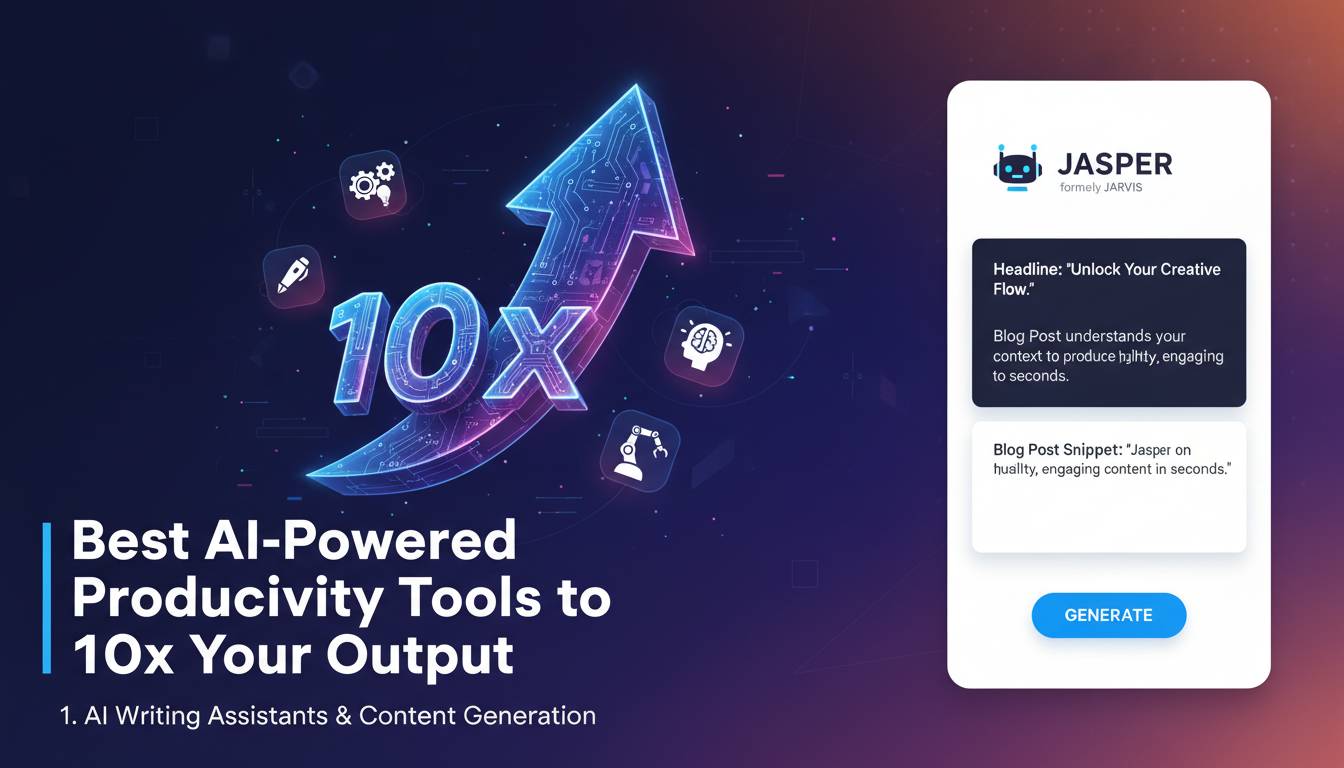
Artificial intelligence has changed how professionals work. AI-powered productivity tools now handle repetitive tasks, generate content in seconds, and help people get more done. The market has grown fast—new tools appear constantly, each promising to solve workplace problems. This guide looks at the leading AI productivity tools in 2025, their features, and how to pick the right ones for your needs.
Understanding the AI Productivity Tool Landscape
The surge in AI tools reflects a bigger shift in how businesses operate. Companies realize that AI can cut time spent on boring tasks, letting workers focus on work that needs human creativity and thinking. Studies suggest professionals using AI tools report productivity gains of 20 to 40 percent, depending on their role and how complex their work is.
These tools fall into a few main categories. Writing and content tools help create emails, reports, and marketing copy faster. Note-taking and knowledge tools organize information. Meeting assistants record, transcribe, and summarize discussions. Project management platforms use AI to predict problems and optimize team workflows. Knowing these categories helps you build an AI toolkit that actually addresses what you need.
The better AI tools share some traits. They learn from how you work and give personalized suggestions. They connect easily with what you already use. They keep improving. These aren’t basic automation—they adapt to you and anticipate what you need.
Top AI Writing and Content Generation Tools
ChatGPT, from OpenAI, is the most recognized AI writing assistant. It handles emails, reports, creative projects, and technical docs well. The latest versions have better reasoning and keep context across long conversations, which helps with bigger writing projects. You can adjust tone and style for different needs—formal business messages or casual social posts.
Claude, from Anthropic, has caught on with professionals who want thoughtful, nuanced responses. It’s strong at breaking down complex topics, researching, and revising work. Claude’s long context window lets it handle lengthy documents, which matters for people working with lots of research material or long-form content. Users like that it’s careful about accuracy.
Grammarly has grown past basic grammar checking. Beyond catching typos, it suggests tone changes, clearer phrasing, and ways to make writing more engaging. It works in browsers, Microsoft Office, and mobile apps, so you get consistent quality wherever you write. Teams use it to keep communication consistent across an organization.
Jasper targets marketing teams and content creators with templates for common marketing tasks. It generates blog posts, social media content, ad copy, and product descriptions. Its brand voice feature keeps content consistent with company guidelines. Marketers like that it creates multiple versions quickly for testing.
AI Note-Taking and Knowledge Management Solutions
Notion AI adds AI to the Notion workspace. Users generate meeting notes, summarize documents, and create outlines without leaving Notion. The AI also brainstorms, improves writing, and answers questions based on what’s in your workspace. Since it’s built into Notion, you don’t switch between apps.
Microsoft Copilot adds AI to Microsoft 365—Word, Excel, PowerPoint, Outlook, and Teams. In Word, it helps draft and suggest improvements. In Excel, it analyzes data and finds patterns without complex formulas. PowerPoint users create presentations from brief outlines. Outlook users get email summaries and reply suggestions. If your company already uses Microsoft products, Copilot fits in easily.
Google Gemini (formerly Bard) works within Google’s productivity suite—Gmail, Docs, Sheets, and Slides. It summarizes information across your Google account, so you can quickly catch up on long email threads or find details from past messages. It pulls from Google’s search, which helps with research and staying current on industry news.
AI Meeting and Communication Tools
Otter.ai is the leading AI meeting assistant. It transcribes automatically, summarizes, and pulls out action items. It works with Zoom, Microsoft Teams, and Google Meet, capturing and processing meetings on its own. Users get searchable transcripts they can edit and share with teammates who missed the meeting. It figures out who said what and highlights key moments—useful for teams across time zones or anyone who can’t take detailed notes during a call.
Slack AI brings automation to workplace chat. Its AI summarizes channels so you can quickly catch up on conversations you missed. It searches better across your organization’s Slack history. It also helps compose messages, suggests responses, and prioritizes notifications based on how you work.
Fireflies.ai is another solid meeting intelligence option, with transcription and analysis across video platforms. It finds action items, tracks topics, and creates notes teams can share. It connects to CRM systems, logging meeting insights to customer records so follow-up stays consistent. Sales and customer success teams use it a lot.
AI Project Management and Workflow Tools
Asana Intelligence adds AI to Asana’s project management, helping teams plan better and catch issues early. Its AI creates tasks from conversation snippets, spots risks that might cause delays, and recommends how to distribute work fairly across team members. These features help with complex projects that have many stakeholders and tight deadlines.
ClickUp AI offers AI help tailored to different roles—writers, marketers, developers, project managers each get prompts and templates that fit their work. It also summarizes docs, generates content, and suggests workflow improvements.
Trello AI brings smart automation to Trello’s visual boards. It suggests task prioritization, recommends due dates, and organizes boards based on how you work. Users like that these features make Trello better without changing what made it popular.
How to Choose the Right AI Productivity Tools
Picking the right AI tools takes some thought. Start by figuring out which tasks eat up most of your time—those are where AI helps most. A marketing team might want writing and content tools first. A project team might prioritize meeting assistants and task management.
Check whether tools connect to what you already use. A great AI assistant doesn’t help if it doesn’t work with your email, project software, or chat apps. Look for smooth integration so you don’t spend time jumping between programs.
Prices vary a lot—free versions exist, and paid plans go up to hundreds monthly. Try free tiers or trials first to see if something actually helps before paying. Many tools have pricing tiers with basic features at lower cost and advanced stuff at premium levels. Figure out if the productivity gains justify what you spend.
Security matters, especially with business information. Check how each platform handles data, what encryption they use, and what compliance they meet. Enterprise tools usually have stronger security and more control, which matters for regulated industries or confidential data.
Conclusion
AI productivity tools have gotten good enough to deliver real, measurable benefits. The trick is picking tools that fit your workflow and using them in ways that actually help—not just grabbing every new thing that comes out.
The tools here are the current leaders in their categories, each with different strengths. Whether you need help writing, organizing info, managing projects, or running meetings, there’s an AI solution that can cut your workload and improve what you produce. As these tools get better, expect even more capabilities to change how we work.
Getting results from AI tools takes ongoing experimentation. The landscape shifts fast—new features come out constantly. Stay open to changing what you use as your needs change and as better options appear. The people who benefit most treat AI as something that keeps developing, not a finished solution.
Frequently Asked Questions
Which AI productivity tool is best for general business use?
ChatGPT and Microsoft Copilot cover the broadest range of business tasks. ChatGPT handles lots of different jobs—drafting emails, research, general questions. Copilot connects directly to the productivity apps many businesses use every day. Which works best depends on what software you already have.
Are AI productivity tools worth the investment?
Most people see real productivity improvements that make the cost worth it. Studies show gains of 20 to 40 percent depending on what you’re doing and how well you adapt. Start with free versions to test whether something actually helps before paying.
Can AI tools completely replace human workers?
AI works best as a helper that makes humans better, not a replacement. It’s great at automating routine things and generating first drafts. But people still need to check quality, make creative calls, and handle strategic decisions.
How do I get my team to adopt AI productivity tools successfully?
Show clear value with specific examples that matter to your team. Give proper training and ask for feedback to improve how you’re using it. Try it with a small group first, measure the results, then expand based on what you learn.
What should I look for in AI tool security and privacy?
Focus on tools with encryption, clear policies on how they handle your data, and compliance certifications your industry needs. Enterprise tools generally have stronger security and let you control how your data is used.
How often should I evaluate my AI tool selection?
Check your AI toolkit every few months to see if your needs have changed and if newer options might work better. Things move fast in AI—significant improvements come out regularly.