
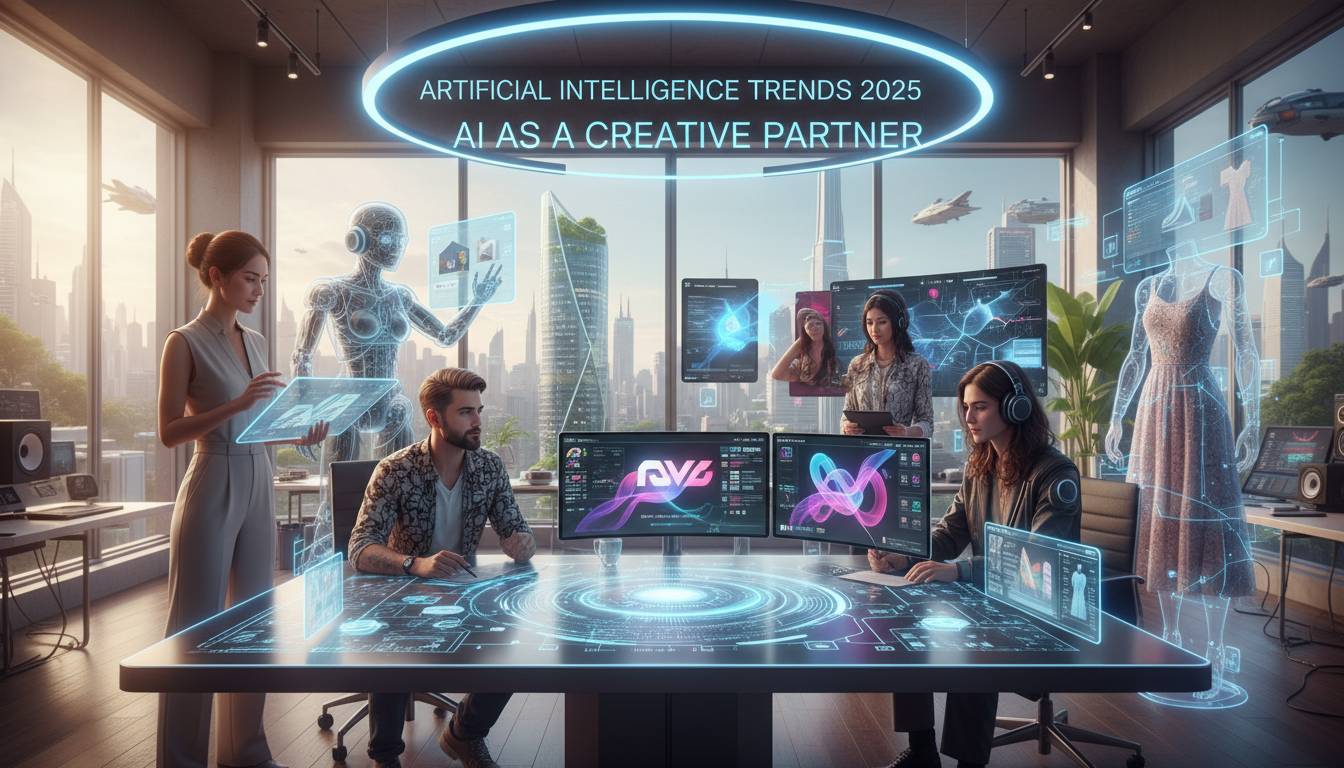
Artificial intelligence is reshaping industries, economies, and daily life in 2025. From breakthroughs in generative models to widespread enterprise adoption, the AI landscape is changing fast. This analysis looks at the most important developments this year and what they mean for businesses, policymakers, and everyone else.
The Current State of AI in 2025
The AI industry has reached a turning point. Organizations across almost every sector are moving past experimental projects to full-scale deployment—a real shift from proof-of-concept to production-ready systems. The global AI market is growing, with analysts expecting double-digit growth through the year.
Investment in AI stays strong, with venture capital going to startups focused on specialized applications rather than general-purpose platforms. This shows that business leaders now understand AI implementation needs clear use cases, solid data infrastructure, and defined success metrics.
Enterprise adoption is the big story of 2025. Companies that once treated AI as something for the future are now integrating machine learning into their core operations. This shift shows up clearly in financial services, healthcare, and manufacturing, where AI-driven automation is delivering real returns.
Generative AI Continues to Dominate
Generative AI remains at the center of AI developments, with multimodal models setting new standards for capability and accessibility. These systems can process and generate text, images, audio, and video within unified frameworks, enabling more sophisticated interactions than earlier AI technology.
More organizations are using generative AI tools at work. Companies are deploying them for content creation, code development, customer service, and data analysis. This adoption reflects both improving technology and workers becoming more comfortable with these tools.
Open-weight models have become a significant force, giving businesses more flexibility in customization and deployment. This has intensified competition among AI providers, which benefits users through better features and pricing.
Content authenticity has become a central concern as generative AI capabilities improve. Organizations are investing in detection technologies and watermarking solutions to address misinformation risks and protect intellectual property. Regulators worldwide are developing frameworks for transparency in AI-generated content.
Enterprise AI Adoption Accelerates
The enterprise AI landscape in 2025 is defined by practical implementation and measurable results. Companies are moving away from broad digital transformation talk toward focused initiatives that solve specific operational problems. This results-driven approach is creating real momentum for AI deployment.
Data infrastructure has become critical to successful AI adoption. Organizations realize that AI performance depends on data quality, accessibility, and governance. Investments in data management platforms and governance frameworks have become prerequisites for meaningful AI implementation.
Industry-specific AI solutions are gaining traction. Rather than building general-purpose systems, technology providers are developing tailored applications for healthcare diagnostics, legal research, financial modeling, and supply chain optimization. This vertical approach delivers value faster by addressing domain-specific challenges with specialized training and interfaces.
AI agents represent one of the most significant enterprise developments this year. These autonomous systems can handle complex, multi-step tasks with minimal human oversight—from scheduling meetings to conducting research and managing workflows. Enterprise adoption of agentic AI is expected to grow as organizations see productivity gains.
AI Regulation and Policy Developments
The regulatory environment for AI continues to evolve across jurisdictions. The European Union’s AI Act has entered enforcement phases, establishing risk-based classifications and compliance requirements for AI systems in the region. Organizations with European operations are adapting their development and deployment practices.
In the United States, regulatory activity has focused on sector-specific guidance rather than comprehensive federal legislation. The National Institute of Standards and Technology continues to develop AI risk management frameworks, while sector regulators are issuing guidance for finance, healthcare, and other industries. This approach emphasizes fostering innovation while addressing specific harms.
International coordination on AI governance has increased through multilateral forums and bilateral agreements. Major economies recognize that fragmented regulations could create compliance burdens and impede cross-border collaboration. Efforts to establish interoperable standards and mutual recognition arrangements are progressing.
Privacy considerations remain central to regulatory discussions. As AI systems process more personal information, authorities are scrutinizing data collection practices, consent mechanisms, and retention policies. Organizations are responding by implementing privacy-preserving techniques and strengthening data governance programs.
AI’s Impact on the Workforce
The workforce implications of AI adoption continue to generate discussion among economists, policymakers, and business leaders. While predictions of mass displacement have cooled off, the transformative nature of AI on job requirements and skill demands is widely acknowledged.
Reskilling and upskilling initiatives have become central to organizational talent strategies. Companies are investing in training programs that help employees work effectively alongside AI systems. This investment reflects recognition that human-AI collaboration often delivers better outcomes than either human or machine alone.
New occupational categories are emerging as AI capabilities expand. Roles focused on AI model training, data annotation, prompt engineering, and AI system oversight are growing quickly. These positions require different skills than traditional technology roles, creating opportunities for workers with varied backgrounds.
Wage effects vary significantly across occupation categories and geographic regions. Studies show AI adoption tends to complement high-skill workers while affecting routine cognitive tasks more substantially. Policymakers are exploring workforce transition support mechanisms, including education benefits and income supplementation, though consensus on specific approaches remains elusive.
Future Outlook
Looking ahead, several trends are likely to shape the AI landscape through the rest of 2025 and beyond. Energy efficiency is emerging as a critical differentiator among AI systems, with providers competing to deliver more capability per unit of computational resource. This competition reflects both operational cost concerns and environmental sustainability commitments.
Reasoning capabilities in AI systems continue to improve, enabling more complex problem-solving and multi-step planning. This advancement is expanding the range of tasks AI can meaningfully support, from scientific research to strategic business planning.
Human-AI interaction is evolving toward more natural and intuitive interfaces. Voice-based interaction, gesture recognition, and adaptive interfaces are making AI tools more accessible to users without technical backgrounds. This accessibility expansion is expected to drive further adoption across consumer and enterprise segments.
The convergence of AI with other transformative technologies, including robotics, biotechnology, and advanced materials, is creating new possibilities for innovation. These combinations are particularly promising in healthcare, environmental sustainability, and infrastructure development.
Conclusion
AI in 2025 represents a technology moving from disruptive innovation to mature, integrated capability. The trends this year reflect a maturing ecosystem where practical implementation, regulatory clarity, and measurable business value are taking priority over speculative advancement. Organizations that approach AI adoption strategically, with clear objectives and robust governance, are positioned to capture real value from these developments.
The trajectory of AI advancement suggests continued evolution across capability, accessibility, and integration. Stakeholders across sectors should stay engaged with these developments, understanding that choices made now will shape the technology’s long-term impact on society and the economy.
Frequently Asked Questions
What are the most significant AI trends in 2025?
The main trends include the spread of multimodal generative AI models, faster enterprise adoption focused on measurable outcomes, the rise of autonomous AI agents for business processes, and increasing regulatory frameworks globally. Energy efficiency and reasoning capabilities in AI systems are also key focus areas.
How is generative AI being used in business operations?
Organizations use generative AI for content creation, code development, customer service automation, data analysis, document synthesis, and workflow optimization. The technology enables productivity gains by automating routine tasks and augmenting human decision-making.
What regulations affect AI development and deployment in 2025?
The European Union’s AI Act is now in enforcement phases, establishing risk-based requirements. In the United States, sector-specific guidance from agencies like NIST and financial regulators applies. Organizations must also navigate privacy regulations, intellectual property considerations, and industry-specific compliance requirements.
How is AI affecting employment and job markets?
AI is transforming job requirements rather than simply displacing workers. Demand for AI-related skills has increased substantially, while many roles are evolving to incorporate AI collaboration. Organizations are investing heavily in reskilling programs to help workers adapt to AI-augmented workflows.
What does the future of AI look like beyond 2025?
The outlook includes continued improvement in reasoning and planning capabilities, greater integration with other transformative technologies like robotics and biotechnology, more natural human-AI interfaces, and increased focus on energy-efficient computing. The technology is expected to become more deeply embedded in everyday business and consumer applications.