The wireless earbuds market in 2024 has gotten seriously good. Manufacturers are delivering impressive sound quality, noise cancellation that actually works, and pairing that doesn’t require a degree in frustration. You can now get premium audio experiences that rival old-school wired headphones, all in tiny, comfortable packages that won’t make your ears sore after an hour.
This guide looks at the top wireless earbuds of 2024, breaking down how they perform in the areas that actually matter: sound quality, battery life, comfort, and whether they’re worth the money. Whether you want audiophile-level sound, serious noise blocking, or something that won’t empty your wallet, I’ve tested and researched these picks to help you find what works for your ears and your lifestyle.
What to Look for in Great Wireless Earbuds
Before getting into specific recommendations, it helps to know what separates genuinely good wireless earbuds from overpriced duds.
Sound quality is obviously the big one. We’re talking about frequency response, how much detail you can actually hear, and whether the overall sound feels balanced. The best earbuds in 2024 give you rich bass without drowning everything else out, clear mids for vocals, and treble that doesn’t make you wince.
Battery life has gotten competitive. Most flagship models give you 7-10 hours of playback, with the charging case throwing in 3-4 more full charges. Quick charging matters too—so you can plug them in for 10 minutes and get a couple hours of listening.
Comfort and fit make or break the experience. Earbuds that don’t fit right will hurt after a while and fall out when you’re moving around. Most companies include multiple ear tip sizes now, and some even have apps that run fit tests to help you find the right size.
Active noise cancellation (ANC) has come a long way. Premium models actually do a great job of silencing the world around you, whether you’re on a plane, in a coffee shop, or just trying to focus at work.
Best Overall: Premium Performance
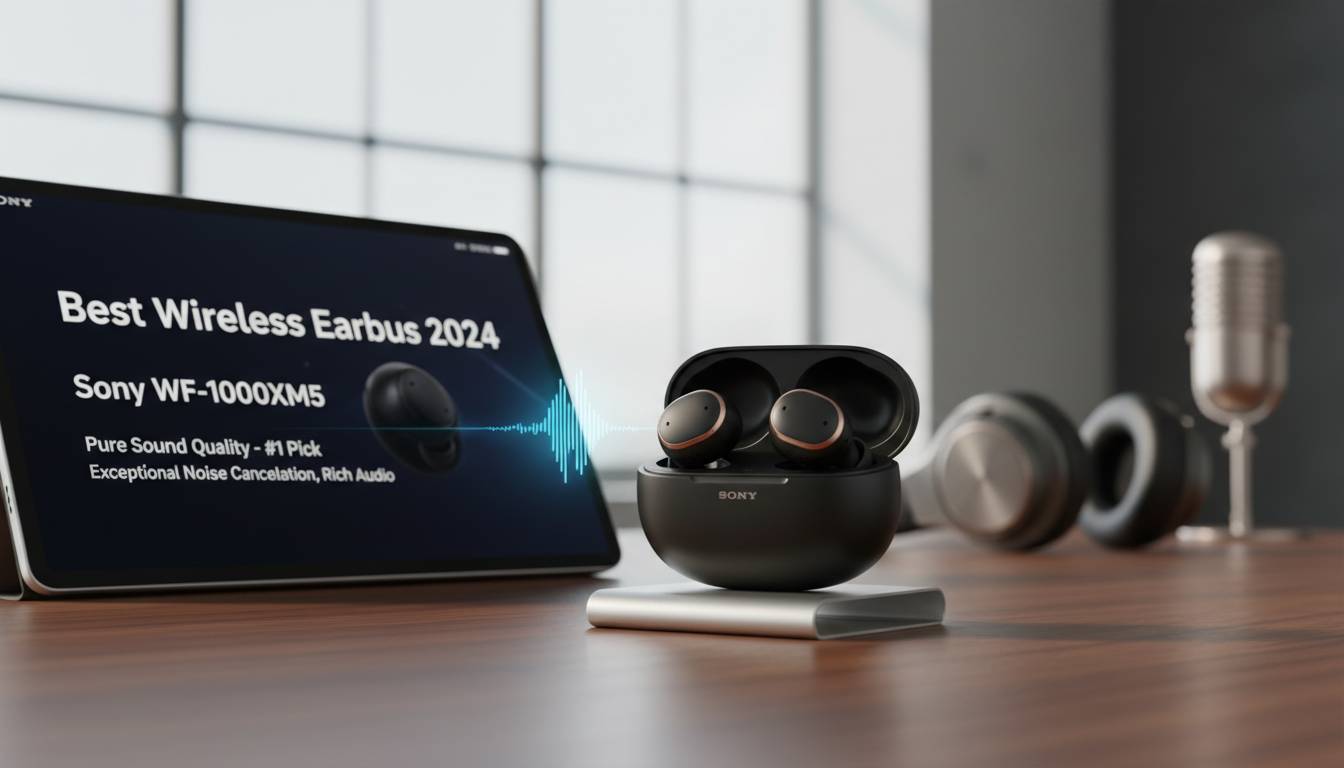
The Sony WF-1000XM5 is the earbuds that everyone else tries to beat. Sony’s Dual Integrated Processor V2 and HD Noise Canceling Processor QN2e deliver noise cancellation that genuinely competes with over-ear headphones—it’s that good. The 8.4mm drivers produce big, detailed sound across the frequency range.
Battery life hits around 8 hours with ANC on, 12 hours with it off. The charging case gives you three more full charges. The design is way smaller than older XM models, and at 5.9 grams each, they’re light enough to forget you’re wearing. Sony’s Headphones Connect app lets you tweak the equalizer and lets adaptive sound control adjust based on what you’re doing—walking, sitting, commuting.
The Bose QuietComfort Ultra Earbuds are the other heavy hitter in this category. Bose has always been king of noise cancellation, and this model keeps that crown while stepping up sound quality. The immersive audio feature creates a spatial sound effect that actually works with stereo content. You get about 7 hours with ANC on, and they fit securely enough for long listening sessions.
Best Value Under $100
The Nothing Ear (a) is the budget surprise of the year. These look distinctive with their transparent design (you can see the guts inside), but the sound quality is what really impresses—it competes with earbuds costing twice as much. The 11mm drivers deliver balanced audio with punchy bass and clear vocals.
ANC works well for the price, doing a solid job of quieting everyday noise. Battery life runs 5.5 hours with ANC on, 9.5 hours with it off, and the case gives you around 4.5 extra charges. Nothing’s app has equalizer settings and gesture controls that work better than they should at this price point.
The Soundcore by Anker Space A40 is another budget winner. Anker has built a reputation for solid value, and these earbuds are proof. The sound profile leans toward clarity and detail, working well across different music styles. Battery life really stands out here—up to 10 hours with ANC off, 8 hours with it on, and the case adds another 50 hours total. The app has customization options you’d expect to find on much more expensive earbuds.
Best for Apple Users
The Apple AirPods Pro 2nd Generation is still the obvious choice if you’re already in Apple’s world. They pair instantly with iPhones, iPads, and Macs, switch between your devices automatically, and have exclusive features like Spatial Audio with head tracking that actually feels cool. The H2 chip handles the audio processing, making both noise cancellation and sound quality better than the original AirPods Pro.
The adaptive audio feature intelligently mixes transparency mode with noise cancellation based on what’s around you—it just works. The stem now has touch controls for volume, which is new for AirPods. Battery life is about 6 hours with ANC on, and the charging case supports wireless charging. The USB-C case that came out in 2024 means one less cable to carry if you have newer Apple devices.
The Beats Fit Pro is worth considering if you want something that stays put during workouts but still plays nice with Apple gear. The wing tip design keeps them secure when you’re moving, and the H1 chip gives you that seamless Apple connectivity. They have ANC, transparency mode, and spatial audio support.
Best for Android Users
The Samsung Galaxy Buds3 Pro is the Android flagship to beat in 2024. Galaxy AI integration brings real-time translation and adaptive noise control. The dual-driver setup with a planar tweeter and dedicated woofer produces detailed, accurate sound across all frequencies.
The design changed significantly from older Galaxy Buds—more conventional stem style with better comfort. Battery life is around 7 hours with ANC on, 9 hours with it off. Samsung’s Galaxy Wearable app gives you plenty of customization, and 360 Audio works well with compatible content.
The Google Pixel Buds Pro 2 is the move for Pixel phone users or anyone who lives in Google Assistant. The Tensor A1 chip handles processing efficiently and makes noise cancellation work well. They’re lightweight and comfortable, with new twist-to-adjust ear gels that actually stay put. About 8 hours battery with ANC on, and the case does wireless charging.
Best for Active Lifestyles
The Jabra Elite 10 is built for people who need earbuds that can handle serious movement. The IP57 rating means they survive dust and water immersion—perfect for intense workouts or running in the rain. The semi-open design avoids that plugged-ear feeling while still blocking noise.
The 6mm drivers deliver punchy, motivating sound for workouts. Jabra’s MySound feature customizes the audio profile to your hearing. Battery life is around 8 hours with ANC on, 36 hours total with the case. Physical buttons mean you can control playback even with sweaty hands—no touchscreen frustration.
The Beats Fit Pro works great for Android users who want fitness features. IPX4 handles sweat, and the wing tips keep them secure during serious activity. They’re comfortable enough for long gym sessions too.
Best for Audiophiles
The Sennheiser Momentum True Wireless 4 is what serious listeners reach for when they want wireless without sacrificing quality. Sennheiser’s 7mm TrueResponse drivers deliver their signature natural, detailed sound with great instrument separation. If you want accuracy over bass boom, this is your answer.
They support high-resolution codecs including aptX Lossless and aptX Adaptive for the best wireless audio quality possible. Battery is about 7 hours with ANC on, and the fabric-covered charging case feels luxurious. Sennheiser’s app gives you comprehensive equalizer control.
The Cambridge Audio Melomania M100 is a solid alternative if you want audiophile quality without the premium price. The 10mm custom drivers deliver detailed, dynamic sound, and class AB amplification keeps distortion low. The open-backed option gives a more natural soundstage than typical closed designs.
How They Compare
Here’s a quick look at the key specs:
| Model | Battery (ANC On) | ANC | Water Rating | Price |
|---|---|---|---|---|
| Sony WF-1000XM5 | 8 hours | Excellent | IPX4 | Premium |
| Bose QuietComfort Ultra | 7 hours | Excellent | IPX4 | Premium |
| Apple AirPods Pro 2 | 6 hours | Excellent | IPX4 | Premium |
| Nothing Ear (a) | 5.5 hours | Good | IPX4 | Budget |
| Samsung Galaxy Buds3 Pro | 7 hours | Very Good | IP57 | Premium |
| Jabra Elite 10 | 8 hours | Very Good | IP57 | Premium |
What’s Coming Next
Wireless earbuds keep evolving fast. AI integration is becoming standard—real-time translation, noise cancellation that learns what you like, and voice assistants that actually understand you.
Battery tech is improving too, with some companies exploring new chemistries and better power management. Sustainability is influencing design more, with more brands using recycled materials and offering repairable options.
Bluetooth codecs keep advancing, with lossless and hi-res options becoming more common. The gap between expensive and cheap earbuds keeps shrinking as technology gets cheaper to make.
Frequently Asked Questions
Which earbuds have the best noise cancellation?
The Sony WF-1000XM5 and Bose QuietComfort Ultra Earbuds are the leaders. Both do an excellent job blocking out the world—offices, planes, anywhere. Sony’s Adaptive Sound Control changes based on what you’re doing, and Bose’s Immersive Audio creates that spatial effect.
Are expensive earbuds worth it?
For most people, yes. Premium earbuds sound better, block noise more effectively, fit more comfortably, and last longer. If you listen a lot or use earbuds in noisy places, the upgrade from budget to premium is noticeable. Budget options have gotten way better, but there’s still a gap.
How long do wireless earbuds last?
With normal use, expect 2-3 years before battery degradation becomes a problem. The batteries lose capacity over time. Better-quality models tend to last longer, and some companies offer battery replacement programs.
Can wireless earbuds replace wired headphones for critical listening?
They’re good enough for most people now. But if you’re an audiophile doing serious listening, wired headphones still have an advantage. The physics of tiny drivers and wireless compression still create some limitations compared to a wired connection.
Do they work well for phone calls?
Modern earbuds handle calls pretty well. Premium models like the AirPods Pro 2 and Galaxy Buds3 Pro have multiple microphones and signal processing that cuts background noise so your voice comes through clearly. Budget options are fine for normal calls but struggle in noisy places.
What matters most when buying?
Think about how you’ll use them most—music, commute, workouts, calls. Prioritize sound, comfort, battery, and noise cancellation based on your situation. Make sure they work well with your specific devices. And if you can, try them on first—comfort is super personal.