
Decentralized finance, or DeFi, is changing how people access financial services. Rather than going through banks and brokerages, DeFi uses blockchain technology and smart contracts to let people trade, lend, and earn interest directly with each other. This guide covers what DeFi investments are, how they work, and what you should know before jumping in.
What is Decentralized Finance?
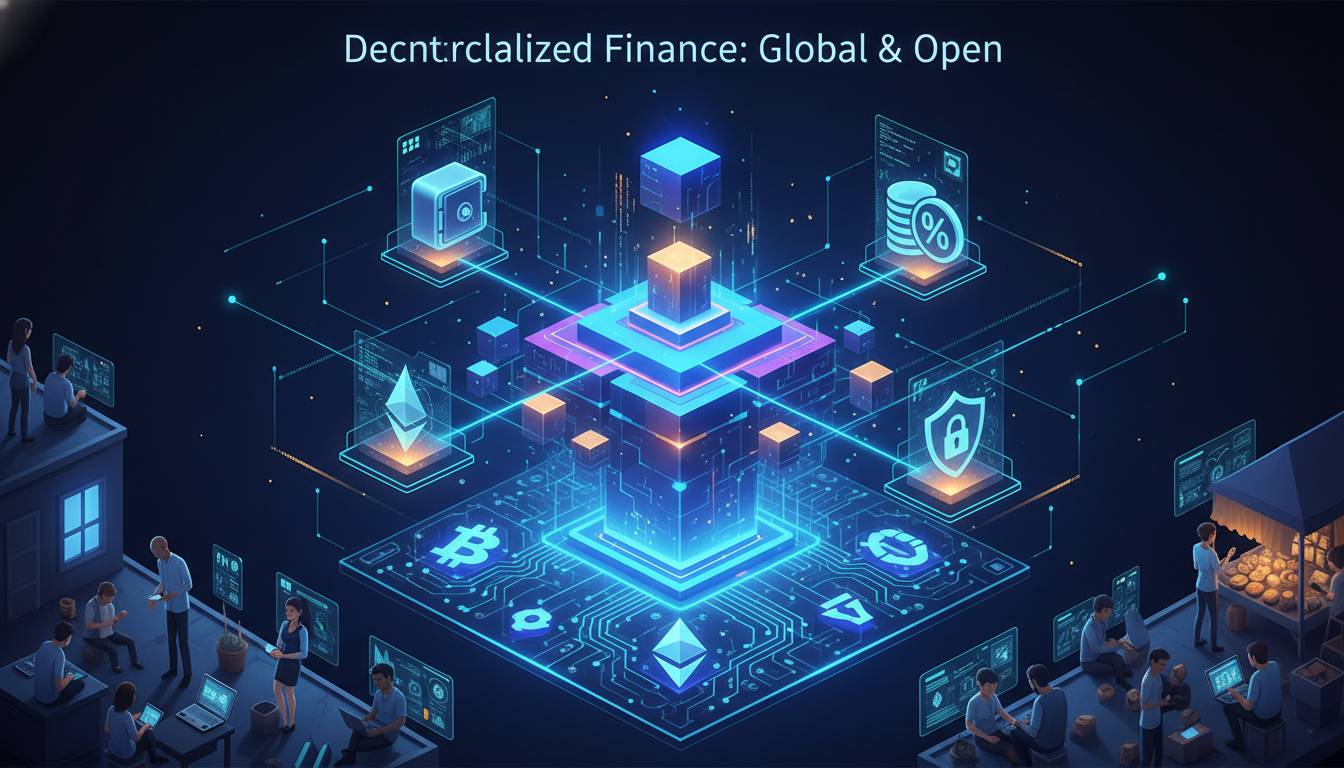
DeFi refers to financial applications built on blockchain networks—primarily Ethereum—that recreate traditional financial tools without central authorities. These platforms let users lend, borrow, trade, and earn interest on their crypto holdings through decentralized protocols instead of banks.
The basic idea is removing middlemen from financial transactions. When you deposit money in a traditional bank, the bank controls those funds. In DeFi, smart contracts—programs stored on the blockchain that run automatically when conditions are met—handle everything. No bank, no middleman. The systems run 24/7, and anyone with an internet connection and a crypto wallet can participate.
Total value locked in DeFi protocols measures the industry’s size. The ecosystem has grown from practically nothing in 2019 to tens of billions of dollars across various protocols. That’s a lot of money flowing into something that didn’t exist a few years ago.
How Does DeFi Work?
Several concepts differentiate DeFi from conventional finance. Blockchain technology provides the foundation—a decentralized ledger recording all transactions. Most DeFi activity happens on Ethereum, though Solana, Avalanche, and Polygon have their own ecosystems.
Smart contracts are the engines driving DeFi. They’re immutable programs that execute automatically when conditions are met. Lend your crypto through a DeFi protocol? The smart contract records the transaction, calculates interest, and sends returns to your wallet—no human involvement needed. The code governs everything, so you don’t need to trust a central entity.
Liquidity pools are another building block. Traditional exchanges match buyers and sellers. Many DeFi platforms instead use liquidity pools where users deposit funds to enable trading. Provide liquidity? You earn a share of the trading fees. This keeps markets running without traditional order books.
Yield farming and staking have become popular ways to earn passive income. Yield farming means moving crypto across different protocols to maximize returns. Staking involves locking up crypto to support network operations and earn rewards. Both offer income opportunities but come with risks.
How to Invest in Decentralized Finance
Getting started requires a few tools. First, you need a cryptocurrency wallet that connects to DeFi protocols. MetaMask, Coinbase Wallet, and Trust Wallet are popular choices, each with different security features and blockchain compatibility.
Next, acquire base assets—usually Ethereum or other blockchain-native tokens depending on which DeFi ecosystem you want to use. Most DeFi apps require gas fees for transactions, so factor those costs into your planning.
Connect your wallet to DeFi platforms to access investment opportunities. Decentralized exchanges like Uniswap and SushiSwap let you swap tokens without intermediaries. Lending platforms such as Aave and Compound let you supply assets and earn interest. Each platform has different interfaces, fees, and risk profiles—research before committing money.
Cross-chain bridges let you move tokens between different blockchains. This opens up more opportunities but adds complexity and security considerations.
Best DeFi Investment Strategies
Your strategy should match your risk tolerance and goals. Staking is relatively accessible—lock tokens to support network operations and earn rewards. Returns are more predictable than other DeFi activities, but your assets are locked up for periods you can’t control.
Liquidity provision involves depositing token pairs into pools to facilitate trading. You earn trading fees, but you’re exposed to impermanent loss—when the relative value of your deposited tokens diverges, you can end up with less than if you’d just held them.
Lending through DeFi platforms is straightforward. Supply assets to lending protocols and earn interest paid by borrowers. Rates fluctuate based on supply and demand, often beating traditional savings accounts—but borrowers must over-collateralize their loans.
Diversification across protocols and strategies helps manage risk. Rather than putting everything in one platform, spread allocations across lending protocols, liquidity pools, and staking opportunities. This reduces exposure to any single protocol failing.
Top DeFi Protocols to Know
Aave is one of the largest decentralized lending platforms, letting users lend and borrow various cryptocurrencies. It pioneered flash loans—uncollateralized loans that must be repaid within one blockchain transaction.
Uniswap is the dominant decentralized exchange on Ethereum, using an automated liquidity protocol for token swaps. Its model has been copied by exchanges across multiple blockchains.
Compound works like Aave as a lending protocol but uses a different interest rate model. Its governance token, COMP, lets holders vote on protocol changes—typical of DeFi’s community-driven approach.
Curve Finance focuses on stablecoin trading, providing low-slippage swaps between tokens designed to maintain their value. It’s become essential infrastructure for stablecoin traders and protocols needing stablecoin liquidity.
Risks of DeFi Investments
DeFi offers potential returns but carries serious risks. Smart contract vulnerabilities are a major threat—bugs or exploits can wipe out funds completely. Even audited protocols have been hacked, losing millions. Security is an ongoing challenge.
Impermanent loss hits liquidity providers when the relative value of token pairs in a pool diverges significantly. In volatile markets, this can mean lower returns than simply holding the tokens.
Regulatory uncertainty is another concern. Governments worldwide are developing crypto regulations, and future policies could significantly impact how DeFi protocols operate. The legal landscape is fluid.
Scams are common—rug pulls where developers abandon projects after collecting money, phishing attacks on wallet credentials, malicious contracts stealing funds. Due diligence is essential.
DeFi vs. Traditional Finance
The differences are fundamental. Traditional financial institutions act as trusted intermediaries—they hold deposits, facilitate transactions, provide customer service. They’re regulated and offer consumer protections.
DeFi removes these intermediaries, theoretically increasing financial inclusion, lowering costs, and improving transparency. Anyone with internet access can use DeFi without a bank account. Transactions happen instantly without banking delays.
But decentralization has trade-offs. Traditional finance offers recourse—regulatory protections, FDIC insurance, customer service when things go wrong. DeFi uses pseudonymous addresses with limited recourse if funds are lost or mistakes happen. You’re fully responsible for security and decisions.
Conclusion
DeFi investments represent an evolving frontier in finance, offering new ways to earn yields and access financial services globally. The technology enables peer-to-peer transactions without traditional middlemen, potentially reducing costs and increasing accessibility.
But the risks are substantial. Smart contract vulnerabilities, market volatility, regulatory uncertainty, and fraud potential demand careful consideration. Start small, diversify across protocols, and maintain secure wallet practices.
As DeFi matures, it may increasingly complement or compete with traditional finance. Whether to participate depends on your risk tolerance, knowledge, and comfort managing assets independently. Approach it with realistic expectations and understand what you might gain—and lose.
Frequently Asked Questions
Is DeFi a good investment?
DeFi can offer higher returns than traditional savings, but the risks are significantly greater. Volatility, smart contract bugs, and potential regulatory changes mean DeFi isn’t suitable for everyone. Only invest money you can afford to lose completely.
How do I start investing in DeFi?
Set up a wallet like MetaMask, buy cryptocurrency (usually Ethereum for most platforms), and connect your wallet to DeFi protocols. Start with established platforms like Aave or Uniswap. Begin with small amounts to learn how things work before investing more.
What are the main risks of DeFi investing?
Smart contract hacks, impermanent loss for liquidity providers, losing funds to bugs or fraud, regulatory crackdowns, and major volatility in token values. Unlike bank accounts, DeFi investments generally lack insurance or recourse if things go wrong.
Is DeFi legal in the United States?
DeFi exists in a regulatory gray area in the US. Individuals can participate in DeFi protocols, but some activities may conflict with securities or banking regulations. The regulatory landscape keeps evolving—stay informed about developments that could affect your holdings.