
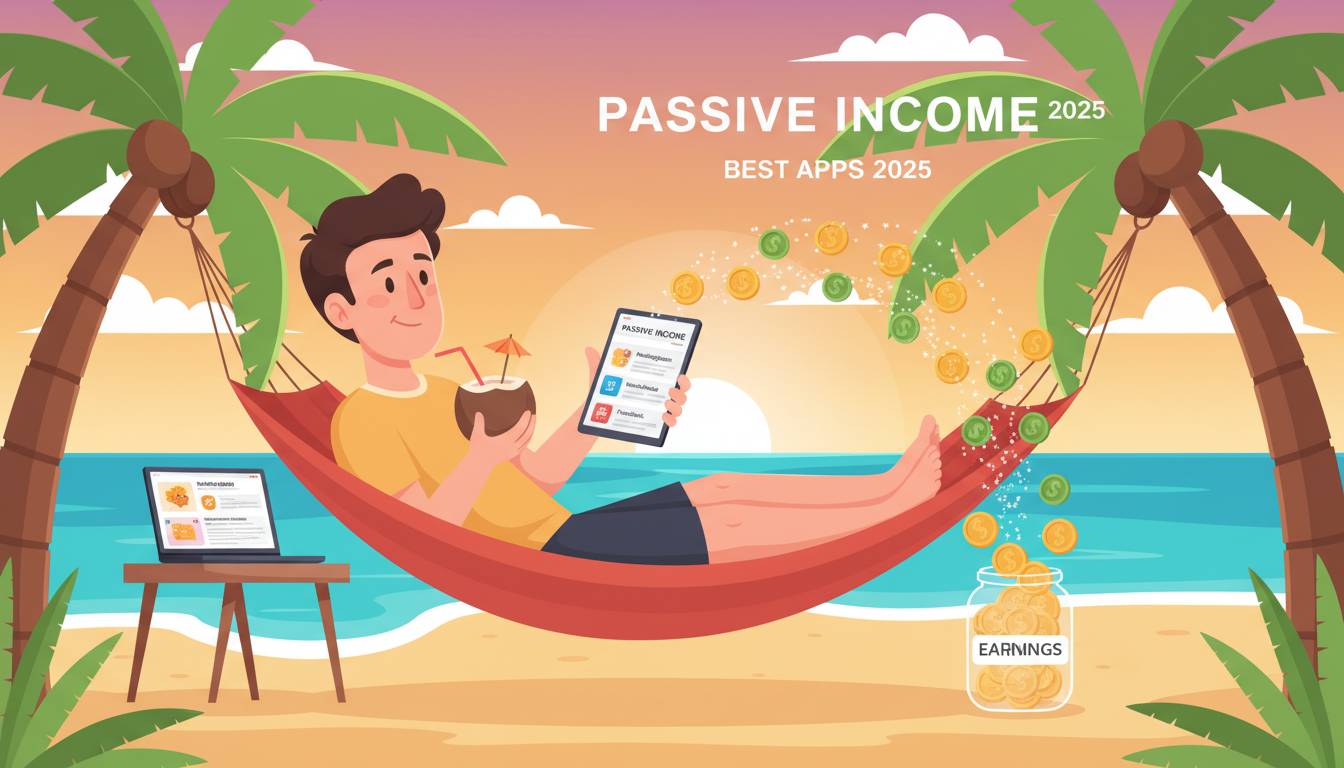
More Americans than ever are looking for ways to make money without trading hours for dollars. Mobile apps have made this easier, though the app store is flooded with options that promise the world and deliver nothing. After testing dozens of them, here’s what actually works.
The passive income app market in the US has grown significantly, with millions of people using at least one income-generating app. But here’s the thing: most of these apps aren’t truly passive, and plenty of them charge fees that eat up whatever you earn. This guide cuts through the noise.
How We Evaluated These Apps
I focused on what actually matters for your wallet:
- Payout reliability: Do they actually pay, or do they ghost you after you’ve earned?
- Real earnings: What are users actually reporting, not what the company claims?
- Fees: Can the fees eat up your gains?
- Effort required: Is it actually passive, or do you need to check in constantly?
Every app here has been around for a while and has real user reviews backing up their claims.
Acorns: Round-Up Investing
Acorns has been around since 2012 and now has millions of users. The concept is simple: link your debit or credit card, and every purchase gets rounded up to the nearest dollar. That spare change goes into a diversified portfolio of ETFs.
A $4.75 coffee? Acorns invests $0.25. It sounds tiny, but it adds up if you use cards regularly. Some people report a few thousand dollars invested annually without thinking about it.
Five portfolio options exist, from conservative to aggressive. The Personal plan runs $3/month, Family is $5, and Gold (with retirement accounts and checking) is $9/month.
The catch: if you only have a few hundred dollars invested, that $3/month fee eats into your returns. Worth it once you’ve got a few thousand in the account.
Rakuten: Cashback on Stuff You’d Buy Anyway
Rakuten partners with thousands of retailers—you shop through their app or browser extension, and you get a cut back. Simple.
They pay quarterly via PayPal or check once you hit $5. The welcome bonus is usually $30 after your first purchase, which is solid.
Average cashback runs around 3%, though it varies from 1% to 40% depending on the store. The biggest upside is that it requires zero effort after you set it up—just make a habit of checking before you buy something.
The limitation: you only earn on purchases you were going to make anyway. If you start buying stuff just to get cashback, you’ve defeated the purpose.
Stash: Fractional Shares for Beginners
Stash lets you buy fractional shares of stocks and ETFs with as little as $1. That’s the main draw—you don’t need $500 to buy into Amazon.
What I like about Stash is the educational angle. When you buy something, it briefly explains what the company does. Good for beginners who want to actually learn, not just click buttons.
Plans range from $3/month (basic investing) to $12/month (automated portfolios and financial planning). Their Stock-Back program gives you fractional shares when you use their debit card, which is a nice passive feature.
Over 7 million users, mostly younger folks getting started.
Ibotta: Grocery Cashback
Ibotta is the most popular grocery cashback app. You look at deals before shopping, then scan your receipt (or link your loyalty card) to get paid.
It works with over 500 retailers, not just grocery stores—drugstores, restaurants, and online shopping all count.
Earnings vary wildly. Some months you might get $10, others $50, depending on what you buy and what offers are available. The tradeoff: you actually have to check the app before shopping and scan your receipts. That’s more effort than truly passive apps.
Minimum payout is $20, which takes most people a few weeks of regular shopping.
Fundrise: Real Estate Without Being Rich
Fundrise lets regular people invest in commercial real estate with as little as $10. Previously, you needed tens of thousands to get into real estate investing.
The platform handles everything—property management, tenants, distributions. You just pick a risk level and let it run.
Returns have ranged from 5% to 12% annually, with an average around 8-9%. They charge 1% annually in fees, which is reasonable for real estate.
The big downside: your money is locked up. You can’t easily pull it out without penalties, especially in the first five years. This is genuinely long-term investing, not something you touch.
Over $7 billion in assets and half a million users. Not bad for a platform that started with a $10 minimum.
Comparison
| App | Category | Minimum | Fees | What You Can Expect |
|---|---|---|---|---|
| Acorns | Micro-investing | $5 | $3-9/month | 7-10% annual returns |
| Rakuten | Cashback | $0 | Free | 1-40% per purchase |
| Stash | Stock investing | $1 | $3-12/month | Market returns |
| Ibotta | Receipt cashback | $0 | Free | $10-50/month |
| Fundrise | Real estate | $10 | 1%/year | 5-12% annual returns |
How Much Can You Actually Make?
Be realistic: none of these apps will replace your salary. But they can add up.
Investment apps (Acorns, Stash, Fundrise) offer compounding returns over years. A $1,000 investment growing at 7% annually becomes about $1,967 in ten years. Not sexy, but it’s free money if you’re already spending that money anyway.
Cashback apps (Rakuten, Ibotta) give you smaller, more immediate returns. If you systematically use them for regular shopping, $20-100/month is realistic. That’s $240-1,200/year for basically checking an app before you shop.
The smart play: combine them. Use Rakuten and Ibotta for日常 purchases, put your savings into Acorns or Fundrise, and let it all compound.
Are These Worth It?
Here’s my honest take: yes, if you set them up and forget them.
The difference between “passive” and “active” matters. Acorns, Fundrise, and Rakuten are genuinely passive after setup. Ibotta requires more effort—you have to actually check deals.
Watch out for fees on small balances. If you’ve got $100 in Acorns, that $3/month fee stings. Either keep enough in there to make it worth it, or stick with free options like Rakuten.
The biggest risk isn’t the apps—it’s thinking they’ll make you rich. They’re tools, not shortcuts.
FAQ
Which pays the most?
Fundrise has historically offered the highest returns (5-12%), but your money is locked up for years. Cashback apps pay less but give you cash in hand. Depends on whether you want growth or liquidity.
Do these actually work?
Yes, the ones I’ve listed are legitimate and pay out. The big ones (Rakuten, Acorns, Fundrise) have been around for a decade and have millions of users. Smaller apps come and go—stick with established names.
How much do I need to start?
Rakuten and Ibotta are free. Acorns and Stash let you start with $1-5. Fundrise needs $10. You can literally start today with $0.
Are they safe?
The apps here are run by regulated companies (some by FINRA-registered brokerages). No investing is risk-free, and real estate can go down in value. But these aren’t scams—just don’t confuse “legitimate” with “guaranteed returns.”
Can I replace my income?
Almost certainly not with these alone. Think of them as a nice supplement, not a replacement. If you’re serious about financial independence, these are one piece of a bigger strategy.
How do I maximize earnings?
Stack multiple apps. Use Rakuten for online shopping, Ibotta for groceries, and automate investments through Acorns or Stash. Link your card for automatic cashback. Check quarterly to make sure you’re still using the best offers—things change.
Bottom Line
These five apps have stood the test of time and actually pay out what they promise. The key is setting them up once, automating what you can, and not expecting to get rich overnight.
Rakuten and Ibotta are great for instant, small returns on stuff you’d buy anyway. Acorns and Stash are solid for building habits around investing. Fundrise is there if you want real estate exposure without buying property.
None of this is glamorous. But passive income that’s real? That’s worth having.