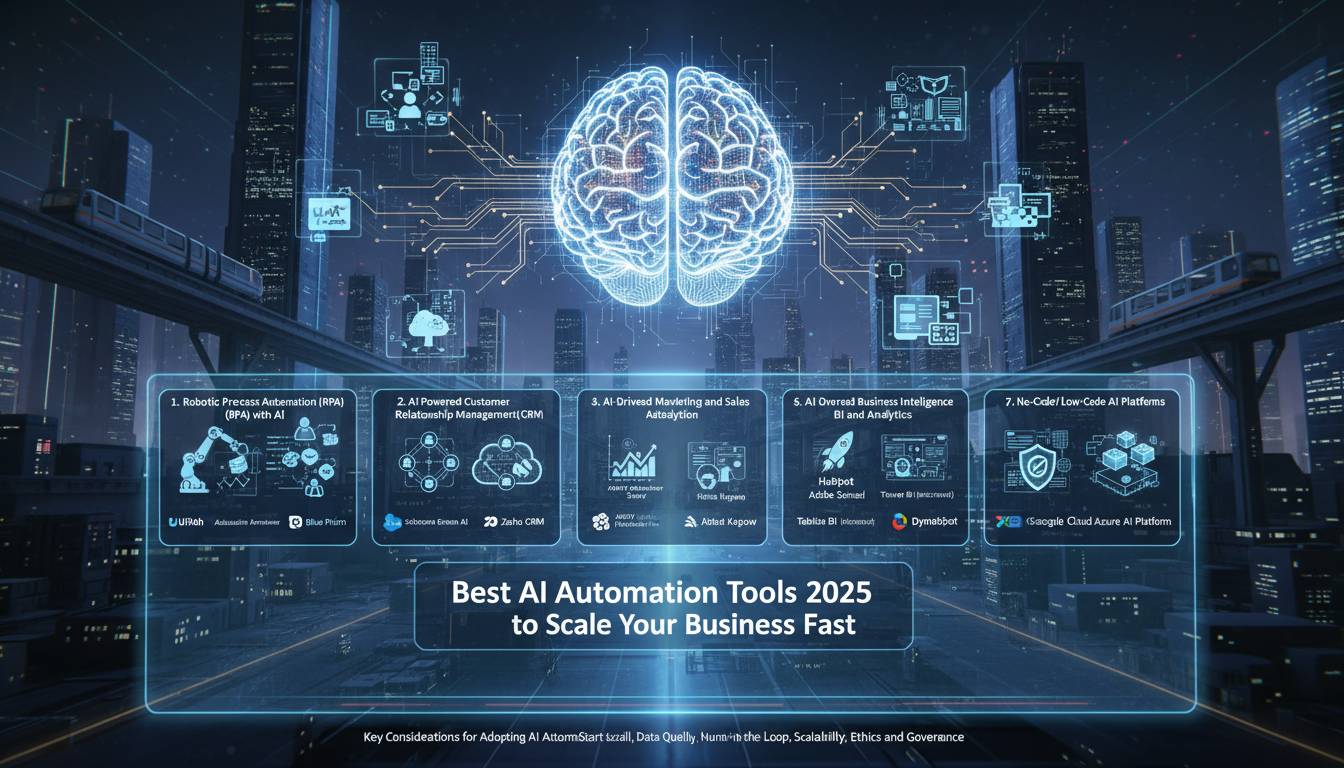


The artificial intelligence landscape has evolved rapidly in 2025, with tools becoming more sophisticated, accessible, and woven into daily workflows across industries. From generative AI for content creation to coding assistants that speed up software development, the ecosystem of AI-powered solutions has grown dramatically. This guide looks at the leading AI tools across major categories, helping professionals and enthusiasts find the best options to boost productivity and creativity this year.
Best AI Writing Tools
The AI writing assistant market has matured significantly. These platforms now offer nuanced understanding of tone, context, and brand voice, serving everyone from casual content creators to enterprise marketing teams.
ChatGPT remains the dominant player in conversational AI, with its GPT-4o model handling drafting, editing, and brainstorming tasks effectively. The free version is surprisingly capable, while the premium tier unlocks advanced features, faster responses, and access to specialized GPTs built for specific industries.
Claude, from Anthropic, has won over users who value thoughtful, nuanced responses. Its longer context window lets it process entire documents, which makes it ideal for research and analysis work that involves lots of background material.
Google Gemini (formerly Bard) works seamlessly with Google’s ecosystem. If you’re already using Google Workspace, the integration feels natural—it pulls real-time web information and handles multimodal inputs like images and documents alongside text.
Jasper AI excels at marketing-focused content. It has templates for ad copy, social media posts, and SEO-optimized blog posts. The brand voice settings help keep generated content consistent across all your materials.
Copy.ai offers an easy entry point for newcomers to AI writing tools. The interface is straightforward, and it focuses on quick content generation for social media and short-form marketing.
Best AI Image Generation Tools
Image generation AI has reached new levels of realism and creative control in 2025. These tools lead the pack in different use cases and accessibility levels.
Midjourney stays popular with artists and designers who want high-quality, stylistically distinctive images. It runs primarily through Discord and gives users strong control over artistic interpretation—great for conceptual art, album covers, and creative projects that need a unique look.
DALL-E 3, OpenAI’s image model, is excellent at following prompts and producing photorealistic images. Since it integrates with ChatGPT, you can develop content that combines written and visual elements in one workflow.
Adobe Firefly is the professional design industry’s serious entry into generative AI. Built for commercial use, it plugs directly into Photoshop and other Adobe apps, offering generative fill, vector creation, and design suggestions within tools designers already know.
Stable Diffusion gives the open-source community a powerful, customizable option. You can run it locally, which matters if you need privacy, want full control over customization, or need to work without internet.
Best AI Coding Tools
Developer productivity has changed dramatically thanks to AI coding assistants that understand context, suggest implementations, and help navigate complex codebases.
GitHub Copilot leads the pack with deep integration into VS Code, JetBrains IDEs, and Neovim. Trained on billions of lines of code, it provides suggestions that understand your project structure and coding patterns.
Cursor has emerged as a strong alternative designed specifically for AI-first development. Its split-pane interface lets developers work directly with AI on code generation, which makes it popular with startups and individual developers who need to prototype quickly.
Amazon CodeWhisperer is worth considering if you’re working within the AWS ecosystem. It generates code tailored to AWS services and has a free tier for individuals, making it attractive at any scale.
Tabnine takes a hybrid approach, offering both cloud-based and local deployment options. This appeals to enterprises with specific security requirements or developers who prefer running inference locally.
Best AI Video Generation Tools
Video generation is arguably the fastest-moving AI category. Tools now produce increasingly sophisticated video content from text prompts.
Runway keeps pushing boundaries with its Gen-3 Alpha model, offering solid control over motion, camera angles, and visual consistency. Its professional-grade tools serve independent creators and production studios exploring AI-augmented workflows.
Pika Labs has gained traction for its user-friendly approach. You can extend existing footage, modify elements within videos, or generate entirely new content from text—which covers most content creation needs.
Synthesia dominates the corporate training and presentation space. Its AI-generated video avatars deliver scripts with natural-looking speech and gestures. Companies creating localized training content at scale have found this particularly useful.
HeyGen competes strongly in the avatar and talking-head video space. Its expressive avatars and easy lip-syncing make it popular for marketing videos, onboarding content, and multilingual communications.
Best AI Audio and Voice Tools
Voice synthesis and audio generation tools have become remarkably natural, opening new possibilities for content creators, accessibility applications, and professional production.
ElevenLabs has established itself as the premium choice for voice synthesis. It offers impressive emotional range, voice cloning, and multi-language support. You’ll find it used for audiobook narration, game development, and more.
Murf AI provides a complete platform for studio-quality voiceovers. It has a library of natural-sounding voices plus voice cloning and conversion features. The timeline-based editor gives precise control over pacing and emphasis.
Descript has changed podcast and video editing with its AI-powered transcription and audio enhancement. The overdub feature lets creators generate voiceovers from typed text, which dramatically speeds up editing.
Best AI Productivity Tools
AI productivity tools have become essential for professionals trying to streamline workflows and manage information overload.
Notion AI brings AI capabilities directly into the popular workspace platform—note-taking, document creation, and project management all get upgrades. It can summarize meetings, generate action items, and assist with writing, which is useful across professional contexts.
Microsoft Copilot embeds AI assistance throughout the Microsoft 365 ecosystem, from Excel analysis to Outlook email drafting. Its enterprise-grade security and compliance make it the go-to for organizations already using Microsoft infrastructure.
Google Gemini (within Google Workspace) provides intelligent help for documents, spreadsheets, and presentations. It integrates tightly with Google’s suite and pulls real-time information through search.
Frequently Asked Questions
What is the best AI tool for beginners in 2025?
ChatGPT and Claude offer the most accessible entry points with intuitive interfaces and versatile capabilities. Both have free tiers, so you can explore AI assistance without spending money before deciding which fits your needs.
Are there high-quality free AI tools available in 2025?
Yes. ChatGPT’s free version, Google’s Gemini, and Microsoft’s Copilot all provide solid functionality at no cost. GitHub Copilot and Amazon CodeWhisperer have free individual plans, and Claude and Midjourney give limited free access.
Which AI tools are most popular among professionals in 2025?
Professionals increasingly gravitate toward tools integrated into their existing workflows. Microsoft Copilot and Google Gemini dominate enterprise productivity, while GitHub Copilot leads in software development. Creative professionals favor Adobe Firefly and Midjourney, and content creators often pair ChatGPT for writing with ElevenLabs for voice work.
How do I choose the right AI tool for your needs?
Think about your primary use case, your existing tool ecosystem, and your budget. Writers usually benefit most from ChatGPT or Claude. Developers should compare GitHub Copilot against Cursor. Image creators might weigh Midjourney’s artistic capabilities against DALL-E’s commercial flexibility. Most platforms offer free trials, so you can test drive them before committing.
Will AI tools replace human workers?
Right now, AI tools work best as collaborators that enhance human capabilities rather than replace them. They handle routine tasks well, generate initial drafts quickly, and provide suggestions that free professionals to focus on strategy, creativity, and complex decision-making—areas where human judgment still matters.
How often are AI tools updated in 2025?
Major AI platforms update their models continuously throughout the year, with significant releases happening quarterly or even more often. Check that you have access to the latest versions—improvements in reasoning, accuracy, and capabilities can be substantial between updates.
Conclusion
The AI tool landscape in 2025 offers incredible capability across almost every professional and creative domain. The key to getting real value is picking tools that fit your specific workflow—and staying aware of how fast things change.
As these technologies keep advancing, the most successful users will be those who treat AI as collaborative partners. Leverage its strengths in automation and generation, but apply human judgment to strategy, creativity, and final decisions. The tools in this guide represent the current leaders in their categories, though the competitive nature of AI development means innovation will keep coming fast.