

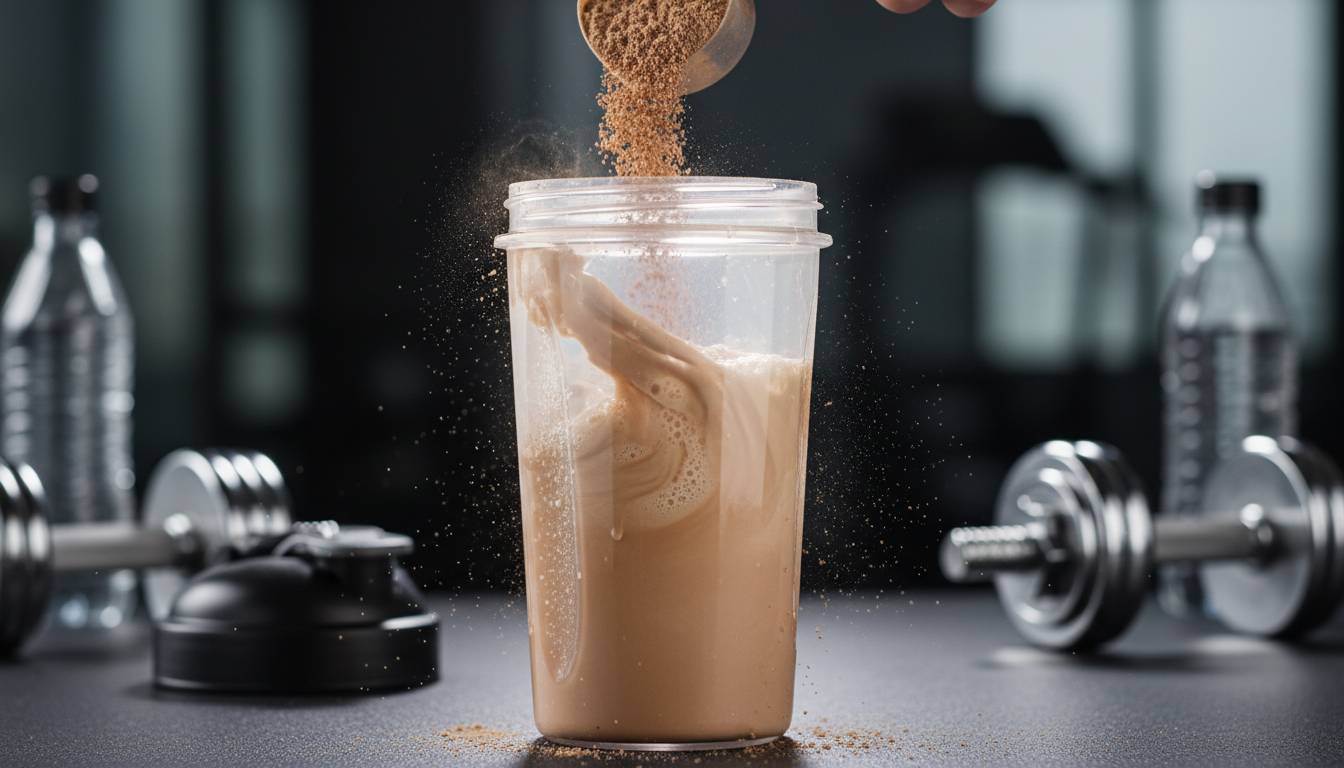
Protein powders are everywhere in the fitness world. Walk into any gym or health store and you’ll face a wall of tubs, each promising to transform your physique. The claims get ridiculous. The prices get more ridiculous. And honestly, most of the marketing is noise designed to separate you from your money.
But here’s the thing—protein powder actually works. It’s not magic, and it’s not necessary if you eat enough whole foods, but it fills a real gap for people with real lives. This guide cuts through the hype and covers what actually matters.
Why Protein Matters for Muscle Growth
Muscle protein synthesis is the process where your body builds new muscle tissue. It needs amino acids—the building blocks that come from protein—to do this. The research is fairly consistent: if you’re lifting weights and want to build muscle, you need somewhere between 1.6 and 2.2 grams of protein per kilogram of body weight daily. That’s roughly 130-180 grams for an 80kg person, which is a lot of chicken breast.
Where the science gets murky is timing. You’ve probably heard about the “anabolic window”—the idea that you need protein within 30 minutes of working out or it’s all wasted. This has been massively overblown. What matters most is hitting your total daily number. That said, spreading protein across your meals (rather than eating 60 grams at dinner and nothing else) does seem to help keep muscle building steady throughout the day.
Protein powders make hitting these numbers easier. They’re quick, portable, and don’t require cooking. A scoop typically gives you 20-30 grams of usable protein. Is it better than eating actual food? No. But is it convenient? Absolutely.
Understanding Different Protein Types
Whey Protein is the most popular for good reasons. It comes from milk, absorbs quickly, and has a complete amino acid profile. Whey isolate is purer—less lactose and fat—while whey concentrate keeps more of the milk’s natural stuff and often tastes creamier. If you’re not lactose-sensitive, concentrate is usually the better value.
Casein Protein digests slowly. We’re talking 6-8 hours of gradual release. Athletes sometimes take it before bed so their muscles get a steady drip of amino acids overnight. It’s not as versatile as whey since you can’t really use it post-workout—too slow.
Plant-Based Proteins have improved a lot in recent years. Pea protein, rice protein, hemp—these used to taste like chalk and had incomplete amino acid profiles. Now, companies blend different sources to create complete proteins that rival animal products. If you’re vegan or dairy-free, you have real options now.
Top Protein Powders for Maximum Muscle Gain
Optimum Nutrition Gold Standard 100% Whey
This is the坦克 of protein powders—reliable, widely available, and does the job without fuss. It’s a blend of isolate and concentrate, giving you 24 grams per scoop with minimal fillers. The taste is consistently decent across flavors, and it mixes well with just water. The price sits around $1 per serving, which is fair for what you’re getting.
Is it the absolute best? Probably not—there are faster-absorbing options and better-tasting ones. But it’s never bad, never fake, and you can find it everywhere. That’s worth something when you’re restocking every few weeks.
Dymatize ISO100
If you want pure, fast-absorbing whey, this is it. ISO100 is hydrolyzed, meaning it’s been partially pre-digested. Your body absorbs it almost immediately. This matters most right after training when your muscles are screaming for amino acids.
The tradeoff is taste and price. Hydrolyzed proteins taste slightly bitter to some people, and you’ll pay more than the ON option. But if you’re serious about recovery and have the budget, this delivers.
MusclePharm Combat Powder
Combat is a blend—whey isolate, concentrate, and casein all in one tub. The idea is you get immediate absorption from the whey plus sustained release from the casein. It’s a solid concept, though honestly, most people would be fine just taking whey post-workout and casein before bed separately.
The flavors are hit or miss. Some are genuinely good; others taste like artificial sweetener hell. Read reviews before buying.
Ritual Essential Protein
Plant-based options have come a long way, and Ritual is one of the better ones. It uses pea, pumpkin seed, and watermelon seed proteins—actual whole food sources rather than synthetic amino acid spiking. No artificial junk, no weird fillers.
The taste is more muted than whey, which some people appreciate and others find boring. At 20 grams per serving, it’s slightly less protein than competitors, but the ingredient quality is there if you care about that.
Transparent Labs BCAA Glutamine
This isn’t a protein powder—it’s a recovery aid. BCAAs (branched-chain amino acids) may help reduce muscle soreness and support repair. Glutamine, an amino acid, potentially helps with immune function after intense training.
The debate on BCAA supplementation is genuinely mixed. If you already eat enough protein, you’re probably getting BCAAs anyway. But for athletes training twice daily or in a caloric deficit, this might add something. It’s worth trying to see if you notice a difference.
How to Choose the Right Protein Powder
Here’s the honest truth: almost any reputable protein powder will work if your diet and training are on point. The differences between products are smaller than the marketing suggests. That said, here’s what actually matters:
Dietary Restrictions: Lactose intolerant? Go with isolate or plant-based. Vegan? No animal products. Easy enough.
Budget: Calculate price per gram of protein, not per container. Sometimes the bigger tub isn’t actually cheaper. Premium hydrolyzed proteins cost more—but they’re not three times better.
Taste: This matters more than people admit. If you hate the taste, you won’t take it consistently. Buy a single serving first. Try it with water and with milk. Different proteins behave differently.
Your Schedule: Fast-absorbing whey works best post-workout. Casein makes sense before sleep. If you’re training fasted, having protein immediately after matters more.
Maximizing Your Protein Intake
A few practical notes:
Don’t obsess over timing. Eat protein within a few hours of training if you can, but don’t stress if it’s not immediate. Total daily intake is the big lever.
Spread it out. Three to five meals with protein beats one giant protein dinner. Your body can only build so much muscle at once.
Hydrate. Protein metabolism requires water. If you’re not drinking enough, you’ll feel off. Aim for at least 3 liters daily, more if you sweat a lot.
Food beats powder. If you can eat whole protein sources, do that. Powder is a supplement to fill gaps, not a replacement for real eating.
Frequently Asked Questions
How much protein do I need daily to build muscle?
1.6-2.2g per kg of bodyweight. A 180-pound person needs about 130-180g. Powder helps hit these numbers without eating six chicken breasts.
Is whey protein better than plant protein for muscle gain?
Both work. Whey absorbs faster and has complete amino acids naturally; plant proteins need combining to match that. If you’re vegan or lactose-sensitive, plant options are genuinely good now—they’re not a compromise anymore.
When should I take protein powder?
Within a few hours of training is ideal. But honestly, taking it at the same time every day matters more than hitting some exact window. Consistency beats precision.
Can protein powder help with fat loss while building muscle?
Yes. Protein is satiating, has a high thermic effect (your body burns calories digesting it), and helps preserve muscle during caloric deficits. It’s useful for recomposition goals.
Any side effects?
Most people are fine. Starting with too much too fast can cause bloating and digestive issues. If you have kidney problems, talk to a doctor before dramatically increasing protein.
How long until I see results?
Recovery improvements usually show in 2-3 weeks. Visible muscle growth takes 2-3 months of consistent training and proper nutrition. Protein powder doesn’t accelerate this—it’s just making the nutrition part easier to stick with.