Voice Cloning AI: Create Lifelike Voiceovers in Minutes

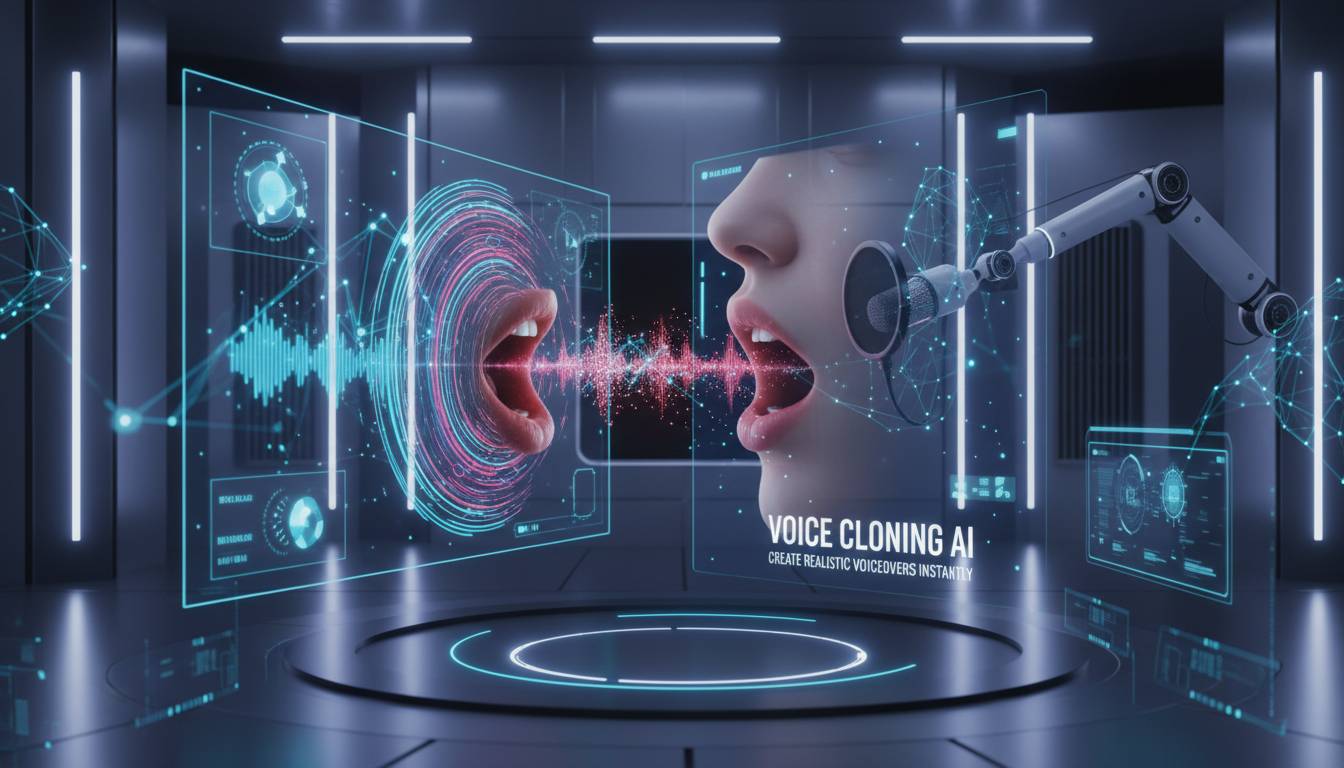
Voice cloning technology has transformed from a science fiction concept into a practical tool that businesses, content creators, and individuals use daily. These AI-powered platforms can replicate human speech patterns, tone, and emotion with increasing accuracy, enabling anyone to generate professional voiceovers in minutes rather than hours.
What Is Voice Cloning AI and How Does It Work?
Voice cloning AI uses deep learning algorithms to analyze recordings of a person’s voice and create a synthetic model that can generate new speech. The process typically requires between 10 seconds and 30 minutes of audio samples, depending on the platform and desired quality level.
Modern voice cloning systems employ several key technologies working in combination. Neural networks analyze acoustic features including pitch, timbre, cadence, and pronunciation patterns. Speaker embedding techniques extract unique vocal characteristics while filtering out content-specific elements. Text-to-speech engines then use these embeddings to generate new utterances from input text.
ElevenLabs, a leading provider in this space, reports that their voice cloning models can capture “emotion, tone, and accent” from minimal samples . The technology has advanced significantly since early attempts in the 1990s, which required hours of recorded speech and produced robotic-sounding results.
Types of Voice Cloning
| Type | Sample Required | Quality | Use Case |
|---|---|---|---|
| Instant Voice | 10-30 seconds | Good | Quick prototypes, personal use |
| Professional Voice | 3-10 minutes | Very High | Commercial content, audiobooks |
| Studio Quality | 30+ minutes | Excellent | Broadcast, film production |
Top Voice Cloning Platforms in 2025
The voice cloning market has expanded rapidly, with multiple platforms offering distinct strengths. Understanding each platform’s specialty helps you select the right tool for your needs.
ElevenLabs
ElevenLabs has emerged as a market leader since launching in 2022, gaining particular traction among content creators and game developers. Their platform supports 29 languages and offers both instant cloning and professional voice cloning options. The company raised $80 million in Series B funding in January 2024, indicating strong market confidence.
Key Features:
– Instant voice cloning in under 60 seconds
– Professional voice cloning with higher fidelity
– Voice design tool for creating synthetic voices
– Multi-language support including rare languages
Pricing: Free tier available; paid plans start at $5/month for 10,000 characters
Respeecher
Respeecher focuses on enterprise applications and has worked with major film studios and game developers. Their technology emphasizes emotional range and has been used in post-production to restore an actor’s voice when original recordings were unusable.
Specialization: “Voice restoration for media production and conversational AI”
WellSaid Labs
WellSaid Labs positions itself as an enterprise solution for corporate training, marketing, and product development. Their platform emphasizes reliability and brand consistency over creative flexibility.
Pricing: Teams plan at $99/month with 4 user seats
Descript
Descript’s voice cloning feature, called “Overdub,” integrates directly into their video and podcast editing software. This makes it particularly valuable for content creators already using Descript for editing, as voice generation becomes part of their existing workflow.
Murf AI
Murf AI offers a broad library of pre-made voices alongside custom voice cloning. Their platform targets marketing teams, educators, and product teams needing quick voiceovers without technical expertise.
Pricing: Starter plan at $19/month with 10 minutes of voice generation
Comparison of Leading Platforms
| Platform | Languages | Free Tier | Starting Paid | Best For |
|---|---|---|---|---|
| ElevenLabs | 29 | Yes (10 min/mo) | $5/mo | Creators, developers |
| Respeecher | 15+ | No | Custom pricing | Enterprise media |
| WellSaid Labs | 2 (EN, ES) | No | $99/mo | Corporate training |
| Descript | 22 | Yes | $12/mo | Podcast/video editors |
| Murf AI | 20+ | Yes (10 min) | $19/mo | Marketing teams |
Practical Applications and Use Cases
Voice cloning technology serves diverse industries and use cases. Understanding where this technology delivers the most value helps identify opportunities for implementation.
Content Creation and Marketing
YouTubers, podcasters, and social media creators use voice cloning to scale content production. A creator can write a script once and generate voiceovers in multiple languages or voices without re-recording. This dramatically reduces production time for content localization.
A 2024 survey by HubSpot found that 47% of marketers using AI tools reported increased content output, with voice generation cited as a primary efficiency driver .
Audiobooks and E-Learning
Audiobook production traditionally required hiring voice talent and booking studio time—costs that made many titles financially unviable. Voice cloning enables publishers to create audio versions of backlist titles that would never justify traditional production costs.
Educational institutions use voice cloning to create personalized learning experiences. Students can potentially hear content narrated in voices that feel more engaging or familiar.
Accessibility and Assistive Technology
Voice cloning serves important accessibility applications. Individuals who lose their ability to speak due to illness or injury can preserve their voice for future use. The “Voice Banking” movement allows people to record samples that can later be synthesized, preserving their vocal identity.
Business Applications
Corporate training videos, product demonstrations, and customer service IVR systems benefit from voice cloning. Companies maintain consistent brand voice across content without requiring talent availability for each new recording.
Technical Considerations and Limitations
While voice cloning has advanced significantly, understanding its limitations prevents disappointment and ensures appropriate use cases.
Quality Factors
Voice cloning quality depends on several variables. Sample quality matters—recordings with background noise, reverb, or inconsistent audio levels produce less accurate clones. Speaking style in the samples affects output; scripted, deliberate speech generates more predictable results than conversational recordings.
Rare accents or unusual pronunciation patterns can challenge some systems. Voices with significant background noise or emotional variation may not clone cleanly. Most platforms recommend recording in quiet environments with consistent microphone placement.
Language Limitations
While major platforms support numerous languages, quality varies significantly. English, Spanish, French, German, and Mandarin typically receive the most development attention and produce the best results. Less commonly spoken languages may have limited voice options or reduced accuracy.
Processing Time and Resources
Generation time depends on output length and platform capacity. Short clips often process in seconds, while longer content may require minutes. High-demand periods can extend wait times, particularly on platforms with free tiers.
Ethical Considerations and Concerns
Voice cloning technology raises significant ethical questions that the industry and regulators continue to address.
Misinformation and Fraud
The ability to replicate anyone’s voice creates obvious potential for misuse. Audio deepfakes have already been used in fraudulent schemes, including a 2024 incident where criminals used cloned voices to steal $25 million from a multinational company (BBC News, March 2024).
The industry has responded with detection tools and watermarking systems. ElevenLabs and other providers have implemented policies restricting certain use cases and working with authorities on abuse prevention.
Consent and Rights
Using someone’s voice without explicit consent raises legal and ethical questions. Several jurisdictions are developing or have implemented regulations around voice cloning. California enacted a law in 2024 requiring disclosure when AI-generated voices are used in political communications .
Content Authenticity
Audiences increasingly need to distinguish between human-recorded and AI-generated audio. Many platforms automatically add watermarks that can be detected by specialized tools, though these protections are not foolproof.
Cost Analysis and Value Proposition
Voice cloning economics depend heavily on use case volume and quality requirements.
Cost Breakdown by Platform
| Use Case | Estimated Monthly Cost | Traditional Alternative |
|---|---|---|
| Individual creator (5-10 videos/month) | $5-20 | $50-200 (freelancer) |
| Small business (20-50 videos/month) | $50-200 | $500-2,000 |
| Enterprise (daily content) | $500+ | $5,000+ |
For many use cases, voice cloning delivers significant cost savings compared to traditional voice talent. However, the technology currently works best for content where perfection isn’t required—for highly emotional scenes or demanding voice performances, traditional voice actors often deliver superior results.
How to Choose the Right Voice Cloning Platform
Selecting the appropriate platform requires evaluating several factors against your specific needs.
1. Primary Use Case: Consider what you’re creating. Content creators often prefer ElevenLabs for flexibility. Enterprises may value WellSaid Labs or Respeecher for reliability and support.
2. Language Requirements: Verify that your needed languages receive high-quality support. Test outputs before committing to paid plans.
3. Integration Needs: If you already use Descript or similar tools, integrated voice cloning may simplify your workflow.
4. Budget and Volume: Calculate expected usage and compare costs across platforms. Free tiers exist but come with limitations.
5. Quality Expectations: Test sample outputs against your standards. Most platforms offer demos or trials that allow evaluation before purchase.
The optimal approach involves testing 2-3 platforms with your actual content type before committing. What works for one use case may not suit another.
Getting Started with Voice Cloning
Beginning with voice cloning requires minimal technical expertise. Most platforms offer intuitive interfaces that guide you through the process.
- Create an account on your chosen platform (ElevenLabs, Murf AI, or Descript offer good starting points)
- Record or upload voice samples following platform guidelines for quality
- Wait for model training (ranges from seconds for instant cloning to hours for professional quality)
- Enter text and generate your voiceover
- Refine by adjusting speed, pitch, and other parameters
Start with free tiers or trials to explore capabilities before investing in paid plans. Most users find they can produce usable voiceovers within their first session.
Frequently Asked Questions
Is voice cloning legal to use?
Yes, voice cloning technology is legal for legitimate uses in most jurisdictions. However, using cloned voices to impersonate others for fraud, create misleading political content, or violate someone’s rights without consent may violate laws. California and several other states have enacted specific regulations requiring disclosure of AI-generated voices in certain contexts.
How long does it take to clone a voice?
Instant voice cloning can produce usable results in under 60 seconds with 30 seconds of audio. Professional-quality cloning may require several minutes of high-quality samples and takes minutes to hours to process, depending on the platform and desired fidelity.
Can voice cloning be detected?
Detection tools exist and continue to improve, but they aren’t always reliable. Some platforms embed watermarks detectable by specialized software. However, as cloning technology advances, detection becomes more challenging. Platforms like Respeecher and ElevenLabs actively work on authentication methods.
What’s the difference between voice cloning and text-to-speech?
Text-to-speech converts written text into spoken audio using pre-made synthetic voices. Voice cloning creates a synthetic version of a specific person’s voice, then uses that cloned voice for text-to-speech generation. Think of standard TTS as using a rental voice, while voice cloning provides your own customized voice.
How much does professional voice cloning cost?
Professional-grade voice cloning varies significantly by provider. Individual plans with ElevenLabs start at $5/month. Enterprise solutions from providers like Respeecher and WellSaid Labs often require custom quotes, potentially costing hundreds to thousands of dollars monthly depending on usage and features.
Will voice cloning replace voice actors?
Voice cloning currently excels at neutral, informational content—corporate training, explainers, and straightforward narration. It struggles with highly emotional content, character work, and performances requiring subtle nuance. Most industry professionals see voice cloning as a tool for scaling production rather than replacing human talent entirely.
Conclusion
Voice cloning AI has matured into a practical, accessible technology that serves creators, businesses, and individuals across numerous applications. The technology offers compelling benefits—speed, cost savings, scalability, and accessibility—while raising legitimate ethical concerns that the industry continues to address.
For content creators and businesses looking to scale audio production, platforms like ElevenLabs and Murf AI offer accessible entry points with strong results. Enterprise users with complex needs may find Respeecher or WellSaid Labs more suitable despite higher costs.
The key to successful implementation lies in matching the technology to appropriate use cases. Voice cloning excels at volume content where perfection matters less than consistency and efficiency. For highest-quality creative work, traditional voice talent often remains superior.
As detection technology, regulations, and best practices evolve, expect voice cloning to become an increasingly normalized part of content production—useful, powerful, and requiring thoughtful application.