
Ultimate Muscle Building Nutrition Guide for Maximum Gains

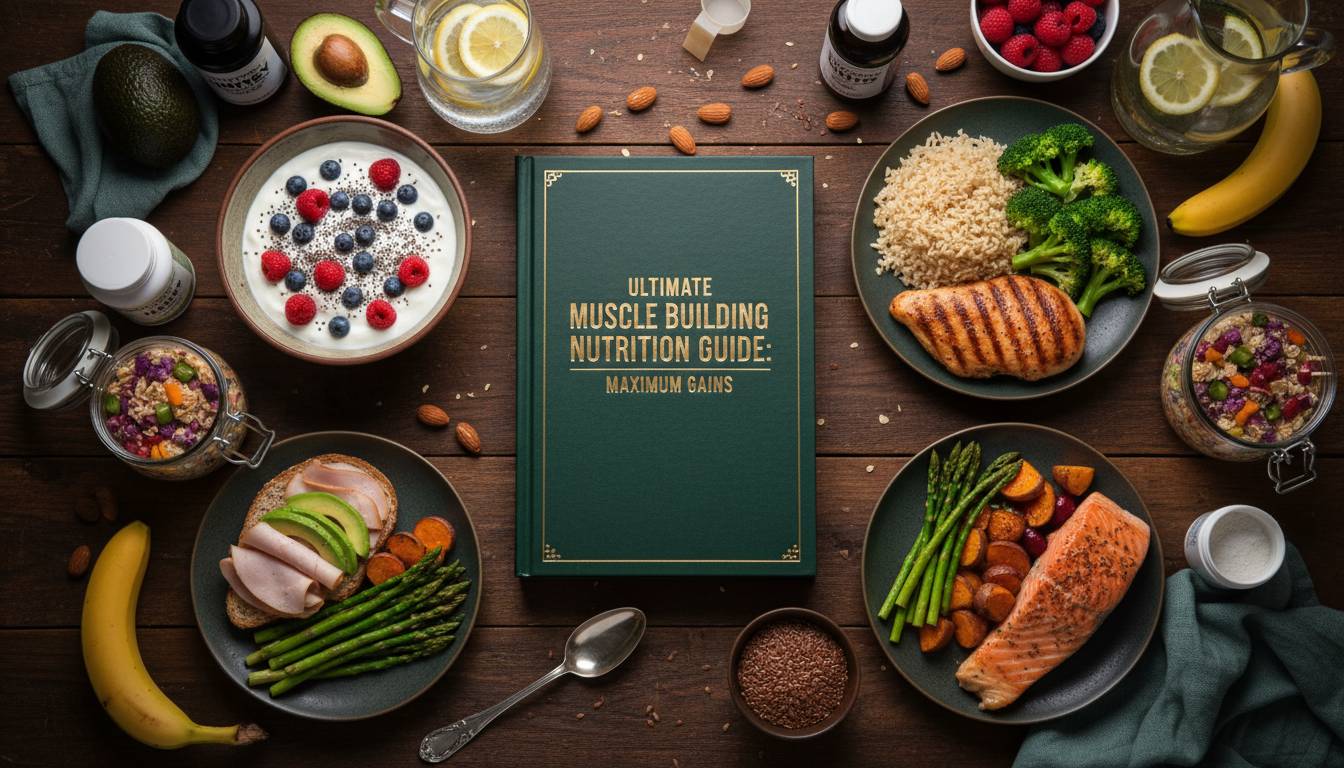
Building muscle requires more than just lifting heavy weights in the gym. Your nutrition strategy determines whether all that hard work translates into actual muscle growth or simply leaves you spinning your wheels. The science of muscle protein synthesis, caloric balance, and nutrient timing forms the foundation of any successful muscle building program, and understanding these principles separates those who make steady progress from those who struggle to see results.
This guide breaks down everything you need to know about structuring your diet for maximum muscle gains, from calculating your caloric needs to optimizing meal timing around your workouts. Whether you are just starting your muscle building journey or looking to fine-tune your current approach, these evidence-based principles will help you construct a nutrition plan that supports your goals.
Understanding Caloric Needs for Muscle Growth
Muscle growth, known scientifically as muscle hypertrophy, requires a caloric surplus. Your body needs extra energy to build new muscle tissue, and consuming more calories than you burn creates the anabolic environment necessary for this process to occur. Without sufficient caloric intake, your body simply cannot construct new muscle mass, regardless of how perfectly you train.
To determine your caloric needs, you first need to estimate your maintenance calories, which represents the number of calories you burn daily to sustain your current weight. Several online calculators use your age, weight, height, and activity level to estimate this number, though tracking your actual intake and weight over two to three weeks provides more accurate data. Once you know your maintenance level, adding 250 to 500 calories daily typically produces lean muscle gain without excessive fat accumulation for most people.
The rate of weight gain provides valuable feedback on whether your caloric surplus is appropriate. Gaining 0.25 to 0.5 pounds per week indicates an ideal surplus that prioritizes muscle gain while minimizing fat storage. Gaining faster than one pound weekly suggests your caloric surplus is too large, potentially leading to unwanted fat gain. Conversely, if you are not gaining weight at all, you need to increase your caloric intake further.
Protein: The Foundation of Muscle Building
Protein serves as the primary building block for muscle tissue, and adequate protein intake directly impacts your ability to synthesize new muscle protein. The amino acids found in protein-rich foods repair and rebuild muscle fibers damaged during resistance training, making sufficient protein intake non-negotiable for anyone seeking muscle growth.
Current research suggests that individuals engaged in regular resistance training should consume 1.6 to 2.2 grams of protein per kilogram of body weight daily, which translates to approximately 0.7 to 1 gram per pound of body weight. This range represents the point where additional protein intake provides diminishing returns for muscle growth. Consuming significantly more than this amount does not accelerate muscle gains and simply increases caloric intake unnecessarily.
Protein quality matters alongside quantity. Complete proteins contain all nine essential amino acids that your body cannot produce on its own, and sources like eggs, meat, poultry, fish, and dairy provide optimal amino acid profiles for muscle protein synthesis. Plant-based athletes can combine complementary protein sources such as rice and beans to achieve complete amino acid profiles, though this requires more thoughtful meal planning.
Distribution throughout the day proves more effective than consuming most protein in a single meal. Research indicates that spreading protein intake across four to five meals, each containing 20 to 40 grams of protein, maximizes muscle protein synthesis throughout the day. This approach keeps amino acids circulating in your bloodstream and provides consistent building blocks for muscle repair and growth.
Carbohydrates: Fuel for Intense Training
Carbohydrates often receive unnecessary criticism in fitness circles, but they play an essential role in muscle building. Your muscles store carbohydrates as glycogen, and this stored energy powers your workouts. Without adequate carbohydrate intake, your training intensity suffers, potentially limiting the muscle-building stimulus you can create during resistance training.
During high-intensity exercise, your body relies primarily on glycogen for fuel. When glycogen stores become depleted, performance decreases significantly, and you may experience premature fatigue that cuts your training session short. Since progressive overload drives muscle growth, maintaining adequate carbohydrate intake supports the intense training sessions necessary for continued gains.
Carbohydrate timing around workouts deserves attention for athletes seeking optimal performance. Consuming carbohydrates two to three hours before training provides sustained energy during your session, while simple carbohydrates consumed 30 to 60 minutes before exercise offer quick fuel for immediate energy. Post-workout carbohydrates help replenish glycogen stores and, when combined with protein, create an anabolic environment favorable for muscle recovery.
For muscle building, carbohydrates should comprise 40 to 50 percent of your total caloric intake. This percentage provides sufficient energy for intense training while leaving room for adequate protein and healthy fats. Individuals with higher body fat percentages or those prone to excess fat gain may benefit from slightly lower carbohydrate intake, while leaner individuals or those with faster metabolisms may tolerate higher carbohydrate consumption.
Healthy Fats and Hormonal Health
Dietary fats support hormone production, and testosterone, the primary male sex hormone, plays a crucial role in muscle building. Consuming inadequate dietary fat can lower testosterone levels and impair muscle building potential, making fat intake an often-overlooked component of muscle building nutrition. Aim for 20 to 30 percent of your total calories from healthy fat sources.
Focus on unsaturated fats found in foods like olive oil, avocados, nuts, seeds, and fatty fish. These fats support cardiovascular health and provide essential fatty acids that your body cannot synthesize independently. Salmon, mackerel, and sardines offer the added benefit of omega-3 fatty acids, which may reduce inflammation and support muscle recovery.
Saturated fats deserve a balanced approach. While excessive intake of saturated fats poses health risks, moderate consumption from sources like eggs, lean meats, and dairy fits within a healthy muscle building diet. Current dietary guidelines suggest limiting saturated fat to less than 10 percent of total calories, which allows for inclusion of these foods while prioritizing unsaturated fat sources.
Meal Timing and Frequency
The concept of the anabolic window, the supposed critical period immediately after training when your body supposedly requires immediate nutrient intake, has been somewhat overstated in popular fitness literature. While post-workout nutrition certainly matters, the window is likely two to three hours rather than the 30-minute window often marketed by supplement companies. What matters more is meeting your overall daily nutritional needs.
That said, strategic meal timing can optimize your results. Consuming protein and carbohydrates before training provides energy and amino acids during your workout. Post-workout meals should include both protein for muscle repair and carbohydrates for glycogen replenishment. The exact timing matters less than ensuring you consume adequate nutrients throughout the day.
Meal frequency typically ranges from three to six meals daily, depending on individual preference and schedule. More frequent meals allow for better protein distribution but require more preparation and planning. The most important factor is finding an approach you can maintain consistently rather than pursuing an theoretically optimal strategy that proves impractical for your lifestyle.
Essential Supplements for Muscle Building
While whole food should form the foundation of your nutrition, certain supplements can enhance your muscle building efforts. Creatine monohydrate stands as the most researched and effective supplement for increasing muscle strength and size. It works by increasing the availability of phosphocreatine in your muscles, allowing you to perform more repetitions and lift heavier weights over time. Taking five grams daily, regardless of timing, produces results within two to four weeks.
Protein powder serves as a convenient way to meet your daily protein needs, especially when whole food options prove impractical. Whey protein, derived from milk, absorbs quickly and provides a complete amino acid profile, making it ideal for post-workout consumption. Casein protein digests more slowly and may benefit those going extended periods without food, such as overnight. Plant-based options like pea and hemp protein work well for those avoiding dairy.
Beta-alanine increases muscle endurance by buffering acid in your muscles during high-intensity exercise. Taking three to five grams daily produces a tingling sensation but significantly improves your ability to sustain high-intensity efforts. This benefit translates to more effective training sessions over time, indirectly supporting greater muscle gains.
Creatine and beta-alanine provide measurable benefits and belong in most muscle building supplement regimens. Other supplements like pre-workout formulas, branched-chain amino acids, and testosterone boosters offer more modest benefits or lack sufficient research evidence. Focus your investment on the supplements with strong research support before exploring additional products.
Common Muscle Building Nutrition Mistakes
Many individuals sabotage their muscle building efforts through preventable nutritional errors. Eating too little protein remains the most common mistake, as inadequate protein intake limits muscle protein synthesis regardless of training quality. Calculating your protein needs based on body weight and tracking your intake ensures you meet this fundamental requirement.
Neglecting overall caloric intake while focusing exclusively on protein represents another frequent error. Protein provides amino acids for muscle building, but without sufficient total calories, your body cannot efficiently utilize these building blocks. Prioritize hitting both your caloric and protein targets consistently.
Inconsistent eating patterns hinder progress more than most people realize. Skipping meals or going many hours without eating creates catabolic conditions that break down muscle tissue. Spreading your protein and calories throughout the day maintains stable blood amino acid levels and supports continuous muscle building.
Finally, unrealistic expectations lead many people to abandon their nutrition plans prematurely. Muscle building occurs slowly, and expecting visible changes within weeks leads to disappointment and abandonment of effective strategies. Committing to a sustainable nutrition plan and tracking progress over months, not weeks, produces lasting results.
Practical Meal Planning Strategies
Successful muscle building nutrition requires practical strategies that fit your lifestyle. Batch cooking proteins like chicken, beef, and fish at the beginning of each week provides ready-to-eat options for busy days. Preparing complex carbohydrates in advance, such as rice and potatoes, similarly simplifies meal assembly.
Stock your kitchen with convenient protein sources that require minimal preparation. Greek yogurt, cottage cheese, eggs, and pre-cooked chicken breast offer quick options when time is limited. Keep healthy snacks like nuts, protein bars, and string cheese available to prevent going long periods without eating.
Sample daily meal plans provide templates you can adapt to your preferences and schedule. A typical muscle building day might include breakfast with eggs and oatmeal, lunch with chicken and rice, an afternoon snack with Greek yogurt and fruit, post-workout protein with carbohydrates, and dinner with fish or lean meat and vegetables. Adjust portion sizes based on your caloric targets and individual response.
Frequently Asked Questions
How much protein do I really need to build muscle?
Research indicates that 0.7 to 1 gram of protein per pound of body weight daily supports optimal muscle growth for individuals engaged in resistance training. This translates to approximately 1.6 to 2.2 grams per kilogram of body weight. Consuming more than this amount does not significantly enhance muscle gains and simply adds unnecessary calories to your diet.
Do I need to eat in a caloric surplus to build muscle?
Yes, muscle growth requires a caloric surplus. Your body needs additional energy to construct new muscle tissue, and consuming maintenance-level calories provides insufficient resources for significant muscle growth. A modest surplus of 250 to 500 calories daily typically produces lean muscle gain without excessive fat accumulation for most people.
Is timing my protein intake around workouts necessary?
While consuming protein before and after workouts offers benefits, the anabolic window is much wider than previously believed, likely spanning several hours rather than minutes. What matters more is meeting your total daily protein target and distributing intake across multiple meals throughout the day rather than consuming most protein in a single meal.
Can I build muscle on a vegetarian or vegan diet?
Absolutely. Plant-based athletes build muscle successfully by combining complementary protein sources throughout the day. Rice with beans, hummus with pita, and tofu with quinoa provide complete amino acid profiles. Plant-based protein powders also offer convenient options. With proper planning, vegetarian and vegan diets fully support muscle building goals.
Should I take supplements, and which ones actually work?
Supplements enhance but never replace solid nutrition. Creatine monohydrate remains the most effective supplement for muscle building, with strong research supporting its ability to increase strength and size. Protein powder helps meet daily protein needs conveniently. Beta-alanine improves muscle endurance. Other supplements offer minimal benefits for most users.
How long does it take to see muscle building results?
Noticeable muscle growth typically requires three to four months of consistent training and proper nutrition, though initial strength gains often occur within four to six weeks. Visible changes in muscle size may take six to twelve months depending on your starting point, training consistency, and genetic factors. Patience and consistency prove essential for long-term success.