
Sustainable Living Tips That Actually Make a Difference

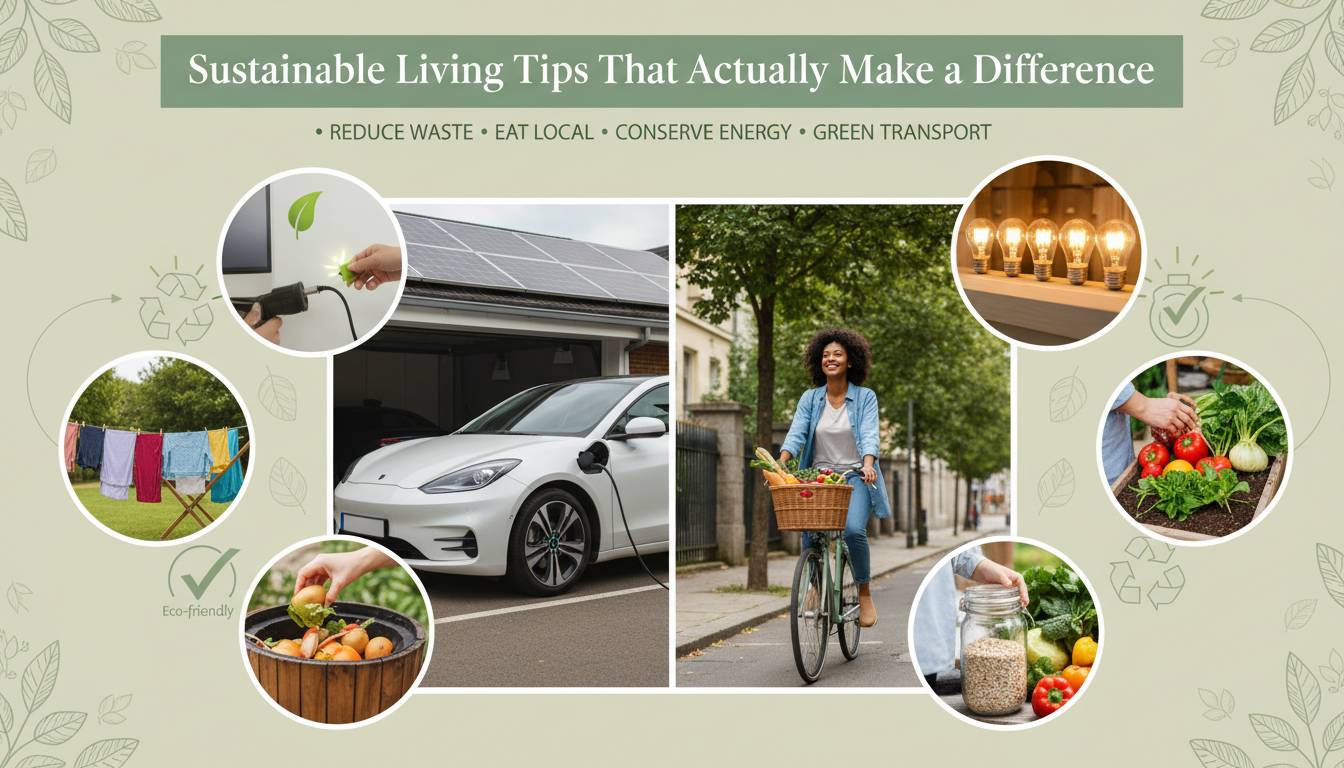
Most people who try to live more sustainably hit a wall within weeks. They recycle religiously, buy reusable bags, and feel guilty about occasional flight purchases—yet feel like their efforts amount to nothing. The problem isn’t a lack of motivation; it’s that most sustainable living advice focuses on actions with minimal impact while ignoring the changes that actually move the needle.
The reality is stark: research from Project Drawdown shows that roughly 70% of greenhouse gas emissions can be traced to just 50 companies and countries. But that doesn’t mean individual action is pointless—it means being strategic about where your effort goes. The difference between “sustainable living tips” that feel good and those that actually matter comes down to impact hierarchy.
This guide separates the high-impact changes from the low-effort window dressing. You’ll learn which swaps deliver meaningful results, how to build lasting habits without burnout, and the specific actions that account for the biggest carbon reductions in daily life.
Why Most Sustainable Living Advice Falls Short
The sustainability industry is full of well-meaning but ineffective recommendations. Branded reusable water bottles get handed out at conferences. Coffee shops proudly advertise paper straw alternatives. Yet a 2020 study published in the Journal of Industrial Ecology found that cotton tote bags need to be used over 20,000 times to have a lower environmental impact than plastic bags—a number most people will never reach.
This phenomenon has a name: “slacktivism” or “greenwashing.” It describes the tendency to focus on visible but low-impact actions while ignoring the changes that actually matter. The problem isn’t malicious—it’s structural. Easy tips get shared virally because they’re simple to implement and discuss. Complex, high-impact changes require more thought, investment, or lifestyle adjustment.
The 80/20 Rule of Sustainable Living
Environmental researchers consistently find that roughly 80% of an individual’s environmental impact comes from just a few categories:
- Transportation (especially air travel)
- Home energy use
- Food choices (particularly meat and dairy)
- Consumption habits
Targeting these areas delivers dramatically better returns than obsessively sorting recyclables or refusing plastic straws. A single transatlantic flight generates more carbon than a year of perfect recycling. The goal isn’t to abandon small efforts—but to prioritize them appropriately.
High-Impact Fundamentals: Where to Start
If you’re new to sustainable living or feeling overwhelmed by the sheer scope of change, start here. These fundamentals account for the largest environmental footprint for most Americans and offer the best return on investment.
Transportation: Your Biggest Carbon Leverage
Transportation accounts for approximately 29% of U.S. greenhouse gas emissions, making it the largest source for most individuals. The hierarchy is clear:
Flying less is the single highest-impact change most people can make. A single round-trip flight from New York to Los Angeles generates about 2-3 tons of CO2 per passenger—roughly equivalent to driving a fuel-efficient car for an entire year. The International Council on Clean Transportation reports that airplane emissions have increased 32% since 2013, making this a growing concern.
Driving decisions matter enormously. Electric vehicles produce roughly 70% fewer lifetime emissions than gasoline cars, according to the Union of Concerned Scientists. But you don’t need to buy a new car to make a difference. Simply reducing driving by combining trips, working from home when possible, and choosing walkable or bikeable options for short distances compounds over time.
| Transportation Choice | Annual CO2 Impact (approx.) | Impact vs. Average Car |
|---|---|---|
| One round-trip flight (NYC-LA) | 2-3 tons | Equal to 1 year driving |
| Average car (15,000 miles/year) | 4.6 tons | Baseline |
| Electric vehicle (clean grid) | 1-2 tons | 60-75% reduction |
| Public transit commuter | 2.3 tons | 50% reduction |
| Bicycle/walk (short trips) | 0 tons | 100% reduction |
Practical tip: Start by tracking your annual flight mileage and looking for one trip to eliminate or replace with ground travel. For driving, even switching just 10% of trips to alternatives creates measurable impact.
Food Choices: The Kitchen Revolution
Food production accounts for about 26% of global greenhouse gas emissions, and your dietary choices directly influence this number. The impact hierarchy is well-established by nutritional and environmental research:
Beef and dairy carry the heaviest environmental cost. Beef production requires 20 times more land and emits 20 times more greenhouse gases per calorie than beans or grains, according to a 2018 study in Science. A pound of beef generates approximately 60 pounds of CO2 equivalent—a stark contrast to lentils at about 1 pound.
You don’t need to go vegan. Research from Oxford University found that the most sustainable diets aren’t necessarily fully plant-based—they’re primarily plant-forward. Simply reducing beef consumption to once a week while increasing vegetables, legumes, and whole grains delivers the majority of the environmental benefit.
Food waste is a hidden climate culprit. The USDA estimates that 30-40% of food in the United States goes to waste. This waste generates methane in landfills—one of the most potent greenhouse gases. Planning meals, storing food properly, and composting scraps cuts your footprint while often saving money.
Home Energy: Invisible Impact
Residential energy use accounts for about 20% of U.S. carbon emissions. While major upgrades like solar panels or heat pumps require upfront investment, significant reductions come from behavioral changes and low-cost improvements.
Heating and cooling dominate energy bills. The U.S. Department of Energy reports that heating and cooling account for roughly 50% of home energy use. Each degree you lower your thermostat in winter saves about 3% on heating costs. In summer, raising the thermostat by 2-3 degrees during peak afternoon hours cuts cooling costs similarly.
Phantom loads add up. Devices on standby consume 5-10% of residential electricity in typical homes. Unplugging chargers, using power strips with switches, and enabling sleep modes on computers reduces this waste. Smart power strips automate the process.
LED lighting offers quick wins. Replacing incandescent bulbs with LEDs uses 75% less energy and lasts 25 times longer. For a typical household, this switch saves about $75 annually per bulb replaced.
Intermediate Strategies: Building Momentum
Once you’ve established fundamentals, these strategies compound your impact while often saving money over time.
The True Cost of Fast Fashion
The fashion industry produces approximately 10% of global carbon emissions—more than all international flights combined. Fast fashion’s business model depends on disposable clothing that ends up in landfills within a year or two.
Quality over quantity applies literally. A 2019 report from the Ellen MacArthur Foundation found that extending the average life of clothing by just three months reduces carbon, water, and waste footprints by 5-10%. This means buying fewer, higher-quality pieces rather than chasing trends.
The secondhand market has exploded. Platforms like Poshmark, Depop, and ThredUp have made selling and buying used clothing easier than ever. The resale market is now valued at $36 billion and growing 25 times faster than traditional retail.
When you do buy new, choose certified sustainable. Certifications like GOTS (Global Organic Textile Standard), Fair Trade, and B Corp indicate meaningful environmental and social standards rather than greenwashed claims.
Water: Beyond Shorter Showers
While shorter showers help, residential water use represents a smaller portion of total environmental impact than energy or transportation. However, water-stressed regions face increasing urgency, and efficiency measures protect both the environment and your utility bills.
The biggest water waste often comes from outdoor irrigation. A typical lawn requires about 1 inch of water per week, which can amount to 50 gallons per 1,000 square feet. Switching to drought-tolerant plants (xeriscaping) eliminates this use entirely. The EPA estimates that outdoor water use accounts for 30-60% of residential consumption in arid regions.
High-efficiency appliances make a difference. A WaterSense-labeled toilet uses 1.28 gallons per flush versus 3.5-7 gallons for older models—a 60-80% reduction. Similarly, ENERGY STAR washing machines use about 25% less water and 40% less energy than conventional models.
Rethinking Consumption: The Minimalist Advantage
Consumer culture creates environmental impact at every stage: resource extraction, manufacturing, transportation, and eventual disposal. Reducing consumption at the source often beats end-of-life recycling.
Before buying, apply the “30-day rule.” Waiting a month before non-essential purchases dramatically reduces impulse buying. Studies suggest we regret 70-80% of impulse purchases. The delay also helps distinguish genuine needs from wants driven by marketing.
Borrow, rent, or share instead of owning. Community tool libraries, rental platforms for equipment, and sharing arrangements with neighbors reduce redundant ownership. The “sharing economy” model—applying it genuinely—spreads resource use across more users.
Advanced Tactics: Deepening Your Impact
For those ready to move beyond personal habits into systemic change, these approaches multiply impact significantly.
Home Upgrades With Real Returns
Certain home investments offer both environmental benefits and financial returns that make them self-sustaining over time.
Solar panels now deliver average paybacks of 6-8 years in most U.S. regions, with system lifespans exceeding 25 years. The federal Investment Tax Credit covers 30% of installation costs through 2032. Even without roof ownership, community solar programs offer similar benefits.
Heat pumps provide both heating and cooling at 2-4 times the efficiency of traditional systems. The Inflation Reduction Act offers rebates covering 30-50% of installation costs for qualifying households. Air-source heat pumps work efficiently even in cold climates, despite persistent myths otherwise.
Insulation and weatherization often deliver the fastest financial returns. The Department of Energy estimates that air sealing and insulation can reduce heating and cooling costs by 15-30%—investments that pay for themselves in just a few years.
Divesting and Investing With Purpose
Your financial decisions carry weight beyond personal returns. Approximately $6.3 trillion in U.S. assets is held in fossil fuel companies, representing significant leverage for change.
Divestment signals corporate accountability. Since 2015, over 1,500 institutions representing $40 trillion have committed to divesting from fossil fuels. While individual divestment has minimal direct financial impact on companies, it shifts social norms and increasingly affects access to capital.
Sustainable investing options have matured. ESG (Environmental, Social, Governance) funds now manage over $2.5 trillion in assets. While “greenwashing” exists in this space, rigorous indexes like the MSCI Low Carbon Leaders Screen offer legitimate ways to align portfolios with environmental values.
Consider green banking. Credit unions and banks vary significantly in how they deploy deposited funds. Institutions like Aspiration, Beneficial State Bank, and several credit unions explicitly avoid fossil fuel lending.
Common Mistakes to Avoid
Even well-intentioned sustainability efforts can backfire or waste effort. Here’s how to avoid the most common pitfalls.
| Mistake | Why It Fails | Better Approach |
|---|---|---|
| Obsessing over plastic straws | 0.03% of plastic waste; mostly cosmetic | Focus on transportation and food |
| Buying “eco” products you don’t need | Creates new production footprint | Use what you have; buy less overall |
| Perfect sorting of recyclables | Contamination ruins entire batches | Learn exactly what your locality accepts |
| Guilt over “imperfect” choices | Leads to burnout and abandonment | Progress over perfection; consistency matters |
| Following trends without research | Greenwashing is rampant | Verify certifications; read beyond marketing |
Tools and Resources for Sustainable Living
Building sustainable habits is easier with the right tools tracking your progress and identifying opportunities.
Carbon footprint calculators from the EPA and Carbon Independent help you understand your personal impact baseline. These tools identify which categories matter most for your specific situation.
Energy monitoring devices like Sense or Emporia show real-time electricity consumption, identifying energy hogs and confirming the impact of efficiency measures.
Meal planning apps like Mealime or Paprika reduce food waste while simplifying sustainable cooking. Batch cooking and ingredient management reduces both environmental impact and food costs.
Community exchange platforms Nextdoor, local Facebook groups, and tool libraries help neighbors share resources rather than duplicate purchases.
Frequently Asked Questions
Does recycling actually make a difference?
Recycling matters, but less than most people think. Only about 32% of U.S. waste gets recycled, and contamination significantly reduces that number. What’s more important: reducing consumption and choosing recyclable materials (especially aluminum and glass) in the first place. Recycling aluminum saves 95% of the energy required to produce new aluminum—a massive win.
Is going vegan the only way to live sustainably?
No. While eliminating animal products offers significant environmental benefits, research consistently shows that reducing beef consumption and increasing plant-forward eating delivers most of the gain. Flexitarian diets (vegetarian with occasional meat) reduce your food footprint by 50-70% compared to typical meat-heavy diets.
Are electric vehicles actually better for the environment?
Yes, even when accounting for battery manufacturing and grid electricity. Lifetime emissions from EVs are 50-70% lower than gasoline cars, even in regions with high coal dependence. As grids clean up, this advantage grows. For now, keeping an efficient used car running often beats buying a new EV from an environmental standpoint.
What’s the most impactful change I can make as an individual?
Flying less typically tops the list for Americans. One less round-trip transatlantic flight per year saves more emissions than a lifetime of perfect recycling. If you can’t fly less, look into verified carbon offsets—but reduction should always come first.
How do I stay motivated with sustainable living?
Focus on systems, not willpower. Build habits that make sustainable choices the default: keep reusable bags by the door, automate energy savings, meal prep to reduce food waste. Celebrate progress rather than pursuing perfection. Social support—community groups, accountability partners—dramatically improves long-term success.
Are carbon offsets worth buying?
Carbon offsets can help neutralize emissions that can’t be eliminated, but quality varies enormously. Look for verification standards like Verra or Gold Standard. Remember that offsets address emissions already created—they’re not a substitute for reducing emissions in the first place.
Conclusion: Progress Over Perfection
The path to meaningful sustainability isn’t about achieving perfection in every dimension of life—it’s about being strategic with your effort. The tips in this guide prioritize high-impact changes: reducing air travel, choosing plant-forward foods, improving home energy efficiency, and being thoughtful about consumption.
Start with one or two changes that fit your life. Build consistency before adding complexity. Remember that sustainable living is a marathon, not a sprint—and that collective action amplifies individual choices. When millions of people make incremental shifts, the aggregate impact transforms markets, policies, and cultural norms.
The most sustainable choice you can make is the one you’ll actually maintain. Pick your starting point, build the habit, and expand from there. The planet—and your future self—will thank you.