
Solana emerged as one of the most dynamic cryptocurrencies in 2024, drawing significant attention from investors, developers, and market analysts. As the crypto market continues to evolve, industry participants are focused on projecting where Solana might stand by the end of 2025. This analysis examines the scenarios that could shape SOL’s price trajectory, considering market dynamics, technological developments, and the broader cryptocurrency ecosystem.
The Solana network has distinguished itself through high-performance blockchain infrastructure, processing thousands of transactions per second with minimal fees. This technical advantage has attracted substantial developer interest and institutional attention, making SOL one of the most closely watched digital assets heading into 2025. Understanding potential price movements requires examining adoption trends, regulatory developments, competitive pressures, and macroeconomic conditions.
Current Market Position and 2024 Performance Overview
Solana entered 2024 with renewed market confidence after navigating significant technological disruptions in 2022-2023. The cryptocurrency showed remarkable resilience throughout 2024, with price action reflecting growing institutional interest and increased utility across decentralized applications. Trading volumes on Solana-based decentralized exchanges consistently ranked among the highest in the crypto ecosystem, indicating sustained user engagement and liquidity.
Total value locked in Solana’s decentralized finance protocols grew substantially during 2024, driven by momentum in the broader crypto market and the network’s continued development of scaling solutions. Major financial institutions began exploring Solana’s infrastructure for various applications, from tokenizing real-world assets to payment processing solutions. This institutional validation provided additional credibility to the blockchain platform and influenced retail investor sentiment positively.
Market capitalization rankings positioned Solana among the top five cryptocurrencies throughout much of 2024, demonstrating its established role in the digital asset class. SOL’s price showed higher volatility compared to some competitors, a characteristic that attracts traders seeking larger price movements while presenting challenges for investors seeking stability. This volatility pattern will likely continue influencing price discovery as the market progresses toward 2025.
Solana Price Prediction 2025: Bull Case Scenario
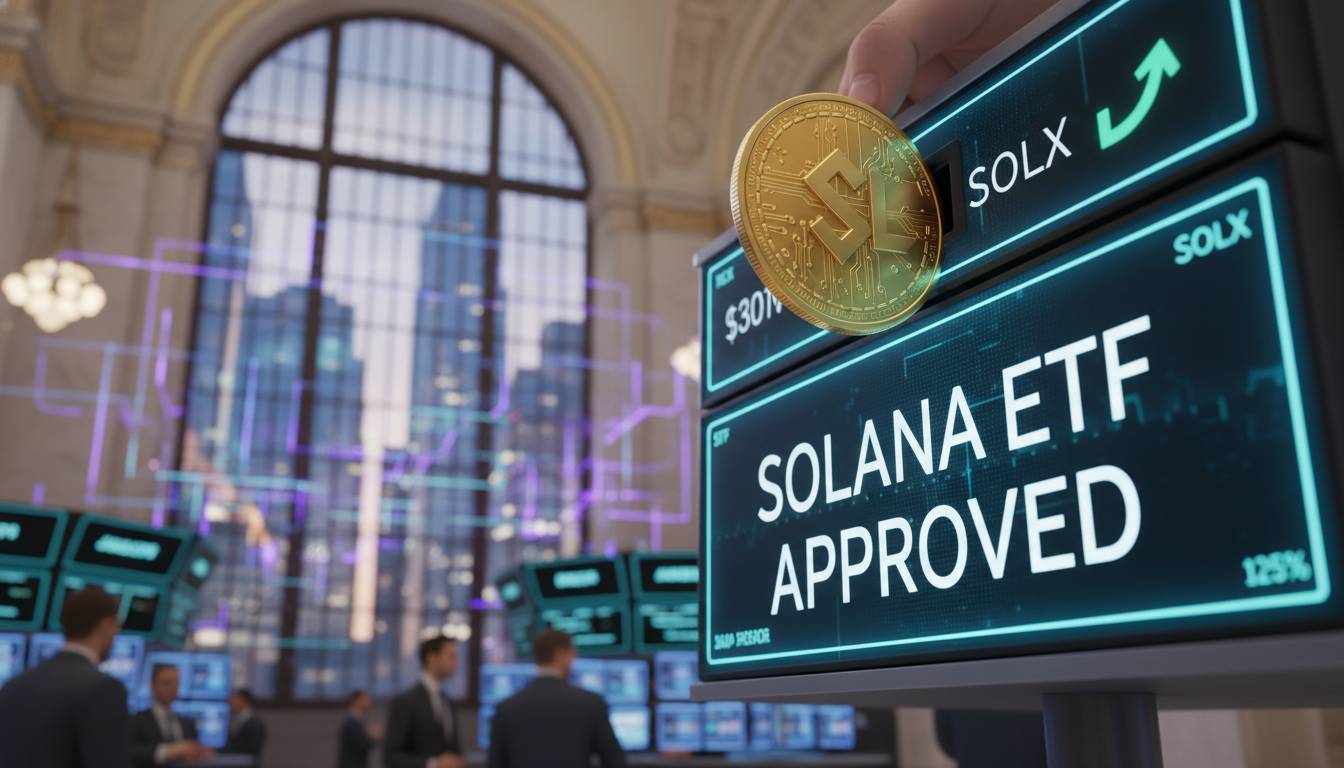
The bullish case for Solana in 2025 centers on potential catalysts that could drive significant price appreciation. Analysts supporting optimistic projections point to continued institutional adoption as a primary growth driver. If major financial institutions launch Solana-based exchange-traded products or investment vehicles, the resulting demand surge could push SOL toward the $400-$500 range by late 2025.
Network growth metrics provide additional support for bullish predictions. The Solana ecosystem has attracted new decentralized applications across various sectors, including gaming, decentralized finance, and non-fungible token platforms. Continued expansion of these use cases could increase demand for SOL as a utility token, creating sustained buying pressure. The network’s ability to maintain high transaction throughput while reducing costs positions Solana favorably against competing layer-one blockchains.
Regulatory clarity in the United States represents another potential catalyst for bullish scenarios. If the SEC provides clearer guidelines for cryptocurrency classification and trading, market uncertainty could diminish significantly. Such developments typically benefit established blockchain platforms with compliant infrastructure, and Solana’s professional approach to regulatory matters could position it favorably in this environment. The approval of spot cryptocurrency ETFs has already demonstrated institutional appetite for digital asset exposure, and further products linked to Solana could amplify this trend.
Technical upgrades planned for the Solana network in 2025 also support optimistic price projections. Improvements to the protocol’s security, scalability, and interoperability could enhance developer confidence and user adoption. Features such as enhanced staking mechanisms and improved wallet infrastructure may lower barriers to entry for new users, expanding the overall market for SOL.
Solana Price Prediction 2025: Base Case Scenario
The base case scenario projects more moderate price appreciation, with SOL potentially reaching the $200-$300 range by the end of 2025. This projection assumes continued organic growth in the Solana ecosystem without major catalyst events that would trigger extraordinary price movements. Market conditions would need to remain generally supportive, with crypto markets avoiding significant downturns while experiencing steady institutional and retail adoption.
Under this scenario, Solana maintains its position among leading layer-one blockchains but faces intensifying competition from other high-performance networks. The crypto market’s overall growth trajectory would need to continue at a measured pace, with Bitcoin maintaining relative stability and driving incremental interest toward alternative digital assets. Base case projections acknowledge that regulatory frameworks may develop gradually rather than dramatically, providing some clarity without generating immediate transformative changes.
Network metrics under the base case would show consistent but not explosive growth. Total value locked in Solana protocols might expand at healthy double-digit rates, while user adoption increases steadily across decentralized applications. This organic growth pattern would support gradually increasing token demand without creating supply shocks that could trigger dramatic price movements.
Technical performance remains stable in the base case scenario, with the network handling increased transaction volumes without significant outages or security incidents. Developers continue building on Solana, attracted by its technical capabilities and established user base, but competitive pressures prevent dramatic dominance in any particular application sector. This balanced growth environment supports price appreciation that reflects underlying utility expansion rather than speculative excess.
Solana Price Prediction 2025: Bear Case Scenario
The bearish case for Solana in 2025 considers various risk factors that could limit price appreciation or even trigger declines. If crypto markets experience significant correction due to macroeconomic pressures or regulatory actions, SOL could face substantial selling pressure despite its fundamental strengths. Bear case projections suggest SOL might trade between $50-$120 by late 2025 under adverse market conditions.
Regulatory challenges present meaningful risks for Solana and the broader crypto ecosystem. If the SEC or other regulatory bodies implement restrictive policies targeting specific blockchain protocols or token classifications, market sentiment could deteriorate significantly. While Solana has demonstrated commitment to compliance, the regulatory landscape remains unpredictable, and adverse policy developments could impact investor confidence regardless of individual project merits.
Competitive pressures from other blockchain platforms also feature prominently in bearish scenarios. Ethereum’s continued development of scaling solutions, the rise of alternative layer-one networks, and emerging blockchain platforms could capture market share and developer attention that might otherwise flow to Solana. If competitors achieve technological breakthroughs or attract significant institutional partnerships, Solana’s competitive position could weaken, potentially impacting token valuations.
Network reliability concerns represent another risk factor for bearish projections. While Solana has made significant improvements to its infrastructure, historical outage incidents remain in market participants’ memory. Any significant technical issues during 2025 could undermine confidence and trigger capital outflows from the Solana ecosystem. Additionally, security vulnerabilities, even if successfully mitigated, could temporarily impact market sentiment and token prices.
Key Factors Influencing Solana’s 2025 Trajectory
Several critical factors will determine which scenario materializes for Solana in 2025. Macroeconomic conditions, including interest rate policies and inflation trends, continue influencing crypto markets broadly. Federal Reserve decisions regarding monetary policy affect risk asset valuations, and cryptocurrencies have demonstrated correlation with traditional market movements during periods of significant economic uncertainty.
Institutional adoption represents perhaps the most significant potential catalyst for Solana price appreciation. The success of spot Bitcoin ETFs has demonstrated institutional appetite for cryptocurrency exposure, and similar products based on Solana could channel substantial capital into SOL. Beyond exchange-traded products, corporate treasury adoption, payment processing integration, and financial services applications could drive meaningful demand increases.
The regulatory environment in the United States remains a crucial variable for all cryptocurrency price predictions. Clear, supportive regulations could unlock significant growth potential, while restrictive policies might constrain market development. Industry participants are closely monitoring legislative and regulatory developments that could reshape the operating environment for blockchain technologies.
Network metrics and ecosystem development provide fundamental indicators of Solana’s health beyond price speculation. Developer activity, transaction volumes, decentralized application usage, and institutional partnerships all contribute to the network’s long-term value proposition. These metrics offer insights into whether Solana’s technological advantages are translating into sustainable adoption.
Historical Performance and Market Context
Understanding Solana’s historical price movements provides context for 2025 projections. The cryptocurrency experienced dramatic volatility during the 2021-2022 market cycle, reaching all-time highs above $250 before declining significantly during the broader crypto market downturn. This pattern is consistent with many digital assets that appreciate substantially during bull markets while experiencing steep corrections during bearish periods.
The 2023-2024 recovery period demonstrated Solana’s capacity for regeneration following challenging conditions. Despite competitive pressures and market uncertainties, the network maintained active development and growing user adoption. This resilience suggests fundamental strengths that could support price appreciation even if market conditions prove challenging.
Comparing Solana’s performance against competitors reveals both strengths and limitations. The cryptocurrency has generally ranked among the better-performing major tokens during recovery periods, suggesting positive investor sentiment toward its technological approach. However, volatility remains higher than some established cryptocurrencies, reflecting both the network’s growth stage and broader market dynamics affecting smaller-cap digital assets.
Is Solana a Good Investment for 2025?
Investment decisions regarding Solana require careful consideration of individual risk tolerance and investment objectives. The cryptocurrency offers potential for significant returns but carries substantial risks inherent to the asset class. Investors should evaluate whether Solana’s technological differentiation and growth potential align with their portfolio strategies.
The bullish case for Solana investment in 2025 rests on potential catalysts including institutional adoption, ecosystem expansion, and favorable regulatory developments. If these factors materialize positively, early investors could realize meaningful returns. However, the bearish scenario demonstrates that adverse market conditions or competitive pressures could result in substantial losses.
Diversification principles suggest that investors considering Solana exposure should do so as part of a balanced cryptocurrency allocation rather than concentrating capital in any single asset. The volatility demonstrated by SOL historically means that price movements can be significant in either direction. Position sizing should reflect this volatility and individual risk tolerance.
Conclusion
Solana price prediction for 2025 encompasses multiple scenarios reflecting the inherent uncertainty in forecasting crypto markets. The bullish case projecting $400-$500 assumes successful institutional adoption, favorable regulatory developments, and continued ecosystem growth. The base case range of $200-$300 reflects more moderate expectations for organic growth without extraordinary catalysts. The bearish scenario acknowledging $50-$120 prices considers significant market adversity or competitive challenges.
The crypto market’s nature means that actual outcomes could fall outside these ranges depending on developments that are difficult to predict. Solana’s fundamental strengths, including its high-performance blockchain infrastructure and growing ecosystem, provide a foundation for potential price appreciation. However, investors should approach cryptocurrency investments with appropriate caution and awareness of the asset class’s volatility characteristics.
The ultimate trajectory for Solana in 2025 will depend on how various factors, including macroeconomic conditions, regulatory developments, competitive dynamics, and network growth, interact to shape market sentiment and token demand. Careful monitoring of these variables will be essential for investors seeking to understand and respond to Solana’s evolving market position.
Frequently Asked Questions
Will Solana reach $500 in 2025?
Solana reaching $500 in 2025 remains possible but represents an optimistic scenario requiring significant catalysts such as institutional adoption, ETF approvals, or major regulatory clarity. This price target would represent substantial growth from current levels and would likely depend on favorable macroeconomic conditions and successful ecosystem expansion throughout 2025.
What factors will most influence Solana’s price in 2025?
The primary factors influencing Solana’s 2025 price include institutional adoption and ETF developments, regulatory clarity from US authorities, macroeconomic conditions affecting risk assets, competitive dynamics with other blockchain platforms, and network growth metrics including developer activity and transaction volumes.
Is Solana a good investment compared to Ethereum?
Solana and Ethereum serve different market segments with distinct technical approaches. Ethereum offers broader ecosystem adoption and longer market history, while Solana provides higher transaction throughput and potentially lower fees. Investment suitability depends on individual risk tolerance and portfolio strategy rather than categorical superiority of either platform.
When is the best time to buy Solana for 2025?
Timing cryptocurrency purchases involves substantial uncertainty, and no reliable method exists for consistently identifying optimal entry points. Dollar-cost averaging, which involves spreading purchases across multiple time periods, represents a common strategy for managing volatility risk. Investors should conduct their own research and consider consulting financial advisors before making investment decisions.
What are the main risks for Solana in 2025?
Key risks for Solana in 2025 include potential regulatory restrictions, competitive pressure from other blockchain platforms, network reliability issues, security vulnerabilities, and broader cryptocurrency market downturns. The cryptocurrency’s inherent volatility means that price movements can be significant in either direction based on these and other factors.
How does Solana’s technology compare to competitors?
Solana’s technology distinguishes itself through high transaction throughput capability, reaching thousands of transactions per second, combined with relatively low transaction costs. The network utilizes a unique proof-of-history mechanism that contributes to its performance characteristics. However, competing platforms continue developing their own scaling solutions, and technological advantages can shift over time as the industry evolves.