Solana NFT Marketplace – Buy, Sell & Trade Digital Art on-chain

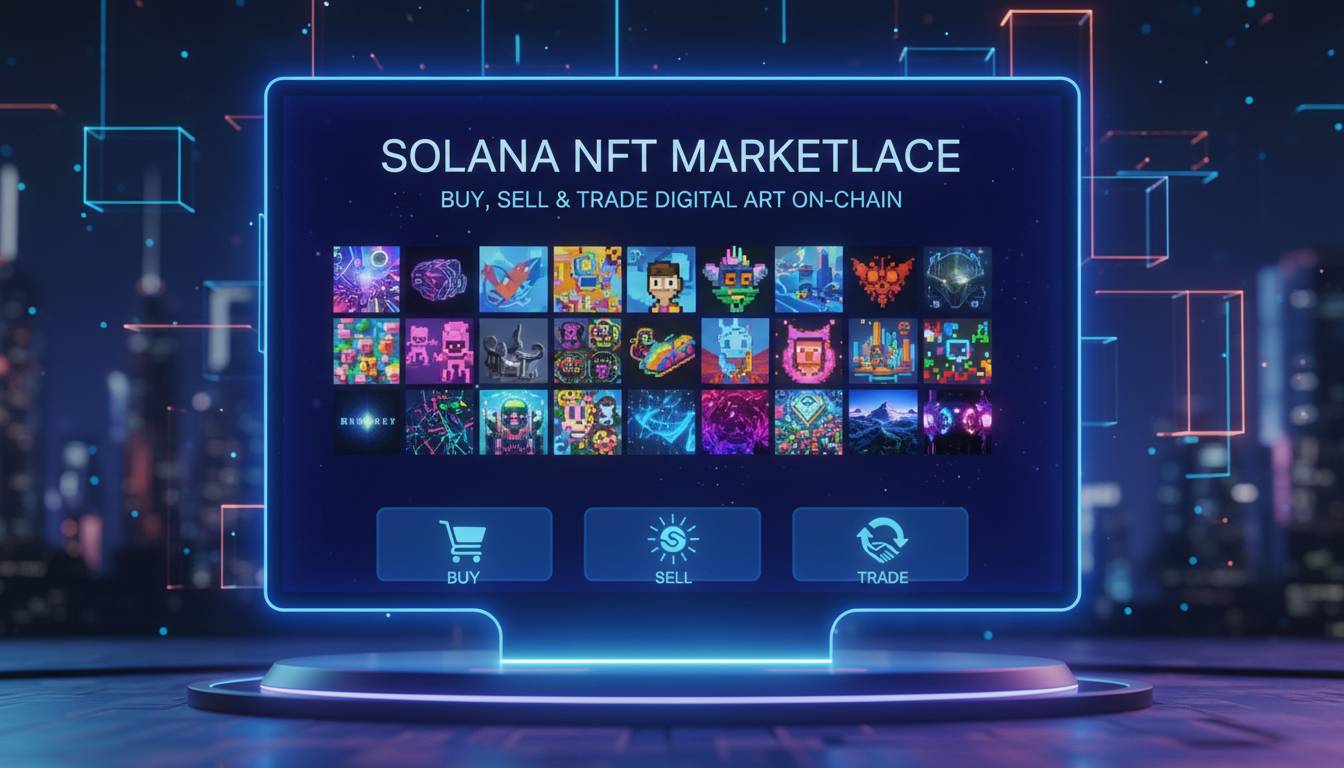
Solana NFT marketplaces have revolutionized digital collectibles by offering fast transactions and minimal fees compared to Ethereum-based alternatives. These blockchain-powered platforms enable creators and collectors to trade unique digital assets including artwork, music, virtual real estate, and gaming items without the gas fee frustrations that plague other networks. With transaction speeds averaging 400 milliseconds and costs often under $0.01 per transaction, Solana has attracted millions of users and billions in trading volume since its NFT ecosystem launched in 2021. This comprehensive guide covers everything you need to know about navigating Solana’s NFT landscape, from choosing the right marketplace to understanding fees, security best practices, and emerging trends.
What Is a Solana NFT Marketplace?
A Solana NFT marketplace is a decentralized platform built on the Solana blockchain where users can mint, buy, sell, and trade non-fungible tokens. Unlike traditional e-commerce platforms, these marketplaces operate entirely on-chain, meaning every transaction, ownership transfer, and metadata change gets recorded on Solana’s public ledger. This provides unprecedented transparency and verifiability—anyone can confirm the authenticity and ownership history of any digital asset.
Solana’s technical architecture makes it particularly well-suited for NFT activities. The blockchain uses a proof-of-stake mechanism called Proof of History, which allows for the high throughput necessary when thousands of users are simultaneously bidding on drops, transferring ownership, or minting new pieces. The network processes approximately 65,000 transactions per second, far exceeding Ethereum’s ~15-30 transactions per second capacity during peak usage.
The marketplaces themselves function similarly to conventional art galleries mixed with auction houses. They provide the infrastructure for creators to upload digital files, set pricing or auction parameters, and receive payments directly in SOL or other supported tokens. Collectors can browse collections, verify rarity traits, inspect ownership history, and execute purchases with just a few clicks. The entire process typically completes in under three seconds, compared to the minutes or hours users might wait on congestion-plagued networks.
Top Solana NFT Marketplaces in 2025
The Solana ecosystem hosts several established marketplaces, each with distinct features, fee structures, and community focuses. Understanding their differences helps you choose the platform best suited for your specific needs.
Magic Eden stands as the dominant marketplace, consistently capturing over 90% of Solana NFT trading volume. Launched in 2021, it offers an intuitive interface, robust collection analytics, and integrated tools for creators including minting capabilities and collection management. The platform charges a 2% seller fee on secondary sales, with creators typically receiving a 5-10% royalty on future resales of their work. Magic Eden’s aggregation features allow users to view listings across multiple marketplaces simultaneously, ensuring best pricing execution.
Tensor has emerged as a serious competitor, particularly among professional traders and those seeking advanced trading features. The platform offers professional-grade tools including floor pricing analytics, portfolio tracking, and real-time market data. Tensor’s commitment to liquidity through its marketplace-making tools has attracted significant trading volume, and the platform recently introduced zero-fee trading for maker orders, making it attractive for high-volume collectors.
Solanart represents one of the original Solana NFT marketplaces and maintains a loyal user base, particularly for certain collection categories. The platform features a curated approach to listings and provides educational resources for newcomers to the NFT space. Seller fees sit at 3%, positioning it competitively for casual sellers who may prefer its simpler interface over more complex alternatives.
DigitalEyes focuses on accessibility and ease of use, making it particularly popular among newcomers to the Solana NFT space. The marketplace emphasizes community discovery and features regular curated drops from emerging artists. Its streamlined checkout process and clear fee breakdowns help users understand exactly what they’ll pay before completing transactions.
| Marketplace | Seller Fee | Buyer Fee | Primary Focus | Best For |
|---|---|---|---|---|
| Magic Eden | 2% | 0% | All-purpose | General users, collection browsing |
| Tensor | 0% (makers) | 0% | Trading tools | Active traders, flippers |
| Solanart | 3% | 0% | Established collections | Casual sellers |
| DigitalEyes | 2% | 0% | New artists | Beginners, discovery |
How to Buy NFTs on Solana
Purchasing your first NFT on Solana requires several components working together: a compatible cryptocurrency wallet, sufficient SOL balance, and connection to your chosen marketplace. The process has become increasingly streamlined as platforms compete to reduce friction.
First, you need a Web3 wallet that supports the Solana blockchain. Phantom Wallet remains the most popular choice, available as a browser extension and mobile app. Backpack, Slope, and Glow offer alternative options with varying feature sets. After installing your preferred wallet, you’ll create or import an account, securely storing your seed phrase—this is critical as losing it means losing access to your assets permanently.
Funding your wallet requires purchasing SOL from a cryptocurrency exchange. Major US-based exchanges including Coinbase, Kraken, and Binance US allow you to buy SOL with US dollars or other cryptocurrencies. Once purchased, you’ll transfer the SOL from the exchange to your Web3 wallet by copying your wallet address (found in your wallet app’s receive section) and using it as the destination for the transfer. Most transfers complete within minutes, though network congestion can occasionally cause delays.
With funded wallets, connecting to a marketplace happens through your wallet’s browser extension or mobile integration. Most platforms display a prominent “Connect Wallet” button in their header. Clicking this prompts your wallet to request permission to connect, which you approve. Some marketplaces may request additional permissions for features like signing messages or confirming transactions—review these carefully before approving.
Browsing and purchasing involves finding an NFT you wish to buy, reviewing its details including ownership history and any verified traits, and either purchasing at the listed price or placing a bid. When buying at list price, the transaction typically involves one or two wallet confirmations and completes within seconds. Once confirmed, the NFT appears in your wallet’s collectibles section, and ownership is permanently recorded on-chain.
How to Sell NFTs on Solana
Selling NFTs on Solana marketplaces follows a straightforward process, though several strategic considerations can affect your success. The fundamental mechanics involve listing your NFT at a specified price, waiting for a buyer, and then confirming the transaction when one purchases your item.
To list an NFT, navigate to the item in your wallet or on the marketplace where you previously acquired it. Most platforms display a “Sell” or “List” button when viewing an NFT you own. You’ll then set your asking price in SOL or potentially other tokens depending on marketplace support. Some platforms also offer auction formats where you set a starting price and duration, allowing the market to determine final value through bidding.
Pricing strategy significantly impacts sale speed and final proceeds. Research comparable sales of similar items, considering factors like rarity traits, collection floor prices, and overall market sentiment. Listing significantly above market average often results in extended holding periods, while pricing competitively generates quicker sales. Marketplaces like Tensor provide analytics tools showing recent sales, floor trends, and price distribution across trait rarities.
When a buyer purchases your listing, you receive the sale proceeds minus the marketplace fee. Unlike Ethereum where gas fees can significantly impact final proceeds, Solana’s minimal transaction costs mean more of your sale price reaches your wallet. Funds typically arrive within seconds of transaction confirmation, though some marketplaces may have brief processing periods before making funds available for withdrawal or further trading.
Understanding Fees and Costs
One of Solana’s primary advantages over Ethereum and other blockchains lies in its cost structure. Understanding these economics helps you maximize returns and avoid unexpected expenses when trading NFTs.
Transaction fees on Solana, commonly called “gas,” average approximately $0.00025 per transaction—often less than a tenth of a cent. This stands in stark contrast to Ethereum, where gas fees frequently range from $5 to $100+ during busy periods, and occasionally spike to several hundred dollars during major collection launches. These minimal fees mean you can list, delist, bid, and manage your portfolio without worrying that transaction costs will erode your profits or make small trades economically unviable.
Marketplace fees vary but generally range from 0% to 3% on the seller side. The competitive landscape has driven many platforms to reduce or eliminate fees, particularly for maker orders. Magic Eden charges 2% on secondary sales, Tensor offers zero fees for makers, Solanart charges 3%, and DigitalEyes sits at 2%. These fees apply only to successful sales—you pay nothing to list items that don’t sell, and there are no fees for canceling listings.
Creator royalties represent another cost category, typically ranging from 5% to 10% of each resale. When you purchase an NFT, a portion of any future sale goes to the original creator as compensation for their work. These royalties are enforced programmatically through the SPL Token standard and automatically deducted at sale, ensuring creators receive their earned percentage regardless of which marketplace handles the transaction.
Security Considerations and Best Practices
Protecting your NFT assets requires understanding the threat landscape and implementing appropriate safeguards. While Solana’s blockchain itself maintains strong security properties, user-level vulnerabilities account for the vast majority of asset losses.
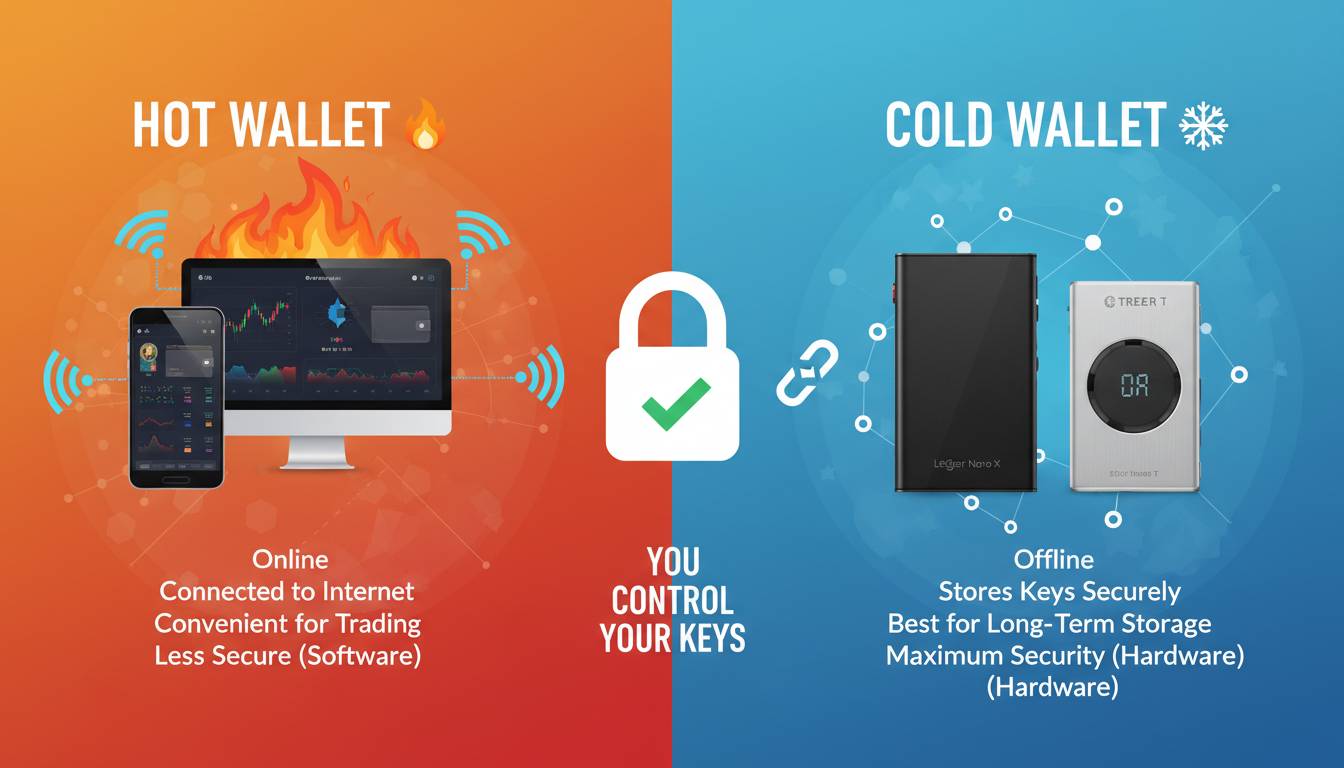
Wallet security begins with your seed phrase—the 12 or 24 words that generate your private keys. Never share this phrase with anyone, and never enter it into websites or apps except when initially setting up your wallet. Store your seed phrase offline, preferably in multiple secure physical locations. Hardware wallets like Ledger provide additional protection by keeping private keys isolated from internet-connected devices, though ensure you purchase only from authorized retailers to avoid tampered devices.
Phishing attacks represent the most common threat vector. Scammers create fake websites, send fraudulent emails, or post malicious links on social media designed to trick users into connecting wallets to malicious sites or signing harmful transactions. Always verify you’re on the correct marketplace URL, double-check any transaction details before signing, and be extremely cautious about clicking links in direct messages or unfamiliar social media accounts. Legitimate marketplaces will never ask for your seed phrase.
Transaction signing deserves careful attention. When connecting to marketplaces, you’ll often sign messages confirming your identity or agreeing to terms—this is normal. However, malicious sites can craft signing requests that appear legitimate but actually transfer assets to attackers. Review every signature request carefully, noting the exact tokens and amounts involved. If something seems unclear or overly complex, reject the request and verify through official channels before proceeding.
The Future of Solana NFTs
Solana’s NFT ecosystem continues evolving rapidly, with several developments poised to shape the landscape in coming years. Understanding these trends helps you anticipate opportunities and make informed decisions about participation.
Mobile-first experiences are driving significant platform development. As smartphone capabilities expand and user expectations shift away from desktop-first interfaces, marketplaces are investing heavily in mobile applications and responsive designs. This trend enables broader participation from users who prefer managing their collections on mobile devices, potentially expanding the collector base significantly.
Gaming and entertainment integrations represent a major growth vector. Several high-profile blockchain games have built or are building on Solana, creating in-game NFT assets that players can potentially use, trade, or transfer across compatible ecosystems. These use cases move NFTs beyond pure collectibles into functional utility, potentially driving sustained demand beyond speculative trading.
Fractional ownership and NFT index products are emerging to address liquidity and accessibility concerns. These innovations allow multiple users to own shares of expensive NFTs, reducing the capital required to participate in the market and potentially unlocking liquidity for holders of otherwise illiquid assets. Several platforms have already launched fractionalization tools, though regulatory uncertainty remains a consideration.
The integration of real-world assets onto Solana through tokenization could dramatically expand the network’s NFT applications. Everything from real estate documents to event tickets to identity credentials could potentially exist as NFTs, leveraging Solana’s speed and cost advantages for use cases where traditional blockchain limitations would be prohibitive.
Frequently Asked Questions
Are Solana NFTs a good investment?
Solana NFTs, like all NFTs, carry significant risk and should be approached as speculative assets rather than guaranteed investments. The market experiences high volatility, with values potentially dropping substantially. Only invest what you can afford to lose entirely, and research thoroughly before purchasing. Past performance does not guarantee future returns in this highly speculative market.
How do I avoid NFT scams on Solana?
Verify all URLs before connecting your wallet, never share your seed phrase, carefully review transaction signatures before approving, and be skeptical of unsolicited offers or urgent demands. Use official marketplace links, double-check collection authenticity through verified channels, and consider using a dedicated wallet for NFT activities to limit potential exposure.
What wallet do most Solana NFT collectors use?
Phantom Wallet dominates the Solana NFT space due to its user-friendly interface, strong security features, and broad marketplace compatibility. It offers browser extension and mobile apps, making it accessible for both desktop and mobile users. Other options include Backpack, Slope, and Glow, each with different feature sets.
Can I transfer my Solana NFTs to other blockchains?
Most Solana NFTs exist natively on Solana and cannot be directly transferred to other blockchains. However, bridge services exist that can wrap or teleport certain assets across chains, though these introduce additional complexity and risk. Generally, Solana NFTs should be considered Solana-based assets.
What happens to my NFTs if the marketplace closes?
Your NFTs remain in your wallet and on the Solana blockchain regardless of any individual marketplace’s status. Marketplaces simply provide interfaces for trading—the actual assets live on-chain. As long as you maintain access to your wallet, you retain your NFTs even if every marketplace were to cease operations tomorrow.