NFT Gaming: Play-to-Earn Games That Pay Real Crypto

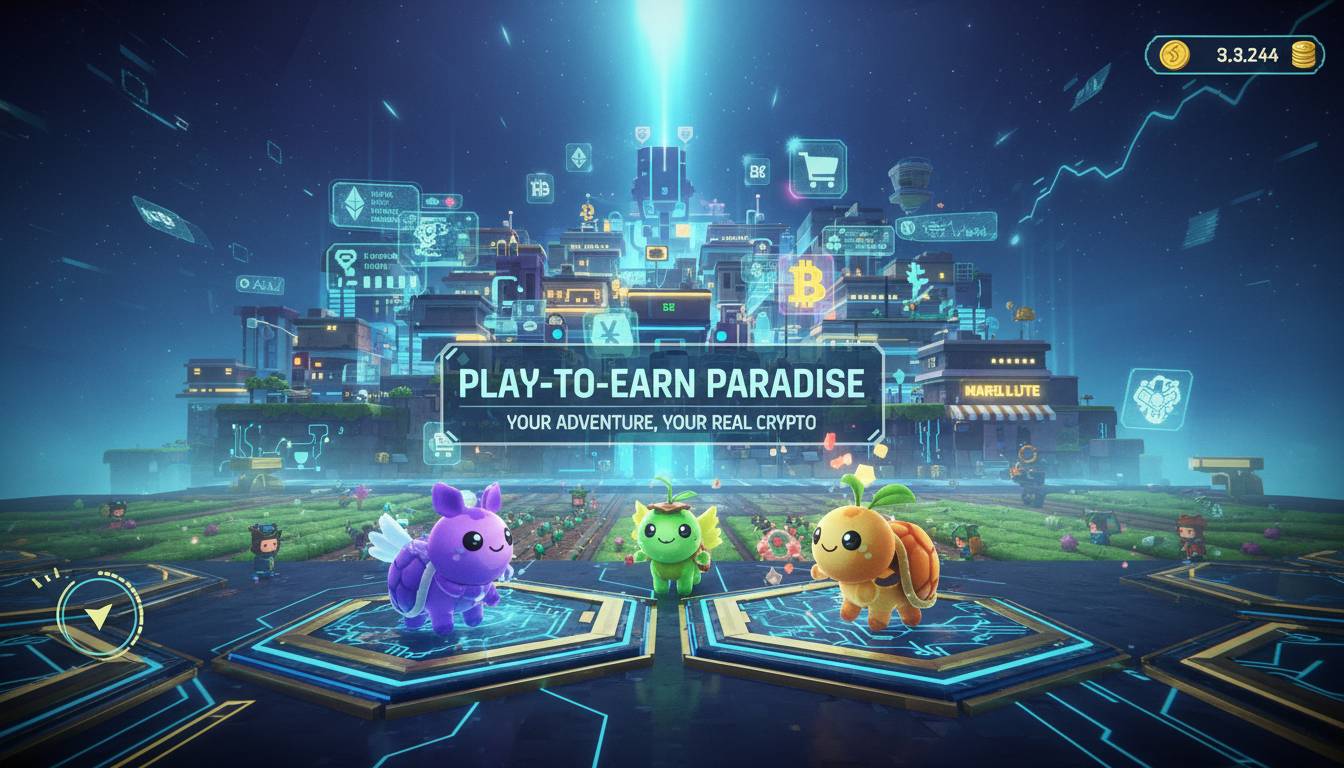
The gaming industry has undergone a radical transformation with the emergence of blockchain technology and non-fungible tokens (NFTs). NFT gaming, particularly the play-to-earn model, has created new opportunities for gamers to earn real value from their time invested in virtual worlds. Unlike traditional gaming where in-game assets remain locked within proprietary ecosystems, NFT games allow players to truly own their digital items and trade them on open marketplaces for cryptocurrency that can be converted to fiat currency.
This comprehensive guide explores the landscape of play-to-earn NFT games, how they work, the risks involved, and what the future holds for this evolving industry.
Understanding NFT Gaming and Play-to-Earn
NFT gaming represents a paradigm shift in how we think about video games and digital ownership. At its core, NFT gaming involves games built on blockchain technology where in-game items—such as characters, weapons, skins, and land—are minted as NFTs. These tokens exist on a blockchain, giving players true ownership that cannot be replicated or taken away by the game developer.
The play-to-earn (P2E) model differs fundamentally from the traditional free-to-play or pay-to-play models that have dominated gaming for decades. In conventional gaming, players spend countless hours grinding to obtain rare items, only to have those items remain trapped within the game’s ecosystem. If the game shuts down or the player’s account is banned, all that time investment vanishes.
Play-to-earn games flip this equation by rewarding players with cryptocurrency or tradeable NFT assets for their gameplay activities. According to data from DappRadar, the blockchain gaming sector saw over $2.5 billion in transaction volume during 2022, demonstrating the significant economic activity generated by these platforms (DappRadar, January 2023).
The economic model typically works through tokenomics—the in-game economies often feature two tokens: a governance token that provides voting rights and strategic influence, and a currency token used for transactions within the game. Players earn these tokens through various activities including completing quests, winning battles, breeding characters, or simply logging in daily.
Axie Infinity, one of the most well-known P2E games, popularized this model by allowing players to earn Smooth Love Potion (SLP) tokens through gameplay, which could be sold on cryptocurrency exchanges for real money. At its peak in early 2022, Axie Infinity reported over 2 million daily active users and a marketplace transaction volume exceeding $600 million in a single week (Sky Mavis, February 2022).
However, it’s crucial to understand that the value of in-game tokens is highly volatile. The price of SLP, for example, dropped over 95% from its all-time high, illustrating the significant financial risks inherent in NFT gaming.
Top Play-to-Earn NFT Games
The NFT gaming space has exploded with numerous titles across different genres, from collection games to strategy and virtual world experiences. Here are some of the most prominent play-to-earn games that have established significant player bases.
Axie Infinity
Axie Infinity remains one of the most influential NFT games, having pioneered the play-to-earn model. Players collect and raise fantasy creatures called Axies, which are NFTs that can be bred, battle, and traded. The game runs on the Ronin blockchain and uses two tokens: AXS (governance) and SLP (in-game currency).
To start playing, new players must purchase at least three Axies from the marketplace, which historically cost anywhere from $30 to thousands of dollars depending on rarity and attributes. While the barrier to entry has decreased significantly since the game’s peak, players should still consider this initial investment carefully.
StepN
StepN represents a unique approach to NFT gaming by combining fitness with blockchain rewards. Players purchase NFT sneakers and earn GMT tokens by walking, jogging, or running outdoors. The game tracks movement through GPS and rewards users based on their activity.
The game gained massive popularity in early 2022 but subsequently faced challenges including a ban in China and significant token price decline. As of late 2024, the project continues operating but with a much smaller user base than its peak of over 300,000 daily active users.
Gods Unchained
For fans of trading card games, Gods Unchained offers a play-to-earn experience similar to games like Hearthstone or Magic: The Gathering. Players can earn GODS tokens through competitive gameplay, and cards themselves are NFTs that can be traded on the marketplace.
The game has maintained a relatively stable player base and represents one of the more accessible entry points into NFT gaming, as players can earn cards through gameplay without initial investment.
The Sandbox
The Sandbox is a virtual world where players can create, own, and monetize their gaming experiences using voxel-based assets. LAND parcels are NFTs that owners can develop with games, experiences, or rental opportunities. The game uses SAND as its primary token.
This metaverse-style game has partnered with numerous major brands including Adidas, Warner Bros., and Gucci to create branded experiences, demonstrating the mainstream adoption potential of NFT gaming platforms.
Illuvium
Illuvium is an open-world RPG adventure game built on the Immutable X blockchain. Players explore a universe filled with creatures called Illuvials, which can be captured, customized, and traded. The game features high-quality graphics that rival traditional console games, setting a new standard for blockchain gaming production values.
The project launched its token in 2022 and has focused on building a sustainable economic model that rewards long-term players rather than encouraging rapid token dumping.
How to Get Started with NFT Gaming
Entering the world of NFT gaming requires several steps and considerations that differ from traditional gaming. Understanding these requirements helps ensure a smoother onboarding experience.
Setting Up a Cryptocurrency Wallet
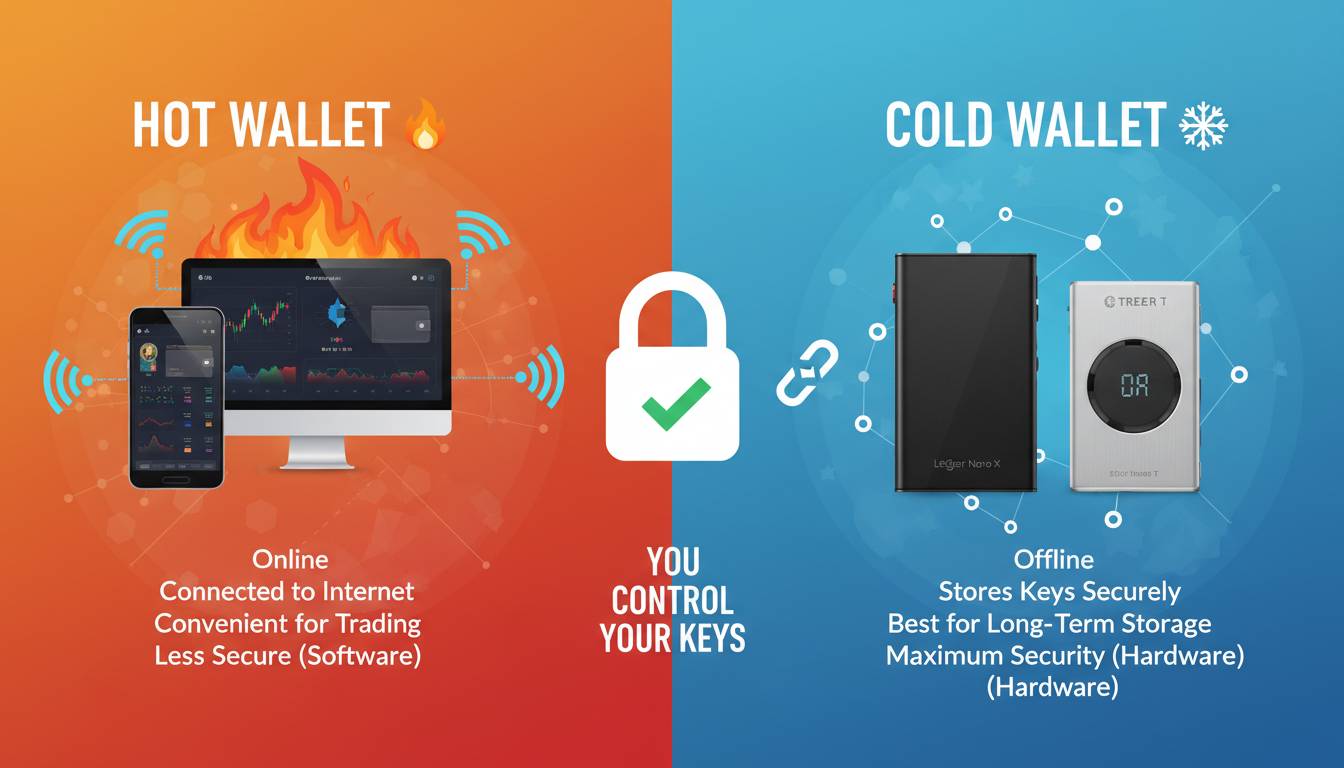
The first step involves creating a cryptocurrency wallet that supports the blockchain network used by your chosen game. MetaMask is the most widely compatible wallet, supporting Ethereum, Polygon, Ronin, and numerous other networks. Phantom wallet is popular for Solana-based games, while other games may require chain-specific wallets.
Your wallet stores both your cryptocurrencies and NFTs, serving as your identity within blockchain games. The security of your wallet is paramount—losing access to your seed phrase means permanent loss of all assets with no recovery option.
Acquiring Cryptocurrency
Most NFT games require some initial cryptocurrency to get started, whether for purchasing in-game NFTs, paying transaction fees (gas fees on Ethereum can be substantial), or staking tokens. You can purchase cryptocurrency through exchanges like Coinbase, Kraken, or Binance using traditional payment methods.
It’s advisable to only invest money you can afford to lose entirely, given the volatility and risk factors inherent in this space.
Transferring Funds to Your Wallet
After purchasing cryptocurrency, you must transfer it to your personal wallet for use in games. This process involves copying your wallet address and using the exchange’s withdrawal function to send funds. Always verify you’re sending the correct token to the correct network—sending Ethereum to a Solana address, for example, results in permanent loss.
Connecting to Games
Once your wallet is funded, you can connect to NFT games through their websites or launchers. Most games provide clear instructions for wallet connection. When connecting, you’ll be asked to approve the connection and potentially sign messages to verify ownership—this is normal and secure when using legitimate game websites.
Understanding Gas Fees
Transaction fees on blockchain networks vary significantly. Ethereum mainnet transactions can cost anywhere from $5 to over $100 during high-traffic periods. Layer-2 solutions like Polygon, Immutable X, and Ronin offer much lower fees, making them more accessible for frequent gameplay.
Many games have migrated to these more affordable networks, so consider fee structures when selecting games to play.
Risks and Challenges of NFT Gaming
While the play-to-earn model offers exciting possibilities, prospective players must understand the significant risks involved.
Token Volatility
The most immediate risk is the extreme volatility of in-game tokens. Many P2E games have experienced catastrophic token price declines that erased players’ earnings potential entirely. The Axie Infinity token AXS dropped over 90% from its all-time high. The StepN token GMT experienced similar declines.
This volatility means that earnings from gameplay can rapidly become worthless, and players who enter primarily for financial gain often find themselves with significant losses.
Scams and Fraud
The NFT gaming space has attracted numerous scams. Fake games, phishing websites that steal wallet credentials, and fraudulent investment schemes are prevalent. Players should only interact with official game websites, never share their seed phrases, and thoroughly research any project before investing time or money.
Rug pulls—where developers abandon a project after collecting investment—are unfortunately common in the space. Even established projects can fail, leaving players with worthless tokens.
Regulatory Uncertainty
The regulatory landscape for cryptocurrency and NFT gaming remains unclear in many jurisdictions. Some countries have banned cryptocurrency activities entirely, while others are developing comprehensive frameworks. Players should understand their local regulations and the potential tax implications of trading NFT game assets.
Play-to-Earn Economic Sustainability
Many early P2E games proved economically unsustainable. The model often required constant influxes of new players to pay rewards to existing players—a Ponzi-like structure that inevitably collapses when growth slows. Sustainable games are transitioning toward models that reward engagement without requiring exponential user growth.
Environmental Concerns
Blockchain gaming has faced criticism for energy consumption, particularly on proof-of-work networks like Ethereum. However, many games have migrated to proof-of-stake networks or layer-2 solutions that significantly reduce environmental impact.
The Economics of Play-to-Earn
Understanding the economic mechanics behind play-to-earn games helps players make informed decisions about where to invest their time and money.
Tokenomics Fundamentals
Most P2E games feature dual-token systems. The governance token (like AXS, SAND, or IMX) typically has a limited supply and provides holders with voting rights on game development decisions. The in-game currency (like SLP or GST) is often minted as rewards and consumed for in-game actions like breeding characters or upgrading items.
The relationship between these tokens, their supply mechanics, and how they’re distributed creates the economic incentives that drive gameplay.
Yield and ROI Calculations
Some players approach NFT gaming as an investment, calculating potential returns based on initial investment, token earnings rates, and token price projections. These calculations often prove overly optimistic because they typically assume token prices remain stable.
Realistic analysis should consider:
- Initial investment required (NFT purchases, starting tokens)
- Daily or weekly earning potential in tokens
- Token price volatility and historical trends
- Gas fees for transactions
- Time required to achieve break-even
Many players find that after accounting for these factors, the effective hourly wage from gameplay is minimal, particularly in games where earnings have declined from peak levels.
The Importance of Sustainable Models
The most successful long-term P2E games are those that create genuine utility for their tokens beyond speculation. Games that tie tokens to meaningful in-game advantages, governance that actually influences development, and economies that don’t require infinite growth to function are more likely to survive long-term.
Future of NFT Gaming
The NFT gaming industry continues evolving rapidly, with several trends shaping its future direction.
Integration with Traditional Gaming
Major gaming companies are exploring blockchain integration, though often cautiously given player backlash. Ubisoft launched Quartz, placing NFTs in Tom Clancy’s Ghost Recon Breakpoint, though the initiative received mixed reception. Square Enix has expressed interest in blockchain gaming as part of its future strategy.
This mainstream adoption could bring significant capital and development resources to the space while also legitimizing the technology for broader audiences.
Improved User Experience
The friction of cryptocurrency wallets, gas fees, and blockchain concepts remains a barrier to mainstream adoption. Future developments will likely focus on abstracting away these complexities, allowing players to engage with NFT games as easily as traditional games.
Regulatory Framework Development
As governments establish clearer cryptocurrency regulations, the industry will likely see reduced speculation and more sustainable economic models emerge. Clear rules will also enable institutional investment and traditional gaming companies to participate more fully.
Interoperability Advances
The concept of bringing NFTs across different games and platforms—using the same character or item in multiple games—remains largely theoretical but represents a significant future possibility that could fundamentally change gaming ownership models.
Frequently Asked Questions
Is NFT gaming profitable?
NFT gaming can be profitable, but it carries significant risks. Token prices are extremely volatile, and many players have lost money rather than earned it. The initial investment required to start playing, combined with declining token values, means many players earn less than minimum wage for their time. Only invest what you can afford to lose entirely.
How do I start playing NFT games?
To start playing NFT games, you need to: 1) Create a cryptocurrency wallet like MetaMask, 2) Purchase cryptocurrency (usually ETH, MATIC, or game-specific tokens) from an exchange, 3) Transfer funds to your wallet, 4) Purchase necessary in-game NFTs from the game’s marketplace, 5) Download or access the game and connect your wallet. Start with games that have low or no entry cost to learn the mechanics.
Are NFT games legal in the United States?
NFT games operate in a legal gray area in the United States. The SEC has indicated that some tokens may qualify as securities, but enforcement has been limited. Players should consult tax professionals, as the IRS treats cryptocurrency transactions as taxable events. The legal landscape continues evolving, and future regulations could impact how these games operate.
What is the best NFT game for beginners?
Gods Unchained and Alien Worlds are often recommended for beginners due to their lower entry barriers and more accessible gameplay. However, the “best” game depends on your interests—collectible card games, virtual worlds, and move-to-earn fitness apps each offer different experiences. Research thoroughly and start small before investing significant money.
Can you lose money playing NFT games?
Yes, you can lose money playing NFT games through token price decline, scams, game failure, or simply poor economic decisions. Many players have reported losses after investing in games that subsequently declined or failed. Always research thoroughly, never invest more than you can afford to lose, and be cautious of projects promising guaranteed returns.
What blockchain networks are used for NFT gaming?
Ethereum was the original blockchain for NFT gaming but faces high fees. Today, many games use layer-2 solutions like Polygon, Immutable X, and Ronin to reduce costs. Solana, BNB Chain, and WAX also host various NFT games. Each network offers different tradeoffs in terms of cost, speed, and ecosystem size.
Conclusion
NFT gaming represents an innovative intersection of gaming, blockchain technology, and economic opportunity. The play-to-earn model has created genuine possibilities for players to earn real value from their gaming efforts, particularly in regions where traditional income opportunities are limited.
However, this space carries substantial risks that cannot be overstated. Token volatility has destroyed billions in market value, scams have ruined countless players, and many economic models have proven unsustainable. Anyone considering NFT gaming should approach with extreme caution, thorough research, and only money they can afford to lose entirely.
The future of NFT gaming likely involves greater mainstream integration, improved user experiences, and more sustainable economic models. As the technology matures and regulatory frameworks develop, the industry may deliver on its promise of true digital ownership while mitigating current risks.
For those interested in exploring NFT gaming, start with games that have proven track records, low entry costs, and active communities. Learn the mechanics of wallets and tokens before investing significant funds. And remember—the primary purpose of games should be enjoyment; any financial gains should be considered a bonus rather than an expectation.