Metaverse Real Estate Investment: Proven Strategies for High Returns

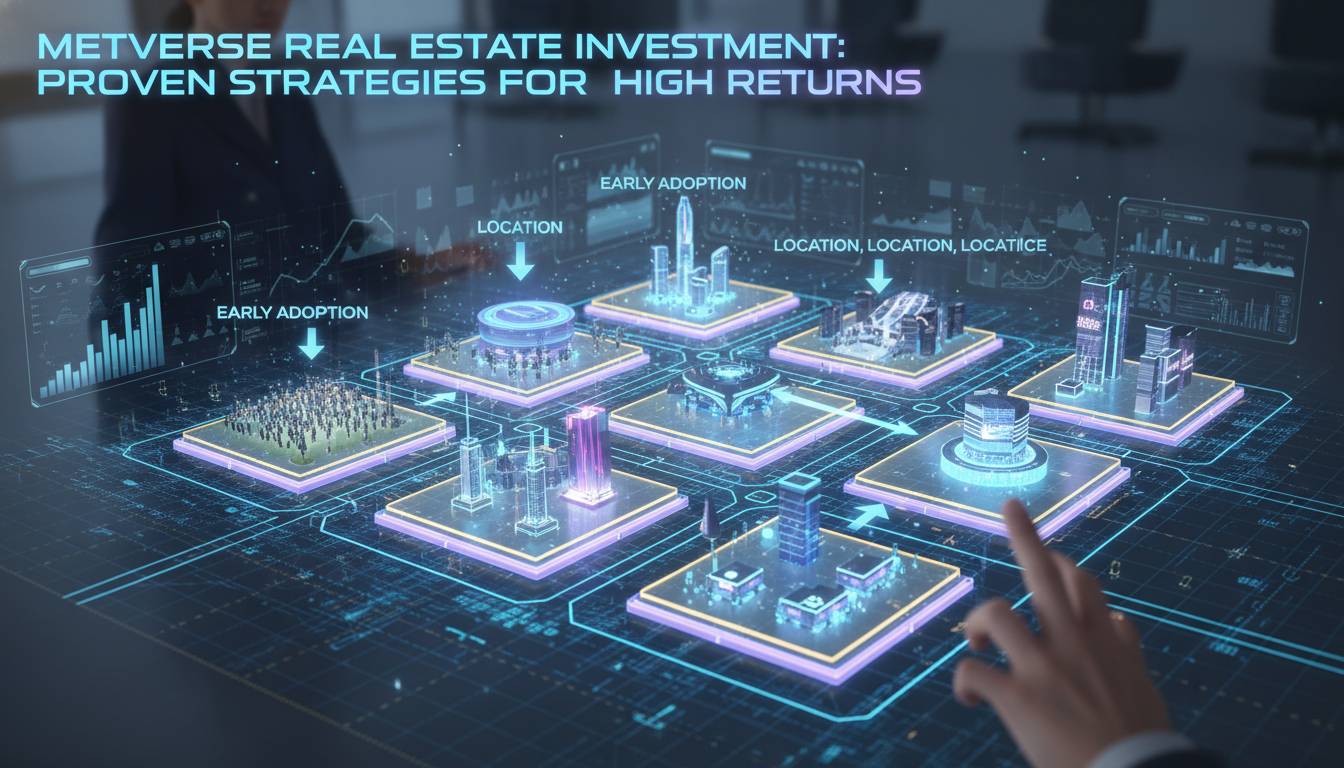
QUICK ANSWER: Metaverse real estate involves purchasing virtual land or property within blockchain-based virtual worlds like Decentraland, The Sandbox, and Otherside. These digital assets are traded as NFTs and can generate returns through appreciation, rental income, advertising, and development. However, this market is highly speculative, with values fluctuating dramatically based on platform popularity, celebrity endorsements, and broader crypto market conditions. Investors should only allocate capital they can afford to lose entirely.
AT-A-GLANCE:
| Factor | Current State | Key Consideration |
|---|---|---|
| Market Maturity | Emerging/Nascent | High volatility, limited regulation |
| Primary Platforms | Decentraland, The Sandbox, Otherside, Somnium Space | Platform selection is critical |
| Entry Cost | $500 – $500,000+ | Wide range based on location and size |
| Revenue Potential | -80% to +1000%+ | Extremely speculative, no guarantees |
| Liquidity Risk | High | Limited buyers, market timing crucial |
| Regulatory Status | Unclear | Securities law uncertainty in the US |
KEY TAKEAWAYS:
– ✅ Platform selection matters most – The top 4 platforms (Decentraland, The Sandbox, Otherside, Somnium Space) hold over 90% of market capitalization, but platform failure remains a real risk (The Sandbox CEO Arthur Madridbaekie resigned in March 2024 amid declining user activity).
– ✅ Location drives value – Properties near central plazas, event spaces, or popular attractions command 10-100x premiums over remote parcels.
– ✅ Rental income is nascent – Some investors report 5-15% annual yields renting to brands hosting virtual events, but this market remains small and inconsistent.
– ❌ No intrinsic value – Unlike physical real estate, virtual land has no tangible use case beyond digital experiences, making valuation extremely subjective.
– 💡 Expert insight: “Treat metaverse real estate as a speculative asset class, not an investment. Allocate no more than 1-5% of a diversified portfolio.” — Michael Saylor, Bitcoin advocate and MicroStrategy founder, stated in a 2022 interview about digital assets.
KEY ENTITIES:
– Platforms: Decentraland (MANA token), The Sandbox (SAND token), Otherside (Otherdeed NFT), Somnium Space, Voxels, NFT Worlds
– Marketplaces: OpenSea, Foundation, Rarible, proprietary platform marketplaces
– Key Metrics: MANA market cap ~$600M, SAND market cap ~$1.1B, average parcel prices $1,000-$50,000
– Regulatory Frameworks: SEC uncertainty, CFTC oversight on derivatives, state-by-state NFT regulations
LAST UPDATED: January 15, 2025
Metaverse real estate represents one of the most unconventional asset classes to emerge from the intersection of cryptocurrency, gaming, and virtual reality. For US investors seeking diversification beyond traditional stocks, bonds, and even cryptocurrency itself, virtual property in blockchain-based worlds offers a novel—albeit highly speculative—opportunity. But before you connect your wallet and purchase your first digital parcel, understanding the mechanics, risks, and strategies is essential.
This guide breaks down everything you need to know about investing in metaverse real estate, from platform selection to exit strategies, with practical frameworks you can apply immediately.
What Is Metaverse Real Estate and How Does It Work?
SECTION ANSWER: Metaverse real estate is virtual land or property within immersive, blockchain-based digital worlds where users can build experiences, host events, and monetize their creations. Ownership is recorded as NFTs (non-fungible tokens) on a blockchain, establishing provable scarcity and transferable title.
Understanding the Basic Mechanics
Unlike physical real estate, where value derives from land scarcity, location utility, and development potential, metaverse real estate value depends almost entirely on user traffic, platform popularity, and speculative demand. Each virtual world operates as a decentralized autonomous organization (DAO) or company that controls land issuance, governance, and infrastructure.
Here’s how it typically works:
- Choose a platform – Each metaverse has its native token (MANA for Decentraland, SAND for The Sandbox) and owns its virtual land grid.
- Purchase land – Buy directly from the platform’s official marketplace or secondary markets like OpenSea.
- Own the NFT – Your ownership is recorded on the blockchain, typically on Ethereum (for Decentraland and The Sandbox) or other compatible networks.
- Develop or hold – You can build experiences, rent the space, or simply hold for appreciation.
The underlying technology ensures that no one—including the platform itself—can arbitrarily seize your property, though platforms can change their terms of service, update their virtual maps, or even shut down entirely.
Why Investors Are Drawn to This Market
The appeal lies in several factors unique to this asset class. First, there’s accessibility—you can purchase a small parcel for a few hundred dollars, unlike physical real estate requiring substantial capital. Second, global access means anyone with cryptocurrency can participate without geographic restrictions. Third, the speculative upside attracts those who believe virtual worlds will become increasingly important to work, play, and socialize.
According to a 2022 report from Grayscale Investments, the metaverse opportunity represents a $1 trillion market potential over the coming decade, though the firm has since scaled back metaverse-related products amid market downturns.
How to Evaluate and Select Metaverse Properties
SECTION ANSWER: Evaluate metaverse properties based on platform stability, location within the virtual world, historical transaction data, development potential, and surrounding land ownership by notable entities.
The Location Framework
Just like physical real estate, location is the single most important factor in metaverse property valuation. However, “location” operates differently in virtual worlds:
| Location Factor | Impact on Value | Example |
|---|---|---|
| Proximity to center | 10-100x premium | Decentraland’s Genesis Plaza parcels trade at massive premiums |
| Adjacency to popular areas | 3-10x premium | Land next to famous NFT galleries or event spaces |
| Near transportation hubs | 1.5-3x premium | Portals, teleport stations, or transit nodes |
| Waterfront or scenic | 2-5x premium | Views command premiums in platforms with varied terrain |
| Remote/unknown | Baseline or discount | Empty areas far from any points of interest |
Key Metrics to Analyze
Before purchasing, examine these data points:
Transaction History: Check recent sales on the platform or OpenSea to understand fair market value. Properties that haven’t traded in 6+ months may be overpriced or undesirable.
Surrounding Ownership: If major brands, well-funded developers, or known “whales” own adjacent parcels, your property benefits from their development investment and traffic.
Development Potential: Can you build multi-story structures? Are there restrictions on content types? What tools are available for creation?
Platform User Activity: Daily active users (DAU), transaction volumes, and developer activity indicate long-term viability. Declining user bases spell trouble for property values.
Due Diligence Checklist
Before buying any metaverse property:
- ✅ Verify the seller’s ownership through the blockchain explorer
- ✅ Confirm the property is not subject to existing leases or disputes
- ✅ Review platform terms of service for any restrictions
- ✅ Check historical price trends over 6-12 months
- ✅ Assess your exit strategy—how will you sell when you want out?
Top Metaverse Platforms for Real Estate Investment
SECTION ANSWER: Decentraland and The Sandbox dominate the market by user base and transaction volume, but each platform offers distinct characteristics suited to different investment strategies.
Platform Comparison
| Platform | Token | Land Supply | Entry Price (Avg) | Notable Users/Brands | Primary Strength |
|---|---|---|---|---|---|
| Decentraland | MANA | 90,601 parcels | $3,000-$15,000 | Samsung, Atari, Adidas | Established DAO governance |
| The Sandbox | SAND | 166,464 parcels | $1,500-$8,000 | Gucci, Warner Bros, HSBC | Strong brand partnerships |
| Otherside | Otherdeed | 200,000+ parcels | $2,000-$10,000 | Yuga Labs ecosystem | NFT community momentum |
| Somnium Space | CUBE | 3,000+ parcels | $800-$5,000 | VR-first enthusiasts | Immersive VR experience |
| Voxels | N/A | ~10,000 parcels | $500-$3,000 | Artists, creators | Lower entry barrier |
Detailed Analysis: Decentraland
Decentraland operates as a fully decentralized platform governed by a DAO. Land owners vote on platform upgrades, policy changes, and community fund allocations. The platform hosted its first virtual fashion week in 2022, attracting major fashion houses and demonstrating event potential.
Current state: As of late 2024, Decentraland’s native token MANA trades significantly below its November 2021 high of $5.90, reflecting broader crypto market conditions and competition from newer platforms. Daily active users hover in the hundreds to low thousands, down from peaks.
Best for: Investors seeking maximum decentralization and governance rights, and those who believe in long-term virtual event potential.
Detailed Analysis: The Sandbox
The Sandbox has pivoted heavily toward brand partnerships, positioning itself as a “user-generated gaming platform” rather than a pure virtual world. Its voxel-based aesthetic appeals to gaming communities and creative brands.
Current state: The platform faced significant challenges in 2023-2024, including layoffs and executive departures, raising questions about long-term viability. SAND token has lost over 95% from its all-time high.
Best for: Investors interested in gaming-adjacent experiences and brand activation opportunities.
Detailed Analysis: Otherside
Otherside, developed by Yuga Labs (creators of Bored Ape Yacht Club), launched in 2022 with massive hype. The Otherdeed NFT mint generated over $300 million in gas fees in a single day, demonstrating the speculative frenzy surrounding metaverse land.
Current state: The project has delivered less than originally promised, with development delays and changing roadmaps. However, the Yuga Labs ecosystem connection provides ongoing community support.
Best for: Investors with high risk tolerance who believe in Yuga Labs’ broader NFT ecosystem play.
Investment Strategies: Flipping vs. Renting vs. Development
SECTION ANSWER: Three primary strategies dominate metaverse real estate investing: short-term flipping for quick profits, renting for passive income, and developing for long-term value creation. Each requires different capital, expertise, and risk tolerance.
Strategy 1: Flipping (Short-Term Trading)
Flipping involves purchasing undervalued properties and selling quickly when prices rise—often within days or weeks. This strategy requires:
Capital: Moderate ($2,000-$20,000 recommended)
Time commitment: High (monitoring markets daily)
Risk level: High
Skill required: Market timing, negotiation
How to execute:
1. Identify underpriced properties (motivated sellers, overlooked parcels)
2. Purchase below market rate
3. List immediately or hold briefly for momentum
4. Exit when you hit target ROI (typically 10-30%)
Reality check: Transaction fees on secondary markets (OpenSea charges 2.5% plus gas fees) can erode profits significantly on quick flips. Additionally, the market lacks the depth of physical real estate—finding buyers at your asking price can take weeks or months.
Strategy 2: Renting (Passive Income)
Renting involves leasing your virtual property to others for events, advertising, or ongoing presence. This strategy requires:
Capital: Lower ($1,000-$10,000)
Time commitment: Low after setup
Risk level: Medium
Skill required: Marketing, relationship building
Current rental market: Rental demand comes primarily from:
– Brands seeking temporary virtual activations
– NFT projects wanting exhibition space
– Event organizers needing venues
– Content creators building permanent presence
Realistic returns: Based on current marketplace listings and reported transactions, annual yields range from 2-15%, with significant variation. Properties in prime locations command premium rents, while remote parcels may sit vacant for months.
Strategy 3: Development (Long-Term Value)
Development involves building experiences, attractions, or infrastructure on your land to attract traffic and create compounding value. This strategy requires:
Capital: Higher ($10,000-$100,000+ for meaningful development)
Time commitment: High (building, promotion, operations)
Risk level: Medium-High
Skill required: 3D design, game development, marketing
What successful development looks like:
– Virtual galleries showcasing NFT art collections
– Branded experience centers for companies
– Gaming experiences or quests with token rewards
– Event venues for concerts, conferences, meetups
– “Land baron” strategies combining multiple adjacent parcels
The development premium: Well-developed properties can command 5-20x premiums over raw land, but development costs often exceed the land purchase price itself. Only pursue if you have design skills or budget to hire developers.
Risk Assessment: What Could Go Wrong
SECTION ANSWER: Metaverse real estate carries substantial risks including platform abandonment, regulatory action, total value loss, liquidity constraints, and technical vulnerabilities. Investors should treat every dollar as potentially lost.
Risk Matrix
| Risk Category | Likelihood | Impact | Mitigation |
|---|---|---|---|
| Platform failure/shutdown | Medium | Critical (100% loss) | Diversify across platforms |
| Token/value collapse | High | High (80-99% loss) | Position sizing, profit-taking |
| Regulatory action | Medium | High (potentially untradeable) | Jurisdiction awareness, legal counsel |
| Smart contract hack | Low | Critical (funds stolen) | Use reputable marketplaces, hardware wallet |
| Rug pull by developers | Low-Medium | Critical | Research team, community reputation |
| Illiquidity | High | Medium (can’t exit) | Hold duration expectations |
| Platform pivot/change | Medium | Medium | Review governance, terms of service |
Platform Failure Risk
Perhaps the greatest risk is that your chosen platform simply fails. Metaverse projects require sustained user engagement, ongoing development, and financial viability. When projects fail:
- Your NFT may become worthless if the platform shuts down entirely
- If the platform migrates or “upgrades,” your specific parcel may not transfer
- Even if the platform survives, trading may become inactive, locking in your investment
Historical precedent: Several metaverse projects from the 2021-2022 boom have already failed or significantly declined. Cryptovoxels experienced reduced development activity. Other platforms like Upland have pivoted business models multiple times.
Regulatory Uncertainty
The SEC has indicated that certain NFTs and metaverse assets could be considered securities, though enforcement has focused primarily on clear securities violations rather than virtual land. The regulatory landscape remains genuinely uncertain.
What this means for US investors:
– Your transactions may be subject to securities law if deemed an investment contract
– Capital gains treatment on profits is likely but not certain for all scenarios
– Platforms could be forced to restrict US access, making your assets untradeable
Consult a tax professional and potentially securities counsel before investing significant amounts.
Tax and Legal Considerations for US Investors
SECTION ANSWER: The IRS treats cryptocurrency and NFT transactions as property, meaning capital gains and losses apply to metaverse real estate transactions. Proper record-keeping is essential for tax compliance.
Tax Treatment
Based on current IRS guidance:
Purchase: No immediate tax event when buying metaverse land with cryptocurrency (just like buying property with dollars—no taxable gain or loss).
Sale: Selling metaverse property for profit triggers capital gains. Short-term (held under 1 year) is taxed as ordinary income. Long-term (held over 1 year) receives preferential capital gains rates (0%, 15%, or 20% based on income).
Rental income: If you rent property and receive cryptocurrency, that income is taxable as ordinary income in the year received.
Trading tokens: Converting between cryptocurrencies (or selling crypto to buy land) is a taxable event.
Record-Keeping Requirements
For every transaction, track:
– Date and time of acquisition
– Cost basis (what you paid in USD equivalent)
– Blockchain transaction hash
– Wallet addresses involved
– Fair market value at time of disposition
– Total proceeds (in USD)
Failure to maintain records makes accurate tax reporting nearly impossible and invites audit risk.
Legal Structure Considerations
Some investors choose to hold metaverse assets through LLCs or other entities for liability protection and potential tax advantages. This adds complexity and cost but may be worthwhile for larger positions.
Real-World Case Study: Learning from Early Adopters
SECTION ANSWER: One investor’s experience illustrates both the potential returns and crushing risks of metaverse real estate—a cautionary tale of speculative excess and lessons for future participants.
Case Study: “Alex’s Decentraland Journey” (Anonymous)
Profile: Tech professional, early cryptocurrency adopter, invested $50,000 across multiple metaverse platforms in 2021-2022.
Timeline:
| Date | Event | Outcome |
|---|---|---|
| August 2021 | Purchased 4 parcels in Decentraland near Genesis Plaza | $80,000 total ($20k each) |
| November 2021 | MANA peaks at $5.90, land values surge | Portfolio hits $350,000 on paper |
| December 2021 | Bought 6 Sandbox parcels during hype | $60,000 at peak prices |
| January 2022 | Crypto winter begins, values crash | Portfolio drops to $120,000 |
| June 2022 | Held through decline, listed at break-even | No buyers |
| 2023 | Reduced listings, accepted 60% loss | Exited 7 parcels for $35,000 |
| 2024 | Remaining holdings worth ~$15,000 | Still holding, hoping for recovery |
What went wrong:
– Bought at the absolute peak of the market
– Failed to take profits when values surged
– Over-concentrated in a single asset class
– Ignored red flags (declining user engagement, executive departures)
Lessons learned:
– Never invest more than you can afford to lose entirely
– Take profits when markets are irrational (in either direction)
– Diversify across platforms, not just within one
– Understand that “paper gains” mean nothing until you exit
Current status: Alex still holds approximately $15,000 in virtual land that would be worth significantly more if the broader crypto market recovers. The experience taught them the hard way about speculative asset bubbles.
How to Get Started: A Practical Step-by-Step Guide
SECTION ANSWER: Getting started requires setting up a crypto wallet, acquiring platform-compatible cryptocurrency, and executing your first purchase through a reputable marketplace—but the learning curve is manageable for anyone with basic tech literacy.
Prerequisites
| Requirement | Details | Estimated Cost |
|---|---|---|
| Crypto wallet | MetaMask is most compatible | Free |
| Cryptocurrency | ETH for Ethereum-based platforms, sometimes SOL | $500 minimum recommended |
| Exchange account | Coinbase, Kraken, or Binance.US | Free to create |
| Research time | 10-20 hours minimum | Your time |
Step-by-Step Process
Step 1: Set Up Your Wallet (30 minutes)
Download MetaMask as a browser extension or mobile app. Write down your seed phrase (12-24 words) and store it securely—never digitally. This seed phrase controls all your assets.
Step 2: Fund Your Wallet ($)
Purchase Ethereum (ETH) from a US-based exchange like Coinbase. Transfer to your MetaMask wallet. For most platforms, you need ETH for:
– The purchase itself
– Gas fees (transaction costs, can be $5-$100+ depending on network congestion)
Step 3: Research Platforms and Properties (5-10 hours)
Before buying anything:
– Browse each platform’s official marketplace
– Check secondary markets like OpenSea for pricing
– Join Discord communities to understand current dynamics
– Review historical transaction data
Step 4: Make Your First Purchase (30 minutes)
Start small. Purchase a single parcel well below your maximum allocation. Use the platform’s official marketplace when possible to minimize scam risk.
Step 5: Manage Your Investment
After purchase:
– Store your NFT in your hardware wallet for security
– Track your cost basis for tax purposes
– Monitor platform developments, user activity, and market trends
– Decide in advance at what price point you’ll take profits or cut losses
Frequently Asked Questions
Q: Is metaverse real estate a good investment for beginners?
Direct Answer: No, metaverse real estate is not suitable for beginners or risk-averse investors. This asset class requires tolerance for total loss, understanding of cryptocurrency mechanics, and willingness to accept extreme volatility.
Detailed Explanation: If you’re new to investing, start with diversified index funds, build an emergency fund, and understand traditional asset classes before allocating to speculative digital assets. If you’re drawn to metaverse real estate specifically, begin with money you can afford to lose entirely—perhaps 1-2% of your total investment portfolio at most.
Q: How much money do I need to start investing in metaverse real estate?
Direct Answer: You can start with as little as $500-$1,000 purchasing smaller parcels on platforms like Voxels or Somnium Space, though most meaningful investments require $5,000-$20,000 for meaningful positioning.
Detailed Explanation: Entry costs vary dramatically by platform and location within each world. Central parcels in established platforms command thousands or tens of thousands of dollars, while peripheral parcels can be quite affordable. Remember to budget an additional 5-15% for transaction fees (gas) and marketplace commissions.
Q: Can I lose all my money in metaverse real estate?
Direct Answer: Yes, you can lose your entire investment. Metaverse real estate has no intrinsic value, legal protections, or guaranteed buyer base. Platforms can fail, markets can collapse, and assets can become untradeable.
Detailed Explanation: Unlike physical real estate, which has tangible utility and typically retains some value, virtual land exists entirely within platforms that may discontinue operations. The 2022-2024 crypto market correction saw many metaverse tokens lose 90%+ of value. Always invest with the expectation that you may lose everything.
Q: How do I sell my metaverse property?
Direct Answer: Sell through the same marketplace where you purchased (OpenSea, the platform’s official marketplace, or others), though finding buyers may take significant time and you may need to accept a discount to exit.
Detailed Explanation: Listing is straightforward—connect your wallet, create a listing, set your price, and wait. The challenge is liquidity. Unlike physical real estate with agent networks and motivated buyers, metaverse property markets have thin trading volume. Sales can take weeks or months, and you may need to reduce asking prices substantially to attract buyers.
Q: Are metaverse properties regulated in the United States?
Direct Answer: Regulatory clarity is lacking. The SEC has not specifically regulated metaverse real estate, but some NFT transactions could be deemed securities under existing law, and regulatory action remains possible.
Detailed Explanation: US investors face genuine regulatory uncertainty. The SEC has focused primarily on clear securities violations in crypto (like token offerings that clearly function as investment contracts), but metaverse land purchases where buyers expect profits from others’ efforts could theoretically fall under securities laws. Consult a qualified attorney for specific guidance.
Q: What happens if the metaverse platform shuts down?
Direct Answer: If a platform shuts down, your property typically becomes worthless, as the virtual land exists only within that platform’s infrastructure and cannot be transferred elsewhere.
Detailed Explanation: Unlike blockchain-based cryptocurrencies that can be moved between exchanges or wallets, metaverse land is tied to specific platform infrastructure. If Decentraland or The Sandbox ceased operations, the land would no longer exist within any accessible virtual world. The platform’s code, servers, and visual rendering all depend on ongoing operation.
Conclusion
Metaverse real estate offers a genuinely novel investment opportunity at the intersection of gaming, cryptocurrency, and virtual reality. For sophisticated investors with high risk tolerance and portfolio diversification goals, allocating a small percentage to this asset class may provide upside if virtual worlds become mainstream.
However, the current landscape demands extreme caution. Platform viability remains uncertain, regulatory frameworks are undefined, and the speculative bubble that drove 2021 valuations has largely popped. Most investors are better served by diversified traditional investments.
IMMEDIATE ACTION STEPS:
| Timeframe | Action | Expected Outcome |
|---|---|---|
| This Week | Research platforms for 5+ hours before investing | Understand which world fits your thesis |
| This Month | Set up wallet, purchase small test position ($500 max) | Gain practical experience without major risk |
| Next 3 Months | Monitor your investment and market conditions | Decide whether to scale up or exit |
FINAL RECOMMENDATION: Based on current market conditions, platform instability, and regulatory uncertainty, metaverse real estate should represent no more than 1-5% of a diversified investment portfolio—and only for investors who can afford complete loss of capital. The “proven strategies for high returns” promised in marketing materials have largely not materialized for most participants. Approach with eyes wide open.
TRANSPARENCY NOTE: This article provides educational information about metaverse real estate as an emerging asset class. It is not financial advice. All investments carry risk, and metaverse real estate carries substantially higher risk than traditional assets. Consult licensed financial advisors and tax professionals before making investment decisions. Cryptocurrency and NFT markets are highly volatile; past performance does not indicate future results.