How to Secure Bitcoin: 7 Proven Ways to Protect Your Wallet

Bitcoin security remains one of the most critical yet overlooked aspects of cryptocurrency ownership. With over 4 million Bitcoin currently lost forever—worth approximately $170 billion at current prices—and hacking incidents resulting in billions of dollars in losses annually, the stakes have never been higher. Unlike traditional bank accounts protected by federal insurance and fraud protection, Bitcoin users bear sole responsibility for securing their assets. This comprehensive guide examines seven proven methods to protect your Bitcoin wallet, backed by industry research and expert insights.
Understanding Bitcoin Security Fundamentals
Bitcoin operates on a decentralized network using cryptographic keys for access. Your “wallet” doesn’t actually store Bitcoin—it stores your private keys, which are mathematical proofs that allow you to spend your Bitcoin. Whoever controls the private keys controls the Bitcoin. This fundamental distinction explains why traditional security advice doesn’t always apply.
The security landscape has evolved dramatically since Bitcoin’s inception in 2009. Early adopters often stored Bitcoin on exchanges or simple software wallets with minimal protection. As Bitcoin’s value increased, so did the sophistication of attacks. According to Chainalysis’ 2024 Crypto Crime Report, hackers stole approximately $1.7 billion in cryptocurrency in 2023 alone, with Bitcoin representing the majority of stolen assets by value.
Key Security Concepts
| Concept | Description | Risk Level |
|---|---|---|
| Private Key | 256-bit cryptographic key granting access | Critical – exposure means loss |
| Seed Phrase | 12-24 word backup of private keys | Critical – same as private key |
| Hot Wallet | Internet-connected wallet | Higher risk |
| Cold Storage | Offline wallet storage | Lower risk |
| Multi-sig | Requires multiple keys for transaction | Enhanced security |
The security pyramid illustrates the trade-off between convenience and protection. Hot wallets offer instant access but carry higher risk. Cold storage provides superior security but requires more effort for transactions. Understanding where your Bitcoin sits on this spectrum is the foundation of proper security.
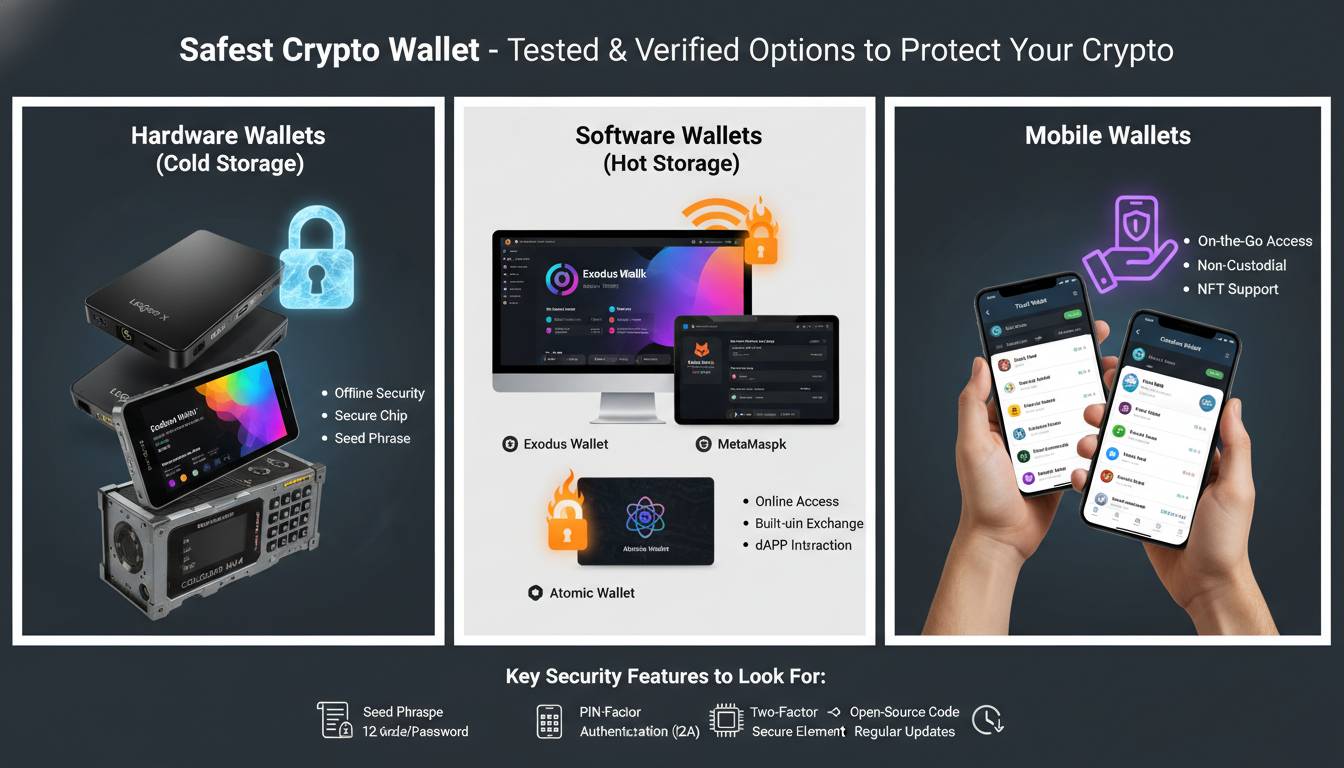
Hardware Wallets: The Gold Standard
Hardware wallets represent the industry consensus for securing significant Bitcoin holdings. These specialized devices store private keys offline, isolating them from internet-connected computers and malware. Even if your computer is compromised, the private keys never leave the hardware wallet.
Leading Hardware Wallet Options
| Wallet | Price | Security Rating | Best For |
|---|---|---|---|
| Ledger Nano X | $149 | ⭐⭐⭐⭐⭐ | Mobile users |
| Trezor Model T | $239 | ⭐⭐⭐⭐⭐ | Maximum security |
| Ledger Nano S Plus | $79 | ⭐⭐⭐⭐ | Budget-conscious |
| Coldcard Mk4 | $169 | ⭐⭐⭐⭐⭐ | Advanced users |
According to a 2023 survey by Bitcoin Magazine, 67% of institutional Bitcoin holders use hardware wallets as their primary storage solution. The devices use secure element chips—same technology used in credit cards and passports—to store private keys. When initiating a transaction, your computer sends the transaction data to the hardware wallet, which signs it internally and returns only the signed transaction. The private key never exposes to the computer.
Trezor, founded by SatoshiLabs in 2014, pioneered the hardware wallet category. Their open-source approach allows security researchers to audit the code. Ledger, the market leader by volume, uses proprietary secure elements with a proven track record. The Coldcard wallet, created by Coinkite, emphasizes air-gapped operation and has become popular among privacy-focused users and those storing large amounts.
Expert Insight:
“Hardware wallets remain the single most effective investment for serious Bitcoin holders. The one-time cost of $100-200 pales in comparison to the value they protect. I’ve seen countless stories of people losing life-changing amounts because they stored Bitcoin on exchanges or insecure software wallets.” — Jameson Lopp, Chief Security Officer at CasaHODL and Bitcoin infrastructure specialist
Software Wallets: Balancing Convenience and Protection
Software wallets provide essential convenience for daily transactions but require careful configuration to minimize risk. The ecosystem includes mobile wallets, desktop applications, and browser extensions, each with distinct security profiles.
Mobile Wallet Recommendations
| Wallet | Platform | Features | Security Score |
|---|---|---|---|
| BlueWallet | iOS/Android | Lightning Network, multi-sig | ⭐⭐⭐⭐ |
| Samourai Wallet | Android | Privacy features, multi-sig | ⭐⭐⭐⭐⭐ |
| Electrum | Desktop/Android | Lightweight, hardware wallet support | ⭐⭐⭐⭐ |
| Muun | iOS/Android | Built-in exchange, self-custody | ⭐⭐⭐⭐ |
Mobile wallets have become the preferred tool for Bitcoin users who transact frequently. Modern smartphones offer hardware security modules (HSMs) that can protect private keys at the hardware level. Apple’s Secure Enclave and Android’s Strongbox provide dedicated cryptographic processing isolated from the main operating system.
Electrum, released in 2011, remains the gold standard for desktop wallets. Its simplicity and compatibility with hardware wallets make it suitable for both beginners and experienced users. The wallet connects directly to Bitcoin nodes rather than relying on third-party APIs, providing better privacy and reducing counterparty risk.
Critical Software Wallet Practices
- Enable two-factor authentication on any cloud-backed wallet
- Use a dedicated device for large holdings when possible
- Verify wallet addresses on hardware wallet displays before sending
- Keep software updated to patch security vulnerabilities
The Lightning Network, Bitcoin’s Layer 2 scaling solution, introduces new wallet considerations. Lightning channels involve locked capital and require online presence, creating different security trade-offs than on-chain storage. Users should understand these trade-offs before committing significant funds to Lightning channels.
Cold Storage Solutions
Cold storage refers to keeping Bitcoin completely offline, disconnected from any network. This method provides maximum protection against remote attacks but requires careful execution to avoid catastrophic mistakes.
Paper Wallets
Paper wallets involve printing private keys and addresses on physical paper. When generated properly using air-gapped computers and reputable tools, paper wallets are immune to digital theft. However, they introduce physical risks—fire, water damage, loss, or theft.
The paper wallet generation process requires extreme caution. Experts recommend:
1. Use a computer that has never connected to the internet
2. Download wallet generation software (like bitaddress.org) via verified channels
3. Disconnect internet before generating keys
4. Print using a dedicated printer (not a network printer)
5. Store multiple copies in secure, separate locations
Steel Wallets
Steel wallets protect against physical disasters that could destroy paper. Companies like Cryptosteel and Billfodl offer stainless steel plates that resist fire, flooding, and physical damage. These products accommodate seed phrases, ensuring your backup survives extreme conditions.
The primary advantage of steel over paper is durability. Standard paper degrades over time and succumbs to water damage easily. High-quality steel wallets can survive house fires and decades of storage. However, they don’t protect against someone finding and using the steel plate—physical security remains essential.
Multi-Signature Protection
Multi-signature (multi-sig) wallets require multiple private keys to authorize transactions. This approach distributes trust and provides protection against single points of failure. A 2-of-3 multi-sig, for example, requires any two of three designated keys to sign a transaction.
Multi-Sig Configuration Options
| Configuration | Keys Required | Best Use Case |
|---|---|---|
| 2-of-3 | Any 2 of 3 | Personal savings with backup |
| 3-of-5 | Any 3 of 5 | High-value corporate treasury |
| 2-of-2 | Both keys | Joint accounts, extreme security |
| 1-of-2 | Either key | Shared access, inheritance planning |
CasaHODL, founded by Jameson Lopp, specializes in multi-sig solutions for individuals holding substantial Bitcoin. Their flagship product provides a 3-of-5 key setup with keys distributed geographically—you might keep one key at home, one in a safe deposit box, and one with Casa’s secure storage. This ensures no single theft or disaster compromises your holdings.
Multi-sig also solves the inheritance problem. Traditional Bitcoin storage dies with the owner—if they don’t share access, Bitcoin becomes permanently inaccessible. Multi-sig configurations can include trusted family members or legal provisions ensuring inheritance works properly.
Expert Insight:
“The biggest risk in Bitcoin security isn’t sophisticated hackers—it’s human error and single points of failure. Multi-signature eliminates the ‘lost key = lost forever’ scenario that has destroyed wealth for countless early Bitcoiners.” — Andreas M. Antonopoulos, Bitcoin author and educator
Securing Your Seed Phrase
Your seed phrase—typically 12 or 24 words—represents the master key to your Bitcoin. Anyone with your seed phrase can recreate your wallet and spend your Bitcoin. Protecting this phrase is arguably more important than protecting any single private key.
Seed Phrase Best Practices
| Method | Security Level | Convenience | Notes |
|---|---|---|---|
| Memorization | Highest | Low | Difficult for large amounts |
| Steel plate | Very High | Medium | Fire/water resistant |
| Safe deposit box | High | Low | Third-party access risk |
| Home safe | High | High | Depends on safe quality |
| Hidden in home | Medium | High | Vulnerable to theft |
The conventional wisdom suggests storing seed phrases in at least two locations. This provides redundancy against fire, natural disaster, or other single-point failures. However, each additional location increases theft risk. The appropriate balance depends on the Bitcoin amount and your threat model.
Never store seed phrases digitally. Photos, text files, cloud storage, and password managers all create vulnerabilities. Malware can scan for seed phrases on computers. Cloud services can be compromised. Even password manager breaches have occurred. Physical storage, properly protected, remains the only secure approach.
Some advanced users split seed phrases, storing partial phrases in different locations. A 12-word seed split into three 4-word pieces provides protection against any single location being compromised—the thief would need to find at least three pieces to reconstruct the seed. However, this complexity introduces risks of its own: losing track of pieces or misunderstanding the reconstruction process.
Exchange Security Measures
While self-custody represents the gold standard for Bitcoin security, many users keep Bitcoin on exchanges for trading convenience. If you use exchanges, understanding their security features and limitations is essential.
Exchange Security Features
| Feature | Description | Importance |
|---|---|---|
| 2FA (YubiKey) | Hardware-based two-factor | Critical |
| 2FA (Authenticator) | App-based two-factor | High |
| Withdrawal whitelisting | Limited addresses for withdrawals | High |
| Cold storage policy | Percentage held offline | Medium |
| Insurance coverage | Protection against hacks | Low |
Two-factor authentication using hardware security keys (like YubiKey) provides the strongest exchange protection. SMS-based 2FA has been repeatedly compromised through SIM swapping attacks, where attackers transfer your phone number to their device. Authenticator apps offer better protection but remain vulnerable to phishing. Hardware keys require physical possession and cannot be remotely compromised.
Withdrawal whitelisting restrict where you can send Bitcoin. Even if attackers compromise your account, they cannot transfer Bitcoin to addresses you haven’t pre-approved. This feature, offered by major exchanges like Coinbase and Kraken, provides a crucial security layer—even if your password and 2FA are compromised, the Bitcoin stays put.
Case Study: The Kraken Breach Attempt
In June 2023, Kraken’s security team detected and thwarted an attempted breach that could have compromised user accounts. The attack involved sophisticated social engineering combined with forged identity documents. Kraken’s internal controls, including manual verification for large withdrawals and behavioral analysis systems, prevented any user losses. This incident illustrates that exchange security requires multiple overlapping protections—no single measure is sufficient.
Common Security Mistakes to Avoid
Even experienced Bitcoin holders make critical security errors. Understanding these pitfalls helps you avoid joining their ranks.
| Mistake | Consequence | Prevention |
|---|---|---|
| Storing Bitcoin on exchanges | Loss from hacks or insolvency | Withdraw to personal wallet |
| Using SMS 2FA | SIM swap theft | Use hardware or authenticator 2FA |
| Sharing seed phrase | Complete loss | Never share, even with “support” |
| Not verifying addresses | Wrong address transfers | Verify first 4 and last 4 characters |
| Clicking links in emails | Phishing attacks | Navigate directly to websites |
| Discussing holdings publicly | Targeted theft | Maintain operational security |
The most common fatal mistake is storing Bitcoin on exchanges. While convenient for trading, exchanges represent counterparty risk—your Bitcoin technically belongs to the exchange, not you. When exchanges fail (as Mt. Gox did in 2014) or restrict withdrawals (as many did during the 2022 market crisis), users have lost access to billions in Bitcoin. The golden rule: if you don’t hold the keys, you don’t own the Bitcoin.
Phishing attacks have grown increasingly sophisticated. Attackers create exact replicas of exchange websites, send convincing emails about “security alerts,” and even call users pretending to be support. Always navigate directly to exchange websites rather than clicking links. Legitimate support never asks for your password or seed phrase.
Frequently Asked Questions
What is the safest way to store Bitcoin for long-term holding?
Hardware wallets provide the best combination of security and usability for long-term Bitcoin storage. A hardware wallet keeps your private keys offline, protected from malware and remote attacks. For very large holdings, consider a multi-signature setup requiring multiple keys to authorize transactions.
How do I recover my Bitcoin if I lose my hardware wallet?
Your Bitcoin isn’t stored in the hardware wallet—it’s stored on the blockchain. The hardware wallet simply holds the keys to access it. Using your 12 or 24-word seed phrase, you can restore your wallet on any compatible hardware or software wallet. This is why securing your seed phrase is absolutely critical.
Should I keep my Bitcoin on a cryptocurrency exchange?
It’s generally not recommended to keep significant Bitcoin holdings on exchanges long-term. Exchanges can be hacked, go bankrupt, or restrict withdrawals. For security, withdraw Bitcoin to a wallet where you control the private keys—preferably a hardware wallet for significant amounts.
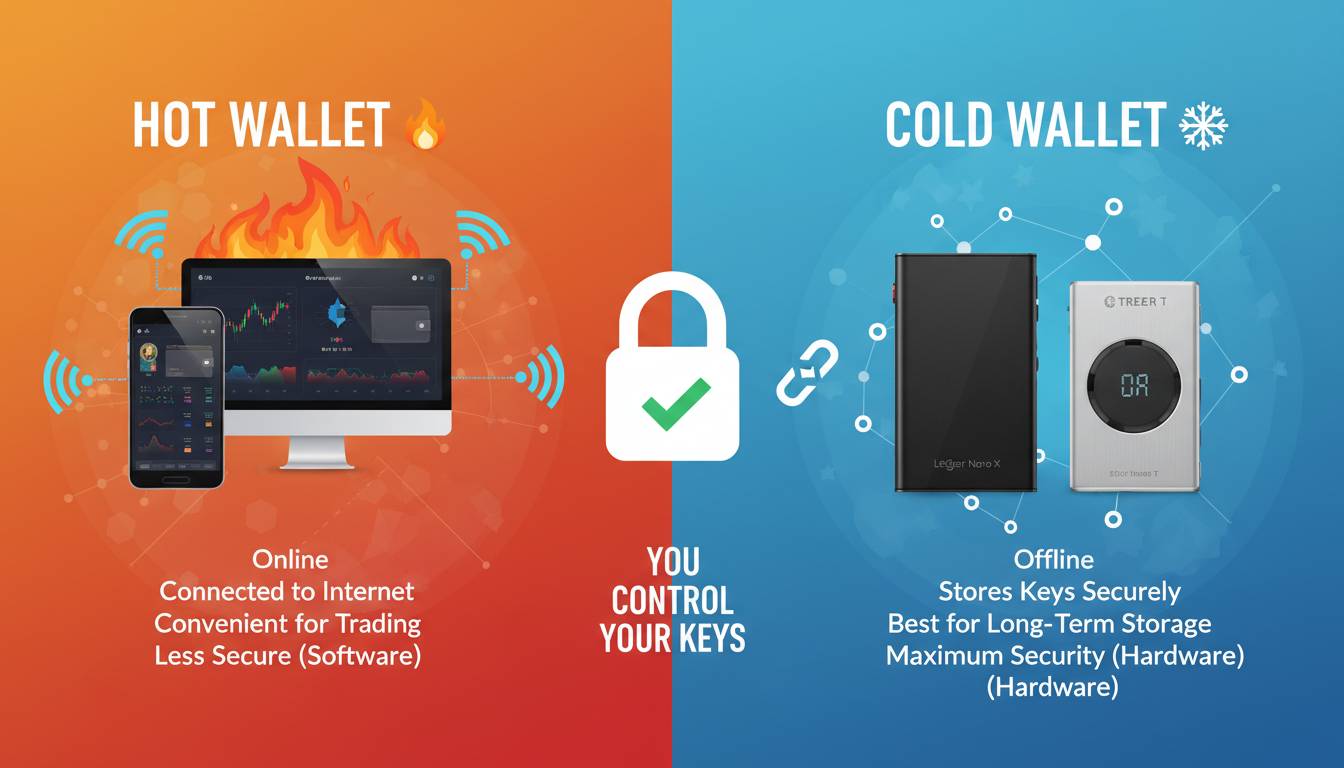
What’s the difference between a hot wallet and a cold wallet?
A hot wallet is connected to the internet (like mobile apps or exchange accounts), offering convenience for transactions but exposing private keys to potential remote attacks. A cold wallet is stored offline (like hardware wallets or paper wallets), providing superior security against digital threats but requiring more effort for transactions.
How often should I back up my Bitcoin wallet?
Modern hardware wallets using BIP39 seed phrases require only one backup—the 12 or 24-word seed phrase. This seed generates all your addresses and private keys. If you’ve properly secured your seed phrase, you have everything needed to recover your Bitcoin. Test your backup by restoring to a different device before funding the wallet heavily.
Can Bitcoin be stolen if my hardware wallet is lost or stolen?
If your hardware wallet is lost or stolen, your Bitcoin remains secure—as long as your seed phrase wasn’t stored with the device. The hardware wallet requires a PIN code, and after multiple failed attempts, it can wipe itself. An attacker would need both the physical device and your PIN or seed phrase to access your Bitcoin.
Conclusion
Bitcoin security requires understanding that you are your own bank. The cryptocurrency’s decentralized nature provides unprecedented financial sovereignty but places security responsibility entirely on individual users. No customer service department will reverse unauthorized transactions; no insurance company will reimburse lost Bitcoin.
The seven methods outlined—hardware wallets, software wallets, cold storage, multi-signature protection, seed phrase security, exchange security measures, and avoiding common mistakes—provide a comprehensive security framework. For most users, a quality hardware wallet represents the essential first investment. As holdings grow, adding multi-signature protection and geographically distributed seed phrase storage provides additional protection against single points of failure.
Remember: security is not a product but a process. Review your security setup regularly, stay informed about emerging threats, and periodically test your recovery procedures. The Bitcoin you protect today could represent life-changing wealth for your future self.
Start with a hardware wallet if you haven’t already. The peace of mind and the protection it provides are worth far more than the purchase price. In a world where millions of Bitcoin have been lost forever to inadequate security, taking proper precautions isn’t optional—it’s essential.