How to Invest in Crypto for Beginners: Complete Step-by-Step Guide

Cryptocurrency has transformed from a niche technology experiment into a trillion-dollar asset class that has captured the attention of investors worldwide. If you’re reading this, you’re likely curious about how to get started but feel overwhelmed by the complexity and volatility that surrounds digital currencies. You’re not alone—millions of Americans have navigated these same questions and built portfolios that work for their financial goals.
This guide walks you through everything you need to know to start investing in cryptocurrency with confidence. We’ll cover the fundamentals, practical steps to get started, risk management strategies, and security best practices that protect your investment. By the end, you’ll have a clear roadmap for entering the crypto market in a way that aligns with your financial objectives and risk tolerance.
Understanding Cryptocurrency: The Basics
Before investing a single dollar, you need to understand what you’re actually buying. Cryptocurrency is a digital or virtual currency that uses cryptography for security and operates on decentralized networks—no central authority like a bank or government controls it.
The first and most well-known cryptocurrency, Bitcoin, launched in 2009 by an unknown person or group using the name Satoshi Nakamoto. Bitcoin introduced the concept of blockchain technology, which is a distributed ledger that records all transactions across a network of computers. This technology ensures transparency and prevents fraud by making it nearly impossible to alter past transaction records.
Ethereum, launched in 2015 by Vitalik Buterin, expanded on Bitcoin’s concept by introducing smart contracts—self-executing agreements with terms directly written into code. This innovation enabled developers to build decentralized applications (dApps) on top of Ethereum’s blockchain, creating an entire ecosystem of financial tools, games, and services.
As of 2025, there are over 10,000 different cryptocurrencies in existence, ranging from established coins like Bitcoin and Ethereum to newer tokens with specific use cases. However, the reality is that a significant portion of these cryptocurrencies may not survive long-term. Industry analysts consistently note that the top 10 cryptocurrencies by market capitalization account for the vast majority of total market value, with Bitcoin and Ethereum together representing approximately 60% of the entire crypto market.
How Cryptocurrency Investing Works
Understanding the mechanics of crypto investing is essential before committing any money. Unlike traditional stocks, which represent ownership in a company, cryptocurrency ownership is recorded on a blockchain through unique cryptographic keys.
When you purchase cryptocurrency, you’re not buying a coin or token in the physical sense. Instead, you’re acquiring a private key—a complex string of characters that gives you access to your holdings on the blockchain. This private key is what allows you to send or transfer your cryptocurrency. Along with your private key, you’ll have a public key or address that functions like an email address, allowing others to send cryptocurrency to you.
The value of cryptocurrency fluctuates based on market demand. When more people want to buy a particular cryptocurrency than sell it, the price rises. When selling pressure exceeds buying interest, prices fall. This market operates 24 hours a day, seven days a week, meaning crypto markets never close—which is both an advantage and a challenge for investors.
Your cryptocurrency holdings can increase in value if the price rises, but they can also decrease significantly. The cryptocurrency market is known for its volatility. For context, Bitcoin has experienced drops of 50% or more multiple times in its history, yet it has also delivered extraordinary returns for early investors who held through the volatility.
Step 1: Define Your Investment Goals and Risk Tolerance
Before choosing any cryptocurrency or opening an account, you need to be honest with yourself about why you’re investing and how much volatility you can handle.
Ask yourself these questions: Are you looking for long-term growth potential, short-term trading opportunities, or simply want to diversify your portfolio? How would you feel if your crypto investment lost 30% of its value in a month? Do you have emergency savings elsewhere, or would you need to liquidate crypto in a crisis?
Financial experts generally recommend that cryptocurrency should represent only a small portion of a diversified investment portfolio—often suggested as somewhere between 1% and 10%, depending on individual risk tolerance. This approach ensures that even a total loss of your crypto holdings wouldn’t devastate your overall financial situation.
Many beginners make the mistake of investing more than they can afford to lose, often driven by stories of massive gains. This emotional approach leads to panic selling during downturns and potentially catastrophic financial outcomes. Setting clear boundaries before you begin protects both your finances and your mental well-being.
Step 2: Choose a Cryptocurrency Exchange
To buy cryptocurrency, you need to use a cryptocurrency exchange—a platform that allows you to buy, sell, and trade digital assets. For beginners in the United States, several reputable exchanges offer user-friendly interfaces, strong security features, and regulatory compliance.
Coinbase is widely considered one of the most beginner-friendly exchanges in the US. It offers a simple interface, educational resources that reward users with small amounts of cryptocurrency for learning about different coins, and insured custodial wallets. Founded in 2012 and headquartered in San Francisco, Coinbase went public on NASDAQ in April 2021, making it a publicly traded company subject to regulatory oversight.
Kraken, founded in 2011, offers more advanced trading features while maintaining usability for beginners. It provides a wide selection of cryptocurrencies and has strong security track record. Kraken also offers staking services, allowing you to earn rewards by holding certain cryptocurrencies.
Binance.US offers one of the widest selections of cryptocurrencies available to US customers and typically has lower trading fees than competitors. However, beginners might find the interface slightly more complex than Coinbase’s streamlined approach.
When choosing an exchange, prioritize security features like two-factor authentication (2FA), cold storage for customer funds, and regulatory compliance with US authorities. Check whether the exchange supports the specific cryptocurrencies you’re interested in purchasing, as not all exchanges offer every available coin.
Step 3: Create and Secure Your Account
Once you’ve chosen an exchange, the account creation process typically takes 10-20 minutes and involves several verification steps required by US financial regulations.
You’ll need to provide personal information including your full legal name, date of birth, social security number, and address. This process, known as Know Your Customer (KYC), is mandatory for licensed US exchanges and helps prevent fraud and money laundering. Expect the verification process to take anywhere from a few minutes to a couple of days, depending on the exchange and your information.
After your account is verified, enable two-factor authentication immediately. This security measure requires a second form of verification—typically a code from an authentication app like Google Authenticator or Authy—beyond your password. SMS-based 2FA is better than nothing, but app-based authentication provides stronger protection against SIM-swapping attacks.
Create a strong, unique password that you don’t use anywhere else. Consider using a password manager to generate and store complex passwords securely. Write down your login credentials somewhere secure, separate from your computer, in case you ever need to recover your account.
Step 4: Fund Your Account and Make Your First Purchase
With your account secured, you’re ready to add funds. Most US exchanges offer several funding options:
Bank transfers (ACH in the US) are typically the slowest but often have the lowest or no fees. These transfers can take 1-5 business days to complete.
Wire transfers are faster but may incur fees ranging from $10-30 per transfer. They usually complete within one business day.
Debit card purchases are instant but often come with higher fees—typically 3-5% of the transaction amount. This option is best for small initial purchases or when you want to start immediately.
For your first purchase, consider starting with a small amount—perhaps $50-100—to get comfortable with the process before committing larger sums. This approach lets you experience how buying works, how prices move, and how to navigate the exchange interface without significant financial risk.
When making your first purchase, Bitcoin and Ethereum are generally recommended for beginners. They have the longest track records, the largest user communities, the most institutional adoption, and the highest liquidity. This means you can easily buy and sell these cryptocurrencies without significantly affecting their market price.
Step 5: Understand Different Cryptocurrencies Beyond Bitcoin
While Bitcoin remains the largest and most recognized cryptocurrency, the market offers many other options with different characteristics and use cases.
Bitcoin (BTC) functions primarily as a store of value and digital gold. Its fixed supply of 21 million coins creates scarcity, and it’s widely accepted as payment by various companies and even some governments.
Ethereum (ETH) powers smart contracts and decentralized applications. Its native token is used to pay for transactions on the network. Ethereum is transitioning to a proof-of-stake consensus mechanism, which reduces energy consumption and potentially increases accessibility for regular investors through staking rewards.
Solana (SOL) offers faster transaction speeds and lower fees than Ethereum, making it popular for DeFi applications and NFTs. However, it has experienced occasional network outages, raising questions about its reliability.
Cardano (ADA) emphasizes academic rigor and peer-reviewed development. It aims to provide a secure and scalable platform for smart contracts and dApps.
Stablecoins like USDC and USDT are pegged to the US dollar, maintaining a 1:1 value ratio. They’re useful for moving money between cryptocurrencies without converting to fiat currency, and many investors use them as a way to “pause” during volatile market periods.
Research any cryptocurrency thoroughly before investing. Look into the team behind it, its use case, its tokenomics (how many coins exist and how new coins are created), and its community support. Be extremely cautious of “meme coins” or cryptocurrencies that have gained popularity solely through social media hype without fundamental value.
Risk Management Strategies Every Beginner Should Know
The cryptocurrency market’s volatility makes risk management absolutely essential. Without proper risk controls, you expose yourself to potentially devastating financial losses.
Dollar-cost averaging (DCA) involves investing a fixed amount at regular intervals, regardless of price. Instead of trying to time the market—which even professional investors struggle with—you buy more when prices are low and less when prices are high. This strategy smooths out volatility over time and removes the emotional stress of trying to predict price movements. For example, investing $100 every week for a year means you’ve accumulated cryptocurrency at an average price throughout the year’s ups and downs.
Position sizing means never investing more than you can afford to lose in any single cryptocurrency or the crypto market as a whole. A common guideline is to keep any single investment below 5% of your total portfolio.
Stop-loss orders automatically sell your cryptocurrency if it drops to a predetermined price, limiting your potential losses. However, be aware that in highly volatile markets, stop-loss orders can execute at significantly lower prices than expected due to slippage.
Taking profits means setting target prices where you’ll sell a portion of your holdings. Many experienced investors sell a percentage when their investment doubles, triples, or reaches another milestone. This strategy locks in gains while allowing you to hold some position for potential further growth.
Diversification applies to crypto investing just as it does to traditional investing. Don’t put all your money into one cryptocurrency, regardless of how confident you are in its future. Spread investments across different types of cryptocurrencies to reduce the impact of any single coin performing poorly.
Security Best Practices for Protecting Your Investment
Security is perhaps the most critical aspect of cryptocurrency investing. Unlike traditional bank accounts, cryptocurrency transactions are irreversible—if your funds are stolen, they’re virtually impossible to recover.
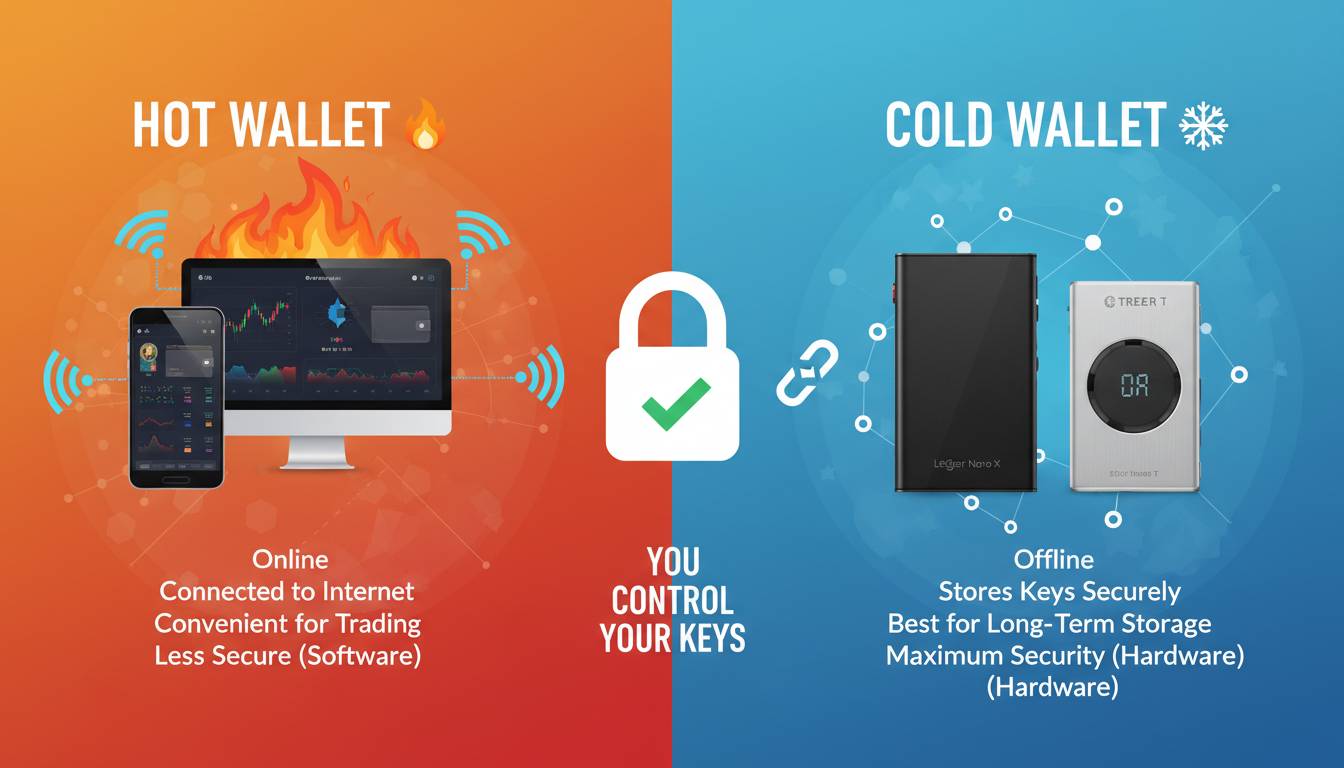
Hardware wallets are considered the gold standard for cryptocurrency security. These physical devices store your private keys offline, making them immune to online hacking attempts. Popular options include Ledger and Trezor devices, which range from $50-250. For holdings exceeding a few hundred dollars, a hardware wallet is strongly recommended.
Software wallets (mobile or desktop applications) are more convenient but less secure than hardware wallets. They’re suitable for smaller amounts or for holding cryptocurrency you use frequently for transactions. Examples include MetaMask, Exodus, and Trust Wallet.
Exchange wallets provided by platforms like Coinbase are convenient for buying and selling but generally shouldn’t be used for long-term storage. While reputable exchanges have robust security measures, keeping large amounts on any exchange creates counterparty risk—you’re trusting the exchange to secure your funds.
Never share your private keys or seed phrases with anyone. Legitimate companies will never ask for this information. Your seed phrase (usually 12 or 24 words) is the master key to your cryptocurrency—if someone obtains it, they can access and steal all your funds. Write it down on paper and store it somewhere secure, like a safe deposit box.
Be extremely cautious of phishing attempts. Scammers create fake websites, emails, and social media accounts that mimic legitimate exchanges and services. Always verify URLs carefully, especially on mobile devices where addresses are less visible. Bookmark the actual exchange websites you use and only access them through those bookmarks.
Common Mistakes Beginners Should Avoid
Learning from others’ mistakes is much cheaper than learning from your own. Here are the most common errors that new cryptocurrency investors make.
FOMO buying (Fear of Missing Out) leads people to buy at the top of price spikes, often just before a correction. Seeing prices rise rapidly creates psychological pressure to jump in immediately. The solution is to stick to your investment plan regardless of what others are doing or what headlines say.
Investing more than you can afford is perhaps the most dangerous mistake. Cryptocurrency’s potential for high returns attracts people to risk money they need for essential expenses. This creates desperate situations where panic selling during downturns locks in losses.
Ignoring taxes can lead to serious legal consequences. The IRS treats cryptocurrency as property, meaning every sale or trade is a taxable event. Keep detailed records of all your transactions, including purchases, sales, and any cryptocurrency used for purchases. Consider consulting a tax professional familiar with cryptocurrency.
Chasing “get rich quick” schemes like yield farming, unregistered ICOs, or investments promising guaranteed returns are almost always scams. If something sounds too good to be true, it almost certainly is.
Neglecting to back up wallet information means a computer crash, lost phone, or hardware failure could result in permanent loss of your investment. Multiple secure backups of your seed phrase are essential.
Frequently Asked Questions
Q: How much money do I need to start investing in cryptocurrency?
You can start with as little as a few dollars on most exchanges. Many platforms allow you to buy fractional portions of cryptocurrencies, meaning you don’t need to purchase a whole Bitcoin (which costs tens of thousands of dollars) to invest. Some exchanges have minimum purchase requirements as low as $2.
Q: Is cryptocurrency a safe investment?
Cryptocurrency carries significant risk, including the possibility of losing your entire investment. The market is highly volatile, regulatory frameworks are still developing, and security threats are real. However, many investors view this risk as acceptable given the potential for high returns. Only invest money you can afford to lose entirely.
Q: Can I lose all my money in crypto?
Yes, it’s possible to lose your entire investment in cryptocurrency. Prices can drop to near zero, exchanges can be hacked (though reputable ones have strong security), or you could lose access to your wallet. This is why security practices and only investing money you can afford to lose are so important.
Q: Do I have to pay taxes on cryptocurrency gains in the US?
Yes, the IRS treats cryptocurrency as property for tax purposes. Capital gains from selling or trading cryptocurrency are subject to capital gains tax. Failure to report cryptocurrency transactions can result in penalties, audits, and interest. Keep detailed records of all your transactions and consult a tax professional.
Q: What’s the difference between buying and earning cryptocurrency?
Buying cryptocurrency means purchasing it on an exchange with fiat currency like US dollars. Earning cryptocurrency means receiving it as payment for goods, services, mining, staking rewards, or as interest from lending platforms. Both methods result in owning cryptocurrency, but earning typically has different tax implications.
Q: How do I know when to sell my cryptocurrency?
There’s no universal answer—this depends on your investment goals, risk tolerance, and the specific cryptocurrency. Many investors set target prices or percentages where they’ll take partial profits. Others hold for the long term regardless of short-term price movements. Having an exit strategy before you buy helps remove emotion from selling decisions.
Conclusion
Investing in cryptocurrency offers genuine opportunities for portfolio growth, but it requires education, discipline, and caution. The key to success isn’t finding the next Bitcoin before it moons—it’s understanding what you’re investing in, managing risk appropriately, and maintaining security over your assets.
Start small, learn the fundamentals, and gradually increase your involvement as you gain experience. Focus first on understanding Bitcoin and Ethereum before exploring other cryptocurrencies. Use dollar-cost averaging to smooth out volatility, and always keep your security practices strong.
Remember that cryptocurrency markets never sleep, and neither does the need for vigilance against scams and security threats. Take your time, do your research, and never invest money you can’t afford to lose entirely.
The cryptocurrency space continues evolving rapidly, with new developments in regulation, technology, and institutional adoption. Stay informed, remain skeptical of guarantees, and approach every investment opportunity with careful analysis. Your financial future will thank you for the patience and discipline you apply today.