
Future of Artificial Intelligence: 7 Revolutionary Changes Coming

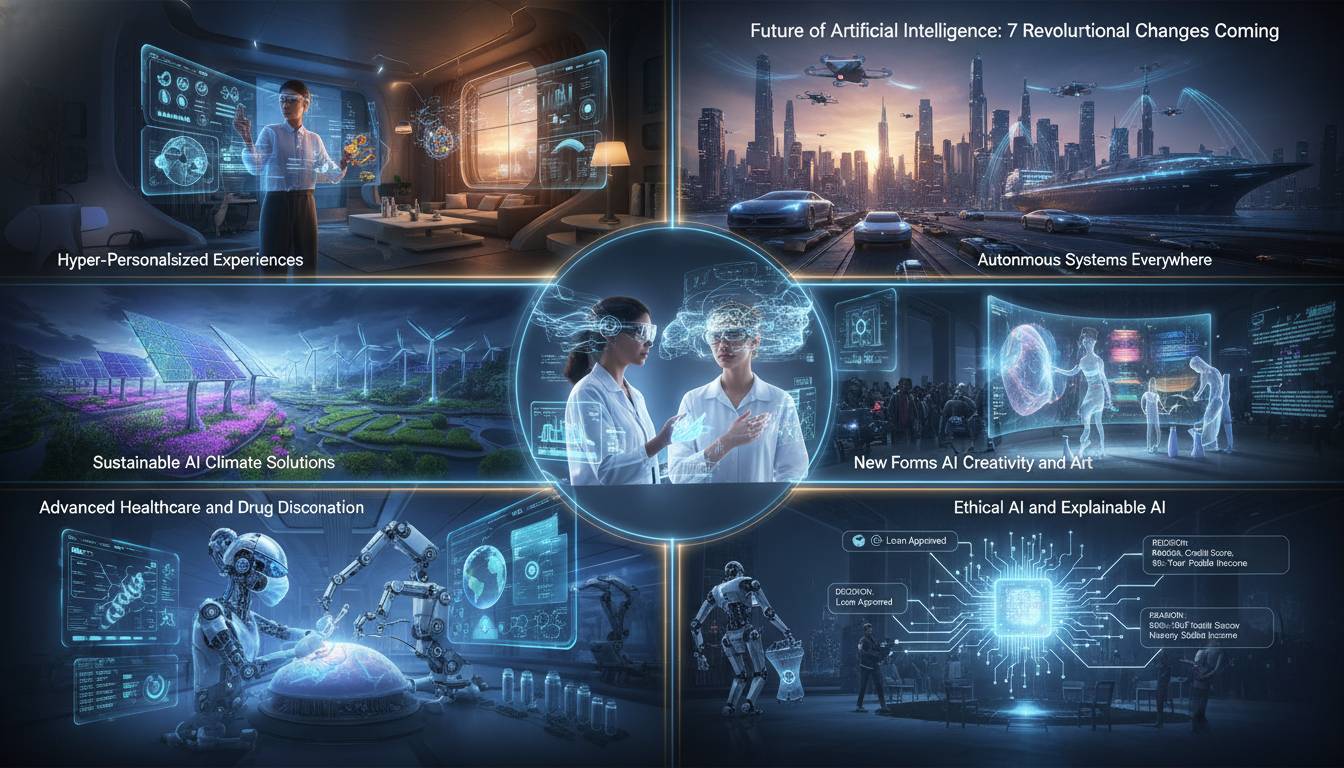
The artificial intelligence landscape is evolving at an unprecedented pace, fundamentally reshaping industries, economies, and daily life. From generative models that create art and content to autonomous systems powering self-driving vehicles, AI’s trajectory points toward transformative changes that will define the next decade. Understanding these shifts isn’t just beneficial—it’s essential for businesses, professionals, and individuals preparing for a world where AI capabilities will continue expanding beyond current imagination.
Key Insights
– Global AI market projected to reach $1.81 trillion by 2030
– Generative AI alone expected to contribute $4.4 trillion annually to the global economy
– Over 77% of companies now use or explore AI technologies in some form
– AI investment in the United States surpassed $50 billion in 2024
This comprehensive analysis explores seven revolutionary changes poised to reshape our relationship with artificial intelligence, examining the technologies driving these shifts, their practical implications, and how society might adapt to an increasingly intelligent technological ecosystem.
The Current AI Landscape: Foundation for Transformation
The artificial intelligence of 2024 bears little resemblance to the rule-based systems of previous decades. Modern AI, particularly machine learning and deep learning architectures, has achieved remarkable breakthroughs across vision, language, and reasoning tasks. Large language models demonstrate emergent capabilities that researchers struggled to predict even five years ago, while computer vision systems match or exceed human performance in specific detection tasks.
This foundation creates the launching pad for revolutionary changes. The convergence of increased computational power, expanding datasets, and algorithmic innovations has produced a feedback loop accelerating development beyond linear projections. What once required years now takes months; capabilities once considered decades away emerge within years.
The United States maintains leadership in AI research and deployment, with major technology companies, well-funded startups, and world-class research institutions driving innovation. The CHIPS and Science Act of 2022 allocated $280 billion for semiconductor manufacturing and scientific research, signaling governmental commitment to maintaining competitive advantage. This investment ecosystem supports the infrastructure demands of increasingly sophisticated AI systems.
However, this rapid advancement introduces complex challenges. Questions around workforce displacement, algorithmic bias, privacy erosion, and autonomous decision-making require thoughtful consideration. The revolutionary changes coming aren’t merely technological—they’re societal, demanding frameworks that ensure beneficial outcomes while managing genuine risks.
1. Multimodal AI: Beyond Single-Modal Intelligence
The first revolutionary change involves the emergence of truly multimodal AI systems that process and generate information across multiple formats simultaneously. Current systems often handle text, images, audio, or video in isolation. The next generation will seamlessly integrate these modalities, creating AI that experiences and expresses information more like humans do.
Multimodal Capabilities Comparison
| Capability | Current Systems | Next-Gen Multimodal |
|---|---|---|
| Input Processing | Single format | Text + image + audio + video simultaneously |
| Output Generation | One format per request | Cross-format generation with consistency |
| Context Understanding | Limited cross-modal | Unified understanding across all inputs |
| Real-time Adaptation | Delayed processing | Instant response across modalities |
Google’s Gemini, OpenAI’s GPT-4V, and similar models already demonstrate early multimodal capabilities, but true integration remains limited. Future systems will understand that a picture of a sunset relates to poetic descriptions, musical compositions about melancholy, and the biological mechanisms of color perception—all simultaneously.
This shift carries profound implications for creative industries, education, healthcare, and human-computer interaction. A doctor might present an AI system with patient symptoms, medical imaging, and voice descriptions, receiving analysis that synthesizes all inputs into a coherent diagnostic perspective. Designers could describe concepts verbally while the AI generates corresponding visuals, prototypes, and even simulation videos.
The challenge lies in creating unified representations that genuinely understand relationships between modalities rather than simply translating between separate processing pipelines. Research into foundational models that learn universal representations across all data types represents one of the most active areas in AI development.
2. Autonomous Agents: From Tools to Teammates
The second transformation involves AI evolving from reactive tools to proactive autonomous agents capable of planning, executing, and iterating on complex tasks with minimal human intervention. Current AI requires explicit instructions for each action; future systems will understand goals and determine necessary steps independently.
This shift moves AI from consultation to collaboration. An autonomous agent given the objective “prepare for my client meeting next week” would research the client’s company, analyze relevant market data, draft presentation materials, coordinate with team members, and prepare briefing documents—all while keeping a human supervisor informed of progress and seeking clarification when encountering obstacles.
Agent Autonomy Levels
| Level | Description | Human Involvement | Current Examples |
|---|---|---|---|
| 1 | Rule-based automation | Complete oversight | Robotic process automation |
| 2 | Assisted task completion | Approval required | AI assistants |
| 3 | Autonomous task execution | Monitoring only | Emerging agents |
| 4 | Goal-oriented autonomy | Exception handling | Future systems |
| 5 | Self-directing intelligence | Minimal oversight | Long-term vision |
The economic implications are substantial. McKinsey estimates that autonomous agents could automate activities constituting 60-70% of current employee time across knowledge work sectors, fundamentally altering productivity calculations and organizational structures.
Industries from manufacturing to financial services are already piloting agentic systems. Coding assistants that not only suggest completions but plan and implement entire features represent early manifestations. Customer service agents that handle complex resolution journeys without escalation demonstrate practical value. The trajectory points toward AI teammates that organizations hire, manage, and collaborate with rather than tools they simply operate.
3. Personalized and Adaptive AI Experiences
Third, AI systems will become increasingly personalized, adapting to individual users’ preferences, working styles, and needs with unprecedented precision. Rather than one-size-fits-all solutions, future AI will develop detailed models of each user, customizing interactions, outputs, and recommendations accordingly.
This personalization extends beyond current recommendation algorithms. Imagine AI systems that understand your communication style and adapt their own to match, remember your project’s historical context across sessions, recognize when you’re stressed and adjust their approach accordingly, and proactively suggest actions based on your established patterns and goals.
Personalization Dimensions
- Communication Style: Matching tone, formality, and verbosity to user preferences
- Knowledge Context: Understanding user’s expertise level and providing appropriate detail
- Working Patterns: Adapting to peak productivity hours and preferred workflows
- Goal Alignment: Tracking personal and professional objectives across interactions
- Relationship Memory: Maintaining continuity across long-term user relationships
Educational applications demonstrate particularly compelling possibilities. AI tutors that adapt pacing, explanation styles, and content to individual learning patterns can provide genuinely personalized education at scale. Healthcare applications might include AI systems that understand individual patient communication preferences and health literacy levels, improving adherence and outcomes.
The privacy implications require careful consideration. Effective personalization demands data collection and behavioral modeling that raises legitimate concerns about surveillance, manipulation, and data security. Developing frameworks that enable personalization benefits while protecting individual autonomy represents one of AI’s critical governance challenges.
4. AI in Scientific Discovery and Healthcare
The fourth revolutionary change involves AI fundamentally accelerating scientific research and healthcare delivery. AlphaFold’s breakthrough in protein structure prediction demonstrated AI’s capacity to solve problems that consumed decades of traditional research. This capability is now expanding across biology, chemistry, physics, and medicine.
AI Research Impact Areas
| Domain | Current AI Contribution | Projected Impact |
|---|---|---|
| Drug Discovery | Target identification, molecule design | 10x faster pipeline, reduced failures |
| Medical Imaging | Diagnostic assistance | Earlier detection, reduced error rates |
| Genomics | Sequence analysis, variant interpretation | Precision medicine at scale |
| Materials Science | Property prediction, synthesis planning | Accelerated discovery cycles |
| Climate Modeling | Simulation enhancement | Improved prediction accuracy |
The pharmaceutical industry has taken notice. Major pharmaceutical companies report AI-assisted drug discovery programs reducing initial screening timelines from years to months. Pfizer’s partnership with IBM Watson and Merck’s collaboration with Health Catalyst demonstrate industry commitment to AI integration. More recently, Insilico Medicine used generative AI to identify a novel drug candidate in 18 months—a fraction of traditional timelines.
In healthcare delivery, AI diagnostic systems are achieving specialist-level performance across radiology, pathology, dermatology, and ophthalmology. These systems don’t replace physicians but augment their capabilities, handling routine analysis while humans focus on complex cases, patient relationships, and nuanced decision-making.
The National Institutes of Health continue expanding AI research funding, recognizing potential for addressing complex health challenges from cancer to neurodegenerative diseases. The intersection of AI with biotechnology represents perhaps the most promising frontier for human benefit, though regulatory frameworks must evolve alongside capabilities.
5. Explainable and Trustworthy AI Systems
Fifth, the AI industry is moving decisively toward explainable and trustworthy systems. Early AI models functioned as black boxes—powerful but incomprehensible even to their creators. This opacity proved unacceptable for high-stakes applications in healthcare, finance, legal systems, and autonomous vehicles.
The European Union’s AI Act, effective 2024, mandates explainability requirements for high-risk AI systems. Similar regulatory discussions occur in the United States through executive orders and agency guidance. These requirements drive technical innovation in interpretable machine learning, counterfactual explanations, and transparent reasoning systems.
Trustworthiness Components
- Explainability: Clear reasoning chains users can understand and audit
- Fairness: Demonstrably equitable treatment across demographic groups
- Robustness: Resistance to adversarial attacks and unexpected inputs
- Privacy: Data minimization and secure processing
- Accuracy: Reliable performance with calibrated confidence estimates
Technical approaches include attention visualization for neural networks, decision tree extraction from complex models, and natural language explanation generation. DARPA’s Explainable AI program has invested substantially in these technologies, recognizing that military applications require operators who understand and trust autonomous systems.
This shift benefits not just regulators but practitioners and users. Understanding why an AI system made a particular recommendation enables appropriate trust calibration, error identification, and continuous improvement. Healthcare providers need to explain treatment recommendations to patients; financial institutions must justify lending decisions to customers; legal systems require transparent evidence evaluation. Explainable AI makes these interactions possible.
6. Edge AI and Distributed Intelligence
Sixth, AI processing is shifting from centralized cloud systems to distributed edge devices. This transition involves running sophisticated AI models locally on smartphones, IoT devices, vehicles, and industrial equipment rather than transmitting data to remote servers for processing.
The benefits are substantial. Reduced latency enables real-time applications impossible with cloud round-trips. Privacy improves when personal data remains on device. Reliability increases when AI functionality operates independent of network connectivity. Bandwidth requirements decrease when raw data doesn’t require transmission.
Edge vs. Cloud AI Trade-offs
| Factor | Edge AI | Cloud AI |
|---|---|---|
| Latency | Milliseconds | Hundreds of milliseconds |
| Privacy | Data remains local | Requires transmission |
| Connectivity | Offline capable | Always required |
| Model Size | Optimized for devices | Larger models possible |
| Cost | Higher device cost | Ongoing compute costs |
Apple’s on-device processing for features like Siri and photo recognition demonstrates consumer applications. Industrial implementations include predictive maintenance systems analyzing equipment sensor data locally, autonomous vehicles processing sensor inputs in real-time, and healthcare devices providing AI diagnostics without network dependency.
The development of efficient model architectures like quantization, pruning, and knowledge distillation enables sophisticated AI capabilities on constrained hardware. Silicon innovations from companies like NVIDIA, Intel, and specialized AI chip startups provide the computational foundation. This trend will accelerate as specialized AI accelerators become standard in consumer devices.
7. AI Governance and Ethical Frameworks
The seventh revolutionary change involves the maturation of AI governance and ethical frameworks. The Wild West approach to AI development—rapid deployment with minimal oversight—is giving way to structured governance approaches incorporating technical standards, regulatory requirements, and ethical guidelines.
The EU AI Act establishes risk-based classification with corresponding requirements. The United Nations has initiated AI governance discussions involving 193 member states. Industry consortia develop standards for fairness, transparency, and safety. Professional organizations establish ethical codes for AI practitioners.
Governance Framework Elements
- Risk Assessment: Systematic evaluation of AI system potential harms
- Transparency Requirements: Documentation and disclosure obligations
- Human Oversight: Requirements for meaningful human control
- Audit Mechanisms: Independent evaluation of system performance
- Redress Procedures: Accountability channels for affected individuals
- Ongoing Monitoring: Continuous assessment as systems evolve
This governance evolution reflects recognition that AI’s societal integration requires coordination beyond individual corporate or research decisions. The stakes involve not just commercial interests but democratic institutions, individual rights, and social stability. Countries increasingly view AI governance as strategic priority, with competitive frameworks becoming elements of international relations.
For practitioners, this shift means AI development can no longer occur in regulatory isolation. Compliance considerations must integrate early in system design rather than as afterthoughts. Organizations developing AI capabilities increasingly employ ethicists, establish advisory boards, and implement governance structures—shifts from exceptional to standard practice.
The Path Forward: Preparing for AI’s Transformative Future
These seven revolutionary changes—multimodal integration, autonomous agents, personalized experiences, scientific acceleration, explainable systems, edge distribution, and governance maturation—will reshape AI’s role in society over the coming decade. Understanding these trends enables better preparation for individuals, organizations, and policymakers navigating this transformation.
The organizations and individuals who thrive will be those who view AI not as distant technology but as present capability requiring strategic engagement. This means developing AI literacy across workforces, establishing governance frameworks before deployment, investing in adaptation capabilities, and maintaining human-centered values as capabilities expand.
The future of artificial intelligence remains unwritten. Technology creates possibilities; human choices determine which possibilities become reality. The revolutionary changes coming offer unprecedented potential for human flourishing—alongside genuine risks requiring serious attention. Meeting this moment demands both enthusiasm for AI’s beneficial potential and clear-eyed recognition of challenges requiring coordinated response.
Frequently Asked Questions
How will AI affect job markets in the next decade?
AI will likely transform job markets more than eliminate them entirely. Automation will handle routine and repetitive tasks, freeing workers for higher-value activities requiring creativity, judgment, and interpersonal skills. New roles focused on AI development, oversight, and integration will emerge. The key adaptation involves continuous skill development and flexibility. Industries like healthcare, education, and creative sectors may see AI augmentation rather than replacement, with professionals leveraging AI tools to increase productivity and quality.
What are the most significant risks associated with advanced AI?
Primary risks include algorithmic bias perpetuating societal inequities, privacy erosion through pervasive surveillance, autonomous systems making consequential decisions without adequate oversight, and potential misuse for malicious purposes. Concentration of AI power among few large organizations or nations creates geopolitical vulnerabilities. There’s also concern about rapid, uncontrolled capability advancement outpacing humanity’s ability to maintain control or alignment. These risks motivate current governance and safety research efforts.
How close are we to artificial general intelligence (AGI)?
Current AI systems remain narrow—they excel at specific tasks but lack general reasoning across domains. Experts disagree significantly on timeline, with estimates ranging from decades to centuries. Significant technical breakthroughs in areas like common sense reasoning, transfer learning, and embodied cognition would be required for human-level general intelligence. Current systems demonstrate impressive but limited capabilities that shouldn’t be confused with human-level general intelligence.
What regulations currently govern AI in the United States?
The United States lacks comprehensive federal AI legislation, but regulatory frameworks are emerging. The AI Executive Order (2023) establishes safety standards, requires disclosure for advanced AI systems, and addresses bias in hiring and healthcare. Sector-specific regulations apply in finance (CFPB, SEC), healthcare (FDA), and transportation (NHTSA). The NIST AI Risk Management Framework provides voluntary guidelines. State-level legislation, particularly in California, is also developing rapidly, potentially creating de facto national standards.
How can individuals prepare for an AI-driven future?
Developing AI literacy provides foundation—understanding capabilities, limitations, and appropriate applications. Focusing on distinctively human skills becomes increasingly valuable: complex problem-solving, emotional intelligence, creative thinking, and ethical judgment. Rather than competing with AI, positioning as collaborator who directs and evaluates AI outputs offers career advantage. Staying informed about technological developments helps anticipate changes rather than reacting surprised. Financial planning should consider potential economic shifts from technological change.
What industries will AI transform most dramatically?
Healthcare stands to benefit enormously through diagnostics, drug discovery, and personalized treatment. Financial services will see continued automation of analysis, risk assessment, and fraud detection. Manufacturing transforms through predictive maintenance, quality control, and process optimization. Education personalizes through adaptive learning systems. Creative industries experience new tools for content generation while human creativity remains central. Transportation evolves through autonomous vehicles and logistics optimization. The pattern shows AI transforming information-intensive industries most rapidly, with physical world applications following as technology matures.