
Fitness Tips for Beginners: Start Your Journey to a Stronger You

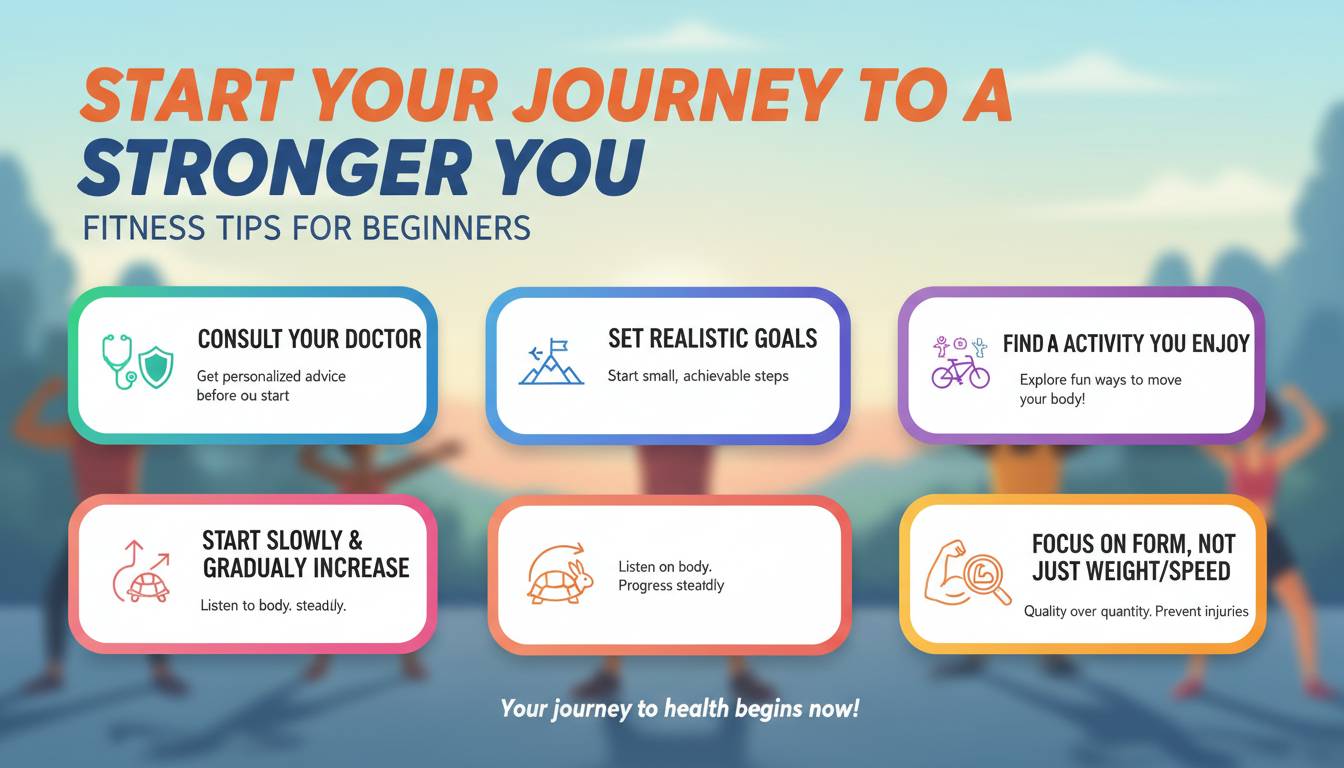
Starting a fitness journey can feel overwhelming. Between conflicting advice on social media, intimidating gym environments, and endless equipment options, many beginners give up before they truly begin. Yet research consistently shows that even modest amounts of exercise can transform physical and mental health. The key lies in understanding that fitness isn’t about perfection—it’s about progress. This comprehensive guide breaks down everything you need to know to start strong, stay safe, and build habits that last a lifetime.
Understanding Your Starting Point
Before diving into workouts, take honest stock of where you are now. This isn’t about judgment—it’s about building a foundation that matches your current capabilities.
Assess your current fitness level by considering how you feel during daily activities. Can you climb a flight of stairs without breathlessness? Do you sit for most of the day? Have you been active recently, or has it been months or years since consistent exercise? These answers matter because they determine your starting intensity.
The American College of Sports Medicine recommends that beginners undergo health screening if they have any chronic conditions, are over 40 (for men) or 50 (for women), or have been sedentary for an extended period. This doesn’t mean you need extensive testing—it simply means checking with your doctor if anything feels uncertain.
Set realistic expectations. The CDC reports that 80% of adults don’t meet the recommended 150 minutes of moderate aerobic activity per week. You’re not competing with fitness influencers on Instagram; you’re competing with the version of yourself who hasn’t started yet. Initial progress often comes quickly—within the first four to six weeks—because your body isn’t accustomed to the stimulus. After that, gains naturally slow, which is completely normal.
The Foundation: Nutrition Basics
Exercise without proper nutrition is like building a house without materials. Your body needs fuel to perform during workouts and recover afterward.
Focus on protein intake. The Dietary Guidelines for Americans recommend that adults get 10% to 35% of their calories from protein. For active beginners, aiming for 0.5 to 0.7 grams per pound of body weight supports muscle repair and growth. This doesn’t require supplements—chicken, fish, eggs, Greek yogurt, beans, and tofu all provide excellent protein sources.
Don’t fear carbohydrates. Despite trendy diet narratives, carbs remain your body’s preferred energy source during exercise. Whole grains, fruits, vegetables, and legumes provide sustained energy without the crash associated with refined sugars.
Hydration impacts performance significantly. The American Council on Exercise notes that even mild dehydration (1-2% body weight loss) can impair exercise performance and cognitive function. Drink water consistently throughout the day, not just during workouts. A simple guideline: urine light yellow generally indicates adequate hydration.
Meal timing matters less than total daily intake. While pre-workout nutrition can enhance performance, obsessing over exact timing often creates unnecessary stress. Eat balanced meals consistently, and adjust based on how you feel during exercise.
Building Your Routine
Consistency beats intensity every time. The best routine is one you’ll actually follow.
Start with three days per week. This frequency allows adequate recovery while building the habit. Structure your week with rest days between workouts—perhaps Monday, Wednesday, and Friday, with weekends available for optional light activity.
Schedule your workouts like appointments. Treat them as non-negotiable commitments. Research from the Journal of Health Psychology shows that people who schedule exercise are more likely to follow through than those who rely on motivation alone.
Begin with full-body workouts. Compound movements like squats, push-ups, rows, and lunges work multiple muscle groups simultaneously, providing efficient workouts that build functional strength. As you progress, you might split body parts, but beginners benefit from integrated movements that develop overall body awareness and coordination.
Duration matters less than consistency. Your first month, aim for 20-30 minutes per session. The Department of Health and Human Services notes that some activity is better than none—even five minutes of movement provides health benefits. Gradually increase duration as your stamina improves.
Strength Training for Beginners
Strength training builds muscle mass, increases bone density, improves metabolism, and enhances overall functional capacity. Yet many beginners avoid it due to intimidation or confusion about equipment.
Master body-weight exercises first. Push-ups, squats, lunges, planks, and glute bridges develop foundational strength without requiring gym membership or equipment. Once you can perform 12-15 repetitions with proper form, progress to more challenging variations.
Learn proper form before adding weight. Poor technique leads to injuries and limits progress. Start with lighter weights—even just a light dumbbell or no weight at all—to focus entirely on movement patterns. Consider working with a trainer for a few sessions to establish proper form, or utilize the numerous credible tutorials available from certified fitness professionals.
Progressive overload drives results. This principle means gradually increasing challenge over time—through more weight, more repetitions, or more sets. Your body adapts to the stress you place upon it. Without progression, plateaus occur. Track your workouts to ensure you’re advancing, even if slowly.
Equipment options expand as you progress. Begin with whatever feels accessible. Resistance bands provide excellent training tools at minimal cost. Dumbbells offer more versatility. Barbells become appropriate once movement patterns feel natural. The “best” equipment is whatever you’ll actually use consistently.
Cardio: Finding Your Pace
Cardiovascular exercise supports heart health, aids weight management, improves mood, and enhances endurance for daily activities.
Choose activities you enjoy. Walking, cycling, swimming, dancing, hiking, or group fitness classes—all count toward cardio goals. The best cardio program is one you find sustainable. If you hate running, don’t force it. Find movement that brings you some level of satisfaction.
Start with moderate intensity. The “talk test” provides a simple gauge: if you can carry on a conversation during exercise but can’t sing, you’re exercising at moderate intensity. This level offers substantial benefits while minimizing injury risk for beginners.
Gradually increase duration and intensity. Begin with 10-15 minute sessions if needed, then add 1-2 minutes weekly. The American Heart Association recommends at least 150 minutes of moderate-intensity aerobic activity per week, which breaks down to just 30 minutes, five days per week—extremely achievable for most people.
High-intensity interval training (HIIT) offers efficiency but requires adequate fitness foundation. After building baseline cardiovascular capacity, incorporating brief HIIT sessions can enhance fitness without lengthy workouts. However, beginners should prioritize consistency with moderate steady-state cardio before adding intensity variations.
Recovery and Rest
Exercise creates stress on your body. Recovery allows adaptation and growth. Without adequate rest, progress stalls and injury risk increases.
Sleep prioritizes everything. During sleep, your body releases growth hormones, repairs tissue, and consolidates motor learning. The National Sleep Foundation recommends 7-9 hours for adults, with insufficient sleep impairing both physical performance and recovery. If you’re struggling to recover from workouts, examine your sleep quality and duration first.
Rest days are productive, not lazy. Active recovery through light walking, stretching, or gentle yoga promotes blood flow without additional stress. Complete rest days allow your central nervous system to recover from the demands of training.
Stretching improves flexibility and reduces injury risk. Dynamic stretches (movement-based) work well before workouts to prepare muscles. Static stretches (held positions) prove more effective after workouts when muscles are warm. Holding stretches for 15-30 seconds provides sufficient lengthening without overstretching.
Nutrition supports recovery. Within a couple hours post-workout, consume a combination of protein and carbohydrates. This timing isn’t as critical as once believed, but it does help replenish glycogen stores and provide amino acids for muscle repair.
Staying Motivated for the Long Haun
Motivation naturally fluctuates. Building systems that support consistency matters more than relying on fleeting enthusiasm.
Set process goals, not just outcome goals. “Work out three times this week” is more controllable than “lose 10 pounds this month.” Outcome goals provide direction, but process goals build the habits that actually achieve those outcomes.
Track progress objectively. Keep a workout log noting exercises, sets, repetitions, and weights. This documentation reveals progress that’s easy to miss day-to-day. Seeing that you can now do 10 push-ups when you could only do three two months ago provides powerful motivation.
Find your support system. Whether it’s a workout partner, fitness community, or simply sharing goals with friends, social support dramatically increases adherence. The John Hopkins Medicine research confirms that people who exercise with partners or groups show better adherence than those going it alone.
Prepare for setbacks. Missing a workout doesn’t define your fitness journey. What matters is returning to your routine rather than abandoning it entirely. One missed session becomes problematic only if it triggers a complete pattern of avoidance.
Celebrate non-scale victories. Energy levels, sleep quality, mood improvements, clothing fit, and ability to perform daily activities all indicate progress beyond what scales measure. These wins often appear first and provide meaningful motivation during early stages.
Common Mistakes to Avoid
Learning from others’ mistakes accelerates progress and prevents frustration.
Doing too much, too soon. The most common beginner mistake involves excessive enthusiasm that leads to injury or burnout. Following an aggressive program without adequate conditioning results in soreness severe enough to discourage continuation. Start conservatively and progress gradually.
Comparing yourself to others. Social media presents curated highlight reels, not realistic representations. Your only relevant comparison is yourself yesterday or last month. Focus on personal progress rather than others’ achievements.
Neglecting form for weight. Lifting heavier than you can handle with proper technique compromises results and increases injury risk. Master movements with lighter loads before progressing. Perfect practice makes permanent—poor habits formed early become difficult to correct later.
Overcomplicating programs. The most effective routine is one you’ll follow consistently. Elaborate programs with complex periodization confuse beginners who would benefit more from simple consistency. Master basic compound movements before adding complexity.
Ignoring warning signs. Persistent soreness, joint pain, and excessive fatigue indicate that something needs adjustment. Mild muscle soreness after challenging workouts is normal, but sharp pain or discomfort that doesn’t improve warrants attention. Learning to distinguish between productive discomfort and warning signals protects long-term training capacity.
Frequently Asked Questions
How long does it take to see fitness results as a beginner?
Most beginners notice initial changes within two to four weeks—improved energy, better sleep, and enhanced mood often appear first. Visible physical changes typically emerge within six to eight weeks, though this varies based on genetics, nutrition, and consistency. Remember that the earliest wins happen internally before becoming externally visible.
Do I need gym membership to start fitness journey?
Absolutely not. Body-weight exercises, walking, running, and resistance bands all provide effective workouts without gym access. Many successful fitness transformations begin at home with minimal equipment. Gym membership becomes valuable when your goals require equipment or you simply prefer that environment.
How do I stay motivated when starting feels difficult?
Start so small that resistance feels impossible. Five-minute workouts eliminate the mental barrier of daunting sessions. Additionally, focus on how you feel after workouts rather than during them. The post-workout sense of accomplishment often outweighs the temporary discomfort of exercise itself.
Should I work out every day as a beginner?
No. Recovery is when adaptation occurs. Beginners benefit from three to four days of structured exercise per week, with rest or light activity on other days. Overtraining leads to injuries, fatigue, and burnout. Quality consistently outperforms quantity.
What should I eat before and after workouts?
Before workouts, consume easily digestible carbohydrates for energy—fruit, toast, or oatmeal work well. Include some protein if eating a couple hours before. After workouts, aim for protein (20-40 grams) combined with carbohydrates within a few hours. However, don’t stress exact timing; overall daily nutrition matters most.
How do I know if I’m exercising too intensely?
Warning signs include persistent fatigue, elevated resting heart rate, mood changes, decreased performance, frequent illness, and chronic soreness that doesn’t improve with rest. Learning to rate your perceived exertion (on a scale of 1-10) helps gauge appropriate intensity. Exercise should feel challenging but never painful or excessively grueling.
Conclusion
Beginning a fitness journey requires courage—the willingness to start something new while uncertain of outcomes. Yet the science is clear: regular physical activity transforms health, mood, energy, and quality of life. You don’t need to be athletic, young, or already fit. You need only begin.
Start where you are. Use what you have. Do what you can. The strongest version of yourself isn’t found in an intensive program designed for advanced athletes—it’s built through small, consistent actions that accumulate over time. Focus on showing up regularly, moving with intention, fueling your body appropriately, and resting adequately. Progress follows.
The best time to start was yesterday. The second-best time is today. Your stronger, healthier self awaits—not through some dramatic transformation, but through the simple decision to begin and the commitment to continue.