DeFi Yield Farming Risks: 7 Dangers Every Investor Must Know

Decentralized finance (DeFi) yield farming has transformed how investors approach cryptocurrency, offering returns that traditional banking cannot match. Yet with annual percentage yields (APYs) sometimes exceeding 100%, the risks are equally dramatic. Before allocating capital to yield farming protocols, investors must understand that these high returns come with substantial dangers—many of which have resulted in complete loss of funds for participants.
This comprehensive guide examines the seven most critical risks in DeFi yield farming, drawing on documented incidents, security research, and expert analysis to help you make informed decisions.
Disclaimer: This article is for educational purposes only and does not constitute financial advice. Cryptocurrency investments carry significant risk. Consult with licensed financial professionals before making investment decisions.
1. Smart Contract Vulnerabilities
Smart contracts—the self-executing programs that power DeFi protocols—represent the foundation of yield farming. When these contracts contain bugs or vulnerabilities, the consequences can be catastrophic.
According to blockchain security firm CertiK, smart contract vulnerabilities accounted for over $3.8 billion in cryptocurrency losses between 2021 and 2023. The firm’s 2024 report identified smart contract flaws as the primary attack vector in 67% of DeFi exploits.
**The Wormhole Bridge Hack ** remains one of the most significant examples. Attackers exploited a vulnerability in the Wormhole cross-chain bridge, stealing approximately 320,000 ETH worth roughly $320 million at the time. The hack occurred because the protocol’s signature verification system failed to properly validate incoming transactions, allowing attackers to mint wrapped Ethereum without actually depositing the collateral.
Security researcher Alex Stanczyk, Lead Analyst at blockchain security platform Halborn, explained: “Smart contract audits are essential but not sufficient. Even audited contracts contain vulnerabilities that emerge only under specific market conditions or when combined with other protocols. The DeFi ecosystem’s composability—where protocols interconnect—creates attack surfaces that single audits cannot fully address.”
Key risk factors:
– Reentrancy vulnerabilities allow attackers to drain funds by calling a contract multiple times before balances update
– Oracle manipulation exploits rely on feeding false price data to trigger liquidations or unfair trades
– Integer overflow errors can cause calculations to fail in unpredictable ways
2. Impermanent Loss
Impermanent loss represents one of the most misunderstood risks in yield farming. It occurs when providing liquidity to automated market makers (AMMs) results in holding less value compared to simply holding the assets outright.
When you deposit two assets (such as ETH and USDC) into a liquidity pool, the AMM algorithm maintains their value ratio. If one asset’s price changes significantly, the pool automatically rebalances—by selling the appreciating asset and buying the depreciating one. This mechanism ensures constant liquidity but can leave liquidity providers with less total value than if they had held their assets separately.
Blockchain analytics firm Messari documented cases where liquidity providers in volatile asset pairs experienced impermanent losses exceeding 60% during periods of high price volatility, completely eliminating any yield earned from farming activities.
Dr. Lara Rutten, DeFi researcher and former quantitative analyst at ConsenSys, noted: “Impermanent loss is particularly insidious because it’s invisible until you withdraw. Farmers see their LP tokens growing and assume they’re profiting, but the underlying asset values may have diverged substantially from their original allocation.”
Numerical example:
– You deposit $10,000 (50% ETH, 50% USDC) into a liquidity pool
– ETH doubles in price while USDC stays flat
– The pool sells some ETH and buys USDC to rebalance
– Your $10,000 might be worth only $8,500 when you withdraw—even though you earned 10% APY in farming rewards
3. Rug Pulls and Exit Scams
The DeFi space has seen numerous rug pulls, where developers create seemingly legitimate protocols, attract substantial TVL (total value locked), then drain the liquidity and disappear. Chainalysis’ 2024 Crypto Crime Report identified rug pulls as responsible for approximately $1.1 billion in losses during 2023 alone.
**The Ankr Exploit ** illustrates this risk category. Attackers exploited a vulnerability in Ankr’s staking protocol to mint 10 trillion aBNBc tokens, which they then dumped for approximately $5 million in profits. While this was technically an exploit rather than a rug pull, it demonstrated how quickly malicious actors can drain value from protocols.
Typical rug pull patterns include:
– Developers mining the token themselves and controlling majority supply
– Fake audit certifications and inflated TVL through wash trading
– Timelock contracts that give developers ability to drain funds after investor participation
– ” honeypot” contracts that allow deposits but prevent withdrawals
Security researcher Jerome Powell (no relation to the Federal Reserve Chair), Lead Investigator at SlowMist, stated: “Investor due diligence must include examining token distribution, checking whether the team is doxxed, verifying audit credentials independently, and analyzing on-chain data for unusual activity patterns. If a protocol offers unrealistic APYs with no clear revenue model, the probability of a scam approaches certainty.”
4. Liquidity Risk and Token Illiquidity
Yield farming rewards often come in newly minted tokens with limited market liquidity. Even legitimate projects can leave investors unable to sell their farming rewards at any reasonable price.
When a protocol’s token launches, initial liquidity is typically shallow. Early farmers who receive token rewards may find that attempting to sell their entire allocation would crash the price by 50% or more. This creates a situation where “paper profits” cannot be realized in practice.
The 2021 Yam Finance incident demonstrated this risk acutely. The protocol attracted over $600 million in TVL within days of launch before a critical bug rendered the entire system inoperable. Investors were unable to withdraw their funds or sell the YAM tokens they had received as rewards—the token’s price collapsed from $150 to under $1 within hours.
DeFi analyst Marcus Chen, Founder of DeFi Llama, advised: “Always check the trading volume and market depth of reward tokens before farming. A protocol might advertise 500% APY, but if the token has $10,000 in daily trading volume, you cannot practically exit a significant position. You’re essentially holding an illiquid asset that may become worthless.”
5. Regulatory Uncertainty
The regulatory landscape for DeFi remains undefined and potentially hostile in major markets. The U.S. Securities and Exchange Commission (SEC) has increasingly asserted that many DeFi tokens constitute securities, subject to registration requirements.
SEC Chair Gary Gensler has repeatedly stated that most cryptocurrency tokens “meet the Howey test” for investment contracts, meaning DeFi participants may be participating in unregistered securities offerings. Enforcement actions have targeted notable DeFi protocols, including the 2023 charges against Kraken and the ongoing scrutiny of major lending protocols.
Attorney James Murphy, Partner at Anderson Kill specializing in blockchain law, explained: “Yield farming participants may be unknowingly violating securities laws by participating in unregistered offerings. The regulatory risk isn’t just theoretical—protocols have been shut down, and individual participants could face legal consequences depending on their jurisdiction and the scale of their participation.”
Jurisdictional considerations:
– The EU’s MiCA regulation (fully effective December 2024) provides clearer frameworks but imposes compliance burdens
– China has banned yield farming and DeFi activities entirely
– The UK FCA has issued warnings about DeFi staking and lending products
– Tax implications vary significantly by jurisdiction—yield farming rewards may constitute income or capital gains
6. Platform and Centralization Risk
Many DeFi protocols claim to be decentralized but contain centralization points that can be exploited or abused. These include:
– Admin keys allowing developers to modify protocol parameters or drain funds
– Upgradable contracts where developers can change rules after deployment
– Single points of failure in price oracles or governance systems
**The Harvest Finance Hack ** exploited centralization weaknesses. Attackers used flash loans to manipulate asset prices on external exchanges, then triggered the protocol’s arbitrage mechanism to steal approximately $24 million. The attack succeeded partly because the protocol relied on a single price oracle without sufficient safeguards.
Protocols frequently argue that admin keys are necessary for emergency upgrades and bug fixes. However, these same capabilities create existential risks for users. If developers’ private keys are compromised, or if developers themselves act maliciously, users have no recourse.
Blockchain governance researcher Dr. Sarah Zhang, Lecturer at MIT Digital Currency Initiative, observed: “True decentralization exists on a spectrum. Investors should examine whether governance tokens are distributed fairly, whether upgrades require community approval, and whether the team retains critical control capabilities. Many ‘DeFi’ protocols are effectively centralized databases with token incentives.”
7. Gas Fees and Transaction Costs
Transaction fees on networks like Ethereum can make yield farming economically unviable for smaller investors. During periods of network congestion, simple swaps can cost $50-$200 in gas fees, while complex farming operations involving multiple steps can exceed $500 per transaction.
Consider the mathematical reality: if you farm yield on $1,000 of capital with an APY of 20% ($200 annual return) but pay $200 in gas fees per transaction to claim rewards monthly, your net return becomes negative. The situation worsens when gas fees spike during market volatility—which is precisely when yield opportunities are most attractive.
Layer 2 scaling solutions like Arbitrum, Optimism, and Base have reduced transaction costs significantly. However, moving funds between layers introduces bridging risk and complexity.
| Network | Average Transaction Fee | Best Use Case |
|---|---|---|
| Ethereum Mainnet | $20-$100+ | Large capital deployments |
| Arbitrum | $0.10-$0.50 | Small to medium positions |
| Optimism | $0.15-$0.75 | General farming |
| Base | $0.05-$0.30 | Cost-effective strategies |
| Solana | $0.001-$0.01 | High-frequency farming |
Risk Mitigation Strategies
While risks cannot be eliminated, informed strategies can reduce exposure:
Diversify across protocols: Never allocate more than 5-10% of farming capital to a single protocol. Spread exposure across different chains, asset types, and strategy categories.
Verify audits independently: Check specific audit reports from firms like Trail of Bits, OpenZeppelin, or CertiK. Understand what was audited and what limitations exist.
Start with test transactions: Before committing significant capital, test the full deposit-withdrawal cycle with small amounts to understand the actual user experience and costs.
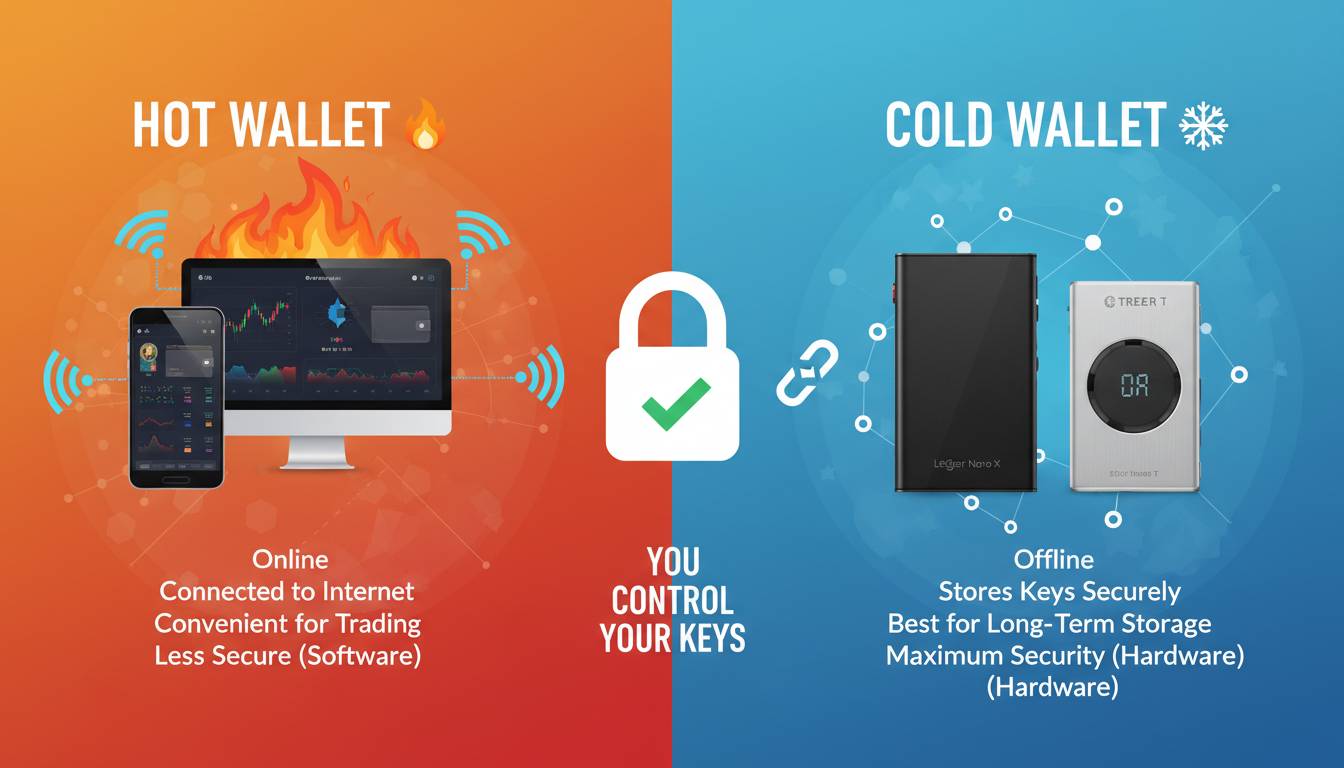
Use hardware wallets: Store significant farming capital in hardware wallets rather than browser extensions. Many exploits target hot wallet private keys.
Monitor on-chain metrics: Track unusual changes in TVL, token holder distributions, and contract upgrades using tools like Etherscan, DeFi Llama, and Dune Analytics.
Understand withdrawal timelines: Some protocols impose timelocks or vesting schedules. Ensure you can exit positions when needed without excessive penalties.
Frequently Asked Questions
Q: Is yield farming completely unsafe for beginners?
Yield farming involves significant risks that make it unsuitable for most beginners. The learning curve is steep, and mistakes—such as approving malicious contracts or failing to understand impermanent loss—can result in total loss of funds. Beginners should first gain substantial experience with cryptocurrency holding, exchanges, and basic DeFi interactions (like swaps and staking) before attempting yield farming. Starting with established protocols and small capital amounts is essential.
Q: How can I verify if a DeFi protocol has been properly audited?
Look for audit reports published directly by the protocol’s website—never trust links or claims on social media alone. Reputable audit firms include Trail of Bits, OpenZeppelin, CertiK, SlowMist, and Halborn. Verify the audit actually exists by visiting the auditor’s official website. Understand that audits are point-in-time snapshots and cannot guarantee future security. Check whether the protocol has implemented all audit recommendations and whether bug bounty programs exist.
Q: What is the safest yield farming strategy for lower-risk tolerance?
Stablecoin farming with established protocols offers the lowest impermanent loss risk since the paired assets maintain roughly equal value. Providing liquidity to USDC/USDT or DAI/USDC pools on major dexes like Uniswap or Curve carries reduced volatility exposure. Lending protocols like Aave or Compound—among the most battle-tested in DeFi—offer relatively stable yields without impermanent loss concerns. These strategies typically yield 3-8% APY rather than triple-digit returns, but they carry substantially lower risk of principal loss.
Q: Can insurance protect against yield farming losses?
Some DeFi insurance protocols like Nexus Mutual and Cover Protocol offer coverage against smart contract failures and exploits. However, coverage typically excludes impermanent loss, rug pulls where developers act maliciously, or losses from user error (approving wrong addresses, sending funds to incorrect networks). Insurance premiums reduce net yields, and claims processing can be lengthy. Insurance should be viewed as a small risk mitigation tool rather than comprehensive protection.
Q: How do gas fees affect profit margins in yield farming?
Gas fees create a break-even threshold that depends on your capital size, farming APY, and network congestion. Using Ethereum mainnet, farming less than $5,000 typically becomes uneconomical due to gas costs consuming most gains. Layer 2 networks and alternative chains offer much lower fees, but introduce bridging complexity and potentially lower liquidity. Always calculate all transaction costs (deposit, claim rewards, compound, withdraw) before committing capital.
Q: Are there legitimate high-yield opportunities, or are extremely high APYs always scams?
Extremely high APYs (above 100%) are almost always unsustainable and involve either extreme risk or token inflation designed to appear lucrative. Sustainable yield comes from actual protocol revenue—interest from borrowers, trading fees, or liquidity provider fees. New protocols sometimes offer temporarily subsidized yields to attract TVL, but these subsidies eventually expire. Legitimate high yields correlate directly with risks: levered positions, volatile asset exposure, or newly launched tokens with minimal liquidity.
Conclusion
DeFi yield farming offers genuine opportunities for cryptocurrency holders to generate returns on idle assets. However, the space remains largely unregulated, technically complex, and populated by bad actors. The seven risks outlined—smart contract vulnerabilities, impermanent loss, rug pulls, liquidity constraints, regulatory uncertainty, centralization points, and transaction costs—represent real dangers that have collectively cost investors billions of dollars.
Successful yield farming requires continuous learning, disciplined risk management, and acceptance that the “high yield, high risk” relationship applies without exception. Protocols advertising returns that seem too good to be true almost always are. Before participating, ensure you understand exactly how your funds will be used, what protections exist, and what could go wrong.
Only invest capital you can afford to lose entirely. The DeFi ecosystem will continue evolving, and while risks remain substantial, informed participants who exercise caution can navigate this space more safely than those who chase outsized returns without understanding the dangers.