Cryptocurrency Trading for Beginners: Master the Markets Today

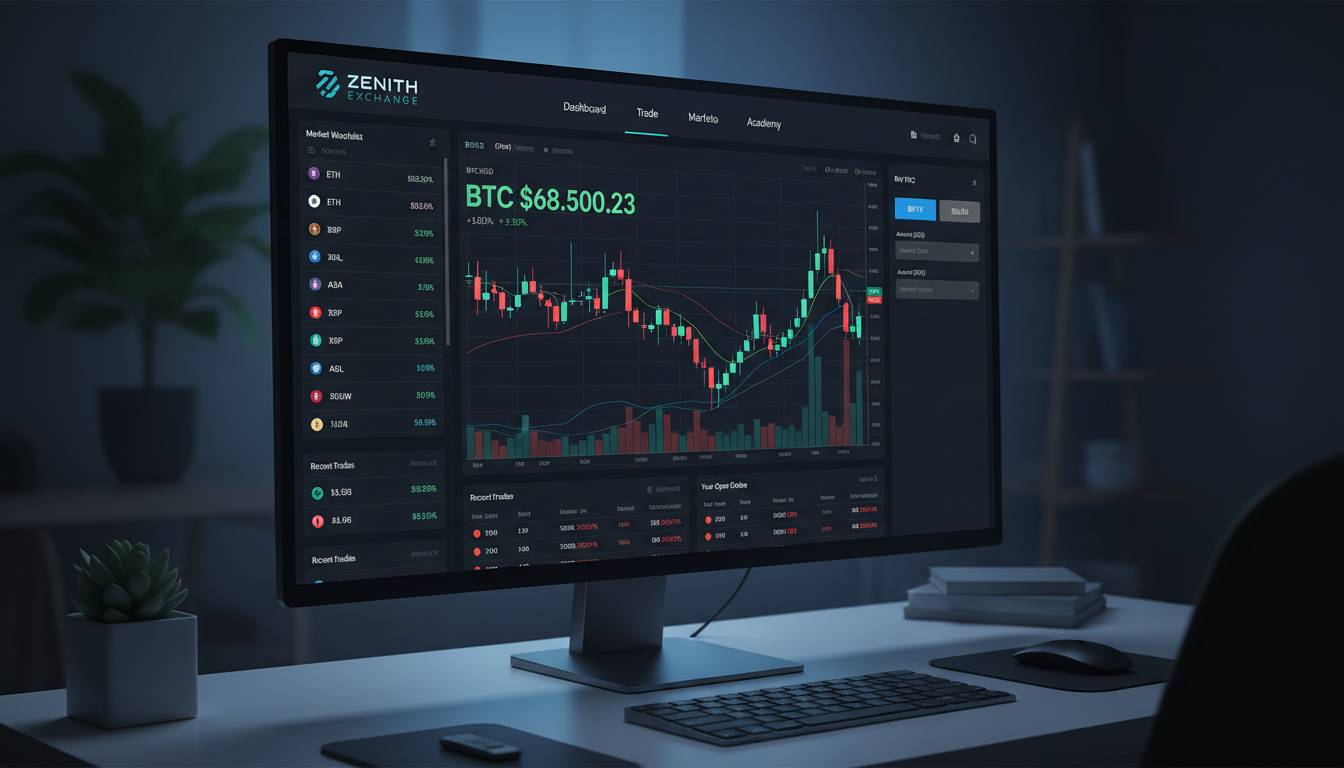
The cryptocurrency market represents one of the most dynamic and potentially profitable trading environments available today. With daily trading volumes exceeding $100 billion across major exchanges, digital assets have transformed from a niche interest into a legitimate financial instrument attracting millions of participants worldwide. For beginners seeking to enter this space, understanding the fundamentals, risks, and strategies is essential before committing capital.
This comprehensive guide walks you through everything you need to know to start trading cryptocurrency with confidence. Whether you’re interested in Bitcoin, Ethereum, or exploring altcoins, the principles outlined here will help you navigate this volatile market effectively.
Understanding Cryptocurrency Fundamentals
Before executing your first trade, you must grasp what cryptocurrency actually is and how markets operate. Cryptocurrencies are digital assets secured through cryptography and decentralized networks, typically built on blockchain technology. Unlike traditional currencies issued by governments (fiat currencies), cryptocurrencies operate without central authorities like banks or governments controlling their supply.
Bitcoin, created in 2009, remains the largest cryptocurrency by market capitalization, consistently holding above $1 trillion in total value. Ethereum, launched in 2015, introduced smart contracts and powers the majority of decentralized applications in the crypto ecosystem. These two assets dominate the market, but thousands of alternative cryptocurrencies (altcoins) exist with varying use cases, technologies, and risk profiles.
Cryptocurrency markets operate 24 hours a day, seven days a week, unlike traditional stock markets with fixed trading hours. This continuous operation means prices can move significantly overnight or during weekends when traditional markets are closed. Major cryptocurrency exchanges include Coinbase, Binance, Kraken, and Gemini, each offering different features, fee structures, and available assets.
How Cryptocurrency Trading Works
Cryptocurrency trading involves buying digital assets at lower prices and selling them at higher prices, or shorting assets when you anticipate value declines. The basic mechanism resembles stock trading: you create an account on an exchange, deposit funds (typically US dollars or other cryptocurrencies), and execute trades through the exchange’s platform.
Two primary trading approaches exist in cryptocurrency markets. Spot trading involves immediate purchase and ownership of actual cryptocurrency tokens—you buy Bitcoin and actually receive Bitcoin in your wallet. Derivatives trading, including futures and options, involves contracts representing the future value of cryptocurrencies without holding the underlying asset. Beginners should start with spot trading, as it involves less complexity and immediate ownership.
Price movements in cryptocurrency are measured in percentages rather than dollars. Because prices vary dramatically (Bitcoin might trade at $50,000 while a smaller altcoin trades at $0.50), understanding percentage changes provides meaningful context. A 10% move on Bitcoin represents $5,000, while the same percentage move on a $0.50 token represents just $0.05—yet both represent equivalent proportional gains or losses.
Essential Trading Strategies for Beginners
Successful cryptocurrency trading requires adopting strategies that match your risk tolerance, time availability, and capital position. Several approaches have proven effective for newcomers entering the market.
Dollar-cost averaging (DCA) involves investing fixed amounts at regular intervals regardless of price, reducing the impact of volatility by spreading purchases over time. Rather than investing $1,000 at once, you might invest $100 weekly for ten weeks. This strategy removes emotional decision-making and historically performs well in upward-trending markets.
Buy and hold (often called “HODLing” in crypto circles) involves purchasing cryptocurrency with long-term appreciation potential and holding through market fluctuations. This approach requires patience and conviction but has generated substantial returns for early Bitcoin and Ethereum investors who maintained positions through multiple market cycles.
Technical analysis uses historical price patterns and indicators to predict future price movements. Traders examine chart patterns, moving averages, relative strength index (RSI), and other tools to identify entry and exit points. While technical analysis requires learning curves, many traders find it valuable for timing trades within existing trends.
Fundamental analysis evaluates cryptocurrencies based on underlying value factors: technology quality, team experience, adoption metrics, tokenomics (supply and distribution), and competitive positioning. This approach suits investors seeking to identify projects with strong long-term potential rather than short-term trading opportunities.
Risk Management and Capital Protection
The cryptocurrency market’s volatility creates substantial profit potential but also significant risks. Proper risk management distinguishes sustainable traders from those who experience catastrophic losses. Several principles guide capital preservation in crypto markets.
Position sizing determines how much capital you allocate to any single trade. Financial advisors commonly recommend risking no more than 1-2% of your total portfolio on any single position. If you have $10,000 in trading capital, a single trade should not exceed $100-$200 at risk. This approach ensures that even multiple consecutive losses won’t devastate your portfolio.
Stop-loss orders automatically sell positions when prices fall to predetermined levels, limiting potential losses. If you buy Bitcoin at $50,000 and set a stop-loss at $47,500 (5% below entry), your maximum loss on that position becomes $2,500 regardless of how far prices subsequently fall. This mechanical discipline prevents emotional holding during panic selling.
Diversification across multiple cryptocurrencies reduces exposure to any single asset’s performance. While diversification doesn’t guarantee profits or prevent losses, holding a portfolio of 5-10 different tokens spreads risk across various projects and sectors within the crypto ecosystem.
Never trade with money you cannot afford to lose. Cryptocurrency markets can experience 50-90% declines in short periods, as demonstrated during the 2022 market crash when Bitcoin fell from $69,000 to approximately $16,000. Only use capital designated for speculative investing, not money needed for essential expenses, emergency funds, or debt repayment.
Setting Up Your Trading Infrastructure
Establishing proper infrastructure before trading protects your assets and enables efficient market participation. Several components require consideration when building your trading setup.
Choosing an exchange involves evaluating security reputation, fee structures, available cryptocurrencies, user interface accessibility, and regulatory compliance. For US residents, regulated exchanges like Coinbase and Gemini offer stronger consumer protections but may have higher fees. Binance and Kraken provide more advanced trading features with competitive pricing but require careful verification of available services in your state.
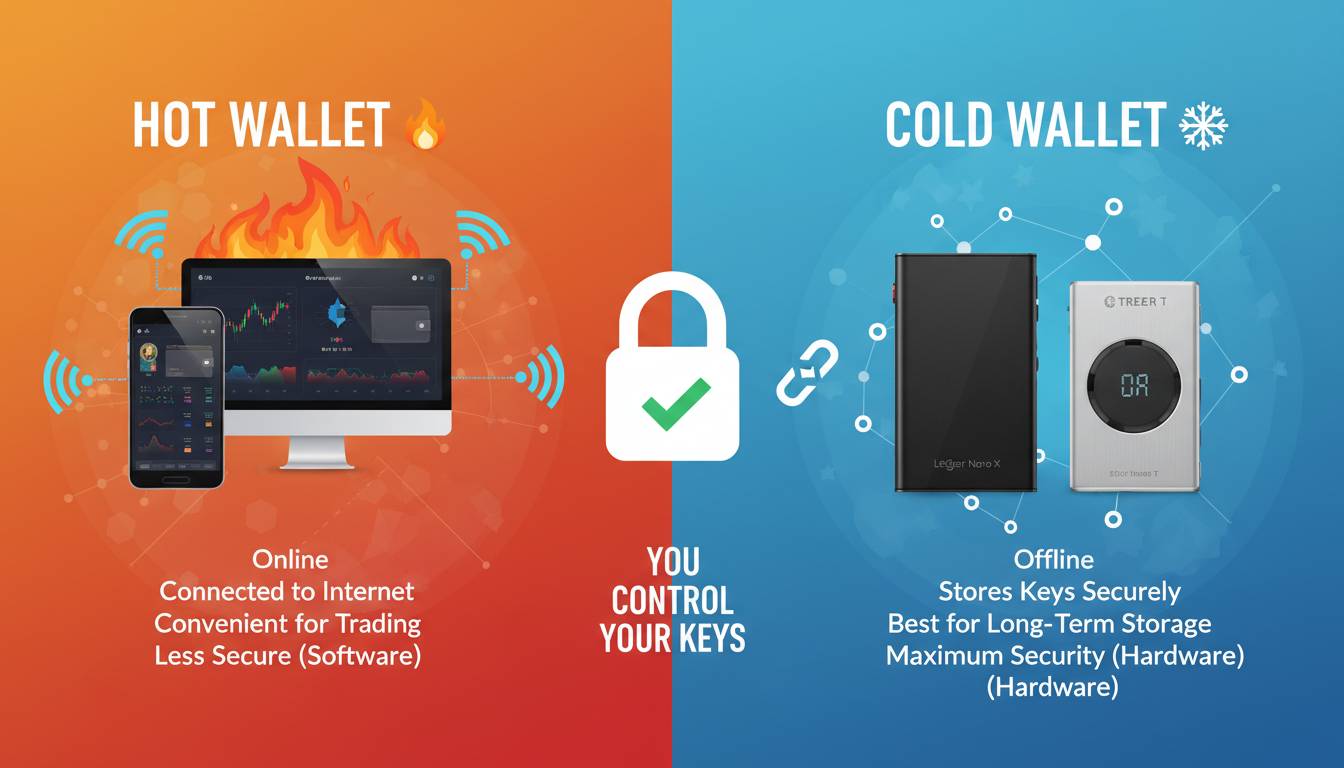
Wallet security separates hot wallets (software-connected wallets for active trading) from cold wallets (offline storage for long-term holdings). Hardware wallets like Ledger and Trezor provide the strongest security for substantial holdings by keeping private keys disconnected from internet-connected devices. For smaller trading balances, exchange-provided wallets offer convenience, though they carry counterparty risk if the exchange experiences security breaches or insolvency.
Secure account practices include enabling two-factor authentication (preferably using hardware security keys or authenticator apps rather than SMS), creating strong unique passwords, and using email addresses dedicated specifically to exchange accounts. Many successful traders maintain separate email addresses for financial accounts to reduce phishing exposure.
Reading Markets and Making Informed Decisions
Developing market literacy enables better trading decisions over time. Understanding key metrics and market indicators helps you evaluate opportunities and risks more accurately.
Market capitalization represents total value of a cryptocurrency, calculated by multiplying current price by circulating supply. Bitcoin’s market cap typically exceeds $1 trillion, while smaller altcoins might have market caps under $100 million. Market cap indicates relative size and typically correlates with liquidity and stability—larger market cap assets tend to experience less dramatic percentage swings than smaller ones.
Trading volume measures how much cryptocurrency changes hands within a given period. High volume indicates strong market interest and easier position entry/exit, while low volume suggests limited liquidity where large orders might significantly impact prices. Active traders prefer assets with substantial daily trading volume.
Order book depth displays buy and sell orders at various price levels, revealing market liquidity and potential support/resistance zones. Understanding order book dynamics helps anticipate price movements around significant order clusters.
News and sentiment analysis influence cryptocurrency prices dramatically. Regulatory announcements, institutional adoption news, technology upgrades, and macroeconomic developments all impact market movements. Following reliable crypto news sources helps you understand factors driving price changes, though distinguishing signal from noise requires practice.
Building Your Trading Plan
Successful traders operate according to predefined plans rather than reacting emotionally to market movements. Creating a comprehensive trading plan before entering positions establishes discipline and direction.
Your trading plan should specify which cryptocurrencies you’ll trade and why, your position sizing methodology, entry criteria for new positions, exit strategies including profit targets and stop-loss levels, and maximum daily or weekly loss limits triggering trading pauses. Review and refine your plan as you gain experience, but avoid constantly changing rules based on recent outcomes—consistency builds sustainable results.
Record-keeping deserves emphasis many beginners overlook. Maintaining a trading journal documenting every trade’s rationale, entry/exit prices, position size, emotions, and outcomes enables pattern recognition over time. Many successful traders attribute their improvement to systematic journal review identifying recurring mistakes or successful strategies.
Tax Considerations for Cryptocurrency Trading
US cryptocurrency traders must understand tax implications of their trading activities. The Internal Revenue Service (IRS) treats cryptocurrency as property, meaning each taxable event triggers potential capital gains or losses calculation.
Taxable events include selling cryptocurrency for fiat currency, trading one cryptocurrency for another (selling Bitcoin to buy Ethereum counts as two events), and using cryptocurrency for purchases. Simply holding cryptocurrency in a wallet does not create taxable events.
Capital gains occur when you sell cryptocurrency for more than your purchase price. Short-term gains (assets held less than one year) are taxed at ordinary income rates up to 37%, while long-term gains (held over one year) qualify for preferential rates of 0%, 15%, or 20% depending on total income.
Capital losses can offset gains and up to $3,000 of ordinary income annually, with excess losses carrying forward to future years. This provision makes tax-loss harvesting a legitimate strategy—selling losing positions to realize losses that offset gains.
Maintaining thorough records of every transaction including dates, amounts, prices, and purpose is essential for accurate tax reporting. Many exchanges provide transaction history downloads simplifying this process, though you may need additional tracking for transfers between wallets or across multiple exchanges.
Frequently Asked Questions
How much money do I need to start trading cryptocurrency?
You can start trading with very small amounts, often as little as $10 or $25 on major exchanges. This allows beginners to learn platform navigation and experience price movements without substantial capital at risk. However, account minimums and transaction fees mean extremely small positions may become impractical due to percentage-based costs eating into returns.
Is cryptocurrency trading legal in the United States?
Yes, cryptocurrency trading is legal in the United States. However, regulations vary by state, and not all exchanges operate in all states. Additionally, certain securities regulations apply to cryptocurrency offerings, and unregistered securities offerings remain illegal. US residents should use regulated exchanges complying with US law.
Can I lose all my money trading cryptocurrency?
Yes, you can lose your entire investment in cryptocurrency trading. The market’s extreme volatility means prices can drop 80-90% in short periods, and many cryptocurrencies ultimately become worthless due to project failures. Proper risk management including position sizing, stop-loss orders, and diversification helps protect against total loss, but no strategy eliminates risk entirely.
What’s the difference between Bitcoin and Ethereum?
Bitcoin functions primarily as a digital currency and store of value, often called “digital gold.” Its blockchain focuses on secure, decentralized transaction recording. Ethereum is a platform enabling smart contracts and decentralized applications, functioning more like a development platform than simple currency. Both serve different purposes in a diversified crypto portfolio.
How do I know when to buy or sell?
Determining optimal entry and exit points challenges even experienced traders. Technical analysis tools like trend lines, moving averages, and support/resistance levels help identify potential opportunities. Fundamental analysis evaluates whether project fundamentals justify current valuations. Most successful traders combine both approaches while maintaining disciplined risk management regardless of their entry timing confidence.
Should I use a trading robot or automated trading system?
Automated trading systems carry significant risks, including technical failures, strategy obsolescence, and scams masquerading as legitimate trading tools. While institutional traders use sophisticated algorithms, retail beginners typically fare better learning manual trading first. If you explore automated systems, thoroughly research track records, understand underlying strategies, and never invest more than you can afford to lose.
Conclusion
Cryptocurrency trading offers substantial opportunities for beginners willing to invest time in learning fundamental principles, developing disciplined strategies, and managing risk carefully. The market’s volatility creates both profit potential and loss risk, making education and preparation essential before committing capital.
Start with small positions, maintain realistic expectations, and prioritize capital preservation in early trading experiences. Focus on understanding market mechanics, developing your trading plan, and building systematic habits rather than chasing immediate profits. As you gain experience and confidence, you can gradually increase position sizes and explore more advanced trading strategies.
Remember that sustainable trading success comes from consistent application of sound principles, not from finding shortcuts or guaranteed winning strategies. The cryptocurrency market will continue evolving, offering new opportunities and challenges—your ability to adapt and learn will determine your long-term success more than any specific strategy or market prediction.