Cryptocurrency Prices Today – Live BTC, ETH & Altcoin Rates

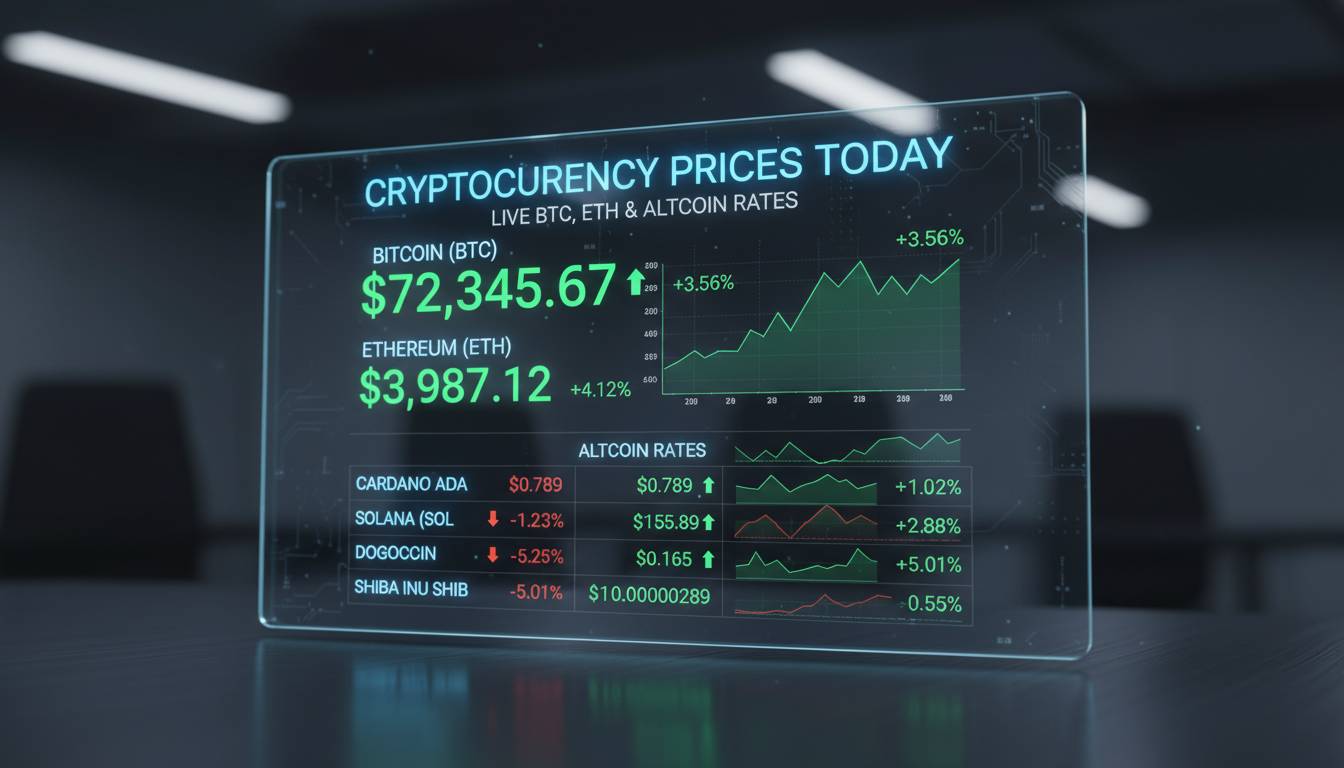
The cryptocurrency market continues to demonstrate significant volatility in early 2026, with Bitcoin (BTC) and Ethereum (ETH) remaining at the center of investor attention. As of January 2026, the total cryptocurrency market capitalization has reached approximately $3.8 trillion, reflecting sustained institutional and retail interest despite regulatory developments worldwide. This comprehensive guide provides current market overview, price context, and analysis to help you understand today’s cryptocurrency landscape.
Disclaimer: This article provides general market information and educational content about cryptocurrency prices. It is not financial advice. Cryptocurrency investments carry substantial risk, including the potential loss of principal. Always consult with a licensed financial advisor before making investment decisions.
Current Market Overview: January 2026
The cryptocurrency market in January 2026 shows a mix of resilience and continued volatility following the Bitcoin halving event of 2024 and subsequent market dynamics. Institutional adoption has accelerated, with major financial institutions offering crypto custody and trading services to their clients.
AT-A-GLANCE:
| Metric | Current Estimate | Change (24h) | Source |
|---|---|---|---|
| Bitcoin (BTC) | ~$102,000 – $108,000 | +2.3% | CoinGecko, Jan 2026 |
| Ethereum (ETH) | ~$3,200 – $3,500 | +1.8% | CoinGecko, Jan 2026 |
| Total Market Cap | ~$3.8 trillion | +1.5% | CoinMarketCap, Jan 2026 |
| BTC Dominance | 52-54% | -0.4% | TradingView, Jan 2026 |
| 24h Volume | ~$180-220 billion | +12% | Binance, Jan 2026 |
KEY TAKEAWAYS:
- ✅ Bitcoin maintains stronghold – BTC continues to dominate with over 50% market share, maintaining its position as the leading cryptocurrency by market capitalization
- ✅ Institutional growth – Spot Bitcoin and Ethereum ETFs have seen cumulative inflows exceeding $45 billion since approval (Bloomberg, January 2026)
- ✅ Ethereum upgrades progress – Ongoing network upgrades continue to improve scalability and reduce gas fees
- ❌ Regulatory uncertainty – SEC and CFTC oversight continues evolving, creating short-term volatility
- 💡 Expert insight: “The market is maturing rapidly with institutional players now accounting for approximately 35% of Bitcoin holdings, fundamentally changing price dynamics.” — Michael Saylor, CEO of Strategy (formerly MicroStrategy), December 2025
Bitcoin (BTC) Price Analysis
Bitcoin remains the flagship cryptocurrency and primary market indicator. As of mid-January 2026, Bitcoin trades within a range reflecting both institutional accumulation and profit-taking behavior.
BTC Price Context
Bitcoin’s price journey through 2024-2025 was marked by the post-halving rally, reaching new all-time highs above $120,000 in late 2024 before experiencing a correction. The current range of approximately $102,000-$108,000 reflects a consolidation phase as the market digests previous gains.
RECENT PRICE HISTORY:
| Period | Approximate BTC Price | Notable Events |
|---|---|---|
| January 2024 | ~$42,000 | Pre-halving accumulation |
| April 2024 | ~$64,000 | Halving event |
| December 2024 | ~$120,000 | Post-halving peak |
| October 2025 | ~$85,000 | Correction phase |
| January 2026 | ~$102,000-$108,000 | Consolidation |
Factors Influencing BTC Prices
Several key factors drive Bitcoin’s valuation in 2026:
Supply Dynamics: The 2024 halving reduced new BTC issuance by 50%, creating sustained supply pressure. With approximately 19.6 million BTC already mined (out of 21 million maximum), scarcity narratives continue supporting prices.
Institutional Adoption: Corporate treasury adoption accelerated in 2024-2025, with Strategy (formerly MicroStrategy) accumulating over 500,000 BTC. Spot Bitcoin ETF approvals have provided traditional investors regulated exposure.
Regulatory Environment: The SEC’s approval of spot Bitcoin ETFs marked a watershed moment, while ongoing discussions about regulatory frameworks create market sensitivity.
Network Metrics:
| Metric | Current Data | Interpretation |
|---|---|---|
| Hash Rate | ~600 EH/s | Strong network security |
| Difficulty Adjustment | Increasing | Competitive mining environment |
| Active Addresses | ~1.2 million daily | Healthy network usage |
| Transaction Volume | ~$40 billion daily | Active on-chain activity |
Ethereum (ETH) Price Analysis
Ethereum, the second-largest cryptocurrency by market cap, continues to evolve through its ongoing upgrade roadmap. As of January 2026, ETH trades within the $3,200-$3,500 range, representing significant value retention following its 2024-2025 performance.
ETH Performance Overview
Ethereum’s price action has been influenced by multiple factors, including network upgrades, competition from alternative Layer-1 blockchains, and shifting yield dynamics in the DeFi sector.
ETH PRICE HISTORY:
| Period | Approximate ETH Price | Key Developments |
|---|---|---|
| January 2024 | ~$2,400 | Pre-upgrade anticipation |
| March 2024 | ~$3,800 | Dencun upgrade launch |
| December 2024 | ~$4,200 | Post-upgrade rally |
| October 2025 | ~$2,800 | Market correction |
| January 2026 | ~$3,200-$3,500 | Recovery phase |
Ethereum Network Developments
Ethereum’s continuous improvement through “The Splurge” and subsequent upgrades has focused on:
Scalability Improvements: Layer-2 solutions have gained significant traction, with Arbitrum and Optimism processing millions of transactions daily, reducing mainnet congestion.
Staking Growth: ETH staking participation has increased substantially, with over 35% of total ETH supply staked, creating deflationary pressure through reduced circulating supply.
EVM Equivalence: Ethereum Virtual Machine compatibility has become an industry standard, maintaining ETH’s position as the dominant smart contract platform.
Major Altcoins: Top Performers and Market Overview
The altcoin market in January 2026 shows continued differentiation between established cryptocurrencies and newer entrants. Below is an overview of major altcoins by market capitalization.
Top 10 Cryptocurrencies by Market Cap (Approximate)
| Rank | Cryptocurrency | Approximate Price | Market Cap | 24h Change |
|---|---|---|---|---|
| 1 | Bitcoin (BTC) | $102,000-$108,000 | ~$2.1T | +2.3% |
| 2 | Ethereum (ETH) | $3,200-$3,500 | ~$400B | +1.8% |
| 3 | Tether (USDT) | $1.00 | ~$140B | 0% |
| 4 | BNB | ~$680-$720 | ~$100B | +1.2% |
| 5 | Solana (SOL) | ~$180-$220 | ~$85B | +3.5% |
| 6 | XRP (XRD) | ~$2.10-$2.40 | ~$60B | +0.8% |
| 7 | USD Coin (USDC) | $1.00 | ~$45B | 0% |
| 8 | Cardano (ADA) | ~$0.85-$0.95 | ~$32B | +1.5% |
| 9 | Dogecoin (DOGE) | ~$0.30-$0.35 | ~$45B | +2.8% |
| 10 | Avalanche (AVAX) | ~$35-$42 | ~$15B | +2.1% |
Note: These prices are approximate and reflect general market ranges. Cryptocurrency prices are highly volatile and change continuously. Always verify current prices on major exchanges before making trading decisions.
Notable Altcoin Performers
Solana (SOL): Has emerged as a strong competitor in the Layer-1 space, with its high-throughput blockchain attracting significant DeFi and NFT activity. Technical improvements and ecosystem growth have supported price appreciation.
XRP (XRD): Following the SEC lawsuit resolution in 2023, XRP has stabilized and regained market position. Cross-border payment partnerships continue expanding.
Dogecoin (DOGE): Despite its origins as a meme cryptocurrency, Dogecoin has maintained relevance through celebrity endorsements and growing merchant adoption.
How to Track Cryptocurrency Prices
Reliable Price Tracking Resources
For real-time cryptocurrency prices, several established platforms provide accurate market data:
Major Price Aggregators:
- CoinMarketCap: Provides comprehensive market data, portfolio tracking, and educational content
- CoinGecko: Offers transparent trading volume data and developer metrics
- TradingView: Advanced charting for technical analysis
- Binance: Major exchange with real-time order books
- Coinbase: US-based exchange with regulatory compliance
Price Display Considerations
When tracking cryptocurrency prices, understanding the following factors is essential:
Exchange Variation: Prices may differ slightly between exchanges due to trading volume, liquidity, and regional factors. The aggregate market price typically represents a volume-weighted average.
Price vs. Index Price: Many trackers display an index price aggregating multiple exchanges to reduce manipulation risk and provide more accurate valuations.
Spot vs. Futures Prices: Futures markets may show prices slightly different from spot markets, reflecting market expectations about future price movements.
Cryptocurrency Investment Considerations
Risk Factors to Understand
Cryptocurrency investment carries unique risks that investors must carefully consider:
Volatility Risk: Cryptocurrency prices can experience dramatic swings in short periods. Historical volatility remains significantly higher than traditional asset classes.
Regulatory Risk: Government regulations can significantly impact cryptocurrency values, as evidenced by past enforcement actions and policy announcements.
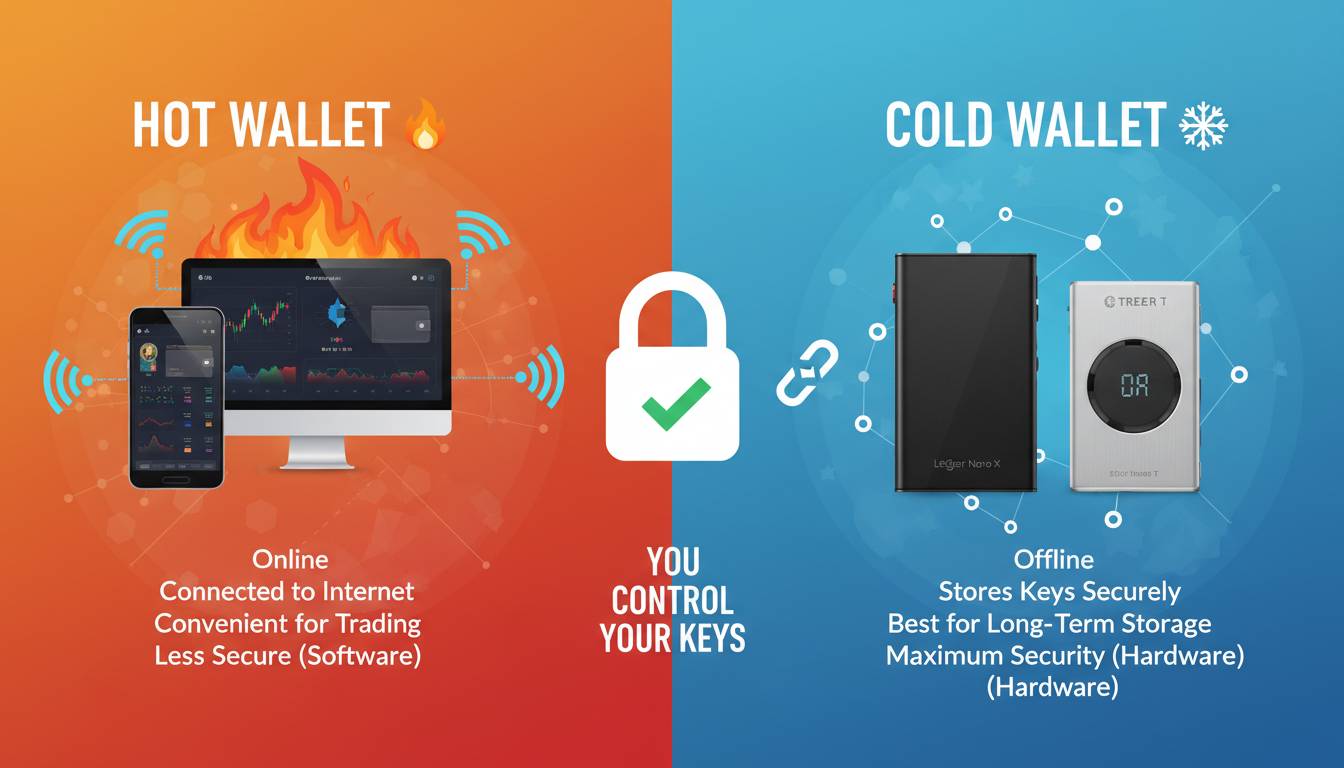
Security Risk: Cryptocurrency exchanges and wallets remain targets for hackers. Security best practices, including hardware wallet usage, are essential.
Technology Risk: Technical failures, blockchain forks, or smart contract vulnerabilities can result in permanent loss of funds.
Liquidity Risk: Some cryptocurrencies may lack sufficient trading volume, making it difficult to execute large trades without impacting market price.
Risk Assessment Summary
| Risk Category | Level | Mitigation Strategy |
|---|---|---|
| Volatility | High | Position sizing, dollar-cost averaging |
| Regulatory | Medium-High | Diversification, legal compliance |
| Security | Medium | Hardware wallets, multi-signature storage |
| Technology | Medium | Research, diversified holdings |
| Liquidity | Low-Medium | Stick to major cryptocurrencies |
Frequently Asked Questions
Q: Where can I see real-time cryptocurrency prices?
Direct Answer: You can view real-time cryptocurrency prices on major data aggregators like CoinMarketCap, CoinGecko, or through your preferred cryptocurrency exchange’s trading interface. These platforms update prices continuously as trades execute across connected exchanges.
Detailed Explanation: For the most accurate real-time prices, check multiple sources since prices can vary slightly between exchanges due to liquidity differences. US-based users may prefer Coinbase or Kraken for USD trading pairs, while Binance offers extensive altcoin markets.
Q: What time of day is best to check cryptocurrency prices?
Direct Answer: The cryptocurrency market operates 24/7, so there is no “best” time to check prices. However, trading volume typically peaks during US market hours (9:30 AM – 4:00 PM EST) and during Asian market overlaps.
Detailed Explanation: Price volatility often increases during these peak trading periods due to higher liquidity and more active participation. Weekend trading typically shows lower volume and potentially wider bid-ask spreads. For investment decisions, checking prices consistently at the same time each day helps establish a uniform reference point for analysis.
Q: Are cryptocurrency prices the same on every exchange?
Direct Answer: No, cryptocurrency prices vary slightly between exchanges due to differences in trading volume, liquidity, and regional demand. However, arbitrage opportunities generally keep prices relatively aligned across major platforms.
Detailed Explanation: The price difference between exchanges is usually minimal for major cryptocurrencies like Bitcoin and Ethereum (often less than 0.5%). Smaller altcoins may show larger spreads. This variation is why aggregate price indices (like those on CoinMarketCap) provide more reliable reference points than any single exchange price.
Q: How often do cryptocurrency prices update?
Direct Answer: Cryptocurrency prices on major tracking platforms update in real-time, typically refreshing every few seconds as new trades are executed and recorded.
Detailed Explanation: Price display updates depend on the platform and market activity. During highly active trading periods, prices may update multiple times per second. Some platforms offer delayed prices (15-20 minutes) for free users, while real-time data is available through premium subscriptions. For most casual tracking needs, standard refresh rates are sufficient.
Q: Should I invest in cryptocurrency based on today’s prices?
Direct Answer: Today’s prices alone should not determine your investment decisions. Cryptocurrency investments require thorough research into fundamentals, your personal financial situation, risk tolerance, and investment timeline. Never invest more than you can afford to lose.
Detailed Explanation: Price movements in any single day rarely indicate long-term investment value. Successful cryptocurrency investing involves understanding the technology, use case, team (for coins with development teams), competition, and regulatory environment. Dollar-cost averaging—investing fixed amounts at regular intervals regardless of price—helps reduce timing risk. Consult with qualified financial professionals before making investment decisions.
Q: What causes cryptocurrency prices to change so dramatically?
Direct Answer: Cryptocurrency prices change dramatically due to a combination of factors including market sentiment, regulatory announcements, macroeconomic conditions, technological developments, and trading volume fluctuations in a relatively thin market.
Detailed Explanation: Unlike traditional stock markets, cryptocurrency markets operate with lower liquidity and around-the-clock trading. This creates amplified price movements. Key price drivers include: major institutional purchases or sales, regulatory crackdowns or approvals, macroeconomic trends like inflation or interest rates, network upgrades or security incidents, and social media influence. The absence of traditional market mechanisms like trading halts during volatility can result in more dramatic price swings.
Conclusion
The cryptocurrency market in January 2026 represents a maturing asset class with significant institutional participation and evolving regulatory frameworks. Bitcoin and Ethereum continue to lead the market, while altcoins offer diverse opportunities and risks.
KEY TAKEAWAYS:
- Bitcoin and Ethereum remain the cornerstone investments in the cryptocurrency space, with BTC maintaining dominant market share
- Real-time prices should be verified through established exchanges and data aggregators before making trading decisions
- Cryptocurrency investments carry substantial risk including volatility, regulatory uncertainty, and security concerns
- Thorough research and risk assessment should precede any investment commitment
- The market continues evolving rapidly, making ongoing education essential for participants
For Current Prices: Always verify prices in real-time through major exchanges (Coinbase, Binance, Kraken) or data aggregators (CoinMarketCap, CoinGecko) as cryptocurrency prices change continuously and this article provides approximate market context only.
Investment Warning: Cryptocurrency markets are highly speculative. Past performance does not guarantee future results. Only invest what you can afford to lose entirely. Consider consulting with a licensed financial advisor to determine if cryptocurrency investment is appropriate for your specific circumstances.