Cryptocurrency News Today – Live Prices, Trends & Expert Analysis

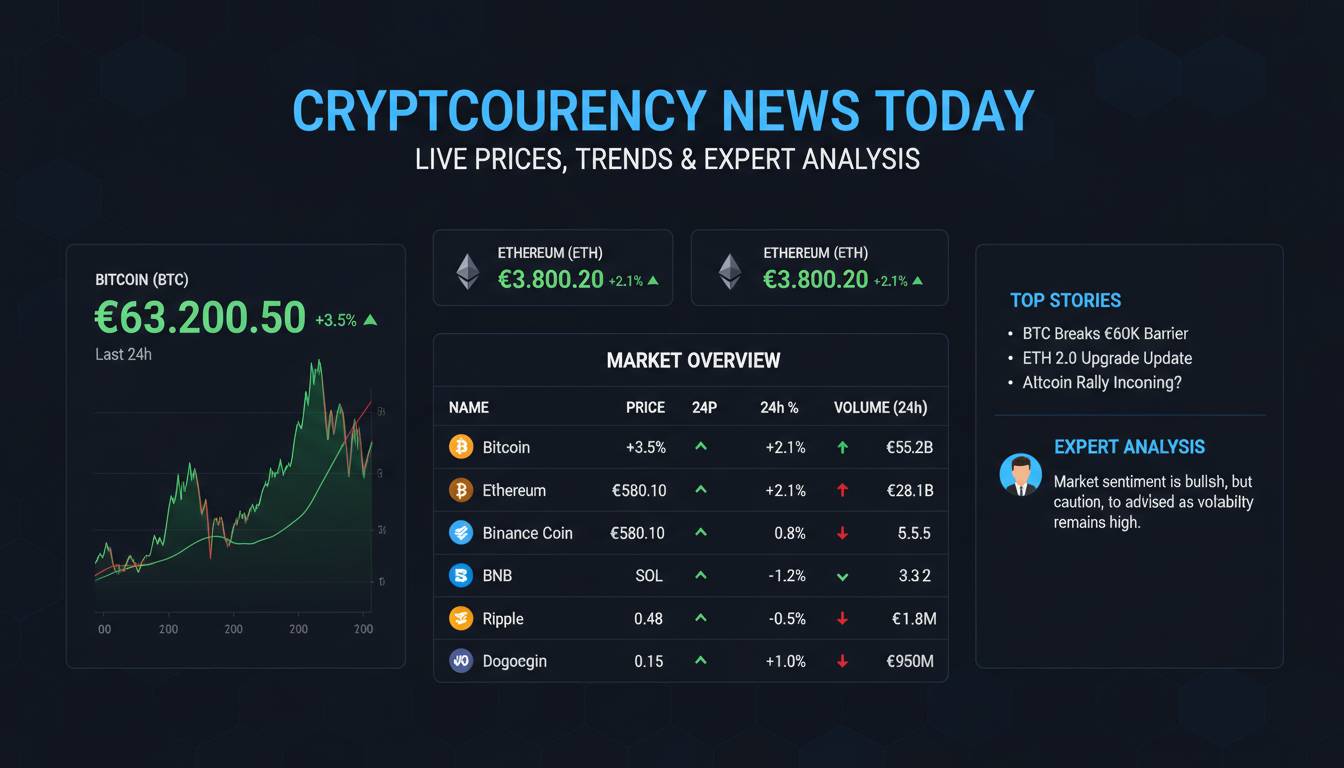
The cryptocurrency market continues to evolve at a rapid pace, with Bitcoin, Ethereum, and thousands of altcoins capturing the attention of investors, traders, and institutions worldwide. Understanding the latest developments in this volatile market is essential for anyone looking to navigate the digital asset landscape effectively.
This comprehensive guide provides current cryptocurrency market analysis, examines key trends shaping the industry, and offers expert insights to help you make informed decisions in today’s dynamic crypto environment.
Understanding the Current Cryptocurrency Market Landscape
The cryptocurrency market represents a transformative financial ecosystem that has grown significantly over the past decade. Unlike traditional currencies issued by governments, cryptocurrencies operate on decentralized networks using blockchain technology—a distributed ledger that records transactions across multiple computers securely and transparently.
As of recent market observations, the total cryptocurrency market capitalization has experienced substantial growth compared to earlier years, with Bitcoin remaining the dominant digital asset by market share. Ethereum, the second-largest cryptocurrency, continues to play a crucial role in enabling decentralized applications (dApps) and smart contracts through its versatile blockchain platform.
The market operates 24 hours a day, seven days a week, across numerous cryptocurrency exchanges worldwide. This round-the-clock trading environment means prices can fluctuate significantly based on news developments, regulatory announcements, technological upgrades, and broader economic factors.
Key Players in the Cryptocurrency Ecosystem
Bitcoin (BTC) remains the flagship cryptocurrency and the most widely recognized digital asset. Created in 2009 by an unknown person or group using the name Satoshi Nakamoto, Bitcoin introduced the concept of decentralized digital currency and blockchain technology to the world.
Ethereum (ETH) launched in 2015 by Vitalik Buterin and others, expanded beyond simple currency transactions to become a platform for decentralized applications and decentralized finance (DeFi) protocols. The transition to Ethereum 2.0, implementing proof-of-stake consensus, represented one of the most significant upgrades in crypto infrastructure.
Altcoins, a term referring to all cryptocurrencies other than Bitcoin, include thousands of projects ranging from established coins like Cardano (ADA), Solana (SOL), and Polygon (MATIC) to newer experimental tokens. Each aims to solve specific problems or offer unique features within the broader blockchain ecosystem.
Live Price Tracking and Market Performance
Understanding how to interpret cryptocurrency prices and market movements is fundamental for any participant in this space. Cryptocurrency prices are determined by supply and demand dynamics on exchanges, with prices often varying slightly between different trading platforms due to liquidity differences and regional factors.
Reading Cryptocurrency Price Charts
Cryptocurrency price charts typically display several key metrics that help traders and investors analyze market conditions:
Price represents the current trading value of one unit of a cryptocurrency against a fiat currency like the US Dollar. Prices fluctuate continuously during market hours.
Market Capitalization (market cap) is calculated by multiplying the current price by the circulating supply of a cryptocurrency. This metric helps gauge the relative size and adoption of different digital assets.
24-Hour Trading Volume indicates the total value of a cryptocurrency traded over a 24-hour period, serving as a measure of market activity and liquidity.
Price Change Percentage shows how much a cryptocurrency’s price has moved over specific timeframes—commonly 24 hours, seven days, 30 days, or year-to-date.
Market Analysis and Trends
Current market analysis reveals several notable trends shaping the cryptocurrency landscape. Institutional adoption has accelerated significantly, with major financial institutions launching cryptocurrency custody services, offering crypto exposure in investment portfolios, and developing blockchain-based settlement systems.
The DeFi sector continues to expand, creating alternative financial products and services that operate without traditional intermediaries like banks. These include lending protocols, decentralized exchanges, yield farming platforms, and synthetic asset platforms.
NFT (Non-Fungible Token) technology has also influenced the broader crypto ecosystem, extending blockchain applications beyond financial transactions to digital ownership, gaming, and creative industries.
Regulatory Developments and Legal Considerations
Regulatory clarity remains one of the most significant factors influencing cryptocurrency markets worldwide. Different jurisdictions have taken varied approaches to regulating digital assets, creating a complex compliance landscape for businesses and investors.
United States Regulatory Environment
In the United States, multiple federal agencies have asserted jurisdiction over different aspects of cryptocurrency activities. The Securities and Exchange Commission (SEC) has focused on whether certain tokens constitute securities subject to registration requirements. The Commodity Futures Trading Commission (CFTC) regulates cryptocurrency derivatives and has classified Bitcoin and Ethereum as commodities.
The Financial Crimes Enforcement Network (FinCEN) applies anti-money laundering (AML) regulations to cryptocurrency exchanges and certain wallet providers. State-level regulations vary, with some states implementing specific licensing requirements for cryptocurrency businesses.
Recent regulatory discussions have addressed stablecoins—cryptocurrencies designed to maintain a fixed value—consumer protection concerns, and the potential for a central bank digital currency (CBDC).
Global Regulatory Perspectives
Internationally, regulatory approaches differ substantially. Some countries have embraced cryptocurrency innovation, establishing regulatory frameworks that encourage blockchain development. Others have imposed restrictions or outright bans on certain cryptocurrency activities.
The European Union’s Markets in Crypto-Assets (MiCA) regulation represents one of the most comprehensive regulatory frameworks globally, providing clarity on crypto asset issuers, service providers, and consumer protection measures.
Investment Strategies and Risk Management
Approaching cryptocurrency investment requires understanding both the potential opportunities and significant risks involved. The market’s volatility means prices can experience substantial swings in relatively short periods.
Fundamental Analysis for Cryptocurrencies
Fundamental analysis in cryptocurrency investing involves evaluating intrinsic value based on factors such as:
Technology: Assessing the underlying blockchain’s technical capabilities, scalability solutions, security features, and development activity.
Adoption Metrics: Examining user growth, transaction volumes, developer participation, and integration partnerships.
Tokenomics: Reviewing the economic model including supply distribution, inflation rates, burning mechanisms, and utility within the ecosystem.
Team and Governance: Evaluating the experience of development teams, transparency of governance structures, and community engagement.
Risk Management Best Practices
Successful cryptocurrency investing requires disciplined risk management:
Portfolio Diversification: Spreading investments across multiple cryptocurrencies and asset classes helps reduce exposure to any single project’s performance.
Position Sizing: Limiting the percentage of total portfolio allocated to highly volatile assets like cryptocurrencies protects against significant losses.
Stop-Loss Orders: Setting predetermined exit points can help limit losses during unfavorable price movements.
Research Due Diligence: Thoroughly researching projects before investing helps avoid scams, rug pulls, and projects with fundamental weaknesses.
Secure Storage: Using hardware wallets for long-term holdings and reputable exchanges with strong security measures for active trading protects against theft and hacks.
Technical Analysis and Trading Tools
Technical analysis applies to cryptocurrency markets, with traders using various indicators and chart patterns to identify potential trading opportunities.
Common Technical Indicators
Moving Averages: Simple moving averages (SMA) and exponential moving averages (EMA) help identify trend direction and potential support or resistance levels.
Relative Strength Index (RSI): This momentum indicator measures the speed and magnitude of price changes, potentially signaling overbought or oversold conditions.
MACD (Moving Average Convergence Divergence): This trend-following momentum indicator helps identify potential trend reversals and momentum shifts.
Volume Analysis: Trading volume provides insights into the strength of price movements—high volume during price increases suggests stronger momentum.
Trading Strategies
Various trading strategies exist within cryptocurrency markets:
HODLing: A long-term investment strategy involving buying and holding cryptocurrencies through market volatility, based on the belief in long-term value appreciation.
Day Trading: Executing multiple trades within a single day to capture small price movements, requiring significant time, knowledge, and risk tolerance.
Swing Trading: Holding positions for days to weeks to capture medium-term price swings, balancing shorter-term trading with longer-term investing.
Dollar-Cost Averaging (DCA): Regularly purchasing fixed dollar amounts regardless of price, reducing the impact of volatility on overall purchase price.
The Future of Cryptocurrency
The cryptocurrency industry continues to evolve rapidly, with several developments likely to shape its future trajectory.
Emerging Trends
Layer 2 Solutions: Technologies like Bitcoin’s Lightning Network and Ethereum’s various scaling solutions aim to increase transaction throughput while maintaining security.
Web3 Development: The vision of a decentralized internet where users control their data and digital assets continues driving blockchain development and investment.
Central Bank Digital Currencies (CBDCs): Many countries are exploring or developing digital versions of their national currencies, potentially complementing or competing with decentralized cryptocurrencies.
Institutional Infrastructure: Continued development of custody solutions, regulatory frameworks, and investment products makes cryptocurrency more accessible to traditional investors.
Challenges and Considerations
The industry faces ongoing challenges including regulatory uncertainty, environmental concerns around energy consumption, scalability limitations, and the need for improved user experience. Addressing these challenges will be crucial for mainstream adoption and sustainable growth.
Frequently Asked Questions
What is the best cryptocurrency to invest in right now?
There is no single “best” cryptocurrency for everyone, as investment decisions depend on individual risk tolerance, investment goals, and research. Bitcoin and Ethereum remain the most established options with the largest market caps and widest adoption. However, thorough research into any cryptocurrency’s technology, team, use case, and community is essential before investing.
How do I start investing in cryptocurrency?
To start investing in cryptocurrency, create an account on a reputable cryptocurrency exchange, complete identity verification requirements, deposit funds using approved payment methods, and then purchase your chosen cryptocurrency. Consider starting with small amounts and gradually increasing your position as you gain experience.
Is cryptocurrency safe to invest in?
Cryptocurrency investment carries significant risks including extreme volatility, potential loss of entire investment, exchange hacks, scams, and regulatory changes. Only invest what you can afford to lose entirely, use secure storage solutions, and thoroughly research any project before committing funds.
How are cryptocurrency prices determined?
Cryptocurrency prices are determined by supply and demand on exchanges where buyers and sellers place orders. Prices can vary slightly between exchanges due to differences in liquidity, regional demand, and trading pairs. Major price movements typically result from significant news, regulatory announcements, or large-scale trading activity.
What is the difference between Bitcoin and Ethereum?
Bitcoin functions primarily as a digital currency and store of value, designed as a decentralized alternative to traditional money. Ethereum is a blockchain platform that enables developers to build decentralized applications, smart contracts, and DeFi protocols. While both use cryptocurrency tokens (BTC and ETH), Ethereum’s utility extends far beyond simple value transfer.
Do I need to pay taxes on cryptocurrency gains?
In the United States and many other jurisdictions, cryptocurrency is treated as property for tax purposes. Capital gains and losses from cryptocurrency transactions may be subject to capital gains tax. Tax obligations apply when selling cryptocurrency for fiat currency, trading one cryptocurrency for another, or using cryptocurrency to purchase goods or services.
The cryptocurrency market offers both significant opportunities and substantial risks. Staying informed about market developments, understanding the technology behind different projects, and maintaining disciplined investment practices positions you to navigate this evolving landscape more effectively. Whether you’re a seasoned trader or just beginning to explore digital assets, continued education and careful risk management remain essential for long-term success in the cryptocurrency space.