Cryptocurrency Explained Simply: Beginner’s Guide

If you’ve ever wondered what all the fuss is about digital money, you’re not alone. Cryptocurrency has transformed from a niche interest into a topic that affects global markets, technology, and even how we think about money itself. Whether you’ve seen headlines about Bitcoin reaching new highs or heard friends discuss ” blockchain,” this guide will walk you through everything you need to know—without the jargon or confusion.
By the end, you’ll understand what cryptocurrency is, how it works, why it matters, and whether it’s right for you. Let’s dive in.
What Exactly Is Cryptocurrency?
At its core, cryptocurrency is a digital form of money that exists only in electronic form. Unlike traditional currencies like the US Dollar or Euro, cryptocurrency isn’t printed by governments or backed by banks. Instead, it operates on a decentralized network of computers using something called blockchain technology.
Think of cryptocurrency like digital cash. You can use it to buy things, send it to friends, or hold it as an investment. The key difference is that every transaction is recorded on a public ledger that thousands of computers around the world maintain together. This makes cryptocurrency transparent, secure, and resistant to censorship.
The first and most famous cryptocurrency, Bitcoin, was created in 2009 by an unknown person (or group) using the name Satoshi Nakamoto. At that time, one Bitcoin was worth less than a penny. By late 2024, Bitcoin had reached values exceeding $100,000, capturing worldwide attention and sparking the creation of thousands of other digital currencies.
How Does Cryptocurrency Actually Work?
Understanding cryptocurrency requires grasping three interconnected concepts: blockchain, cryptography, and decentralization. Here’s how each piece fits together.
The Blockchain Explained Simply
Imagine a shared digital notebook that anyone can read but no one can erase or alter. Every time someone makes a cryptocurrency transaction—like sending Bitcoin to a friend—this transaction gets written into a “block” of information. Multiple transactions form a “chain” of blocks, hence the name blockchain.
Once information enters the blockchain, it’s extremely difficult to change. This creates an immutable record that anyone can verify. If you sent someone 1 Bitcoin, the blockchain proves it happened. There’s no need for a bank to confirm the transaction because thousands of computers around the world already confirmed it together.
Cryptography Keeps It Secure
The “crypto” in cryptocurrency comes from cryptography—the science of securing information. Each cryptocurrency user has two keys: a public key (like your email address, which you can share with anyone) and a private key (like your password, which you must keep secret).
Your private key allows you to authorize transactions. If someone gets access to your private key, they can control your cryptocurrency. This is why protecting your private keys is absolutely essential—a concept we’ll explore when discussing wallets.
Decentralization Means No Middleman
Traditional banks serve as middlemen for your money. When you pay with a debit card, your bank verifies the transaction, updates its records, and takes a slice of the transaction as a fee. Cryptocurrency removes this middleman.
Instead of one bank controlling everything, the network itself validates transactions. This is called decentralization. No single company, government, or person controls cryptocurrency. The system runs automatically through computer code and consensus among network participants.
Key Terms You Need to Know
Before exploring further, familiarize yourself with these essential terms:
| Term | Simple Definition |
|---|---|
| Wallet | A digital app or device that stores your cryptocurrency keys |
| Private Key | A secret password that lets you access and spend your crypto |
| Public Key | An address others use to send you cryptocurrency |
| Seed Phrase | A series of words that recovers your wallet if you lose access |
| Exchange | A platform where you can buy and sell cryptocurrency |
| Blockchain | The public ledger recording all transactions |
| Mining | The process of validating transactions and earning crypto rewards |
| HODL | Holding cryptocurrency long-term (from a misspelled “hold”) |
Major Cryptocurrencies: More Than Just Bitcoin
While Bitcoin remains the largest and most well-known cryptocurrency, thousands of alternatives exist. Here’s a breakdown of the most significant ones:
Bitcoin (BTC)
Bitcoin is the original cryptocurrency and the largest by market value. Designed as a digital alternative to traditional money, Bitcoin has a fixed supply of 21 million coins—making it deflationary by design. Many people view it as “digital gold,” a store of value rather than everyday spending money.
Ethereum (ETH)
Ethereum goes beyond simple digital money. It’s a platform that allows developers to build applications, games, and financial instruments on its blockchain. Ethereum introduced smart contracts—self-executing agreements that automatically enforce terms when conditions are met. This innovation has enabled everything from decentralized finance (DeFi) to non-fungible tokens (NFTs).
Other Notable Cryptocurrencies
- Solana (SOL): A fast, low-cost alternative to Ethereum for apps and transactions
- Cardano (ADA): A research-driven blockchain focused on sustainability and scalability
- Ripple (XRP): Designed for fast international money transfers between banks
- Polygon (MATIC): A “layer 2” solution that makes Ethereum transactions faster and cheaper
Each cryptocurrency serves different purposes. Some aim to replace traditional money, others to power applications, and some to solve specific technical challenges.
How Do You Actually Get Cryptocurrency?
Getting started with cryptocurrency involves a few straightforward steps:
1. Choose an Exchange
Cryptocurrency exchanges are online platforms where you can buy, sell, and trade digital currencies. Popular options in the United States include:
- Coinbase: User-friendly for beginners, widely available
- Kraken: Advanced features with competitive fees
- Binance.US: Lower fees with more trading options
- Gemini: Strong security focus, regulated in New York
When selecting an exchange, consider security features, fees, available cryptocurrencies, and whether it’s licensed to operate in your state.
2. Set Up a Wallet
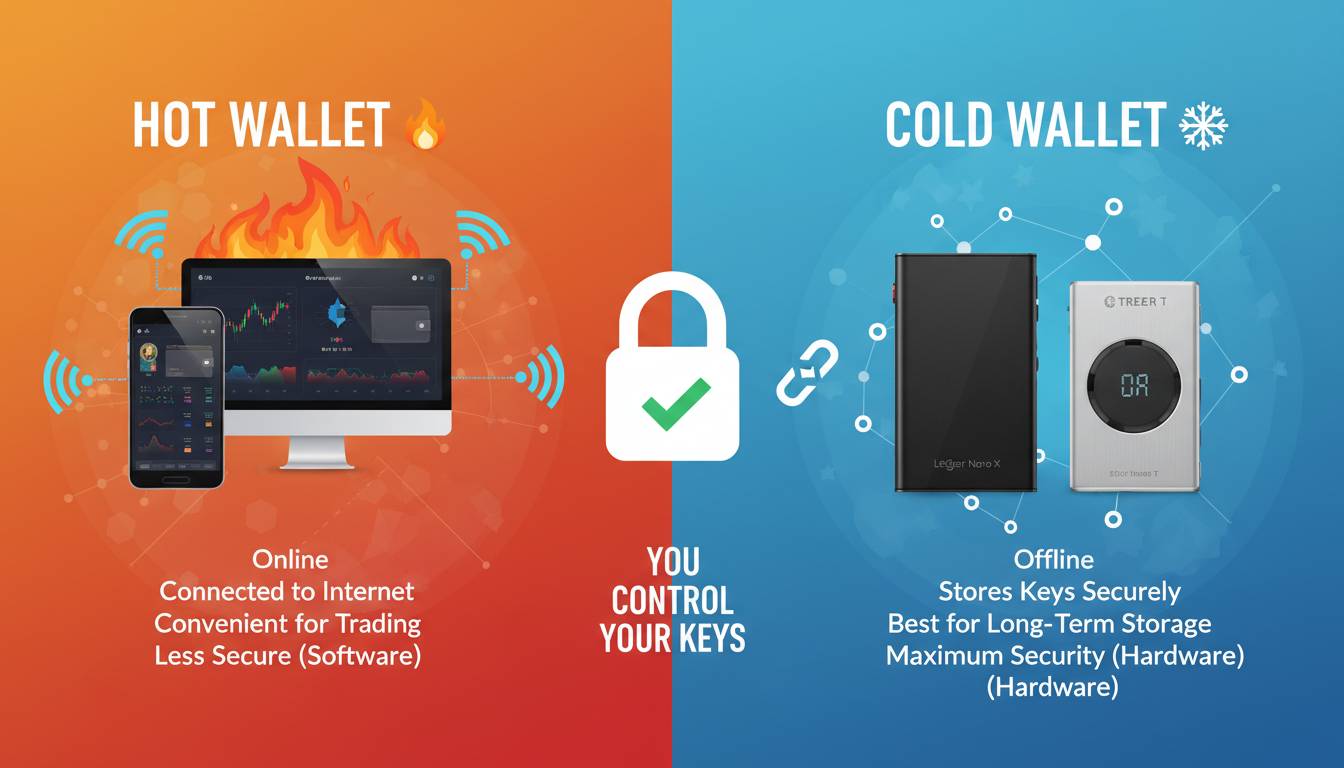
While exchanges provide wallets, many users prefer self-custody wallets for better security. These come in two forms:
- Software wallets: Apps for your phone or computer (e.g., MetaMask, Exodus)
- Hardware wallets: Physical devices that store keys offline (e.g., Ledger, Trezor)
Hardware wallets are considered the safest option because they keep your private keys disconnected from the internet, protecting them from hackers.
3. Make Your First Purchase
After funding your account with US dollars, you can buy cryptocurrency with as little as a few dollars. Start small, especially as you’re learning. Many experts recommend investing only what you can afford to lose entirely.
What Are the Risks and Considerations?
Cryptocurrency offers exciting possibilities, but it comes with significant risks you should understand before investing.
Volatility
Cryptocurrency prices can swing dramatically. In a single day, Bitcoin might gain or lose 10-20% of its value. This volatility means cryptocurrency is unsuitable for money you need soon. Only invest capital you can afford to see temporarily disappear.
Security Threats
While blockchain itself is secure, individual users remain vulnerable. Hacks, scams, and fraud have cost cryptocurrency investors billions. Never share your private keys or seed phrase. Be wary of unsolicited investment offers, “guaranteed returns,” and anyone asking for remote access to your computer.
Regulatory Uncertainty
Governments worldwide are still figuring out how to regulate cryptocurrency. Future laws could restrict use, impose taxes, or ban certain activities. The regulatory landscape remains unpredictable, especially in the United States.
No Consumer Protections
Unlike bank accounts backed by the FDIC, cryptocurrency investments lack federal protection. If you send funds to the wrong address or fall victim to a scam, recovery is extremely unlikely.
Is Cryptocurrency Right for You?
Before diving in, ask yourself these questions:
- Do you understand what you’re investing in? Never buy something you don’t comprehend.
- Can you afford to lose your entire investment? Treat cryptocurrency as high-risk capital.
- What’s your time horizon? Short-term traders face more risk than long-term holders.
- Are you comfortable with technology? Managing wallets and keys requires technical comfort.
- Do you have diverse investments already? Cryptocurrency should rarely be your entire portfolio.
If you’re curious, consider starting with a small amount—perhaps $50-100—to gain hands-on experience without significant financial risk. Learn how wallets work, practice sending small transactions, and understand the process before investing more.
The Future of Cryptocurrency
Where is all this heading? Industry experts see several trends shaping cryptocurrency’s future:
- Institutional adoption: Major financial companies like BlackRock now offer cryptocurrency investment products
- Regulation clarity: Governments worldwide are establishing clearer rules for digital assets
- Real-world integration: Cryptocurrency increasingly connects with traditional finance through stablecoins and tokenized assets
- Technology improvements: Networks are becoming faster, cheaper, and more environmentally friendly
Whether cryptocurrency fundamentally changes global finance or eventually fades remains uncertain. What’s clear is that the technology has sparked conversations about money, trust, and decentralization that will influence the future.
Frequently Asked Questions
Q: Is cryptocurrency legal in the United States?
Yes, cryptocurrency is legal in the United States. You can legally buy, sell, hold, and use cryptocurrency. However, the IRS treats cryptocurrency as property for tax purposes, meaning you may owe taxes on gains when you sell or trade. Various federal agencies, including the SEC and CFTC, regulate different aspects of cryptocurrency markets.
Q: How do I choose which cryptocurrency to buy?
Start with established cryptocurrencies like Bitcoin and Ethereum if you’re new. These have the longest track records, largest communities, and deepest liquidity. Research the purpose of any cryptocurrency before buying—understand what problem it solves and whether it has genuine utility. Avoid “meme coins” or investments promising guaranteed returns.
Q: What’s the difference between buying on an exchange versus using a wallet?
Exchanges hold your crypto for you (like a bank), making them convenient but requiring you to trust the exchange’s security. Self-custody wallets give you direct control but require you to manage your own security. For beginners, starting with an exchange is typically easier, then moving to a personal wallet once you understand the basics.
Q: Can cryptocurrency be hacked or stolen?
Yes, cryptocurrency can be stolen if someone gains access to your private keys or seed phrase. Exchanges have been hacked, and individual users have lost funds to scams. However, blockchain itself has never been successfully hacked—the technology is secure. The vulnerability lies in how users store and protect their keys. Using hardware wallets and following security best practices significantly reduces risk.
Q: How much money do I need to start investing in cryptocurrency?
You can start with very little—some exchanges allow purchases of $1 or less. However, most experts recommend investing only what you can afford to lose entirely. Begin with a small amount you’re comfortable with while learning. As you gain confidence and understanding, you can gradually increase your investment if desired.
Conclusion
Cryptocurrency represents a fundamental shift in how we think about money and trust. At its simplest, cryptocurrency is digital money that operates on a decentralized network, using cryptography to secure transactions and blockchain to maintain a transparent, unchangeable record.
Understanding cryptocurrency takes time, and that’s okay. The key concepts—blockchain, private keys, decentralization—form the foundation. From there, you can explore specific cryptocurrencies, wallets, and investment strategies that match your goals and risk tolerance.
Remember: this space evolves rapidly. Regulations change, new technologies emerge, and markets fluctuate wildly. Stay curious, remain skeptical of promises that sound too good to be true, and never invest more than you can afford to lose.
The world of cryptocurrency awaits if you’re ready to explore it—carefully and thoughtfully.