Crypto Wallet Security Guide: Protect Your Crypto From Hackers

The cryptocurrency landscape has transformed from a niche experiment into a $2.5 trillion global market, with over 420 million people worldwide holding digital assets as of 2024. Yet for all the promise of decentralized finance, the security infrastructure protecting these assets remains surprisingly fragile. In 2023 alone, crypto hackers stole approximately $1.7 billion from exchanges and wallets—a figure that represents not just numbers, but real losses for real people who trusted the wrong security approach.
Key Insights
– Crypto theft reached $1.7 billion in 2023, with wallet exploits accounting for a significant and growing portion
– 95% of crypto thefts result from user error, phishing attacks, or inadequate security practices rather than sophisticated blockchain hacking
– Hardware wallets reduce theft risk by 90%+ compared to software-only solutions
– The average time to detect a wallet compromise is 197 days—giving attackers nearly 7 months to drain funds
– Multi-signature wallets have prevented over $4 billion in potential losses since 2020
This guide provides a comprehensive, practitioner-focused approach to securing your cryptocurrency holdings. Whether you’re holding $100 or $1 million in digital assets, the principles remain the same: understand your threat model, implement defense-in-depth strategies, and maintain operational security habits that evolve alongside attacker tactics.
Understanding the Threat Landscape
The most dangerous misconception in crypto security is that your funds are protected by the blockchain’s cryptographic immutability. In reality, the blockchain itself has never been meaningfully compromised through brute force. The attacks target the interfaces between users and their keys—the wallets, exchanges, and human behaviors that constitute the actual attack surface.
Modern crypto threats fall into four primary categories, each requiring different defensive strategies.
Phishing and social engineering represent the overwhelming majority of successful attacks. These include sophisticated email campaigns mimicking legitimate exchanges, fake browser extensions that capture seed phrases, SMS-based SIM-swap attacks, and even in-person conversations where attackers manipulate users into revealing credentials. Chainalysis data indicates that phishing accounts for roughly 40% of all individual wallet thefts.
Malware and keyloggers silently record your keystrokes, take screenshots of sensitive information, or modify clipboard data to replace legitimate cryptocurrency addresses with attacker-controlled ones. Crypto-focused malware has become a specialized criminal industry, with some strains selling for as little as $50 on dark web marketplaces.
Centralized exchange vulnerabilities make headlines when major platforms suffer breaches. While these attacks target exchange hot wallets rather than individual holdings, users who maintain balances on exchanges face counterparty risk that has resulted in billions in losses when platforms collapsed or were hacked.
Insider threats and rug pulls involve developers or project founders who build cryptocurrency projects with intentional backdoors or simply abandon projects after collecting investor funds. While not strictly wallet security, these threats underscore that holding crypto requires vetting not just your storage method but also what you’re holding.
Understanding these threats reveals the fundamental truth of crypto security: your biggest vulnerability isn’t the blockchain—it’s the space between your keyboard and your brain.
Types of Crypto Wallets: Security Comparison
Choosing the right wallet type forms the foundation of your security strategy. Each option presents distinct trade-offs between convenience, security, and control.
| Wallet Type | Security Level | Convenience | Best For | Risk Factors |
|---|---|---|---|---|
| Hot Wallet (Exchange) | Low-Medium | Very High | Trading, small amounts | Exchange hacks, insider threats |
| Hot Wallet (Software) | Medium | High | Active trading, DeFi | Malware, phishing, device theft |
| Cold Wallet (Hardware) | High | Medium | Long-term storage | Physical loss, firmware compromise |
| Cold Wallet (Paper) | Very High | Low | Maximum security, offline | Physical destruction, human error |
| Multi-sig Wallet | Very High | Medium | Shared funds, large amounts | Key management complexity |
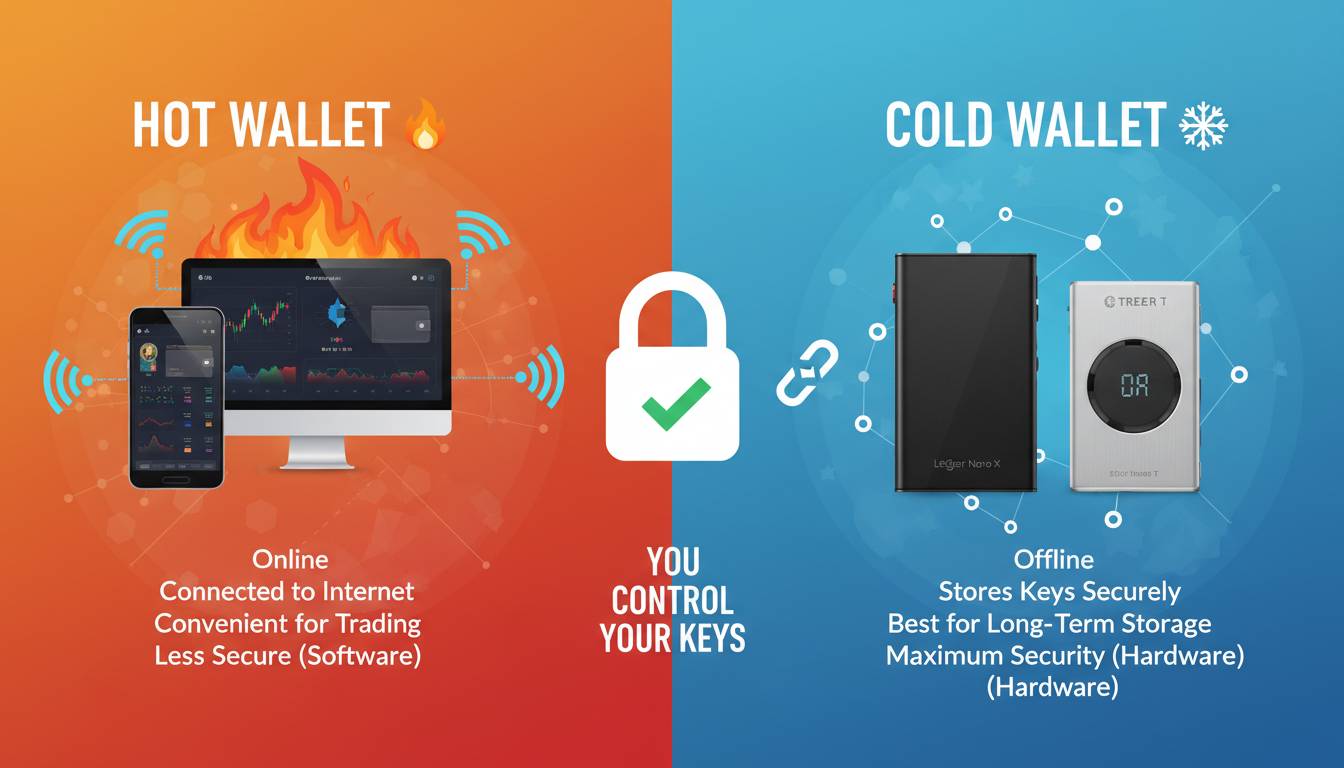
Hot wallets remain connected to the internet, providing immediate access for transactions but exposing private keys to potential remote compromise. Software wallets run as applications on phones or computers, offering good usability with moderate security. Exchange wallets sacrifice control entirely—you don’t hold your keys, meaning you don’t hold your crypto.
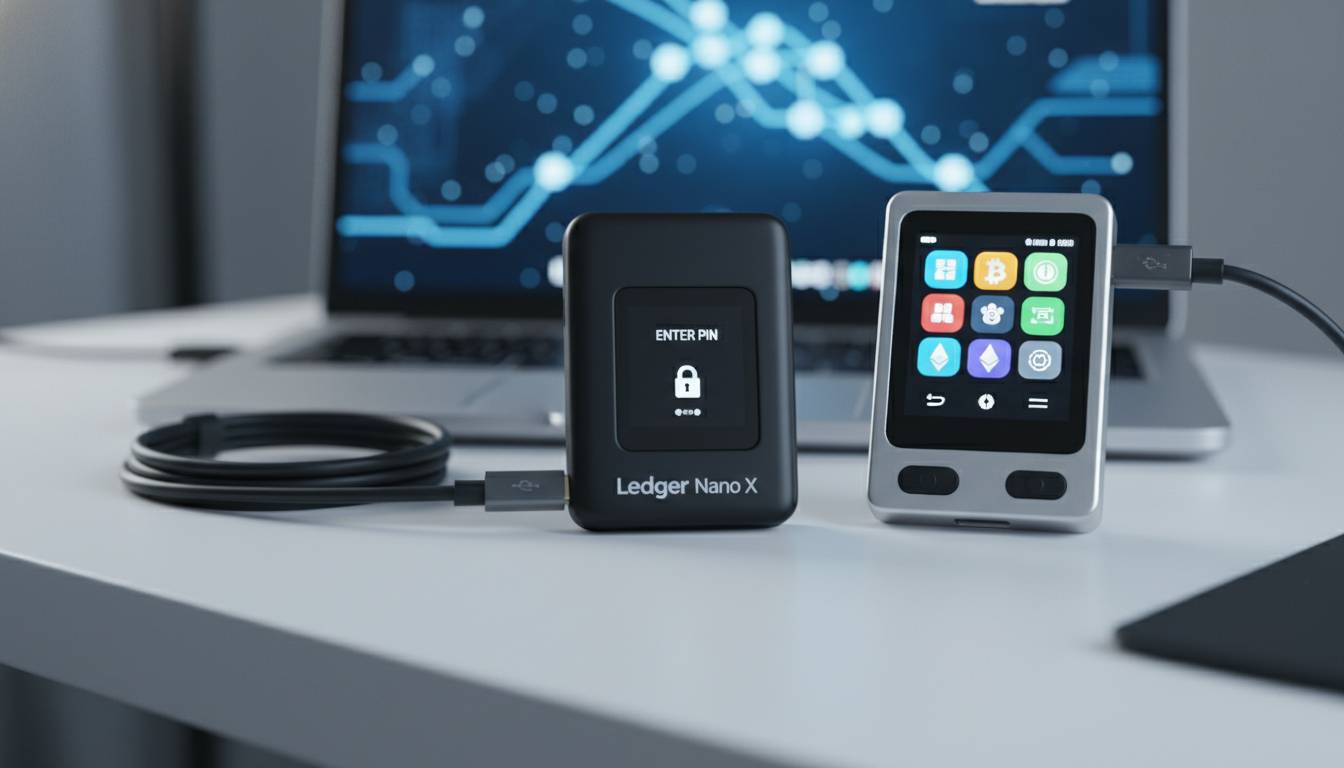
Hardware wallets store private keys in dedicated physical devices that never expose keys to internet-connected computers. When you sign a transaction, the device performs cryptographic operations internally and transmits only the verified signature to your computer. This air gap makes remote attacks theoretically impossible, though physical device compromise remains a theoretical concern.
Paper wallets involve printing private keys and addresses on physical paper, stored in secure locations. These offer theoretical maximum security against digital attacks but introduce catastrophic risks from physical loss, fire, water damage, or simple human error in key generation.
Multi-signature wallets require multiple private keys to authorize transactions—typically 2-of-3 or 3-of-5 configurations. This distributes trust across different locations, devices, or even different people, eliminating single points of failure.
For most users, the optimal strategy combines a small hot wallet for active trading (never more than you can afford to lose) with a hardware wallet for the majority of holdings, optionally enhanced with multi-signature for significant sums.
Essential Security Practices
Security isn’t a product you buy—it’s a system you build and maintain. These practices, implemented consistently, dramatically reduce your risk profile.
Seed phrase management forms the bedrock of self-custody security. Your 12 or 24-word seed phrase represents your entire wallet—if someone obtains it, they own your crypto, regardless of what wallet software you use. Never store seed phrases digitally. Never photograph them. Never type them into any device connected to the internet. The recommended approach: write seed phrases on metal plates (fireproof, corrosion-resistant) using the BIP-39 standard, store copies in physically separate secure locations (safety deposit box, trusted family member’s safe), and never create digital backups.
Address verification prevents one of the most insidious attack vectors: clipboard manipulation. Malware can detect when you copy a crypto address and silently replace it with an attacker’s address before you paste. Always verify the first and last 4-6 characters of any address before sending, ideally by comparing against a previously saved address rather than the one you just copied.
Network security matters more than most realize. Avoid conducting crypto transactions on public WiFi networks. Use a reputable VPN consistently. Consider maintaining a dedicated device for crypto transactions—never install unknown software, browser extensions, or games on this device. Update your operating system and wallet firmware immediately when updates become available.
Two-factor authentication provides a critical additional authentication layer. Hardware security keys (YubiKey, Google Titan) provide the strongest protection, followed by authenticator apps (Authy, Google Authenticator). Avoid SMS-based 2FA entirely—SIM-swap attacks have emptied countless wallets by intercepting text messages.
Transaction verification represents your final line of defense. Before confirming any transaction, verify the recipient address, the amount, and the gas/transaction fee on the hardware wallet’s screen itself—not on your computer screen, which may be compromised. Modern hardware wallets display this information on dedicated screens that cannot be manipulated by malware.
Common Security Mistakes to Avoid
Even experienced crypto users fall into predictable patterns that attackers exploit ruthlessly. Understanding these mistakes helps you avoid joining their victims.
| Mistake | Consequence | Prevention |
|---|---|---|
| Storing seed phrases digitally | Complete wallet drain if device compromised | Metal plates, physical only |
| Using the same password across exchanges | Credential stuffing attacks succeed | Unique passwords, password manager |
| Clicking links in unsolicited messages | Phishing to fake sites | Never click, navigate manually |
| Discussing crypto holdings publicly | Targeted attacks, extortion | Operational security, privacy |
| Not testing wallet recovery | Lost access when needed | Regular recovery practice |
| Leaving large balances on exchanges | Exchange hacks, bankruptcy | Self-custody for significant amounts |
| Sharing screens during transactions | Information leakage | Conduct crypto business privately |
Discussing crypto holdings publicly has resulted in real-world attacks—home invasions, extortion, and violence. Cryptocurrency’s pseudonymity doesn’t extend to your social media profiles. Never share exact holdings, particularly large positions, on public platforms.
Not testing wallet recovery creates false confidence. Many users who lose hardware wallets discover their backup phrases weren’t recorded correctly only when attempting recovery during a crisis. Periodically practice recovering wallets on separate devices using your seed phrases—verify the process works without actually moving funds.
Checking prices on unknown websites exposes you to drive-by attacks. Malicious websites can execute code that detects cryptocurrency balances in connected wallets and offer immediate “withdrawal” processes that drain funds. Use established price tracking sites, and always disconnect wallets from websites after use.
Hardware Wallet Selection and Configuration
Hardware wallets provide the strongest practical security for most users. Understanding their capabilities and limitations helps you deploy them effectively.
Current market options include Trezor (Model T, Model One), Ledger (Nano X, Nano S Plus), and Coldcard (Mk4). All have strong security track records, though Ledger faced controversy in 2023 when a data breach exposed customer information (not keys, but shipping addresses and names). Trezor offers fully open-source firmware, allowing independent security auditing. Coldcard provides advanced features including duress pins and permanent-wipe capabilities.
Initial setup requires meticulous attention. Create your wallet in a secure environment—home WiFi disconnected, no other applications running, no smart TV or voice assistants active. Write down your seed phrase as you generate it, verifying each word against the device screen rather than any computer display. Complete the optional passphrase feature (a 25th word that creates separate wallets) for enhanced security, though note this makes recovery more complex.
Firmware updates should be applied promptly but carefully. Always verify the firmware file against the manufacturer’s published hash. Never update firmware from links in emails. Navigate directly to the manufacturer’s website to download updates.
Recovery seed storage deserves serious investment. Metal backup solutions (CryptoSteel, Shift Crypto, or DIY metal stamping) protect against fire and water damage better than paper. Store backups in geographically separate locations—at minimum, two locations not in the same building as your primary device.
Advanced Security: Multi-Signature and Institutional Solutions
For holdings exceeding what you’d be comfortable losing, advanced security arrangements become worth the complexity.
Multi-signature wallets require multiple approvals for transactions. Common configurations include:
- 2-of-3: Three keys, any two required. Store keys in different locations (home, bank safe, trusted person). Losing one key doesn’t result in lost funds.
- 3-of-5: Five keys spread across trusted parties, require three approvals. Prevents any single person or location from compromising funds.
- Geographic distribution: Keys stored in different cities or countries, protecting against local disasters or legal seizure.
Setting up multi-sig requires technical competence—using tools like Casa, Unchained Capital, or directly with hardware wallets and software like Sparrow or Electrum. The complexity is justified only for significant holdings where losing access would be catastrophic.
Institutional custodians provide another option for very large holdings. Regulated custodians like Fidelity Digital Assets, BitGo, or Coinbase Custody hold crypto in fully insured, audited, geographically distributed cold storage. They provide recovery services, eliminating the “dead man’s switch” problem of self-custody, though they introduce counterparty risk and typically charge fees.
Threshold signature schemes represent the cutting edge of institutional-grade security, allowing keys to be split across multiple parties with mathematical guarantees that no single party can access funds. This technology is becoming increasingly accessible through services like Fireblocks and Anchorage.
Response Protocol: If Your Wallet Is Compromised
Despite best practices, compromises occur. Having a response plan ready minimizes damage.
Immediate actions:
- Transfer remaining funds to a secure wallet—if you still have access to any keys not compromised, move them immediately. Assume any connected devices are compromised.
- Document everything—screenshots, transaction IDs, communications, timestamps. This information helps in potential law enforcement proceedings.
- Report to exchanges—if you know which address received your funds, alert exchanges. Many have frozen funds from hacked wallets in the past.
- File reports—IC3 (Internet Crime Complaint Center) for US residents, local police, and relevant regulatory bodies. While recovery is rare, reports create patterns that help law enforcement.
Common mistakes that worsen situations:
- Sending follow-up transactions from the same compromised wallet
- Engaging with “recovery services” that demand upfront fees (most are scams)
- Wiping devices before forensic analysis, destroying evidence
- Delaying response while hoping the problem resolves
Recovery of stolen cryptocurrency is exceptionally difficult due to blockchain’s pseudonymous nature. Prevention remains dramatically more valuable than response capabilities.
Frequently Asked Questions
What’s the safest crypto wallet for beginners?
For beginners holding less than a few thousand dollars in crypto, a hardware wallet like the Ledger Nano S Plus or Trezor Model One provides the best balance of security and usability. These devices cost $50-150 and prevent the vast majority of attack vectors that compromise software wallets and exchanges.
Should I keep my crypto on an exchange?
Keeping crypto on exchanges should be limited to amounts you’re actively trading. Any crypto you plan to hold for more than a few days should be transferred to self-custody. Exchanges face constant attacks, and several major platforms (FTX, Mt. Gox, QuadrigaCX) have collapsed or been hacked, resulting in permanent losses for users.
What happens if I lose my hardware wallet?
If you lose your hardware wallet, you recover access using your seed phrase on a new device. This is why secure, geographically distributed seed phrase backup is essential. Without your seed phrase, lost hardware means lost crypto permanently.
Can crypto wallets be hacked?
Yes, though “hacking” usually refers to compromising the device, computer, or credentials connected to a wallet rather than breaking the cryptographic encryption itself. Hot wallets (internet-connected) face constant attack attempts. Hardware wallets have never been remotely compromised when used properly—they only transmit signatures, never private keys.
Is paper wallet still secure?
Paper wallets are theoretically secure against digital attacks but introduce unacceptable physical risks. Paper degrades, burns, gets discarded accidentally, and cannot be easily split across multiple secure locations like hardware wallet keys can be. Most security experts no longer recommend paper wallets for any significant amount.
How do I know if my wallet has been compromised?
Signs of compromise include unexpected transaction confirmations you didn’t initiate, unusual login alerts from exchanges, and balances that suddenly drop. By the time you notice these signs, the theft has already occurred. Prevention through proper security practices is far more valuable than detection.
Conclusion
Cryptocurrency security is ultimately about managing trade-offs between accessibility and protection. The措施 that secure millions in cold storage make daily trading inconvenient, while the convenience that enables frequent trading introduces vulnerability.
The practitioner framework is straightforward: assume your hot wallet will eventually be targeted, because it will be. Keep only working capital there. Move everything else to hardware wallet storage, implement seed phrase backup across secure physical locations, and consider multi-signature for amounts that would cause genuine hardship to lose.
Security isn’t a one-time configuration—it’s an operational discipline. Update your practices as threats evolve. Question every unsolicited message, verify every address, and treat your seed phrase with the reverence it deserves: it is, quite literally, your cryptocurrency fortune.
The hackers who stole $1.7 billion in 2023 primarily succeeded by exploiting basic mistakes—phished credentials, insecure seed phrase storage, over-reliance on exchanges. By implementing the practices in this guide, you place yourself in the minority of users who have done the work to make themselves hard targets. In a landscape of victims, that’s not just security—it’s competitive advantage.