Crypto Wallet App – Send, Receive & Trade Crypto Safely

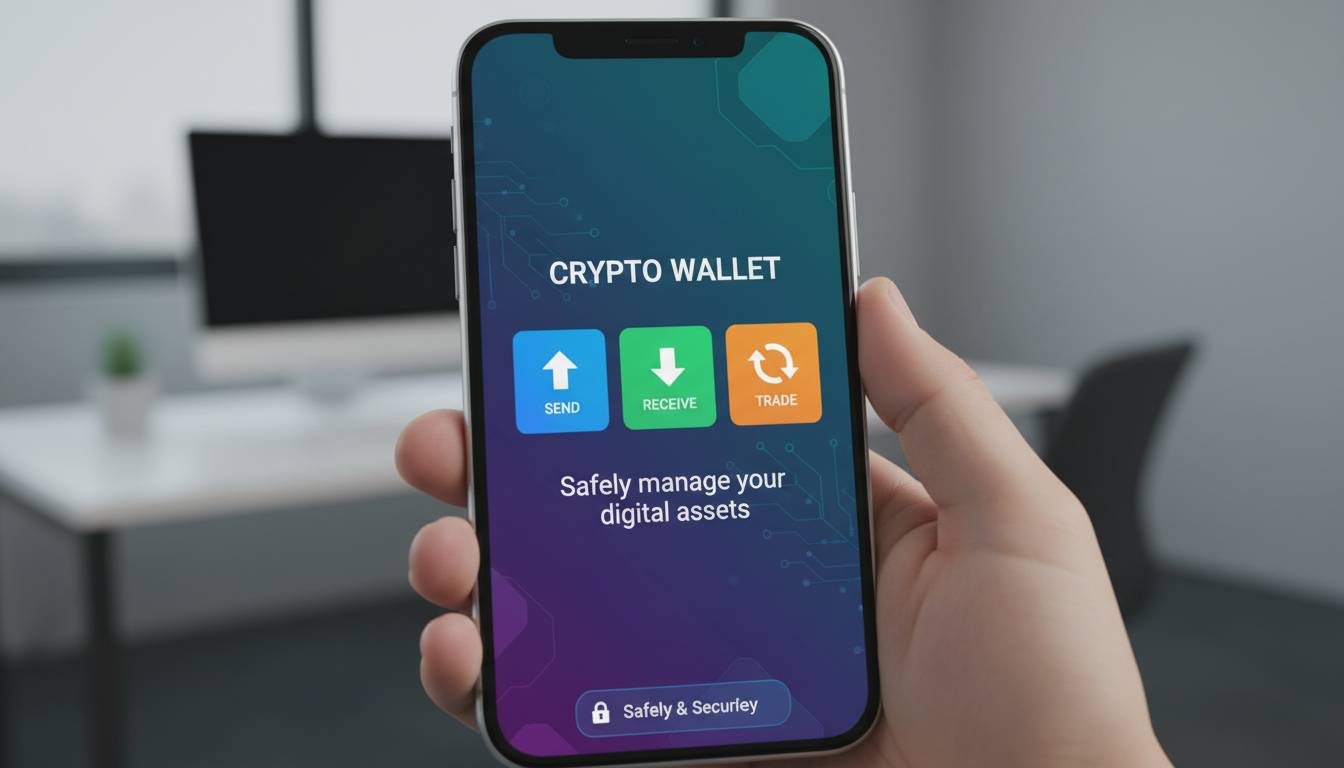
A crypto wallet app is a software application that allows users to store, send, receive, and sometimes trade cryptocurrency assets. Unlike a traditional wallet that holds physical currency, a crypto wallet stores the cryptographic keys needed to access and manage your digital assets on the blockchain. These applications have become essential tools for anyone participating in the cryptocurrency economy, from casual investors holding small amounts of Bitcoin to active traders managing diverse portfolios across multiple blockchains.
The global cryptocurrency wallet market reached approximately $8.4 billion in 2023 and is projected to grow at a compound annual growth rate (CAGR) of 24.2% through 2030, according to data from MarketsandMarkets. This explosive growth reflects increasing mainstream adoption of digital assets and the critical role that wallet applications play in facilitating everyday crypto transactions.
What Is a Crypto Wallet App and How Does It Work?
A crypto wallet app functions as your gateway to the blockchain ecosystem. At its core, the application doesn’t actually store your cryptocurrency—it stores your private keys, which are mathematical codes that prove ownership of your crypto assets and authorize transactions. When you receive cryptocurrency, the transaction is recorded on the blockchain, and your wallet app uses your private key to prove you control the associated address.
The Key Components
Every crypto wallet app contains several fundamental elements that enable its functionality:
Public Address: Similar to a bank account number, your public address is a string of alphanumeric characters that others can use to send you cryptocurrency. You can share this address freely without compromising your security.
Private Key: This is essentially the password that grants access to your funds. Never share your private key with anyone—anyone who possesses it can transfer your assets. Most modern apps use a 12 or 24-word seed phrase as a human-readable representation of your private key.
Wallet Software: The application interface that allows you to view balances, initiate transactions, and manage multiple cryptocurrencies. This software communicates with blockchain networks to retrieve transaction data and broadcast new transactions.
Blockchain Node Connection: Wallet apps connect to blockchain networks either directly through embedded nodes or via third-party API services like Infura or Alchemy to query transaction history and network status.
Hot Wallets vs. Cold Wallets
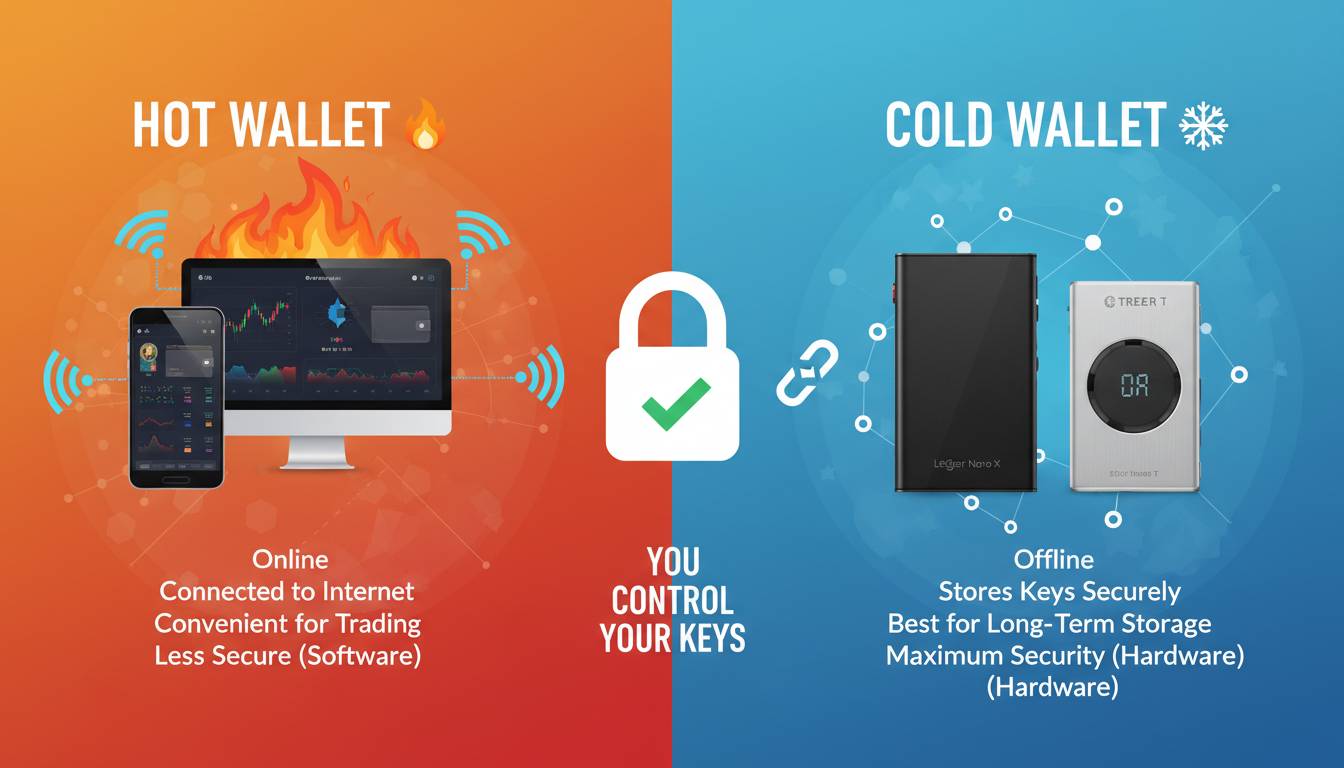
Crypto wallets divide into two primary categories based on their connection to the internet:
Hot Wallets remain connected to the internet at all times, making them convenient for frequent transactions. Mobile apps like Coinbase Wallet, Trust Wallet, and MetaMask represent the most popular hot wallet options. These applications prioritize accessibility but carry higher security risks since they’re continuously exposed to potential online threats.
Cold Wallets store your private keys offline, providing superior security for长期 storage. Hardware devices like Ledger and Trezor fall into this category, though some mobile apps now offer cold storage features that generate and store keys in secure, isolated environments within the device.
Essential Features of a Quality Crypto Wallet App
When evaluating crypto wallet applications, certain features distinguish excellent options from mediocre ones. The right choice depends on your specific needs, trading frequency, and security preferences.
Security Features
Robust security forms the foundation of any trustworthy crypto wallet app. Multi-signature support requires multiple private keys to authorize transactions, adding a layer of protection against unauthorized access. Biometric authentication through fingerprint or facial recognition provides convenient yet secure access control. Two-factor authentication (2FA) adds an additional verification step during login or transaction approval. Many leading wallets now incorporate hardware security modules (HSM) that store cryptographic keys in tamper-proof environments.
Multi-Currency Support
The average cryptocurrency investor now holds an average of 5.7 different cryptocurrencies, up from 3.2 in 2020, based on research from CoinGecko. This diversification trend makes multi-currency support essential. Leading apps support hundreds of tokens across multiple blockchains, enabling users to manage their entire portfolio from a single interface without needing separate wallets for each asset.
Integrated Trading Capabilities
Modern crypto wallet apps increasingly incorporate decentralized exchange (DEX) functionality, allowing users to swap tokens directly within the application without transferring funds to a centralized exchange. This integration reduces transaction friction and can lower overall trading costs by minimizing transfer fees between platforms.
Network Compatibility
With over 23,000 cryptocurrencies existing across numerous blockchain networks, network compatibility has become a critical consideration. The best wallet apps support multiple networks including Ethereum, Solana, Polygon, Binance Smart Chain, and various layer-2 solutions, enabling users to interact with the broader crypto ecosystem without switching applications.
Comparing Top Crypto Wallet Apps
| Feature | Coinbase Wallet | MetaMask | Trust Wallet | Exodus |
|---|---|---|---|---|
| Type | Non-custodial | Non-custodial | Non-custodial | Non-custodial |
| Mobile | ✅ iOS/Android | ✅ iOS/Android | ✅ iOS/Android | ✅ iOS/Android |
| Desktop | ❌ | ✅ Chrome Extension | ❌ | ✅ |
| Supported Coins | 5,000+ | 1,000+ | 10M+ tokens | 300+ |
| Built-in Exchange | ✅ | ✅ (aggregator) | ✅ | ✅ |
| Hardware Wallet | ✅ | ✅ | ✅ | ✅ |
| NFT Support | ✅ | ✅ | ✅ | ✅ |
| Fiat On-Ramp | ✅ | ✅ | ✅ | ✅ |
Coinbase Wallet offers excellent integration with the Coinbase ecosystem and strong security features, making it ideal for users already familiar with Coinbase’s trading platform. MetaMask dominates the Web3 space, with extensive dApp compatibility and browser extension functionality that appeals to DeFi participants. Trust Wallet provides the broadest token support and excellent mobile experience, while Exodus differentiates itself through an intuitive user interface and desktop availability.
Security Best Practices for Crypto Wallet Users
Cryptocurrency transactions are irreversible by design—a feature that provides security against chargebacks but also means mistakes are permanent. Understanding security best practices protects your digital assets from loss or theft.
Protecting Your Seed Phrase
Your recovery seed phrase represents the master key to your cryptocurrency holdings. If you lose your device, the seed phrase is the only way to restore access to your funds. Write down your seed phrase on paper and store it in a secure location—ideally a safe deposit box or secure home safe. Never store digital copies, as they can be hacked or lost. Consider creating multiple physical copies stored in separate secure locations as a backup against fire or theft.
Avoiding Common Security Mistakes
Phishing attacks remain the most common method for stealing cryptocurrency credentials. Never enter your seed phrase on websites or apps that arrived via email or social media links—always navigate directly to official wallet websites. Malware keyloggers can capture keystrokes, so avoid entering sensitive information on public computers or unsecured networks.
Transaction verification is critical before confirming any transfer. Always double-check the recipient address, as cryptocurrency sent to the wrong address cannot be recovered. Many wallets now display the first four and last four characters of addresses prominently to help users verify they’re sending to the intended destination.
Insurance and Protection
While cryptocurrency holdings aren’t typically covered by FDIC insurance like bank deposits, some platforms offer additional protection features. Coinbase holds crime insurance covering digital currency stored on its servers against theft, though this protection doesn’t extend to individual wallet apps. Hardware wallets provide the strongest security but require upfront investment—quality devices from Ledger or Trezor range from $79 to $249 depending on features.
How to Set Up Your First Crypto Wallet App
Setting up a crypto wallet app involves several steps that balance security with usability. Taking time to complete each step properly prevents future problems.
Step 1: Download from Official Sources: Only download wallet apps from official app stores (Apple App Store, Google Play Store) or the official website. Fake apps impersonating legitimate wallets have stolen millions in cryptocurrency.
Step 2: Create Your Wallet: Follow the in-app instructions to generate a new wallet. The app will generate your seed phrase—this is the critical moment when you must record your recovery words.
Step 3: Verify Your Seed Phrase: Most apps verify you’ve recorded your seed phrase correctly by asking you to confirm random words from your list. Complete this verification step honestly.
Step 4: Add Security Layers: Enable all available security features including biometrics, PIN codes, and two-factor authentication if available.
Step 5: Fund Your Wallet: Start with a small test transaction to ensure everything works correctly before transferring significant amounts.
Understanding Transaction Fees and Network Costs
Crypto transactions aren’t free—network fees compensate validators or miners who process and confirm transactions on the blockchain. These fees fluctuate based on network congestion, and understanding how they work helps you optimize transaction timing.
Ethereum network fees, measured in “gas,” vary significantly based on network demand. During periods of high activity, gas fees can spike to $50 or more per transaction, while quieter periods may see fees below $5. Layer-2 solutions like Polygon and Arbitrum offer dramatically lower fees—often less than a cent—while maintaining Ethereum’s security.
Bitcoin transaction fees depend on transaction size in bytes rather than amount transferred. During the 2021 bull market, fees reached an average of $60 during peak congestion. Current fee structures vary between $1 and $30 depending on urgency and network conditions.
Wallet apps handle fee calculation differently. Some allow users to choose between slow/medium/fast confirmation times with corresponding fee levels, while others automatically recommend appropriate fees based on current network conditions.
The Future of Crypto Wallet Applications
Crypto wallet technology continues evolving rapidly, with several trends shaping future development. Account abstraction, now live on Ethereum through ERC-4337, enables smart contract wallets that allow for social recovery, multi-signature authorization, and automatic transactions without requiring users to manage private keys directly.
Cross-chain interoperability represents another significant advancement. Protocols like Wormhole and Axelar enable tokens to move between different blockchains seamlessly, and wallet apps are increasingly incorporating multi-chain functionality that abstracts away the complexity of managing assets across different networks.
Self-custody solutions are gaining mainstream traction as users seek alternatives to centralized exchanges following high-profile collapses like FTX. The saying “not your keys, not your crypto” has driven adoption of non-custodial wallets that give users direct control over their assets without relying on third parties.
Non-fungible token (NFT) integration has become standard in modern wallet apps, expanding beyond simple token storage to include NFT gallery viewing, metadata display, and marketplace integration. This functionality reflects the broader evolution of crypto wallets from pure financial tools to comprehensive digital asset management platforms.
Frequently Asked Questions
What is the best crypto wallet app for beginners?
Coinbase Wallet and Trust Wallet offer the most beginner-friendly interfaces with extensive educational resources and built-in customer support. Both apps guide new users through the setup process with clear instructions and include features that help users understand what they’re agreeing to when approving transactions.
Are crypto wallet apps safe to use?
Non-custodial wallet apps are safe when users follow security best practices: protecting their seed phrase, enabling all available security features, and avoiding phishing attacks. No app can guarantee protection against user error or device compromise, but established wallets with strong security track records provide reasonable protection for most users.
Can I lose my crypto if I lose my phone?
If you lose your phone, your cryptocurrency is not necessarily lost. As long as you have your seed phrase, you can restore your wallet on a new device. This is why recording and securely storing your seed phrase is the most critical step when setting up any wallet.
Do crypto wallet apps charge fees?
Wallet apps themselves typically don’t charge fees for basic storage and transfers, though they may include built-in exchange features that mark up spreads. However, all cryptocurrency transactions incur network fees paid to validators or miners—the wallet app simply passes these fees through to users.
What’s the difference between a crypto wallet and a crypto exchange?
A crypto exchange is a platform where you can buy, sell, and trade cryptocurrency. A crypto wallet stores your cryptocurrency and allows you to send and receive it. Many exchanges provide built-in wallets, but keeping your cryptocurrency in a dedicated wallet gives you more control and security.
How do I know if a crypto wallet app is legitimate?
Verify the app’s legitimacy by checking official websites and social media for verified download links. Read reviews in app stores, check the developer’s history and security audits, and search for news coverage of the wallet. Be cautious of wallets with no track record, those promising unrealistic returns, or those with poor security practices.