Cloud Computing Services – Scalable Solutions for Modern Business

The global cloud computing market reached $602 billion in 2023 and continues expanding at a compound annual growth rate exceeding 15% through 2030. Organizations across every industry now recognize that cloud computing services represent not merely a technology upgrade but a fundamental transformation in how businesses operate, scale, and compete. Whether you are a startup seeking cost-effective infrastructure or an enterprise requiring mission-critical reliability, understanding cloud computing services has become essential for modern business success.
Key Insights
– 94% of enterprises now use cloud services
– Cloud infrastructure spending exceeds $80 billion quarterly across major providers
– Organizations report 40-60% cost reduction after successful cloud migration
– Multi-cloud strategies have increased 50% since 2020
This comprehensive guide examines the cloud computing landscape, explores service models, evaluates leading providers, and provides actionable strategies for businesses transitioning to or optimizing their cloud infrastructure.
What Are Cloud Computing Services?
Cloud computing services deliver computing resources—including servers, storage, databases, networking, software, analytics, and intelligence—over the internet (“the cloud”). Instead of owning and maintaining physical data centers and servers, organizations can access these resources on-demand from cloud service providers, paying only for what they use.
The National Institute of Standards and Technology (NIST) defines cloud computing through five essential characteristics: on-demand self-service, broad network access, resource pooling, rapid elasticity, and measured service. These characteristics distinguish cloud services from traditional hosting models and explain why businesses increasingly adopt cloud-first strategies.
Infrastructure as a Service (IaaS)
IaaS provides virtualized computing resources over the internet. Organizations retain responsibility for operating systems, middleware, runtime environments, and applications, while the cloud provider manages physical infrastructure including servers, storage, and networking equipment.
Amazon Web Services (EC2), Microsoft Azure Virtual Machines, and Google Compute Engine represent leading IaaS platforms. Businesses typically choose IaaS when they require maximum control over their computing environment, need to run custom applications, or seek to migrate existing workloads without significant reconfiguration.
Platform as a Service (PaaS)
Paas delivers a complete development and deployment environment in the cloud. The provider manages underlying infrastructure including servers, storage, and networking, while developers focus on application code and business logic. This model accelerates development cycles and reduces operational complexity.
Heroku, Google App Engine, Microsoft Azure App Services, and AWS Elastic Beanstalk exemplify PaaS offerings. Organizations adopt PaaS when building applications rapidly, when development teams lack infrastructure expertise, or when faster time-to-market outweighs the need for granular control.
Software as a Service (SaaS)
SaaS provides fully functional software applications over the internet on a subscription basis. Users access applications through web browsers or dedicated clients without installing or managing software locally. The cloud provider handles everything from infrastructure maintenance to application updates.
Salesforce, Microsoft 365, Google Workspace, and Zoom represent prominent SaaS applications. Businesses choose SaaS for rapid deployment, reduced IT overhead, automatic updates, and accessibility from any location with internet connectivity.
Leading Cloud Service Providers in 2024
The cloud services market is dominated by three major providers, collectively controlling approximately 65% of the global cloud infrastructure market according to Synergy Research Group.
| Provider | Market Share | Key Strengths | Primary Use Cases |
|---|---|---|---|
| AWS | 32% | Service breadth, ecosystem | Enterprises, startups, ML/AI |
| Azure | 23% | Enterprise integration, hybrid | Microsoft shops, government |
| Google Cloud | 11% | Data/analytics, AI/ML | Data-intensive, container workloads |
| Others | 34% | Specialized offerings | Niche requirements, regional presence |
Amazon Web Services (AWS)
AWS maintains market leadership through the most comprehensive service portfolio, with over 200 fully-featured services spanning compute, storage, databases, machine learning, and IoT. Organizations ranging from startups to Fortune 500 companies utilize AWS for diverse workloads including web applications, data lakes, machine learning pipelines, and enterprise resource planning systems.
Microsoft Azure
Azure excels in enterprise environments, particularly for organizations already invested in Microsoft products. Strong hybrid cloud capabilities, including Azure Arc and Azure Stack, make Azure popular for businesses requiring seamless integration between on-premises and cloud infrastructure. Government agencies and healthcare organizations often prefer Azure due to robust compliance certifications.
Google Cloud Platform (GCP)
Google Cloud differentiates through superior data analytics, machine learning capabilities, and container orchestration expertise. Organizations processing massive datasets or running containerized applications frequently choose GCP for its technical advantages in these domains. BigQuery, Google Kubernetes Engine, and TensorFlow represent flagship offerings.
Business Benefits of Cloud Computing Services
Organizations migrate to cloud computing services for compelling business reasons supported by substantial evidence from industry research and enterprise deployments.
Cost Reduction and Financial Flexibility
Traditional IT infrastructure requires significant capital investment in hardware, facilities, and ongoing maintenance. Cloud computing transforms these capital expenses into operational expenses, enabling organizations to convert fixed costs into variable costs that scale with demand.
| Cost Factor | Traditional IT | Cloud Computing |
|---|---|---|
| Upfront Capital | $500K-$5M+ | Minimal |
| Scaling Speed | Weeks-Months | Minutes-Hours |
| Idle Capacity | Wasted resources | Pay-for-use model |
| Maintenance | In-house staff | Provider-managed |
| Total Cost of Ownership | 3-5 year projection | Monthly operational |
Gartner research indicates that mature cloud adopters achieve 30-50% reduction in total cost of ownership compared to traditional infrastructure, though actual savings vary based on workload characteristics and migration approach.
Scalability and Elasticity
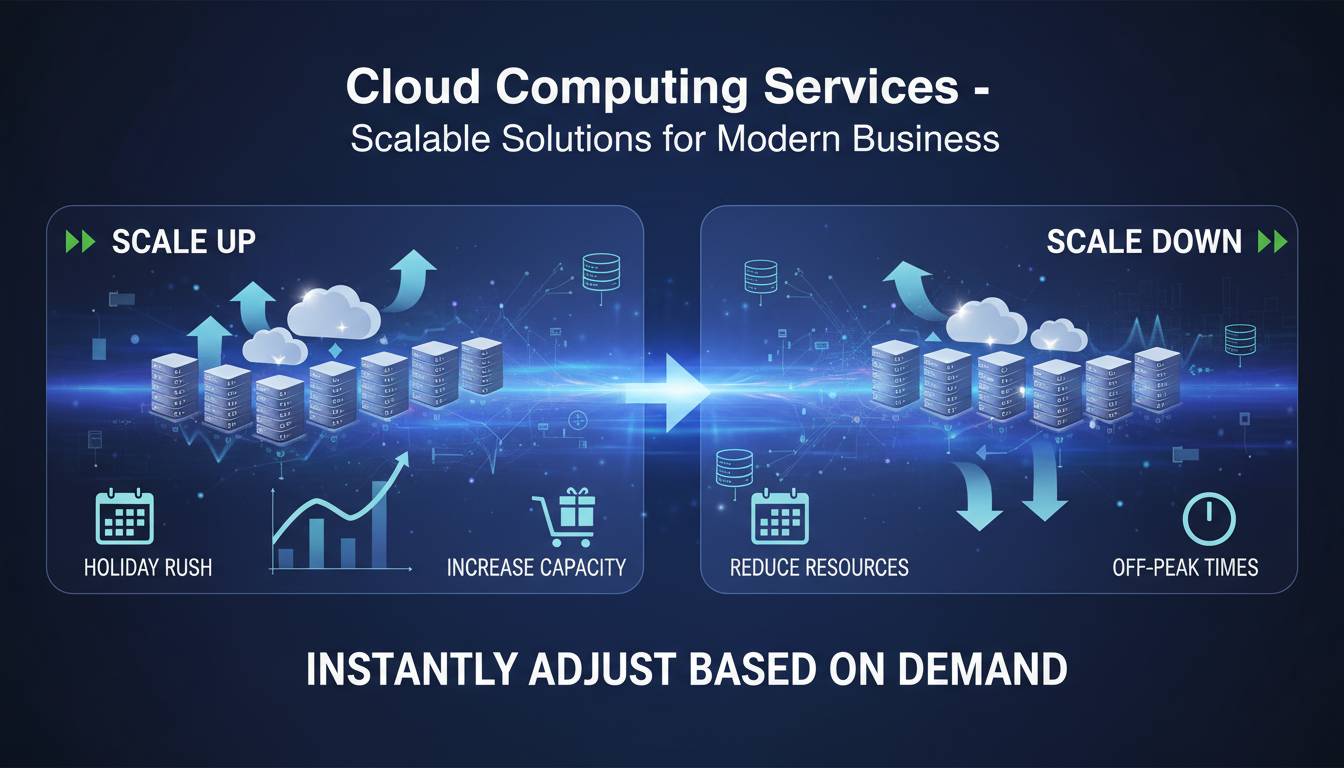
Cloud services enable organizations to scale computing resources up or down automatically based on demand. E-commerce businesses can handle holiday traffic spikes without investing in permanent infrastructure that sits idle during normal periods. Streaming services can accommodate突发用户 growth without service degradation.
This elasticity proves particularly valuable for businesses with variable workloads, seasonal demand patterns, or uncertain growth trajectories. Organizations avoid both the pain of insufficient capacity during peak periods and the waste of over-provisioned resources during low-demand times.
Performance and Global Reach
Major cloud providers operate data centers across numerous geographic regions worldwide. Organizations can deploy applications closer to customers, reducing latency and improving user experience. Content delivery networks integrated with cloud services further accelerate content distribution globally.
Cloud providers continuously upgrade infrastructure with the latest hardware and optimization, ensuring organizations benefit from technological advancements without individual upgrade projects. Enterprise customers gain access to cutting-edge capabilities including GPU instances for machine learning, specialized processors for specific workloads, and globally distributed databases.
Cloud Migration Strategies and Best Practices
Migrating existing workloads to cloud computing services requires careful planning and execution. Organizations approach cloud migration through several strategies depending on workload characteristics, business requirements, and risk tolerance.
The 6 R’s of Migration
-
Rehosting (Lift and Shift): Moving applications to cloud infrastructure without modification. This approach offers fastest migration but captures limited cloud-native benefits.
-
Replatforming: Making minimal modifications to leverage cloud capabilities without complete rearchitecture. Database-as-a-service offerings exemplify replatforming.
-
Refactoring/Re-architecting: Redesigning applications to fully leverage cloud-native patterns including microservices, serverless computing, and managed services.
-
Repurchasing: Moving to different software products, often from on-premises licenses to SaaS alternatives.
-
Retiring: Decommissioning applications that no longer provide value.
-
Retaining: Keeping certain workloads on-premises due to regulatory requirements, technical constraints, or strategic decisions.
Migration Phases
Successful cloud migrations typically follow a structured approach. Discovery and assessment phase involves inventorying applications, assessing dependencies, and classifying workloads based on migration complexity and business criticality. Planning phase defines target architecture, migration sequencing, and timeline. The migration phase executes planned moves with validation and testing. Optimization phase refines configurations, implements cost controls, and establishes operational processes.
Security and Compliance in Cloud Environments
Security remains the most frequently cited concern among organizations evaluating cloud computing services. However, major cloud providers invest billions annually in security infrastructure and often exceed what individual organizations can achieve internally.
Shared Responsibility Model
Cloud security operates under a shared responsibility model where the provider secures underlying infrastructure while customers remain responsible for data protection, access management, and application security. Understanding this division proves essential for maintaining secure cloud deployments.
Providers secure physical data centers, network infrastructure, hypervisors, and physical servers. Customers must secure data through encryption, implement proper identity and access management, configure security groups appropriately, and maintain application-level security.
Compliance and Certifications
Major cloud providers maintain extensive compliance certifications including SOC 2, ISO 27001, HIPAA, FedRAMP, and GDPR compliance. Organizations in regulated industries should verify provider certifications meet specific requirements before deploying sensitive workloads.
Healthcare organizations utilizing HIPAA-covered systems can leverage cloud providers offering Business Associate Agreements (BAAs). Financial services companies can find providers with SOC 2 Type II certifications and specialized financial industry compliance programs. Government agencies can select from providers with FedRAMP and FedRAMP+ authorizations at various impact levels.
Future Trends Shaping Cloud Computing
The cloud computing landscape continues evolving with emerging technologies and shifting organizational priorities.
Multi-Cloud and Hybrid Strategies
Rather than committing to single providers, organizations increasingly adopt multi-cloud strategies utilizing services from multiple providers. This approach reduces vendor lock-in, optimizes for specific workload requirements, and enhances resilience. Hybrid cloud architectures combining on-premises infrastructure with public cloud services remain popular for organizations with specific regulatory, latency, or legacy application requirements.
Serverless Computing Growth
Serverless computing (Function as a Service) enables developers to execute code without managing servers, paying only for actual execution time. This model continues gaining adoption for event-driven workloads, API backends, and batch processing. AWS Lambda, Azure Functions, and Google Cloud Functions lead this segment.
Edge Computing Expansion
Edge computing extends cloud capabilities to geographic locations closer to data sources and end users. Manufacturing, retail, and telecommunications industries increasingly deploy edge computing for real-time processing, reduced bandwidth costs, and improved application responsiveness.
AI and Machine Learning Integration
Cloud providers continue expanding AI and machine learning services, making sophisticated capabilities accessible to organizations without specialized expertise. AutoML services, pre-trained models, and managed machine learning platforms democratize AI access while enterprise-grade MLOps tools support production deployment at scale.
Frequently Asked Questions
What are the main types of cloud computing services?
The three primary categories are Infrastructure as a Service (IaaS), Platform as a Service (PaaS), and Software as a Service (SaaS). IaaS provides virtualized computing resources; PaaS offers development and deployment platforms; SaaS delivers complete applications over the internet. Each model transfers different management responsibilities to the cloud provider.
How much does cloud computing cost for small businesses?
Cloud computing costs vary widely based on usage, but small businesses can start with basic services for $50-500 monthly. Most providers offer free tiers for new customers, and pay-as-you-go pricing means costs scale with actual usage. Small businesses typically find cloud computing more cost-effective than maintaining on-premises infrastructure.
Is cloud computing secure for sensitive business data?
Major cloud providers implement extensive security measures exceeding what most organizations can achieve independently. Security depends significantly on proper configuration and user practices. The shared responsibility model means providers secure infrastructure while customers must properly manage access, encryption, and application security.
How long does cloud migration take?
Migration timelines range from weeks for simple workloads to years for complex enterprise transformations. Assessment and planning typically require 2-4 months. Actual migration can proceed incrementally, with many organizations migrating in phases over 6-24 months depending on scope and complexity.
What is the difference between public cloud and private cloud?
Public cloud services are shared across multiple organizations using provider infrastructure. Private cloud dedicated to single organizations can be hosted on-premises or by providers offering exclusive infrastructure. Hybrid cloud combines both approaches, enabling organizations to keep sensitive workloads private while utilizing public cloud for other workloads.
Can cloud computing help reduce business downtime?
Cloud computing services typically offer 99.9% or higher uptime guarantees through distributed infrastructure, automatic failover capabilities, and professional SLAs. While no platform eliminates all downtime risks, cloud providers’ investments in redundancy, monitoring, and rapid response often exceed what individual organizations achieve independently.
Conclusion
Cloud computing services have transformed from emerging technology to essential business infrastructure. Organizations leveraging cloud services gain scalability, cost optimization, global reach, and access to cutting-edge capabilities without massive capital investment. The market continues maturing with sophisticated offerings addressing enterprise requirements including security, compliance, and hybrid architectures.
Success with cloud computing requires strategic planning, appropriate migration approaches, and ongoing optimization. Organizations should assess their specific requirements, evaluate provider capabilities against those needs, and develop phased implementation plans. Whether beginning with basic infrastructure services or pursuing comprehensive digital transformation, cloud computing provides the foundation for modern business agility and competitive advantage.
The cloud journey continues evolving as technologies mature and organizational capabilities grow. Businesses establishing solid cloud foundations today position themselves to leverage emerging innovations including edge computing, advanced AI services, and increasingly sophisticated automation—building competitive advantages that will define market leadership through the coming decade.