Bitcoin Prediction 2025: Expert Forecast & Price Analysis


Bitcoin continues to dominate the cryptocurrency market as the leading digital asset by market capitalization and adoption. As investors and analysts look toward 2025, numerous factors—from institutional adoption to regulatory developments—will shape Bitcoin’s price trajectory. This comprehensive analysis examines expert forecasts, historical patterns, and critical factors influencing Bitcoin’s value through 2025.
📊 KEY BITCOIN STATS
- $1.3 trillion — Bitcoin’s market capitalization as of late 2024
- $69,000 — Bitcoin’s all-time high reached in March 2024
- 4 years — Bitcoin’s typical halving cycle interval
- $12.5 billion — Net inflows into Bitcoin ETFs in first half of 2024
- 18 million+ — Bitcoin addresses with non-zero balances
Understanding Bitcoin’s Current Market Position
Bitcoin enters 2025 in a significantly different position than in previous bull cycles. The approval of spot Bitcoin ETFs in the United States in January 2024 marked a watershed moment for institutional adoption, creating new pathways for traditional investors to gain exposure to the asset class.
The cryptocurrency’s price dynamics in 2024 demonstrated increased maturity. While volatility remains a defining characteristic, Bitcoin has shown resilience during macroeconomic uncertainty. The asset has increasingly decoupled from traditional risk assets in certain periods, suggesting growing recognition as a distinct asset class.
Several structural changes distinguish the current market environment from previous cycles. The emergence of regulated financial products has transformed how institutional investors approach Bitcoin. Major financial institutions now offer Bitcoin exposure through retirement accounts, wealth management platforms, and hedge fund allocations—options that were largely unavailable during the 2017 or 2021 bull runs.
The network’s hashrate continues to climb, indicating sustained mining activity despite increased energy costs and regulatory scrutiny in various jurisdictions. This network security metric suggests continued confidence in Bitcoin’s long-term viability among mining operators.
Historical Cycles and Price Patterns
Bitcoin’s price history reveals distinct patterns that analysts use when formulating predictions for 2025. Understanding these cycles provides context for expert forecasts.
The Halving Cycle Effect
Bitcoin operates on a predetermined supply schedule known as the halving, which occurs approximately every four years (or every 210,000 blocks mined). This event cuts the reward for mining new blocks in half, reducing the rate at which new Bitcoin enters circulation.
Historical Halving Events and Price Performance:
| Halving Date | Price (Pre-Halving) | Price 12 Months Later | Percentage Change |
|---|---|---|---|
| Nov 2012 | $12 | $1,100 | +9,067% |
| Jul 2016 | $650 | $2,500 | +285% |
| May 2020 | $8,500 | $56,000 | +559% |
| Apr 2024 | $64,000 | TBD | TBD |
The April 2024 halving reduced the block reward from 6.25 BTC to 3.125 BTC. Historical patterns suggest that bull markets typically begin 12-18 months following the halving event, which would position late 2024 and early 2025 within the typical bullish window.
However, analysts caution against assuming historical patterns will repeat identically. The maturation of the market, increased derivatives trading, and the presence of sophisticated algorithmic traders have altered price dynamics in ways that may differ from previous cycles.
Bull and Bear Cycle Analysis
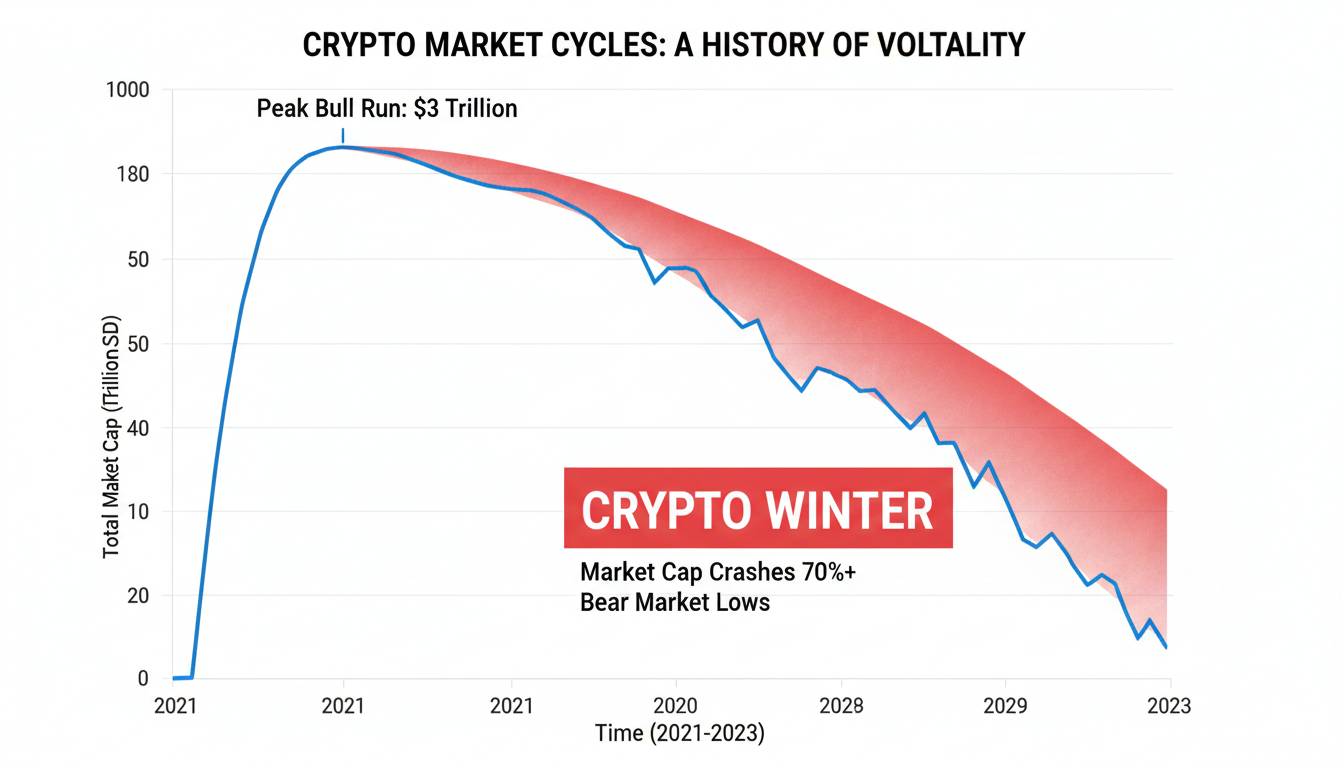
Bitcoin has experienced four major bull markets since its creation, each followed by significant corrections:
- 2013: Rise from $100 to $1,100, followed by 80% decline
- 2017: Rise from $1,000 to $20,000, followed by 80% decline
- 2020-2021: Rise from $10,000 to $69,000, followed by 77% decline
- 2022: Bottom at $15,500, followed by recovery in 2023-2024
Each cycle has produced higher highs than the previous cycle, supporting the long-term bullish thesis among many analysts. The depth of corrections has also decreased proportionally, from 80% in earlier cycles to approximately 77% in the most recent cycle—a potential sign of increasing market maturity.
Institutional Adoption and Market Structure
The institutional adoption trajectory represents one of the most significant changes influencing Bitcoin predictions for 2025. This structural shift affects both demand dynamics and price discovery mechanisms.
Spot Bitcoin ETF Impact
The January 2024 approval of spot Bitcoin ETFs in the United States created unprecedented access for institutional and retail investors. Data from Bloomberg Intelligence indicates that these products attracted over $12 billion in net inflows during the first half of 2024 alone.
The ETF structure provides several advantages that influence market dynamics:
- Tax efficiency: Allows for more favorable tax treatment in taxable accounts
- Custody solutions: Eliminates need for investors to manage private keys
- Regulatory clarity: Operates within established securities frameworks
- Accessibility: Available through traditional brokerage platforms
BlackRock’s entry into the Bitcoin ETF market proved particularly significant. The world’s largest asset manager’s involvement lent legitimacy to Bitcoin as an institutional asset class. Following BlackRock’s lead, other major financial institutions launched similar products or expanded their digital asset offerings.
Corporate Treasury Adoption
MicroStrategy’s aggressive Bitcoin treasury strategy has inspired other public companies to consider similar approaches. As of late 2024, MicroStrategy holds over 400,000 Bitcoin, representing one of the largest corporate treasury allocations to the cryptocurrency.
Several factors influence corporate Bitcoin adoption:
- Inflation hedge narrative: Some corporations view Bitcoin as protection against currency debasement
- Yield generation: Bitcoin-backed lending programs offer corporate treasury yield opportunities
- Balance sheet diversification: Alternative to holding large cash positions
Public companies considering Bitcoin treasury allocations face regulatory considerations, accounting treatment questions, and shareholder approval requirements that may slow adoption compared to individual investor interest.
Expert Price Predictions for 2025
Analysts from major financial institutions and cryptocurrency research firms have published varying predictions for Bitcoin’s price in 2025. These forecasts reflect different methodological approaches and assumptions about market conditions.
Bullish Projections
ARK Invest (Cathie Wood) has maintained extremely bullish projections, suggesting Bitcoin could reach $1 million by 2030. While not specifically publishing a 2025 target, ARK’s research suggests Bitcoin could hit $380,000 by 2025 under aggressive adoption scenarios. Their methodology emphasizes the potential for Bitcoin to capture a significant portion of global store-of-value transactions.
Bloomberg Intelligence senior analyst Mike McGlone has consistently been bullish on Bitcoin, projecting prices in the $100,000-$400,000 range for 2025. McGlone’s analysis emphasizes Bitcoin’s fixed supply and increasing institutional adoption as fundamental supports for higher prices.
Standard Chartered analysts have issued projections suggesting Bitcoin could reach $200,000 by end of 2025. Their research cites ETF inflows and potential interest rate adjustments as key drivers.
Conservative Estimates
JPMorgan analysts have offered more measured projections, suggesting Bitcoin could reach $45,000-$100,000 in a base case scenario. Their analysis emphasizes competition from other assets, regulatory risks, and the challenges of traditional finance incumbents.
Deutsche Bank research suggests Bitcoin could trade between $60,000-$100,000 by 2025 under baseline assumptions, with significant upside potential if regulatory clarity improves in major markets.
Methodology Differences
The variation in predictions reflects fundamental disagreements about several key variables:
- Adoption rate: How quickly institutional and retail adoption will accelerate
- Regulatory environment: Whether supportive or restrictive policies will dominate
- Macroeconomic conditions: Impact of interest rates, inflation, and global economic stability
- Competition: Bitcoin’s position relative to other cryptocurrencies and store-of-value assets
No analyst can guarantee specific price outcomes, and investors should treat predictions as informed opinions rather than forecasts.
Risk Factors and Considerations
Bitcoin predictions for 2025 must account for significant risk factors that could derail bullish scenarios.
Regulatory Uncertainty
Regulatory developments represent perhaps the most significant uncertainty facing Bitcoin. Several scenarios could negatively impact prices:
- Increased taxation: Stricter reporting requirements or higher capital gains rates
- Bans or restrictions: Prohibition in major markets could reduce demand
- Stablecoin regulation: Impact on cryptocurrency liquidity and trading pairs
- Central bank digital currencies (CBDCs): Potential competition for Bitcoin’s store-of-value narrative
The outcome of regulatory battles in the United States, European Union, and Asia will significantly influence Bitcoin’s price trajectory throughout 2025.
Market Risks
- Leverage and derivatives: High levels of leverage in the derivatives market can amplify price swings
- Whale concentration: Large Bitcoin holders maintain significant price influence
- Exchange risk: Platform failures or security breaches could damage market confidence
- Liquidity concerns: Rapid selling during market stress could produce outsized price drops
Macroeconomic Factors
- Interest rate environment: Higher rates can reduce appetite for non-yield-bearing assets like Bitcoin
- Recession risk: Economic downturn could reduce risk appetite across asset classes
- Currency stability: Confidence in fiat currencies affects Bitcoin’s inflation hedge appeal
Technical Analysis Perspectives
Technical analysts examine price charts and trading patterns to identify potential support and resistance levels for Bitcoin in 2025.
Key Support and Resistance Levels
| Level Type | Price Range | Significance |
|---|---|---|
| Major Support | $50,000-$55,000 | Previous cycle highs, psychological level |
| Strong Support | $60,000-$65,000 | Current cycle range lows |
| Resistance | $70,000-$75,000 | All-time high consolidation |
| Major Resistance | $100,000+ | Psychological milestone, previous cycle highs |
Chart Patterns and Indicators
Technical analysts identify several patterns suggesting potential price appreciation:
- Bullish flag patterns: Following the April 2024 breakout, Bitcoin has formed consolidation patterns that could precede further gains
- Moving average alignment: Price above key moving averages suggests bullish momentum
- On-chain metrics: Network activity and holder behavior provide insights into potential price movements
Critics of technical analysis note that Bitcoin’s relatively short history and unique market dynamics limit the reliability of historical chart patterns.
Frequently Asked Questions
What is the most likely Bitcoin price prediction for 2025?
Based on consensus estimates from major financial institutions, Bitcoin is projected to trade between $100,000 and $200,000 by end of 2025 in a base case scenario. However, predictions range from $45,000 (bear case) to $400,000 (bull case), reflecting significant uncertainty around adoption rates and regulatory developments.
Does the Bitcoin halving guarantee price increases?
Historical data shows Bitcoin has consistently appreciated in the 12-18 months following halving events. However, past performance does not guarantee future results. The 2024 halving occurs in a market with significantly more participants, derivatives, and regulatory scrutiny than previous cycles, which may alter historical patterns.
Should I invest in Bitcoin for 2025?
Investment decisions depend on individual risk tolerance, financial situation, and investment objectives. Bitcoin remains highly volatile and speculative. Financial advisors typically recommend limiting cryptocurrency allocations to a small percentage of diversified portfolios. Never invest more than you can afford to lose.
What factors could cause Bitcoin to decline in 2025?
Negative price scenarios could result from adverse regulatory actions, macroeconomic instability, security breaches at major exchanges, competition from CBDCs, or broader market sell-offs during economic recession. The cryptocurrency market remains susceptible to rapid sentiment shifts.
How do Bitcoin ETFs affect price predictions?
Spot Bitcoin ETFs have created new demand channels, allowing institutional investors to allocate to Bitcoin without direct custody. This structural change has increased both the volume of capital flowing into Bitcoin and the sophistication of participants, which many analysts believe supports higher price floors compared to previous cycles.
Is Bitcoin a good hedge against inflation?
Bitcoin’s fixed supply of 21 million coins makes it attractive as an inflation hedge to proponents. However, its high volatility and relatively short history as an asset class make its inflation hedging credentials controversial among traditional economists. Performance during high-inflation periods in 2021-2022 was mixed.
Conclusion
Bitcoin prediction for 2025 involves considerable uncertainty, but several structural factors support cautious optimism among analysts. The maturation of the market through regulated financial products, increasing institutional adoption, and the mathematical supply constraints created by halving events provide fundamental support for higher prices over time.
However, significant risks remain. Regulatory developments in major markets could substantially alter Bitcoin’s trajectory. Macroeconomic conditions, particularly interest rate policies and global economic stability, will influence investor appetite for speculative assets. The cryptocurrency market’s inherent volatility means substantial price swings in either direction remain possible.
For investors considering Bitcoin allocations, the key takeaway is that predictions should inform rather than dictate investment decisions. Diversification, risk management, and realistic expectations about volatility remain essential. As always, consult with qualified financial advisors before making investment decisions, and never allocate more capital to volatile assets than you can afford to lose.
The Bitcoin market in 2025 will ultimately be shaped by the interplay of adoption growth, regulatory developments, and macroeconomic forces—factors that no prediction can fully anticipate.