Best AI Chatbots Compared – Find Your Perfect Match

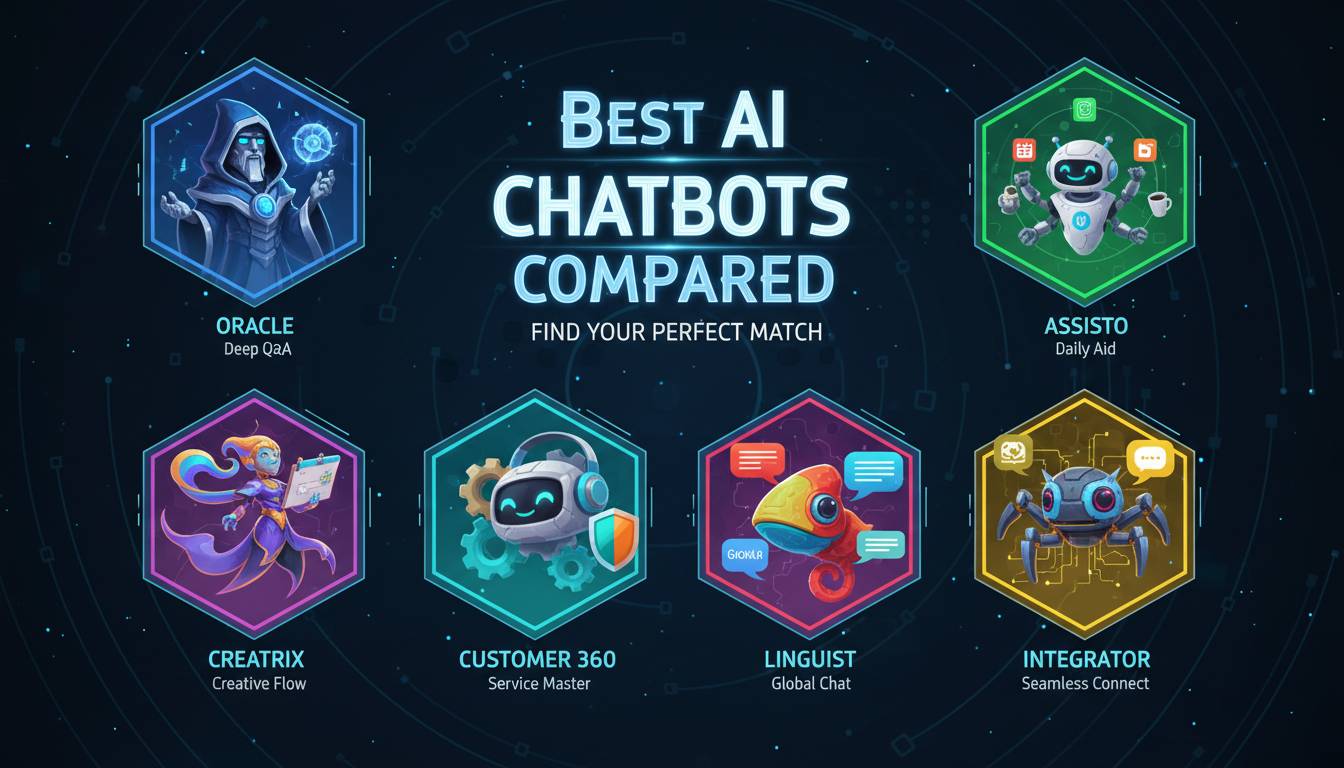
The AI chatbot landscape has undergone a revolutionary transformation in recent years, with capabilities that seemed science fiction just a decade ago now available to anyone with an internet connection. From customer service automation to personal productivity assistants, AI chatbots have become integral tools for both businesses and individuals. This comprehensive guide examines the leading options in the market, helping you identify which chatbot best suits your specific needs—whether you’re looking to enhance customer support, streamline internal operations, or simply explore the boundaries of what artificial intelligence can accomplish.
Understanding the AI Chatbot Market in 2024
The global AI chatbot market has experienced explosive growth, with projections indicating the sector will reach approximately $18.4 billion by 2029, growing at a compound annual growth rate (CAGR) of around 23% from its 2024 valuation. This growth reflects the technology’s rapid evolution from simple scripted responders to sophisticated conversational AI systems capable of understanding context, maintaining nuance, and performing complex tasks.
Modern AI chatbots fall into several distinct categories, each serving different purposes. Retrieval-based chatbots use predefined responses and work well for structured customer service scenarios. Generative AI chatbots create original responses based on training data, offering greater flexibility and natural conversation flow. Task-oriented chatbots focus on completing specific actions like booking appointments or processing orders, while conversational assistants aim to engage in open-ended dialogue and learn from interactions.
The distinction between basic chatbots and advanced large language model (LLM) powered assistants has become increasingly important. Earlier chatbot technologies relied heavily on decision trees and keyword matching, often resulting in frustrating user experiences when queries fell outside their programmed parameters. Today’s leading chatbots leverage transformer-based architectures and massive training datasets, enabling them to understand intent, maintain conversation context across multiple turns, and generate human-like responses that address complex, multi-part questions.
Top AI Chatbots for Personal Use
ChatGPT by OpenAI
ChatGPT has emerged as the most widely recognized AI chatbot since its launch in late 2022, fundamentally changing public perception of what AI assistants can accomplish. Built on OpenAI’s GPT-4 architecture, ChatGPT excels at generating human-like text, answering questions across virtually any topic, and assisting with creative and analytical tasks.
The platform offers both free and premium tiers. The free version provides access to GPT-3.5, which handles most everyday tasks effectively. ChatGPT Plus ($20/month) upgrades users to GPT-4, the company’s most capable model, which demonstrates significantly improved reasoning, reduced hallucinations, and better performance on complex tasks. Additionally, Plus subscribers gain access to advanced features like image analysis (GPT-4V), voice conversations, and the ability to create custom GPTs for specific use cases.
ChatGPT’s strengths include its remarkable versatility—from writing essays and code to explaining complex concepts and brainstorming ideas—and its continuous improvement through regular updates. The integration with DALL-E for image generation and the ability to browse the internet for current information extend its utility further. However, the free tier can experience high demand and slow response times during peak usage, and the knowledge cutoff means it may not have information on very recent events.
Google Gemini
Google Gemini (formerly Bard) represents Google’s entry into the conversational AI space, powered by their proprietary Gemini language model. Gemini stands out for its seamless integration with Google’s vast ecosystem of services and its real-time access to current information through Google Search.
The chatbot is available at gemini.google.com and offers impressive multimodal capabilities, understanding and generating text, code, images, and audio. Gemini’s connection to Google services means it can pull information from your Google accounts, access YouTube videos, search Google Maps, and retrieve current news and information—capabilities that differentiate it from competitors.
Google offers Gemini in three tiers: the free version uses Gemini 1.5 Flash, the Advanced version ($20/month) provides access to Gemini 1.5 Pro with expanded capabilities, and enterprise customers can access Gemini through Google Workspace. The technology excels at reasoning tasks, mathematics, and coding, often matching or exceeding other leading models on benchmark tests. For users already embedded in Google’s ecosystem, Gemini offers unparalleled convenience in accessing and synthesizing information from multiple Google services.
Claude by Anthropic
Claude, developed by Anthropic with a focus on safety and helpfulness, has gained significant traction among users who prioritize thoughtful, nuanced responses. The chatbot is built on the Constitutional AI framework, which aims to ensure AI systems are helpful, harmless, and honest.
Claude 3.5 Sonnet, the current flagship model, demonstrates exceptional performance in analysis, writing, and coding tasks. What sets Claude apart is its ability to engage with lengthy documents—the 200K token context window allows users to upload and analyze entire books, lengthy legal contracts, or extensive codebases in a single conversation. This makes it particularly valuable for researchers, writers, and professionals working with large volumes of text.
The platform offers a generous free tier with substantial usage limits, while the Pro plan ($20/month) provides higher usage limits and access to advanced features. Anthropic has also introduced Claude Teams for businesses, offering collaborative features and administrative controls. Claude’s writing style tends to be more formal and carefully considered than some alternatives, and its “Artifacts” feature allows users to create and share interactive web applications, documents, and code snippets directly within conversations.
Best AI Chatbots for Business Applications
Intercom
Intercom has established itself as a leading customer service platform, combining AI-powered chatbots with robust CRM capabilities. The platform’s AI chatbot, Fin, leverages large language models to handle customer inquiries with human-like conversation quality while integrating seamlessly with Intercom’s suite of customer communication tools.
What makes Intercom particularly valuable for businesses is its comprehensive approach to customer engagement. Beyond basic chatbot functionality, the platform offers live chat, product tours, customer segmentation, and detailed analytics. Fin can be trained on your company’s specific knowledge base, ensuring accurate responses about your products, policies, and services. The chatbot intelligently routes complex queries to human agents, maintaining context throughout the conversation for seamless handoffs.
Pricing for Intercom is customized based on team size and features, generally starting around $74/month for smaller teams and scaling significantly for larger organizations. While the cost is higher than some alternatives, businesses benefit from a complete customer communication ecosystem rather than a standalone chatbot solution.
Drift
Drift specializes in conversational marketing and sales, positioning its AI chatbot as a tool for converting website visitors into qualified leads. The platform emphasizes real-time personalization, using visitor data to tailor conversations and recommendations based on browsing behavior, company information, and previous interactions.
Drift’s chatbot can schedule meetings directly with sales representatives, qualify leads through intelligent questioning, and provide instant answers to common questions. The integration with major CRM systems and marketing automation platforms ensures that conversation data flows seamlessly into existing sales workflows. The platform also offers Drift’s Revenue Acceleration platform, which combines chatbot capabilities with email automation and intent data.
Pricing is available through custom quotes, typically starting at several hundred dollars monthly for smaller teams. Drift represents a strong choice for B2B companies focused on maximizing conversion rates from website traffic and embedding AI-powered engagement directly into their sales processes.
IBM watsonx Assistant
For enterprises requiring enterprise-grade security, customization, and integration capabilities, IBM watsonx Assistant offers a robust solution. Built on IBM’s extensive experience in enterprise AI, watsonx provides sophisticated conversational AI capabilities suitable for complex organizational requirements.
The platform excels in industries with stringent data compliance requirements, offering deployment options that keep data within specific geographic boundaries or on-premises infrastructure. watsonx Assistant integrates deeply with enterprise systems through extensive APIs and supports complex decision-making flows essential for financial services, healthcare, and government applications.
IBM’s approach emphasizes responsible AI deployment, with features designed to ensure explainability, reduce bias, and maintain audit trails—capabilities increasingly important for regulated industries. While the platform requires more technical expertise to implement than consumer-focused alternatives, enterprises with complex requirements benefit from watsonx’s flexibility and enterprise pedigree.
Comparing Pricing and Value
Understanding the cost structure across different chatbot platforms helps in making informed decisions based on budget and feature requirements.
| Platform | Free Tier | Paid Tier | Best For |
|---|---|---|---|
| ChatGPT | Limited GPT-3.5 | $20/month (Plus) | General productivity, versatility |
| Gemini | Limited | $20/month (Advanced) | Google ecosystem users, real-time info |
| Claude | Generous limits | $20/month (Pro) | Long document analysis, careful reasoning |
| Intercom | Custom | From $74/month | Customer service, full engagement suite |
| Drift | Custom | Custom pricing | Sales qualification, conversion optimization |
| watsonx | Enterprise only | Custom | Large enterprises, regulated industries |
For individual users and small teams, the major consumer chatbots (ChatGPT, Gemini, Claude) offer substantial free tiers that handle most use cases effectively. The $20/month premium subscriptions provide worthwhile upgrades for heavy users, with each platform offering distinct advantages depending on specific needs.
Business users must weigh the comprehensive features of platforms like Intercom and Drift against their higher costs. For many organizations, combining a powerful consumer chatbot for general tasks with a specialized business platform for customer-facing interactions provides the best balance of capability and cost efficiency.
Key Features to Consider
When evaluating AI chatbots, several factors significantly impact the practical value you’ll receive.
Context window and memory determine how much information the chatbot can handle in a single conversation. Claude currently leads with a 200K token context window, while GPT-4 and Gemini offer 128K and 32K tokens respectively in their standard versions. Larger context windows matter when working with lengthy documents or complex multi-part analyses.
Accuracy and hallucination rates vary across platforms. While all LLMs can generate incorrect information, some demonstrate consistently lower error rates, particularly for factual queries and technical subjects. Testing specific use cases relevant to your needs provides the most accurate comparison.
Integration capabilities matter enormously for business applications. The best chatbot in isolation provides limited value if it cannot connect with your existing tools, knowledge bases, and workflow systems. Consider what systems you need the chatbot to access and what data must flow in and out.
Customization and control range from simple prompt customization to full model fine-tuning. Businesses often need chatbots that understand company-specific terminology, follow particular conversation flows, and adhere to brand voice guidelines.
Future Trends in AI Chatbots
The AI chatbot landscape continues evolving rapidly, with several trends shaping the near future of the technology.
Multimodal capabilities are becoming standard, with leading chatbots now processing and generating text, images, audio, and video within unified conversations. This progression enables more natural human-AI interaction and opens new use cases in education, creative work, and accessibility.
Specialized industry models are emerging, with companies developing chatbots optimized for specific sectors like healthcare, legal, and finance. These domain-specific solutions offer improved accuracy in specialized contexts while addressing industry-specific compliance requirements.
Autonomous agents represent the next frontier, with AI systems moving beyond answering questions to actively completing multi-step tasks on behalf of users. This includes conducting research across multiple sources, executing transactions, and coordinating with other systems—all while maintaining appropriate oversight.
Enhanced personalization will allow chatbots to develop deeper understanding of individual users’ preferences, communication styles, and needs over time, resulting in increasingly relevant and efficient assistance.
Frequently Asked Questions
Which AI chatbot is best for coding assistance?
Claude and ChatGPT both excel at coding tasks, with slight differences in approach. Claude 3.5 Sonnet often demonstrates superior performance in understanding large codebases and explaining complex code, while ChatGPT’s integration with GitHub Copilot provides seamless development environment support. For dedicated coding assistance, trying both with your specific projects helps determine the better fit.
Are free AI chatbots sufficient for business use?
Free tiers can handle basic business applications like internal knowledge retrieval and simple customer queries. However, businesses requiring higher usage volumes, custom integrations, customer support features, or guaranteed response times generally benefit from paid plans or specialized business platforms like Intercom or Drift.
How do AI chatbots handle sensitive business data?
Consumer chatbots like ChatGPT, Gemini, and Claude have improved their data handling policies, but organizations should review current terms carefully. Enterprise-focused solutions like IBM watsonx offer more robust data isolation and compliance options. For sensitive data, using dedicated enterprise platforms or self-hosted solutions provides the highest security assurance.
Can AI chatbots completely replace human customer service agents?
AI chatbots handle routine inquiries effectively, reducing agent workload by 60-80% in well-implemented deployments according to various industry studies. However, complex emotional situations, nuanced problems requiring judgment, and escalations still benefit from human involvement. The most effective approach combines AI chatbots handling initial interactions and common questions with human agents managing complex cases.
How often should I switch between different AI chatbots?
Many users benefit from maintaining accounts with multiple chatbot platforms, using each for tasks where it demonstrates superior performance. There is no need to commit exclusively to one option—using ChatGPT for creative writing, Claude for document analysis, and Gemini for real-time research leverages each platform’s strengths. Regular experimentation helps identify which chatbot performs best for your specific use cases.