
Beginner Strength Training Program: Build Muscle in 12 Weeks

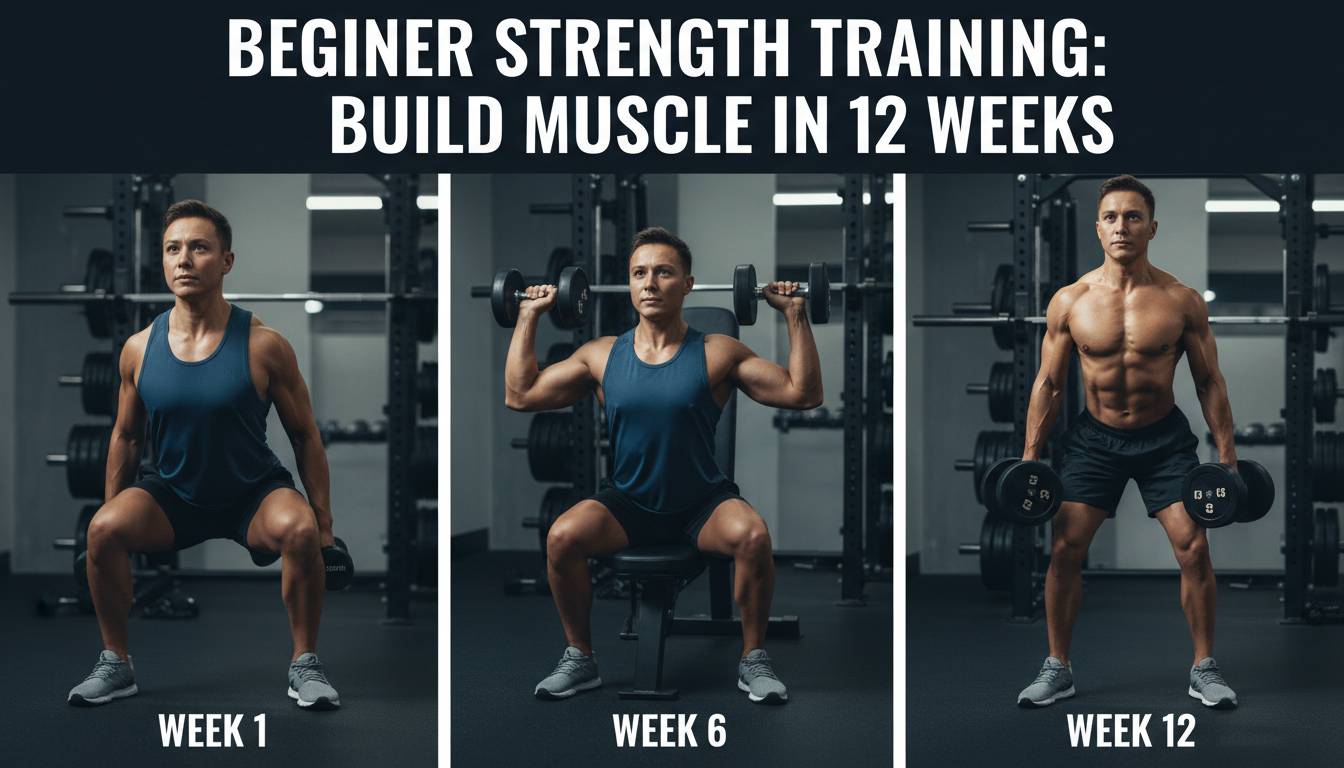
Walking into a gym for the first time can feel overwhelming. The clanging weights, the confident regulars, the complex-looking machines—it enough to make anyone turn around and leave. Yet here’s the truth that most beginners don’t realize: you don’t need fancy equipment, years of experience, or a perfect body to start strength training. You need a plan that works with your current fitness level and progresses gradually.
The average beginner who follows a structured strength training program for 12 weeks can expect to gain 8-12 pounds of muscle while simultaneously losing body fat. That’s not just a number on a scale—that’s a complete transformation in how your body looks, feels, and functions. Research from the American College of Sports Medicine shows that resistance training increases muscle protein synthesis for up to 48 hours after each session, meaning your body continues building muscle long after you leave the gym.
This guide gives you everything needed to build a stronger, more muscular physique in exactly 12 weeks—no guesswork, no expensive supplements required.
Why Strength Training Transforms Your Body
The benefits of strength training extend far beyond aesthetics. While building visible muscle is the primary goal for most beginners, the systemic improvements affect nearly every aspect of your health.
Muscle Mass and Metabolism
Adults lose approximately 3-8% of muscle mass per decade after age 30, a process called sarcopenia. Starting a strength training program in your 20s, 30s, 40s, or beyond reverses this trajectory. Research published in the Journal of Applied Physiology found that strength training increases muscle mass by 10-15% in previously untrained individuals within just 16 weeks. More muscle means a faster metabolism—each pound of muscle burns approximately 6-10 calories daily at rest, compared to only 2-3 calories for a pound of fat.
Bone Density and Joint Health
Your bones respond to resistance training by becoming denser and stronger. A study in the Journal of Bone and Mineral Research demonstrated that weight-bearing exercise increases bone mineral density by 1-3% annually, significantly reducing osteoporosis risk. Additionally, proper strength training strengthens the connective tissues around joints, reducing injury risk and alleviating chronic pain conditions like lower back issues and knee discomfort.
Mental Health and Cognitive Function
The psychological benefits rival the physical ones. Research from Harvard Medical School indicates that strength training reduces symptoms of anxiety and depression by 20-30% in regular practitioners. The discipline required in a strength program builds mental resilience that translates to other life areas—professional performance, relationships, and personal goals.
The Science of Muscle Growth: How Your Body Builds Strength
Understanding the mechanics behind muscle growth helps you train smarter, not just harder. Your muscles consist of thousands of fibers that damage during resistance training. The recovery process rebuilds these fibers slightly larger and stronger than before—a phenomenon exercise scientists call “hypertrophy.”
Mechanical Tension: The Primary Driver
When you lift weights, you create tension in your muscle fibers. This tension is the primary stimulus for growth. Research from the University of Central Florida confirms that lifting heavier weights with fewer reps creates more mechanical tension than lighter weights with high repetitions, making it the optimal approach for hypertrophy. The key is working close to failure—performing within 1-3 reps of your maximum ability.
Progressive Overload: The Golden Rule
Your body adapts quickly to repeated stimuli. Doing the same weight for the same reps week after week produces diminishing returns. Progressive overload—the gradual increase of stress placed on the body—drives continued adaptation. This can happen through adding weight, performing more repetitions, increasing training volume, or reducing rest periods. A good rule: aim to add 2.5-5 pounds to upper body exercises and 5-10 pounds to lower body exercises weekly when you can complete all prescribed reps with good form.
Training Frequency and Recovery
Muscles grow during rest, not during workouts. Training each muscle group 2-3 times per week provides enough stimulus while allowing adequate recovery. The American College of Sports Medicine recommends beginners start with full-body sessions 3 days per week, spacing workouts at least 48 hours apart. Sleep is equally critical—growth hormone and testosterone, both essential for muscle protein synthesis, peak during deep sleep stages.
Your 12-Week Training Schedule
This program uses a push/pull/legs split, allowing you to train all major muscle groups three times weekly while maintaining manageable session lengths. Each workout builds on the previous week’s progress.
Phase 1: Weeks 1-4 (Foundation)
| Day | Focus | Exercises |
|---|---|---|
| Monday | Push | Bench Press, Overhead Press, Incline Dumbbell Press, Tricep Dips, Lateral Raises |
| Wednesday | Pull | Deadlift, Bent Over Row, Lat Pulldown, Face Pulls, Bicep Curls |
| Friday | Legs | Squat, Romanian Deadlift, Leg Press, Leg Curl, Calf Raises |
Phase 2: Weeks 5-8 (Progression)
Add 10% weight to all exercises. Increase compound movements to 4 sets of 8 reps. Add one isolation exercise per muscle group.
Phase 3: Weeks 9-12 (Intensification)
Add another 10% weight. Implement drop sets on final exercise of each movement pattern. Reduce rest periods from 90 seconds to 60 seconds.
Weekly Structure Example (Push Day)
| Exercise | Sets | Reps | Rest |
|---|---|---|---|
| Bench Press | 4 | 8-10 | 90 sec |
| Overhead Press | 3 | 8-10 | 90 sec |
| Incline Dumbbell Press | 3 | 10-12 | 75 sec |
| Tricep Dips | 3 | 12-15 | 60 sec |
| Lateral Raises | 3 | 15-20 | 60 sec |
Mastering the Big Six Exercises
These compound movements form the foundation of any effective strength program. Mastering proper technique before adding heavy weight prevents injury and maximizes muscle recruitment.
1. Barbell Back Squat
The king of leg exercises, squats target quadriceps, hamstrings, glutes, and core stabilizers simultaneously. Stand with feet shoulder-width apart, barbell resting on your upper back. Descend by pushing hips back and bending knees, keeping chest up. Go until thighs are parallel to the ground. Drive through heels to stand.
2. Barbell Deadlift
Deadlifts build posterior chain strength—hamstrings, glutes, and back. Stand with feet hip-width apart, barbell over mid-foot. Hinge at hips, gripping bar just outside your legs. Keep back flat, core braced. Drive through heels, extending hips and knees simultaneously. Lock out with shoulders back, not rounded forward.
3. Bench Press
The fundamental chest exercise also engages shoulders and triceps. Lie on bench with eyes under the bar. Grip slightly wider than shoulder-width. Lower bar to mid-chest with control, elbows at 45-degree angle. Press up and slightly backward to return to starting position.
4. Overhead Press
Standing overhead press builds shoulder strength and core stability. Stand with feet hip-width apart, barbell at collar bones. Press straight overhead, moving head back slightly to let bar path vertically. Lock out arms, then return with control.
5. Bent Over Row
Rows develop the back thickness essential for balanced development. Hinge at hips until torso is nearly parallel to ground. Pull bar to lower chest/upper abdomen, squeezing shoulder blades. Lower with control, fully extending arms.
6. Romanian Deadlift
This variation emphasizes hamstring and glute development. Stand with barbell, slight knee bend. Push hips back while lowering bar along legs, feeling stretch in hamstrings. Return by driving hips forward, keeping shoulders back.
Nutrition for Muscle Building
Training creates the stimulus; nutrition provides the building blocks. Without adequate protein and calories, your body cannot synthesize new muscle tissue.
Protein Requirements
Aim for 0.7-1 gram of protein per pound of body weight daily. Research from the Journal of the International Society of Sports Nutrition confirms this range maximizes muscle protein synthesis in strength training individuals. Spread protein intake across 4-5 meals, consuming 20-40 grams per meal. Excellent sources include chicken breast, lean beef, fish, eggs, Greek yogurt, legumes, and protein supplements.
Caloric Surplus
Building muscle requires energy—approximately 2,500 calories to build one pound of muscle. Beginners should eat 300-500 calories above maintenance level. Use an online calorie calculator to estimate maintenance needs, then add accordingly. Track weight weekly; gain of 0.5-1 pound weekly indicates appropriate surplus.
Pre and Post-Workout Nutrition
Consume 20-40 grams of protein 1-2 hours before training. Carbohydrates 30-60 minutes before provide immediate energy. Post-workout, eat protein and carbs within 2 hours—research shows this “anabolic window” matters less than total daily intake, but consistency helps.
| Meal Timing | Food Example | Purpose |
|---|---|---|
| Pre-workout | Chicken breast + rice | Fuel training |
| Post-workout | Protein shake + banana | Initiate recovery |
| Main meals | Lean protein + complex carbs + vegetables | Daily nutrition |
Avoiding the Mistakes That Stall Progress
Beginners consistently make predictable errors that limit their results. Recognizing these pitfalls keeps your progress on track.
Mistake #1: Lifting Too Heavy Too Soon
Using weights that compromise form sacrifices gains and increases injury risk. Master movements with lighter weight before progressing. If you must heave, jerk, or swing weights to complete reps, you’ve gone too heavy. Reduce weight by 15-20% and focus on controlled, full-range repetitions.
Mistake #2: Neglecting Certain Muscle Groups
Mirror muscles get attention; everything else gets ignored. Omitting legs, back, and rear delts creates imbalances that lead to injury and poor posture. This program ensures balanced development across all major groups.
Mistake #3: Inconsistent Training
Random workouts produce random results. Following the prescribed schedule consistently beats sporadic intense sessions. Aim for 3 weekly sessions without missing more than one per week.
Mistake #4: Insufficient Recovery
Training every day prevents muscle growth. Muscles need 48-72 hours between intense sessions. If you’re severely sore or fatigued, rest—an extra recovery day won’t hurt your progress, but overtraining will.
Tracking Progress and Adjusting Your Program
Measurement transforms effort into results. Without tracking, you cannot know what’s working or needs adjustment.
Key Metrics to Monitor
Weigh yourself weekly, preferably same day and time, after using the bathroom and before eating. Take progress photos monthly in consistent lighting and poses. Log every workout—exercises, sets, reps, and weights. Note energy levels, sleep quality, and soreness.
When to Adjust
If you’ve failed to add weight for three consecutive weeks despite giving full effort, deload by reducing weight by 10% for one week, then resume. If you’re gaining more than 2 pounds weekly, slightly reduce caloric intake. If progress stalls completely after week 8, switch to undulating periodization—alternating between strength and hypertrophy focus weekly.
Long-Term Progression
After completing 12 weeks, you have options. Repeat the program with increased weights, transition to a 4-day upper/lower split, or work with a coach to design an individualized plan. The habits and knowledge gained serve your fitness journey indefinitely.
Frequently Asked Questions
How long does it take to see visible muscle gains?
Most beginners notice visible changes within 8-12 weeks. Initial strength gains come faster—often within 2-4 weeks—due to neuromuscular adaptation. Visible muscle size typically requires 8-16 weeks of consistent training.
Can I build muscle without a gym membership?
Yes, but with limitations. Bodyweight exercises like push-ups, squats, lunges, and pull-ups build muscle effectively for beginners. However, progressive overload becomes harder to implement without access to weights. A basic gym membership costs $20-50 monthly and provides significantly more training options.
Do I need to take protein supplements?
Supplements are optional. Whole food protein sources work perfectly well. Protein powder offers convenience, not necessity. If you struggle to meet protein needs through food, a quality whey or plant-based protein supplement helps.
How many days per week should a beginner train?
Three days per week is optimal for most beginners. This provides sufficient stimulus while allowing adequate recovery. Training more frequently without experience often leads to burnout or injury.
What if I’m too out of shape to do the exercises?
Start with easier variations. Replace barbell squats with bodyweight squats, bench press with push-ups against an elevated surface, deadlifts with kettlebell swings. Build strength and mobility before progressing to more challenging movements.
Will strength training make me bulky?
Getting “bulky” requires years of dedicated training, specific genetics, and often pharmaceutical assistance. The average beginner following this program will develop a lean, athletic physique—not excessive muscle mass.
Conclusion
Beginning a strength training journey transforms more than your body—it changes how you move, think, and approach challenges. The 12-week program outlined here provides the structure needed to build genuine strength and muscle, regardless of your starting point.
Success requires only three things: consistency in showing up, patience in allowing results to develop, and trust in the process. The first weeks will feel difficult as your body adapts. By week four, movements become natural. By week eight, you’ll see changes others notice. By week twelve, you’ll wonder why you waited so long to start.
Pick your program, load the bar, and begin. Your stronger, more capable self is waiting at the end of those 12 weeks.