Ethereum Gas Fees: Cut Costs Now with These Expert Tips

Ethereum gas fees remain one of the most discussed topics in the cryptocurrency space. For anyone interacting with the Ethereum network—whether you’re swapping tokens, minting NFTs, or transferring ETH—transaction costs can fluctuate dramatically, sometimes reaching hundreds of dollars during periods of high demand. Understanding how these fees work and learning strategies to minimize them can save you significant money over time.
This guide breaks down the mechanics of Ethereum gas fees, explains the fee market structure, and provides actionable expert tips to reduce your costs on every transaction.
What Are Ethereum Gas Fees?
Gas fees represent the computational cost required to execute operations on the Ethereum Virtual Machine. Every action on Ethereum—from simple ETH transfers to complex smart contract interactions—consumes a specific amount of gas. The total fee you pay equals gas used × gas price.
Gwei is the denomination used to express gas prices, where 1 Gwei equals 0.000000001 ETH (or 10⁻⁹ ETH). When network congestion is high, gas prices spike because users compete to have their transactions included in the next block. During peak periods in 2024, average gas fees have ranged from 5 Gwei to over 100 Gwei depending on network activity.
The gas limit sets the maximum you’re willing to spend on a transaction. Standard ETH transfers require 21,000 gas units, while token swaps through decentralized exchanges like Uniswap can consume 150,000 to 300,000 gas or more due to the additional computational steps involved in the smart contract interactions.
How Ethereum’s Fee Market Works
In August 2021, Ethereum implemented EIP-1559 , fundamentally changing how transaction fees are calculated and collected. Before this upgrade, users manually set gas prices, often overpaying significantly during normal network conditions.
EIP-1559 introduced two key components:
Base Fee: This is a dynamically calculated minimum price for including a transaction in a block. The network automatically adjusts this fee based on block space demand—increasing when blocks are full and decreasing when capacity exists. The base fee is burned (permanently removed from circulation), making ETH more deflationary over time.
Priority Fee (Tips): This optional addition incentivizes validators to prioritize your transaction. During busy periods, adding a higher tip increases the likelihood of faster confirmation. Most wallets now let you choose between slow, standard, or fast confirmation times, each with different priority fee levels.
Understanding this two-component fee structure is essential because it means you can control one variable (priority fee) while the other (base fee) fluctuates automatically based on market demand. This distinction forms the foundation for many gas optimization strategies.
Current Gas Fee Trends and Patterns
Ethereum gas fees exhibit predictable patterns that informed users can leverage. Based on network data from 2024 and early 2025, several trends emerge:
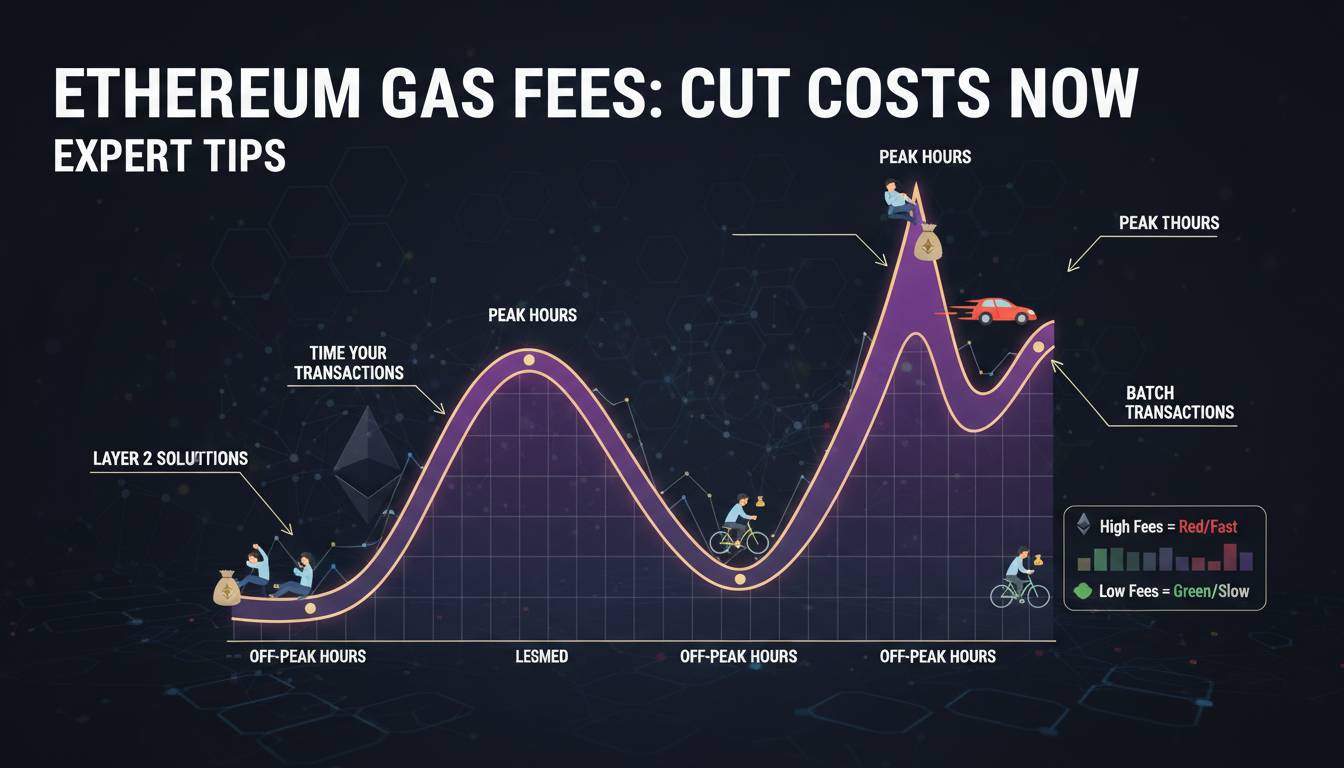
Time-of-Day Patterns: Gas fees typically reach their lowest points between 2 AM and 6 AM UTC (approximately 9 PM to 1 AM EST). Conversely, peak fees occur during U.S. market hours (9:30 AM to 4 PM EST) and European trading hours (8 AM to 5 PM CET).
Day-of-Week Variations: Tuesdays and Wednesdays generally see lower average fees, while Mondays and weekends tend to experience higher volatility and elevated costs. This correlates with reduced institutional activity on weekends combined with retail trading spikes.
Network Activity Correlation: Major protocol events, NFT mints, token launches, and significant market movements can cause gas fees to spike 5-10x above baseline levels within minutes. Monitoring social media for upcoming drops or launches helps you anticipate these spikes.
| Time Period | Average Base Fee (Gwei) | Typical Transfer Cost |
|---|---|---|
| Weekday Off-Peak (2-6 AM UTC) | 5-15 | $1-3 |
| Weekday Peak (9 AM-4 PM EST) | 20-50 | $5-15 |
| Weekend Peak | 30-70 | $8-25 |
| High Congestion Events | 80-150+ | $20-100+ |
Expert Tips to Reduce Gas Costs
Implementing these strategies from experienced Ethereum users and developers can substantially reduce your transaction costs.
1. Time Your Transactions Strategically
Timing represents the most effective way to reduce gas fees without changing your behavior. Schedule non-urgent transactions for early morning hours when network activity drops significantly. Use tools like Ethereum Gas Tracker (available on Etherscan) or Gas Now to monitor real-time gas prices and identify optimal execution windows.
2. Adjust Priority Fees Manually
Most wallets default to aggressive priority fee settings to ensure fast confirmation. For non-time-sensitive transactions, manually setting a lower priority fee can save 20-40% on total costs. During low-congestion periods, even 1-2 Gwei in priority fees often suffices for confirmation within 5-15 minutes.
3. Use Layer-2 Solutions
Arbitrum, Optimism, and Base are Ethereum Layer-2 networks that process transactions off the main Ethereum chain, dramatically reducing fees—often by 90% or more compared to mainnet costs. For DeFi interactions, many popular protocols now deploy on L2s. The trade-off is slightly longer withdrawal times when moving funds back to mainnet.
4. Batch Transactions When Possible
If you need to perform multiple operations, consider whether they can be combined. For instance, if you’re interacting with multiple DeFi protocols, look for routers that can execute multi-hop swaps in a single transaction, consuming less gas than separate approvals and swaps.
5. Enable EIP-1559-Compatible Wallets
Ensure you’re using wallets that support EIP-1559 fee structures, giving you more control over base fees versus priority fees. MetaMask, Rabby, and Frame all provide detailed fee breakdowns that let you adjust settings appropriately.
6. Use Gas Tokens Wisely
Gas tokens (GST2) allow you to store gas when prices are low and redeem it when prices rise. While the strategy requires upfront investment, heavy users of the network can benefit from tokenizing cheap gas periods. However, this strategy has become less profitable since EIP-1559 changed the fee dynamics.
Tools and Strategies for Gas Optimization
Several tools help users monitor and optimize their gas spending:
Etherscan Gas Tracker: Provides current gas prices, historical trends, and predictions. The platform shows median, slow, and fast gas prices so users can select appropriate fee levels.
Blocknative: Offers gas estimation APIs and browser extensions that notify users when gas prices drop below their threshold, enabling timing optimization.
L2 Fee Comparison Tools: Platforms like L2Beat provide comprehensive comparisons of Layer-2 networks, including cost analysis for various transaction types.
For developers and power users, Hardhat and Foundry testing environments allow simulation of transactions before mainnet execution, preventing costly errors. Running test transactions on Ethereum testnets (Sepolia or Holesky) first helps verify contract interactions work correctly without spending gas on failed transactions.
Common Mistakes to Avoid
Even experienced users frequently make these costly errors:
Setting Gas Limits Too Low: While you want to avoid overpaying, setting limits too low causes transactions to fail after consuming partial gas—you lose the spent gas without the transaction completing. For complex interactions, err on the side of higher limits.
Ignoring Max Priority Fee Settings: Some wallets display only the total max fee. Understanding the distinction between base fee (which gets burned) and priority fee (which goes to validators) helps you make informed decisions about what you’re actually paying for speed versus network cost.
Not Accounting for Approval Transactions: First-time interactions with a token require an approval transaction consuming 46,000+ gas. Factor this one-time cost into your planning, especially when testing new protocols.
Chasing Gas During Spikes: When gas suddenly spikes due to a popular mint or launch, waiting 30-60 minutes often results in significantly lower fees as the initial rush subsides.
Frequently Asked Questions
Q: Why do Ethereum gas fees fluctuate so much?
Gas fees fluctuate based on real-time supply and demand for block space. When many users submit transactions simultaneously, validators prioritize those offering higher fees, driving prices up. This happens during popular NFT drops, DeFi token launches, or significant market movements. The EIP-1559 mechanism automatically increases base fees when blocks are full and decreases them when demand drops.
Q: Can I get a refund on unused gas?
No, unused gas is not refunded in the traditional sense. However, the transaction will only charge you for the gas actually consumed, not the limit you set. If you set a 100,000 gas limit but only use 50,000, you’re only charged for 50,000 units. Failed transactions still charge for the gas consumed during execution.
Q: Are Layer-2 networks safe for holding funds?
Yes, major Layer-2 networks like Arbitrum, Optimism, and Base have undergone extensive security audits and have billions in total value secured. They inherit security from Ethereum through fraud proof systems. However, always verify you’re using the official network and bridge addresses—phishing sites frequently target L2 users with fake bridge interfaces.
Q: What’s the difference between gas price and gas limit?
Gas price (measured in Gwei) is the amount you’re willing to pay per unit of computational work. Gas limit is the maximum total units of gas you’ll allow the transaction to consume. Your total potential cost equals gas price × gas limit, though you’ll typically only pay for what you actually use.
Q: How can I estimate gas fees before sending a transaction?
Most wallets provide gas estimates before confirmation. For more accuracy, check Etherscan’s gas tracker for current median prices, or use the gas estimation functions built into smart contracts when interacting through interfaces like Etherscan. During DeFi interactions, the interface will display the expected gas consumption before you sign.
Q: Will Ethereum gas fees ever stop being expensive?
Ethereum’s roadmap includes Proto-Danksharding and full danksharding, which will add more data storage capacity to the network, potentially reducing L2 transaction costs significantly. However, demand for block space historically grows to meet any increased supply. While fees may decrease substantially, complete elimination of congestion-based pricing is unlikely.
Conclusion
Ethereum gas fees don’t have to be a frustration. By understanding how the fee market operates, timing your transactions strategically, and leveraging Layer-2 solutions when appropriate, you can dramatically reduce your costs. The key takeaways are: transact during off-peak hours, use L2 networks for routine DeFi activities, and set priority fees manually rather than accepting wallet defaults.
Remember that gas optimization is a balance—sometimes waiting hours to save a few dollars isn’t worth it, but large transactions or frequent users can save substantial amounts with minimal effort. The Ethereum ecosystem continues evolving, with scaling solutions gradually improving affordability. Stay informed, use the tools available, and adjust your strategies as the network develops.