Crypto Wallet Security Tips to Protect Your Digital Assets

The cryptocurrency landscape has transformed dramatically over the past decade, with millions of Americans now holding digital assets worth thousands of dollars. Yet despite this growth, security remains the single greatest concern for anyone storing cryptocurrency. According to the Federal Trade Commission, Americans lost more than $1 billion to crypto-related scams between January 2021 and March 2022, with the trend continuing upward. The reality is stark: your digital assets are only as secure as the wallet holding them and the practices you follow daily.
This guide covers essential security measures that every crypto holder should implement, whether you’re managing $100 or $100,000 in digital assets. These recommendations draw from industry standards, security research, and established best practices used by exchanges and institutional custodians. By understanding the threats and implementing these protective strategies, you can significantly reduce your vulnerability to the most common attack vectors.
Understanding the Threat Landscape
Before diving into specific security measures, you need to understand what you’re protecting against. The cryptocurrency ecosystem attracts sophisticated attackers who continuously evolve their tactics to exploit vulnerabilities in human behavior and technology.
Phishing attacks remain the most prevalent threat, accounting for approximately 70% of successful crypto thefts targeting individuals, according to research from cybersecurity firm Secureworks. These attacks typically involve fraudulent emails, text messages, or fake websites designed to trick you into revealing private keys, seed phrases, or login credentials. Attackers often impersonate legitimate exchanges or wallet providers with alarming accuracy, creating websites that look nearly identical to the real ones.
Malware presents another significant danger. Keyloggers can record your keystrokes when you enter passwords or seed phrases. Clipboard malware automatically replaces copied cryptocurrency addresses with attacker-controlled addresses, meaning you could send funds directly to thieves without realizing it. Mobile devices face particular risk from malicious apps that overlay legitimate wallet interfaces or intercept sensitive data.
Social engineering attacks have grown increasingly sophisticated. Attackers may contact you through social media, dating apps, or forums, building rapport over weeks or months before introducing crypto investment opportunities that turn out to be scams. SIM-swapping attacks allow attackers to hijack your phone number by convincing your mobile carrier to transfer service to a device they control, enabling them to bypass two-factor authentication.
The human element proves the weakest link in security chains. Even technically sophisticated users have lost millions through momentary lapses in judgment. Understanding these threats isn’t meant to create fear but to inform the security practices that follow.
Hot Wallets vs. Cold Wallets: Making the Right Choice
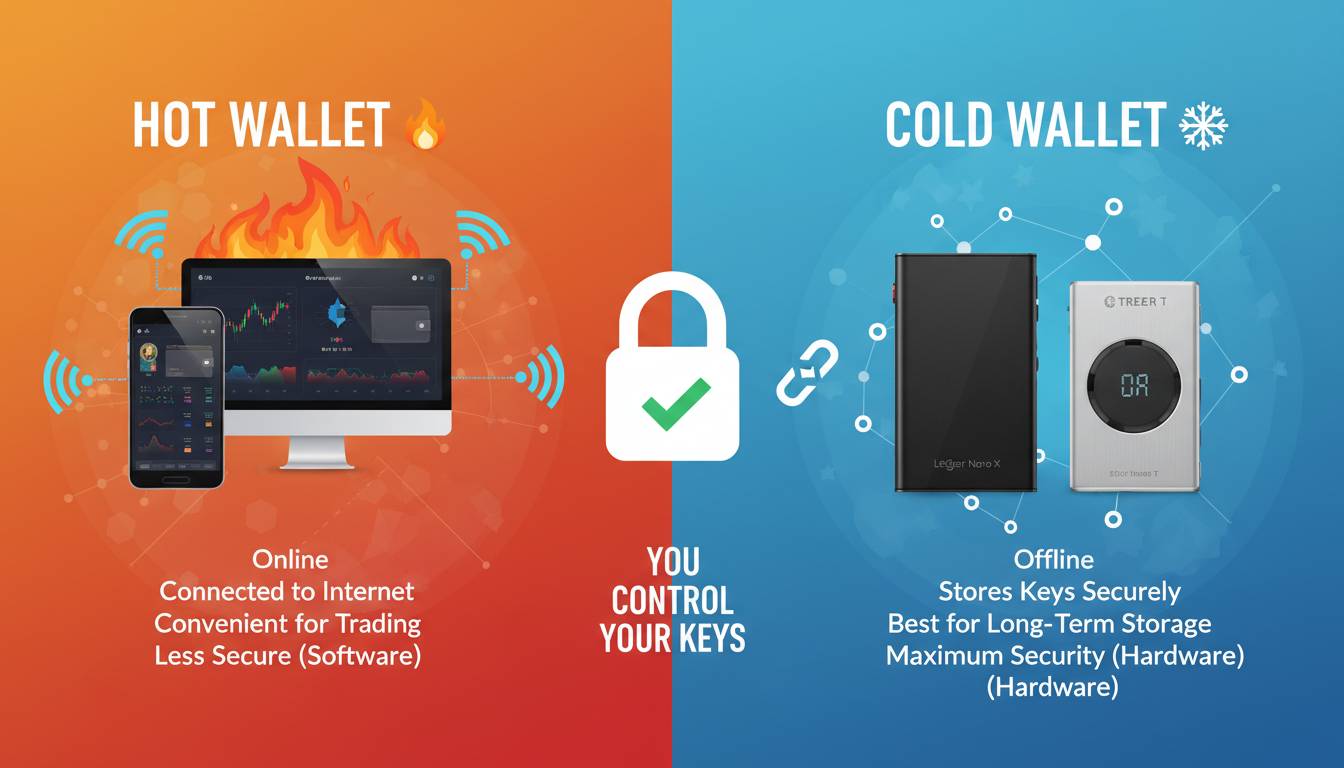
The fundamental choice in crypto security revolves around wallet type: hot wallets connected to the internet versus cold wallets stored offline. Each presents distinct trade-offs between convenience and security that warrant careful consideration.
Hot wallets include exchange-hosted wallets, mobile apps, browser extensions, and desktop software that maintain constant internet connectivity. These wallets offer unparalleled convenience for frequent trading and transactions. You can access your funds instantly from any device with an internet connection. However, this connectivity creates a permanent attack surface. Exchange hot wallets in particular have suffered numerous high-profile breaches, including the Mt. Gox collapse in 2014 and the Coincheck heist in 2018, where attackers stole hundreds of millions in customer funds.
Cold wallets, particularly hardware wallets, store your private keys on dedicated physical devices that never connect to the internet during normal operation. When you need to sign a transaction, the hardware wallet creates the signature internally and transmits only the signed transaction data to your computer or phone. This design dramatically reduces the attack surface available to hackers. Leading hardware wallet manufacturers Ledger and Trezor have built their reputations on this security architecture, with no verified compromises of the devices themselves when used correctly.
For most users, a hybrid approach makes sense. Keep only trading-sized amounts in hot wallets for daily transactions, while storing the bulk of your holdings in cold storage. A common guideline suggests keeping no more than you would comfortably carry in cash in your hot wallet. For long-term holdings that you don’t plan to touch for months or years, cold storage represents the clear choice.
The Critical Importance of Seed Phrases
Your seed phrase—typically 12 or 24 words generated by your wallet—represents the master key to your cryptocurrency. Anyone who obtains this phrase can access your funds regardless of other security measures. Protecting it properly ranks among the most critical security practices in the entire ecosystem.
Never store your seed phrase digitally. This means avoiding photos, cloud storage, email, password managers, and text files. Every digital storage method creates vulnerability to malware and hacking. The safest approach involves writing your seed phrase on paper and storing it in physically secure locations. Consider creating multiple written copies stored in separate secure locations—a home safe, a bank safety deposit box, and a trusted family member’s secure location.
Steel backup solutions offer protection against physical disasters. Devices like the Ledger Cryptosteel or similar products allow you to permanently record your seed phrase on metal, surviving fires, floods, and other destruction that would destroy paper backups. These typically cost $50-150 and represent a worthwhile investment for significant holdings.
When writing down your seed phrase, use the exact order provided by your wallet. Many users make the mistake of rearranging words “for security” or abbreviating words they think they’ll remember. Cryptocurrency seed phrases use specific wordlists, and only the exact sequence will recover your funds. Write legibly, double-check each word against your wallet’s display, and verify the entire phrase before deleting wallet access to test your backup.
Never share your seed phrase with anyone, regardless of how legitimate their request appears. Legitimate support representatives from wallet companies will never ask for your seed phrase. No one needs to verify your identity by requesting this information. Treat your seed phrase as equivalent to cash—if someone obtains it, they have your money.
Multi-Layered Authentication and Access Controls
Securing access to your wallets and exchange accounts requires defense in depth. Relying on single-layer authentication, even strong passwords, leaves you vulnerable to the numerous breaches that expose credentials daily.
Two-factor authentication (2FA) should be mandatory on every account holding cryptocurrency. However, not all 2FA methods offer equal protection. SMS-based 2FA, where codes arrive via text message, has been repeatedly compromised through SIM-swapping attacks. The Electronic Frontier Foundation and security researchers consistently recommend avoiding SMS 2FA for any account holding significant value. Instead, use authenticator apps like Google Authenticator or Authy, which generate codes locally on your device and never transmit over the cellular network.
Hardware security keys represent the gold standard for 2FA. Devices like the YubiKey or Titan Security Key connect physically to your computer or phone when authenticating, making them resistant to phishing and remote attacks. Major exchanges including Coinbase and Binance support hardware key authentication. While the initial cost ($50-150) exceeds other options, the security improvement is substantial for serious holders.
Strong, unique passwords form the foundation of your authentication layer. Never reuse passwords across different services—a breach at any single service could compromise your entire crypto holdings. Consider using a password manager like Bitwarden or 1Password to generate and store unique, complex passwords for each account. These tools encrypt your password vault with a master password that you must remember, providing both security and convenience.
Review your account recovery options carefully. Some services offer account recovery through trusted contacts, social media accounts, or identity verification. Each recovery method potentially creates an attack vector. The most secure approach limits recovery options to methods as strong as your primary authentication.
Hardware Wallet Best Practices
Hardware wallets provide the strongest security for most users, but their effectiveness depends entirely on proper setup and usage. Many users inadvertently compromise their hardware wallet security through configuration errors or failure to verify transactions.
Purchase directly from manufacturers or authorized resellers. Buying used hardware wallets or devices from unknown third parties creates opportunity for tampering. Attackers have modified devices to expose private keys or alter firmware. When your device arrives, verify the packaging integrity and check for any signs of interference before setting it up.
Verify the authenticity of your device upon first setup. Both Ledger and Trezor provide verification procedures that confirm your device runs genuine firmware. Skipping this step means you could be using a compromised device. The verification process typically involves comparing cryptographic hashes displayed on your device against values published by the manufacturer.
When initiating transactions, always verify the recipient address on your hardware wallet’s display, not just your computer or phone screen. Malware can alter addresses displayed on your connected device, but cannot affect what shows on your hardware wallet’s screen. This verification step protects against the most common malware-based attack vector.
Keep your firmware updated. Manufacturers regularly release firmware updates that address newly discovered vulnerabilities. While updating carries minimal risk when following manufacturer instructions, running outdated firmware leaves known vulnerabilities unpatched. However, always verify update authenticity by confirming the firmware signature matches what the manufacturer publishes.
Maintain the recovery seed you created during setup in a secure, separate location. The hardware wallet itself can fail, be lost, or be damaged. Without the seed phrase, you lose access to your funds permanently. The seed phrase is your ultimate backup, not the physical device.
Recognizing and Avoiding Common Scams
Even with excellent operational security, social engineering attacks can succeed by exploiting trust, greed, or urgency. Learning to recognize common scam patterns provides your last line of defense.
Fake websites frequently appear in search results and social media posts, particularly around times of high market activity. Before entering any login information or connecting your wallet, always verify the URL carefully. Scammers register domains with subtle misspellings—coinbaese.com instead of coinbase.com, for example. Bookmark your exchange and wallet URLs directly rather than searching for them.
Unsolicited contact from supposed support representatives, investment advisors, or romantic interests introducing crypto opportunities should immediately raise suspicion. No legitimate service will contact you first offering to help recover funds, resolve account issues, or provide investment returns. End such conversations immediately.
Fake apps appear regularly in both Apple’s App Store and Google Play Store. Before downloading any wallet or exchange app, verify the developer name, check reviews carefully, and look for the download count. Some scam apps persist for weeks before being removed, accumulating downloads from unsuspecting users. When possible, download apps from links provided directly on the official website rather than searching app stores.
Rug pull scams in the decentralized finance space involve developers creating tokens, attracting investment, and then draining liquidity and disappearing. Research any new token or DeFi project thoroughly before investing. Look for team doxxing (verifiable real identities), audited code, and established track records. If a project promises guaranteed returns or seems too good to be true, it almost certainly is.
Network and Device Security
The devices you use to access cryptocurrency wallets and the networks you connect through create additional security considerations that often receive insufficient attention.
Keep your devices updated with the latest operating system versions and security patches. Manufacturers regularly release updates addressing newly discovered vulnerabilities. Running outdated software leaves known vulnerabilities unpatched. Enable automatic updates where possible, and update manually as soon as possible after patches release.
Use dedicated devices for cryptocurrency transactions when possible. This doesn’t necessarily mean purchasing separate computers, but rather establishing a device that sees minimal other use. Avoid conducting crypto transactions on devices you use for general web browsing, social media, and email—the more your device interacts with the internet, the higher its exposure to malware.
Secure your home network as your primary connection point for crypto activities. Change default router passwords, ensure WPA3 or WPA2 encryption is enabled, and keep router firmware updated. Consider using a VPN when accessing crypto services from public networks, as encrypted connections prevent eavesdropping on potentially compromised networks at coffee shops, hotels, and airports.
Be cautious with browser extensions. While many legitimate extensions enhance your crypto experience, each extension you install gains significant permissions in your browser. Malicious extensions have accessed passwords, read web pages, and modified transaction data. Audit your extensions regularly, removing any you don’t actively use. Only install extensions from trusted developers, and research any extension before installation.
Planning for the Unexpected
Security isn’t only about preventing theft—it’s also about ensuring you can access your funds if something happens to you or your assets need to be recovered under adverse circumstances.
Estate planning for cryptocurrency remains widely overlooked. Without proper planning, your digital assets may become permanently inaccessible upon death or incapacity. Create clear documentation of your holdings, wallet types, and recovery procedures. Store this information securely with your estate documents, and ensure a trusted person knows how to access it.
Multiple geographic backups protect against localized disasters. If your home burns down, you don’t want your only seed phrase backup to be destroyed along with your hardware wallet. Maintain backups in physically separate locations—perhaps a safe deposit box at your bank, a secure location at a trusted family member’s home, or a safe in your office.
Test your recovery procedures before storing significant funds. After setting up a new wallet, write down your seed phrase, delete the wallet entirely, and attempt to recover it using only your written backup. This verifies both that your backup is correct and that you understand the recovery process. There’s no worse time to discover a backup error than when you actually need to recover your funds.
Frequently Asked Questions
What is the safest type of cryptocurrency wallet?
Hardware wallets provide the strongest security for most users. Devices like Ledger and Trezor store your private keys offline, making them resistant to remote attacks. However, their effectiveness depends on proper setup—purchasing from authorized sources, verifying device authenticity, protecting your seed phrase, and keeping firmware updated. For small amounts you trade frequently, reputable exchange wallets with strong 2FA offer reasonable convenience, but cold storage should hold the majority of long-term holdings.
How do I know if my wallet has been compromised?
Signs of compromise include unexpected transaction confirmations you didn’t initiate, unusual login alerts from exchanges, and unrecognized device access notifications. Regularly monitor your wallet addresses using block explorers to track all incoming and outgoing transactions. Enable notifications through your wallet or exchange for all account activity. If you suspect compromise, immediately transfer remaining funds to a fresh wallet with a new seed phrase, assuming your device may be compromised.
Should I use a password manager for my crypto accounts?
Yes, password managers significantly improve security by enabling unique, complex passwords for each account. Services like Bitwarden, 1Password, and LastPass encrypt your vault with a master password that only you know. However, never store your seed phrase in a password manager—these digital storage methods create vulnerability to hacking. Seed phrases should only exist in physical form in physically secure locations.
Can someone steal my crypto if they know my public address?
No. Your public address is designed to be shared freely—it’s how others send you cryptocurrency. Knowing your public address provides no ability to access your funds or initiate transactions. The private key (or seed phrase controlling it) is what must be protected. You can safely share your public address for receiving payments without compromising your security.
What should I do if I accidentally sent crypto to the wrong address?
Unfortunately, cryptocurrency transactions are generally irreversible. If you sent to an address you control but made a typo in the address itself, the funds are likely lost forever. Transactions to incorrect but valid addresses go to whoever controls that private key. Some exchanges may help if the receiving address is on their platform, but this is rare and not guaranteed. Always verify addresses character-by-character before sending, and consider sending small test amounts first when sending to new addresses.
How often should I review and update my security practices?
Review your security setup at minimum annually, though quarterly reviews are better. Technology changes rapidly, and practices considered secure two years ago may have vulnerabilities discovered since. Additionally, your personal situation may change—a new exchange account, different holdings, or new family members who should know emergency procedures all warrant security review. After any security event in the broader ecosystem, check whether your practices need updating.
Final Recommendation: The most effective security combines multiple layers—hardware wallets for cold storage, strong unique authentication methods, physical seed phrase backups, and continuous vigilance against social engineering. No single measure provides complete protection, but implementing these practices together creates defense in depth that stops the vast majority of attacks. Start with the most critical measures (seed phrase protection and hardware wallet adoption), then layer in additional security over time as your habits develop.