What Is Generative AI? A Complete Beginner’s Guide


Generative AI refers to artificial intelligence systems that can create new content—including text, images, audio, video, and code—by learning patterns from existing data. Unlike traditional software that follows explicit instructions, generative AI uses neural networks to recognize patterns and produce original outputs that resemble human creativity. This technology has exploded in popularity since 2022, with tools like ChatGPT, Claude, and DALL-E becoming household names. This guide will walk you through what generative AI is, how it works, and what it means for your work and daily life.
How Generative AI Actually Works
At its core, generative AI uses machine learning models—particularly large language models (LLMs) and diffusion models—to understand and create content. These models are trained on massive datasets containing billions of pieces of text, images, or other media. During training, the AI identifies statistical patterns: which words tend to follow each other, which pixels form recognizable shapes, or which musical notes create pleasing melodies.
When you give a generative AI tool a prompt, it doesn’t simply retrieve a stored response. Instead, it predicts what output would most likely satisfy your request based on everything it learned during training. This is why the same prompt can produce slightly different results each time—the model is making probabilistic decisions, not following rigid rules.
The most significant breakthrough came with the transformer architecture, introduced in 2017. Transformers allow AI to process entire sequences of data simultaneously, capturing context and relationships that earlier models missed. This technology powers virtually all modern generative AI tools.
Types of Generative AI
Generative AI encompasses several distinct categories, each specialized for different content types:
Text Generation: Models like GPT-4, Claude, and Gemini excel at creating human-like written content. They can answer questions, write essays, draft emails, summarize documents, and even engage in natural conversation. These models typically contain billions of parameters—internal settings that the AI adjusts during training to improve its predictions.
Image Generation: Tools such as DALL-E 3, Midjourney, and Stable Diffusion create images from text descriptions. They work by starting with random noise and progressively refining it into coherent images through a process called diffusion. A user might type “a cat sitting on a windowsill at sunset,” and within seconds receive a unique, photorealistic or artistic interpretation.
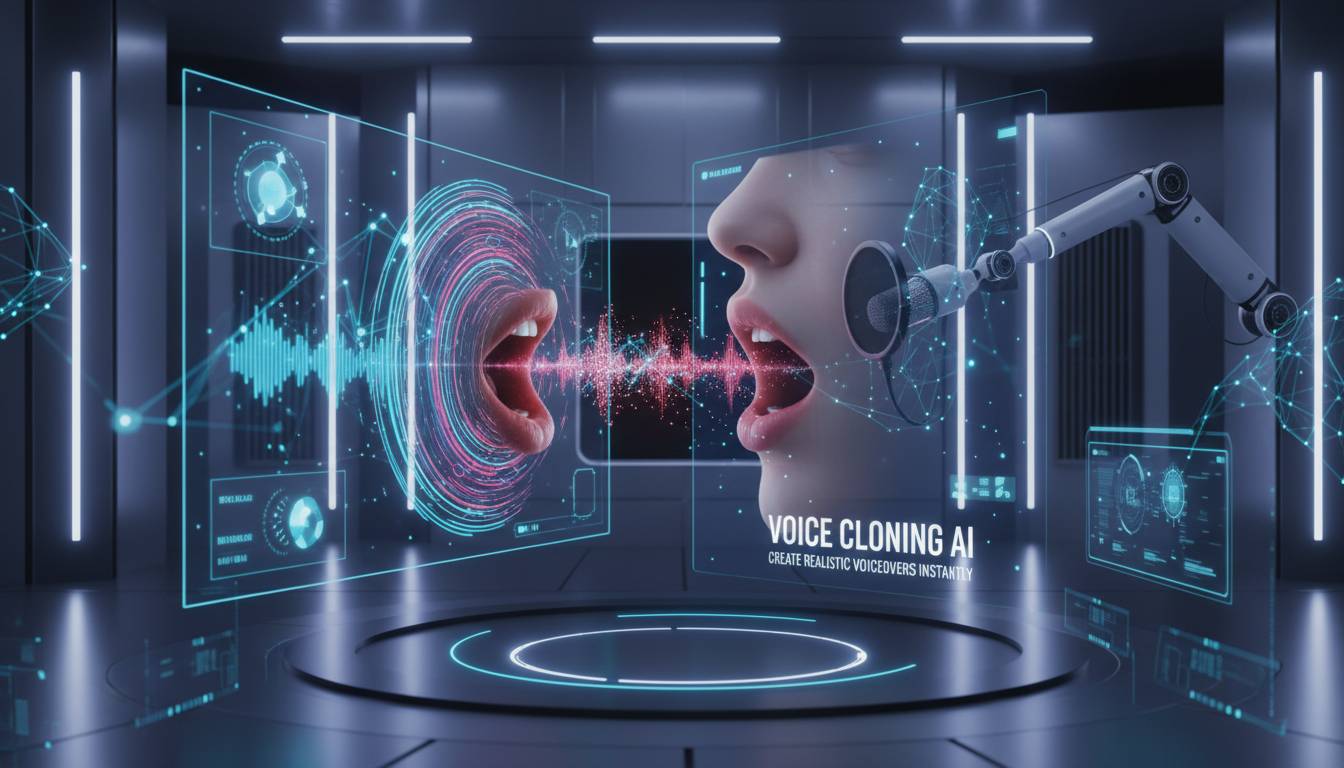
Audio Generation: This category includes tools that create music, voiceovers, and sound effects. AI can now generate speech that closely mimics specific voices, compose original music in various styles, and produce sound effects for videos or games.
Video Generation: Emerging tools like OpenAI’s Sora and Runway’s Gen-2 can generate short video clips from text descriptions. While still limited, this technology is advancing rapidly and may soon enable full-length AI-generated films.
Code Generation: Models like GitHub Copilot and Amazon CodeWhisperer assist developers by writing code, debugging existing programs, and explaining how code works. These tools can significantly speed up software development workflows.
Key Concepts to Understand
To grasp generative AI fully, you should familiarize yourself with several fundamental concepts:
Prompts are the instructions you give to an AI system. The quality of your prompts directly affects output quality—a vague prompt produces vague results, while specific, well-structured prompts yield better outcomes. This practice of crafting effective inputs is sometimes called “prompt engineering.”
Tokens are the basic units AI uses to process text. For English, a token is roughly three-quarters of a word. When you interact with an LLM, you’re actually working with tokens—the model predicts the next token in a sequence, building up complete responses word by word.
Hallucinations occur when AI generates false or nonsensical information while presenting it confidently. This happens because these models are designed to produce fluent text, not verify factual accuracy. Always verify important information from AI outputs against reliable sources.
Fine-tuning involves taking a pre-trained model and training it further on specialized data. A general-purpose LLM can be fine-tuned on medical texts to become better at healthcare applications, or on a company’s internal documents to answer questions about their specific products.
Real-World Applications
Generative AI is transforming numerous industries and use cases:
In marketing and advertising, teams use AI to brainstorm campaign ideas, draft social media posts, create product descriptions, and generate variations of advertisements for different audiences. This dramatically reduces the time needed for content creation while maintaining consistency across channels.
Software development has seen significant productivity gains. Developers report that AI assistants help them write code 40-55% faster, with fewer syntax errors. Beyond code generation, AI helps with testing, documentation, and explaining complex codebases.
In education, generative AI enables personalized tutoring at scale. Students can receive instant explanations of difficult concepts, practice problems tailored to their skill level, and feedback on writing assignments. Teachers use AI to generate lesson plans, quizzes, and educational materials.
Healthcare applications include summarizing patient records, assisting with medical coding, generating draft clinical notes, and helping researchers analyze vast amounts of medical literature. AI can accelerate drug discovery by predicting how molecules might behave.
Creative industries are leveraging AI as a collaborative tool rather than a replacement. Writers use it for brainstorming and drafting. Artists use it for concept development and refinement. Musicians explore new sounds with AI composition tools. The key insight is that human creativity remains essential for guiding and curating AI outputs.
Limitations and Challenges
Understanding generative AI’s limitations is just as important as knowing its capabilities:
Knowledge cutoffs mean AI models don’t know about events after their training data was collected. A model trained on data up to 2023 cannot tell you about 2024 developments unless that information appeared in its training data.
Bias in training data can lead to biased outputs. If training data over-represents certain demographics or perspectives, the AI will reflect those imbalances. Organizations using AI need processes to identify and mitigate these biases.
Copyright concerns surround AI-generated content. Questions remain about who owns output created by AI, whether training on copyrighted material constitutes infringement, and how creators should be compensated when their work influences AI systems.
Environmental impact is significant—training large AI models requires substantial computational resources and energy. While running existing models is less energy-intensive, the environmental cost of AI development remains a concern.
Security risks include the potential for creating convincing fake content (deepfakes), automating phishing attacks, and bypassing authentication systems. Organizations must implement safeguards against these threats.
The Future of Generative AI
The trajectory of generative AI points toward more capable, accessible, and integrated systems. Several trends are shaping the near future:
Multimodal AI that seamlessly combines text, image, audio, and video understanding is becoming standard. Future tools will process and generate multiple content types in a single conversation.
Specialized industry models are emerging for healthcare, legal, finance, and other fields. These domain-specific systems will offer deeper expertise than general-purpose models.
AI agents that can take autonomous actions—scheduling meetings, making purchases, or executing complex workflows—are moving from research labs to real-world applications. This shift from passive assistants to active participants represents a fundamental change in human-AI interaction.
Regulation is developing worldwide. The European Union’s AI Act establishes risk-based categories, while the United States is crafting executive orders and industry standards. Expect clearer guidelines on transparency, accountability, and permissible use cases.
Getting Started with Generative AI
If you’re new to generative AI, here’s how to begin exploring:
Start with accessible tools: ChatGPT, Claude, and Gemini offer free tiers that let you experiment without commitment. Google’s Gemini and Microsoft’s Copilot integrate with search and productivity tools you may already use.
Practice writing clear prompts. Include relevant context, specify the format you want, and indicate the tone or style you prefer. Iteratively refine your prompts based on outputs.
Experiment with different tools for different tasks. No single AI excels at everything—some are better at coding, others at creative writing or analysis.
Stay curious and keep learning. The AI landscape evolves rapidly, with new capabilities and tools emerging regularly. Following reputable technology news sources helps you stay informed about developments.
Frequently Asked Questions
What is the difference between AI and generative AI?
Traditional AI is designed to analyze data, identify patterns, and make decisions—think of recommendation systems or spam filters. Generative AI goes a step further by creating new content based on learned patterns. All generative AI is a subset of AI, but not all AI is generative.
Is generative AI the same as ChatGPT?
No—ChatGPT is a specific application of generative AI. It’s a chat interface built on OpenAI’s GPT language model. Many other tools use generative AI for different purposes: image creation, code assistance, music composition, and more.
Can generative AI be used for free?
Yes, many generative AI tools offer free versions with limitations. ChatGPT’s free tier, Google’s Gemini, and Claude’s free version provide substantial capabilities at no cost. Premium versions offer higher usage limits, faster processing, and advanced features.
Is generative AI content obvious or detectable?
Not necessarily. Modern generative AI produces content that often reads or appears human-created. While detection tools exist, they’re imperfect and can produce false positives. Many platforms now require disclosure when AI assists with content creation.
Will generative AI replace human jobs?
Generative AI is more likely to augment human work than replace it entirely. It excels at repetitive tasks, first drafts, and data synthesis—but still requires human oversight for quality control, creative direction, and ethical judgment. Most experts see AI as a powerful tool that changes how we work rather than eliminating human roles entirely.
How accurate is information from generative AI?
Generative AI can produce inaccurate information, including confident-sounding false statements known as hallucinations. Always verify factual claims from AI outputs against reliable sources. The technology improves with each generation, but critical thinking remains essential when using AI-generated content.