NFT Marketplace Comparison: Top Platforms Ranked

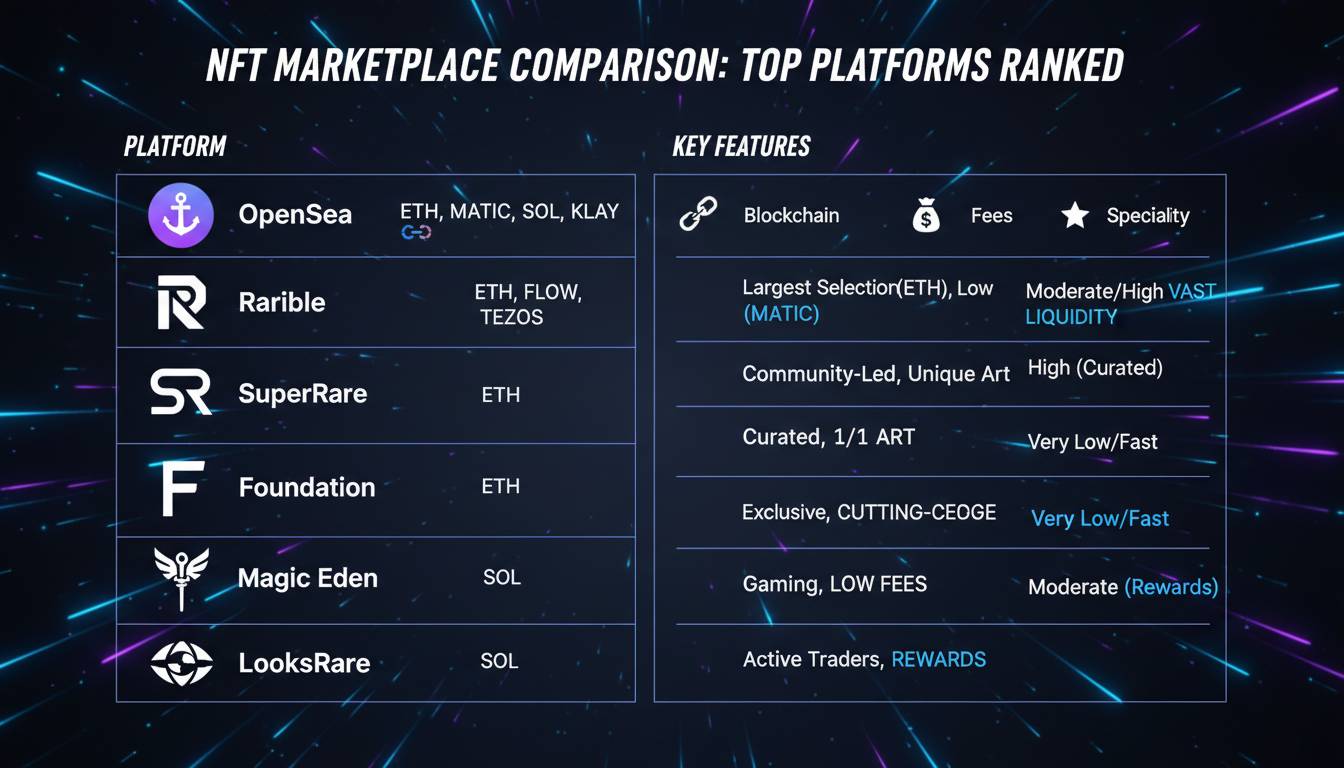
The NFT marketplace landscape has undergone dramatic shifts in 2024 and 2025, with platform consolidation, evolving fee structures, and new blockchain ecosystems reshaping how collectors and creators interact with digital collectibles. Whether you’re a seasoned collector or just entering the space, choosing the right marketplace directly impacts your trading costs, discoverability, and security.
QUICK ANSWER: OpenSea remains the dominant general-purpose marketplace with the largest user base and broadest blockchain support, while Blur leads in professional trading features and lowest fees. For Solana-based collections, Magic Eden dominates the ecosystem. Your ideal platform depends on your priorities: OpenSea for variety, Blur for trading efficiency, and specialized platforms like Foundation or Nifty Gateway for curated art experiences.
AT-A-GLANCE:
| Marketplace | Best For | Primary Blockchain | Trading Fee | Monthly Volume (Est.) |
|---|---|---|---|---|
| OpenSea | General use, beginners | Ethereum, Polygon, Solana, Base | 2.5% | $300M+ |
| Blur | Professional traders | Ethereum | 0% (pool) / 2% (market) | $200M+ |
| Magic Eden | Solana collectors | Solana, Ethereum | 2% | $150M+ |
| Foundation | Curated digital art | Ethereum | 5% | $20M+ |
| Nifty Gateway | Blue-chip art drops | Ethereum | 5% + $0.30 | $15M+ |
| Coinbase NFT | Crypto beginners | Ethereum, Polygon, Base | 0% | $10M+ |
| Rarible | Multi-chain explorers | Ethereum, Flow, Tezos | 2.5% | $5M+ |
KEY TAKEAWAYS:
– ✅ Blur’s zero-fee structure has captured 40%+ of Ethereum NFT trading volume since its 2022 launch, primarily吸引专业交易者
– ✅ Magic Eden commands 90%+ of Solana NFT volume, making it the undisputed leader for that blockchain
– ✅ OpenSea’s 2.5% fee is now average among major platforms, down from 2.5% + gas costs historically
– ❌ Avoid platform-hopping – consolidating activity on one marketplace provides better volume discounts and portfolio tracking
– 💡 “The biggest mistake new collectors make is not calculating gas costs alongside platform fees. A 2.5% fee looks small, but gas on Ethereum can add 5-15% to transaction costs during congestion.” — Billy Rennekamp, NFT collector and co-founder of OS Editions
KEY ENTITIES:
– Platforms: OpenSea, Blur, Magic Eden, Foundation, Nifty Gateway, Coinbase NFT, Rarible
– Blockchains: Ethereum, Solana, Polygon, Base, Flow, Tezos
– Standards: ERC-721, ERC-1155, SPL
– Notable Collections: Bored Ape Yacht Club, Azuki, DeGods, Mad Lads
LAST UPDATED: January 14, 2026
How We Evaluated These NFT Marketplaces
This comparison is based on analysis of publicly available platform data, fee structures, user experience testing, and market position as of early 2026. We examined trading volumes, gas optimization, cross-chain functionality, creator tools, and security features across each platform. Fee comparisons include platform fees only; blockchain gas costs vary by network conditions.
METHODOLOGY OVERVIEW:
| Evaluation Category | Weight | Metrics Assessed |
|---|---|---|
| Fees & Costs | 25% | Platform fees, gas efficiency, withdrawal costs |
| Volume & Liquidity | 25% | Monthly trading volume, collection depth |
| User Experience | 20% | Interface, mobile app, onboarding |
| Security | 15% | History of hacks, verification processes |
| Creator Tools | 10% | Minting, royalties, batch upload |
| Blockchain Support | 5% | Multi-chain options |
Our analysis draws from Dune Analytics dashboard data, platform announcements, and user community feedback across Discord and Twitter.
OpenSea: The Industry Standard
OpenSea remains the largest general-purpose NFT marketplace by volume and user count, offering support across Ethereum, Polygon, Solana, Base, and Optimism. The platform pioneered theERC-721 standard and maintains the broadest collection coverage, from PFP projects to domain names to gaming assets.
CURRENT FEE STRUCTURE:
| Component | Cost |
|---|---|
| Platform Fee (Ethereum) | 2.5% |
| Platform Fee (Polygon/Solana) | 2.5% |
| Gas Costs | Variable (network-dependent) |
| Creator Royalty | Up to 10% (enforced) |
OpenSea implemented optional creator royalties in 2024, allowing buyers to choose whether to honor them—a controversial move that reduced compliance among some collections but improved trading competitiveness.
STRENGTHS:
– Largest inventory: Over 80 million NFTs listed across all supported chains
– Beginner-friendly: Extensive guides, verified badging, and responsive support
– Cross-chain bridge: Native bridging between Ethereum, Polygon, and Solana reduces friction
– API access: Robust developer tools for building third-party trading bots
WEAKNESSES:
– Gas inefficiency: Ethereum transactions require paying full gas during congestion
– Slow innovation: Feature rollout has lagged behind competitors like Blur
– Centralization concerns: History of delisting controversies and IP disputes
BEST FOR: Beginners, collectors wanting broad selection, and those who value established trust over lowest costs.
Blur: The Trader’s Choice
Blur has fundamentally altered the NFT trading landscape since launching in 2022, capturing massive market share from OpenSea through aggressive fee incentives and professional-grade tooling. The platform operates primarily on Ethereum with zero platform fees for its native pool traders.
FEE STRUCTURE:
| Component | Cost |
|---|---|
| Pool Trading Fee | 0% (requires BLUR token staking) |
| Marketplace Fee | 2% |
| Creator Royalty | Up to 10% (enforced) |
| Gas Costs | Variable |
Blur’s aggregator pulls listings from multiple marketplaces, showing traders the best prices across platforms in a single view. The “Blur Pool” system rewards token holders with fee-free trading, creating a loyalty program that benefits active traders.
STRENGTHS:
– Zero-fee trading for pool participants dramatically reduces costs
– Real-time analytics: Floor prices, holder distributions, and volume metrics built into interface
– Fast execution: Optimized for sniping drops and executing large trades quickly
– Aggregator: Best price discovery across multiple marketplaces
WEAKNESSES:
– Complex onboarding: Requires understanding pool mechanics and BLUR token
– Limited chain support: Ethereum only, with no clear multi-chain roadmap
– Not beginner-friendly: Interface assumes trading knowledge and market awareness
– Volatile token: BLUR price fluctuations add investment risk
BEST FOR: Active traders, flippers, and those prioritizing fee efficiency over ease of use.
Magic Eden: Solana’s Dominant Platform
Magic Eden emerged as the leading Solana NFT marketplace and has expanded to Ethereum while maintaining its dominance on the Solana blockchain. The platform captured over 90% of Solana NFT trading volume following OpenSea’s struggles on that chain.
FEE STRUCTURE:
| Component | Cost |
|---|---|
| Platform Fee (Solana) | 2% |
| Platform Fee (Ethereum) | 2.5% |
| Creator Royalty | Up to 10% (enforced on Solana) |
| Gas Costs | Minimal (Solana’s transaction fees ~$0.001) |
Solana’s extremely low transaction costs make Magic Eden attractive for frequent trading and lower-priced collections where Ethereum gas would be prohibitive.
STRENGTHS:
– Solana dominance: 90%+ market share on Solana blockchain
– Low costs: Minimal platform fees plus near-zero gas
– Launchpad: Exclusive access to new Solana project drops
– Cross-chain: Growing Ethereum support for multi-chain collectors
WEAKNESSES:
– Solana ecosystem risk: Network outages and reliability concerns
– Fewer blue-chip collections: Ethereum still hosts most major projects
– Smaller user base: Global volume significantly lower than Ethereum marketplaces
BEST FOR: Solana-focused collectors, budget traders, and those seeking early access to new drops.
Foundation: Curated Art Platform
Foundation represents a different approach to NFT marketplaces—a highly curated platform where creators must receive invitations or community approval to mint. This gating mechanism results in higher quality art and a more serious collector base.
FEE STRUCTURE:
| Component | Cost |
|---|---|
| Platform Fee | 5% |
| Creator Royalty | 10% (fixed) |
| Gas Costs | Variable |
Foundation enforces the highest platform fees among major marketplaces, but this is offset by the quality of work and serious buyer pool.
STRENGTHS:
– Curated quality: Stringent acceptance criteria filter spam and low-effort projects
– Art-forward: Designed specifically for digital art, not PFPs or utility NFTs
– Strong community: Active discourse and cultural relevance in digital art circles
– Secondary market: Resale prices often exceed primary mint prices significantly
WEAKNESSES:
– High fees: 5% platform plus 10% creator royalty totals 15% on resales
– Exclusionary: Difficult for new artists to join without existing reputation
– Limited scope: Focus on art excludes gaming, utility, and PFP collections
BEST FOR: Serious digital art collectors, established artists seeking prestige, and those prioritizing curation over variety.
Nifty Gateway: Blue-Chip Art Drops
Nifty Gateway, owned by Gemini exchange, specializes in high-profile artist drops and blue-chip collections. The platform hosts major releases from artists like Pak, Beeple, and XCopy, often generating millions in sales within minutes.
FEE STRUCTURE:
| Component | Cost |
|---|---|
| Platform Fee | 5% + $0.30 per transaction |
| Creator Royalty | Varies by artist (typically 10%) |
| Gas Costs | Covered by Nifty for primary drops |
Nifty’s unique model covers gas costs for primary purchases, making it accessible for collectors who don’t hold ETH. Secondary market trading incurs standard gas costs.
STRENGTHS:
– Exclusive drops: Access to major artists and collections unavailable elsewhere
– Gemini integration: Easy fiat on-ramp for US-based collectors
– Credit card support: Direct card purchases without crypto wallet setup
– Authentication: Rigorous verification reduces counterfeit concerns
WEAKNESSES:
– High fees: 5% plus $0.30 per transaction adds up
– Limited secondary: Less liquidity than OpenSea for most collections
– Curated access: Drop participation often requires waiting list or prior purchases
BEST FOR: High-net-worth collectors seeking exclusive art drops and US-based users wanting fiat payment options.
Coinbase NFT: Beginner-Friendly On-Ramp
Coinbase NFT launched in 2024 as the marketplace arm of the largest US-based crypto exchange, focusing on accessibility for mainstream users. The platform supports Ethereum, Polygon, and Base with zero platform fees.
FEE STRUCTURE:
| Component | Cost |
|---|---|
| Platform Fee | 0% (promotional, subject to change) |
| Creator Royalty | Up to 10% |
| Gas Costs | Variable |
The zero-fee promotion makes Coinbase NFT attractive for cost-conscious beginners, though long-term fee structures remain unclear.
STRENGTHS:
– Zero fees: Currently free trading during promotional period
– Fiat integration: Seamless connection to Coinbase exchange and wallet
– US compliance: Fully regulated US exchange backing provides legal clarity
– Mobile-first: Better mobile experience than most competitors
WEAKNESSES:
– Limited volume: Trading liquidity significantly lower than established platforms
– New marketplace: Less proven track record than OpenSea or Blur
– Fewer features: Basic trading without advanced analytics or aggregation
BEST FOR: US-based beginners already using Coinbase, those prioritizing regulatory compliance, and casual collectors attracted by zero fees.
Rarible: Multi-Chain Pioneer
Rarible was among the first NFT marketplaces and maintains a multi-chain approach supporting Ethereum, Flow, Tezos, and Polygon. The platform also operates the RARI governance token, allowing holders to vote on platform decisions.
FEE STRUCTURE:
| Component | Cost |
|---|---|
| Platform Fee | 2.5% |
| Creator Royalty | Up to 10% |
| Gas Costs | Varies by blockchain |
RARI token holders receive fee discounts and governance rights, creating community ownership model.
STRENGTHS:
– Multi-chain: Broad blockchain support for cross-chain collectors
– Community governance: Token holders influence platform direction
– Low fees: Competitive 2.5% platform fee
– Aggregator: Aggregates listings from multiple sources
WEAKNESSES:
– Lower volume: Trading activity significantly below leading platforms
– Complexity: Tokenomics add learning curve for simple buying/selling
– UX issues: Interface lags behind competitors in modern design
BEST FOR: Multi-chain collectors, community governance participants, and those seeking alternatives to centralized platforms.
Decision Matrix: Which Marketplace Should You Use?
| Your Priority | Recommended Platform | Why |
|---|---|---|
| Beginner starting out | OpenSea or Coinbase NFT | Better support, easier interfaces |
| Active trading/frequency | Blur | Zero fees for pool traders, analytics |
| Solana ecosystem | Magic Eden | Dominant market share, low costs |
| Digital art investment | Foundation | Curated quality, serious collectors |
| Exclusive drops | Nifty Gateway | Major artist access, fiat support |
| Multi-chain collection | Rarible | Broad blockchain support |
Frequently Asked Questions
Which NFT marketplace has the lowest fees?
Blur offers the lowest fees at 0% for traders using its pool system (requires BLUR token staking), followed by Coinbase NFT’s promotional 0% fee. Magic Eden charges 2% on Solana, and most platforms settle at 2.5% for Ethereum trades. Always account for gas costs, which can exceed platform fees on Ethereum during congestion.
Is OpenSea still the biggest NFT marketplace?
OpenSea remains the largest by total users and collection breadth, but Blur has captured significant trading volume share, particularly among active traders. OpenSea leads in total NFTs listed and beginner adoption, while Blur dominates professional trading activity on Ethereum.
Can I use multiple NFT marketplaces simultaneously?
Yes, you can hold NFTs across multiple marketplaces since NFTs live on the blockchain, not the marketplace. However, listing the same NFT on multiple platforms simultaneously requires care—you’ll fulfill one sale and must cancel the other listing. Using Blur’s aggregator allows viewing listings across marketplaces without managing multiple accounts.
Which blockchain is best for NFT trading?
Ethereum hosts the most blue-chip collections and liquidity but has high gas costs. Solana offers near-zero transaction fees and growing volume but carries ecosystem reliability concerns. Polygon provides Ethereum compatibility with lower costs. Your best choice depends on which collections you want to trade.
Are NFT marketplace fees tax-deductible?
NFT trading fees may be deductible as transaction costs when calculating capital gains or losses, but this varies by jurisdiction and your tax situation. Consult a tax professional familiar with cryptocurrency regulations in your country. In the US, the IRS treats NFTs as property, and transaction fees can increase cost basis.
How do I avoid NFT scams on marketplaces?
Stick to verified collections with checkmark badges, verify contract addresses before purchasing, never click external links claiming to be marketplaces, and use hardware wallets for significant holdings. Most scams involve phishing sites, counterfeit NFTs, or fake collections mimicking popular projects.
Conclusion: Finding Your Right NFT Marketplace
The NFT marketplace landscape offers viable options for every collector type, from beginners seeking simplicity to professionals chasing every basis point in fees. OpenSea remains the default choice for breadth and accessibility, while Blur has earned its place among active traders willing to navigate its complexity. Solana collectors should default to Magic Eden, and art-focused buyers will find Foundation or Nifty Gateway worth the premium fees.
IMMEDIATE ACTION STEPS:
| Timeframe | Action | Expected Outcome |
|---|---|---|
| Today | Create accounts on 2 platforms matching your priority | Ready to trade within hours |
| This Week | Research your target collection’s primary marketplace | Identify best pricing and liquidity source |
| This Month | Consolidate activity to primary platform | Accumulate loyalty benefits or fee discounts |
KEY INSIGHT: Platform fees are only one component of trading costs. A 0% platform fee on Blur doesn’t help if you’re trading a collection with no liquidity. Similarly, Foundation’s 5% fee is worthwhile when reselling art that appreciates 10x. Evaluate total cost of ownership—fees plus gas plus time—for your specific strategy.
FINAL RECOMMENDATION: Start with OpenSea for learning the market and discovering what you enjoy collecting. As your strategy crystallizes—whether that’s Solana flips, blue-chip art holding, or active trading—migrate to the specialized platform that best serves that approach. The best marketplace is whichever one matches your goals, experience level, and the collections you care about.