Financial Independence Retire Early: Your Complete Guide


Financial Independence Retire Early (FIRE) represents a transformative approach to personal finance that has gained millions of adherents over the past two decades. This movement challenges conventional retirement wisdom, proposing that individuals can achieve financial freedom decades before the traditional retirement age of 65 through aggressive saving, intelligent investing, and intentional lifestyle design. The FIRE methodology isn’t merely about retiring early—it’s about gaining the freedom to allocate your time according to your values rather than economic necessity.
The FIRE movement traces its modern roots to Vicki Robin’s 1992 book “Your Money or Your Life,” which introduced the concept of financial independence as a tangible goal achievable through mindful consumption and strategic asset accumulation. The movement accelerated substantially after 2011 when Pete Adeney launched the Mr. Money Mustache blog, demonstrating through his own journey of retiring at age 30 that early retirement wasn’t just possible but practically achievable for ordinary earners willing to embrace unconventional financial strategies.
This comprehensive guide examines the mathematical foundations underlying FIRE, explores the various FIRE methodologies available, addresses the practical challenges practitioners face, and provides actionable steps for anyone pursuing financial independence. Whether you’re earning $50,000 or $250,000 annually, the principles outlined here can help you chart a course toward genuine financial autonomy.
Understanding the FIRE Mathematics
The financial independence calculation rests on a surprisingly straightforward mathematical foundation. The core principle derives from the Trinity Study, a University of Texas research project published in 1998 that examined historical portfolio survival rates across various withdrawal rates and portfolio allocations. The landmark finding established that a 4% initial withdrawal rate—adjusted for inflation thereafter—provided a 95% probability that a diversified portfolio would last at least 30 years.
This 4% rule translates directly into the FIRE formula: multiply your annual expenses by 25 to determine your financial independence number. If you spend $40,000 annually, your FIRE number becomes $1,000,000 in invested assets. Once you accumulate this portfolio value, mathematically you should never need to work again, as your investments can sustain indefinite withdrawals at the 4% rate.
However, contemporary FIRE practitioners increasingly adopt more conservative assumptions. Many target a 3.5% or even 3.25% withdrawal rate to account for increased longevity expectations, potential healthcare costs, and sequence-of-returns risk. Under a 3.5% rule, annual expenses of $40,000 require a $1,143,000 portfolio—a full 14% increase over the traditional calculation.
The savings rate dramatically determines your timeline to FIRE. Someone saving 50% of their income reaches financial independence in approximately 16.9 years, assuming a 7% annual return. Increase that savings rate to 65%, and the timeline compresses to just 10.4 years. This mathematical reality explains why FIRE advocates emphasize maximizing income, minimizing expenses, and closing the gap between the two as aggressively as possible.
The Various FIRE Pathways
The FIRE movement has evolved beyond a one-size-fits-all approach, recognizing that individuals have different income levels, expense structures, risk tolerances, and definitions of a fulfilling life. Understanding these variants helps you select the approach that aligns with your circumstances and values.
Lean FIRE
Lean FIRE represents the most minimalist pathway, requiring the smallest portfolio because it involves living on significantly reduced expenses—typically $25,000 to $40,000 annually in the United States. This approach prioritizes extreme frugality, often involving tiny homes, van living, or shared housing arrangements. Lean FIRE suits individuals who find genuine satisfaction in simplified lifestyles and want to minimize the years spent in conventional employment. The primary risk involves insufficient buffer for unexpected expenses or healthcare costs, making comprehensive insurance planning essential.
Fat FIRE
Fat FIRE targets a more traditional retirement lifestyle, requiring $1.5 million to $3 million or more in invested assets depending on desired annual spending of $60,000 to $120,000+. This approach permits comfortable housing, travel, hobbies, and entertainment without significant financial stress. Fat FIRE takes longer to achieve but provides greater security and lifestyle flexibility. Many Fat FIRE practitioners earn high incomes in technology, finance, or healthcare fields that enable accelerated accumulation while maintaining moderate consumption.
Coast FIRE
Coast FIRE offers a hybrid approach where you stop contributing to retirement accounts once you’ve accumulated enough that compound growth will reach your FIRE number by traditional retirement age—without additional contributions. A 30-year-old with $100,000 invested, targeting a $1 million portfolio at age 65 with 7% returns, has effectively reached Coast FIRE. This pathway provides psychological relief while maintaining employment flexibility. Many Coast FIRE practitioners pursue lower-paying work they’re passionate about, knowing their future financial security is secured through their existing portfolio.
Barista FIRE
Barista FIRE describes a situation where your investments cover most expenses while part-time work provides the remainder. If your portfolio generates $30,000 annually and you need $45,000 to live, earning $15,000 from part-time work completes your budget. This approach often involves jobs in retail, food service, or other positions that provide benefits like health insurance while requiring limited cognitive load. The trade-off involves continued employment but with drastically reduced hours and stress compared to full-time career demands.
Building Your FIRE Foundation
Achieving financial independence requires constructing a solid foundation across multiple financial disciplines. The sequence matters—building these elements in the right order maximizes efficiency and reduces risk.
Emergency Fund Development
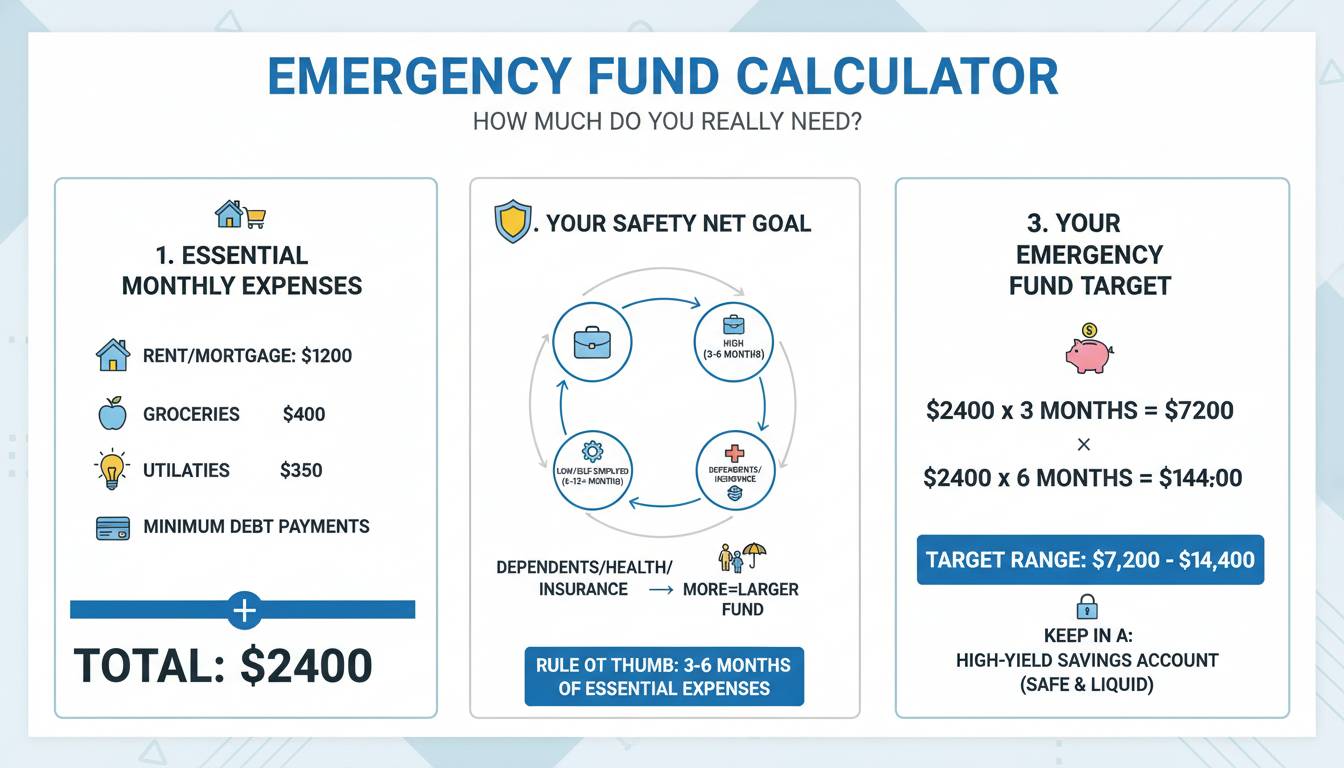
Before aggressively investing, establish three to six months of expenses in accessible savings. This reserve prevents you from selling investments during market downturns to cover unexpected expenses. FIRE practitioners often maintain larger emergency funds of six to twelve months due to reduced income diversity and the desire to avoid withdrawing from portfolios during economic contractions.
Debt Elimination
High-interest debt creates negative returns that undermine FIRE timelines. Credit card balances carrying 15-25% interest rates effectively guarantee you’ll work longer than necessary. Prioritize eliminating any debt with interest rates exceeding your expected investment returns. Mortgage debt at 3-5% interest presents a more nuanced decision, as historically low rates may warrant investing rather than prepaying.
Tax-Advantaged Account Maximization
Retirement accounts like 401(k)s, IRAs, and HSAs provide tax advantages that dramatically accelerate wealth accumulation. In 2024, employees can contribute up to $23,000 to 401(k) plans, with employers potentially matching contributions. Traditional and Roth IRAs permit $7,000 in annual contributions. Health Savings Accounts offer triple tax advantages for those with high-deductible health plans. FIRE practitioners typically maximize all available tax-advantaged space before considering taxable brokerage accounts.
Index Fund Investment Strategy
The FIRE community overwhelmingly recommends low-cost index fund investing over individual stock selection or active management. Research consistently demonstrates that over any meaningful time horizon, the vast majority of actively managed funds underperform their benchmark indices. A simple three-fund portfolio containing US stocks, international stocks, and bonds provides broad diversification with minimal complexity. Vanguard, Fidelity, and Schwab all offer index funds with expense ratios below 0.10%—some below 0.03%.
The Role of Income in FIRE Success
While expense reduction receives substantial attention in FIRE discourse, income level ultimately determines how quickly most practitioners reach financial independence. The mathematics reveal this clearly: doubling your income while maintaining identical expenses cuts your time to FIRE in half.
Career Advancement Strategies
Increasing your earning potential often provides the highest return on investment of any financial activity. Negotiating salary increases, pursuing promotions, developing marketable skills, or transitioning to higher-paying industries can increase income by 30-100% compared to passive expense reduction efforts of similar magnitude. Technology, healthcare, and finance sectors consistently offer the highest compensation for qualified candidates.
Side Hustle Development
Supplementary income streams accelerate FIRE timelines while providing skill diversification and potential future career options. Common FIRE side hustles include consulting in your professional field, teaching online courses, building e-commerce businesses, or monetizing hobbies. The key involves selecting activities that generate meaningful income without consuming time you’d otherwise allocate to rest, relationships, or personal development.
Geographic Arbitrage
Many FIRE practitioners leverage geographic arbitrage—earning income in high-cost areas while living in low-cost regions. A software engineer earning San Francisco salaries while living in Portugal, Mexico, or Thailand can accumulate wealth dramatically faster than local counterparts. Remote work has expanded geographic arbitrage opportunities substantially since 2020, enabling knowledge workers to access high-income opportunities regardless of physical location.
Common FIRE Challenges and Solutions
The path to financial independence involves navigating several predictable challenges that catch many practitioners off guard.
Inflation and Purchasing Power
Historical inflation averages 2-3% annually, but healthcare and education costs have historically increased much faster. A $40,000 annual budget today will require $48,000 in ten years at just 2% inflation. FIRE practitioners address this through conservative withdrawal rate planning, maintaining some allocation to growth assets even in “retirement,” and occasionally returning to income-earning activities if portfolio performance disappoints.
Healthcare in the United States
Healthcare represents the largest uncertainty for American FIRE practitioners. Traditional Medicare becomes available only at age 65, leaving early retirees to navigate the ACA marketplace or high-cost private insurance. Healthcare expenses vary dramatically based on location, health status, and plan selection. FIRE practitioners typically budget $500-$1,000 monthly per person for marketplace coverage plus out-of-pocket costs, with this amount increasing annually.
Psychological and Social Adjustments
Financial independence requires psychological adaptation beyond simple arithmetic. Many practitioners experience identity crisis upon leaving careers that defined their self-worth for decades. Relationships with employed friends may strain as lifestyle differences emerge. Some FIRE retirees report initial difficulty filling their time meaningfully. Addressing these challenges requires developing non-work identities, building community connections outside employment, and pursuing purposeful activities that provide meaning and social connection.
Frequently Asked Questions
How long does it typically take to achieve FIRE?
The time to FIRE depends heavily on your savings rate relative to income. Based on standard assumptions of 7% annual returns, saving 20% of income requires approximately 37 years. Saving 50%压缩es the timeline to about 17 years, while saving 70% achieves FIRE in roughly 10 years. Those with very high incomes or extreme savings rates have reached FIRE in under five years.
Is the 4% withdrawal rate still safe?
The 4% rule derives from historical data spanning 1926-1976 and was formalized in the 1998 Trinity Study examining periods up to 1995. Contemporary analysis suggests slightly lower rates—3.5% to 3%—may be more appropriate given current market valuations, increased longevity expectations, and the unprecedented nature of current bond-stock correlations. However, the 4% rule remains reasonable for a 30-year retirement horizon, with flexibility to reduce spending during market downturns.
What happens if I need to access my FIRE funds early?
FIRE portfolios are typically held in accounts accessible before age 59½ without penalty. Taxable brokerage accounts have no restrictions. Roth IRA contributions can be withdrawn tax-free at any time. However, earnings from tax-advantaged accounts withdrawn before 59½ generally incur 10% penalties plus income taxes, necessitating planning around the “rule of 55” (allowing 401(k) withdrawals at 55 from employer plans) or Roth conversion ladders.
Do I need to completely stop working to be considered FIRE?
No. Financial independence means your investment income covers your expenses, not that you stop all work. Many FIRE practitioners continue part-time work, pursue passion projects, or maintain freelance careers for social connection and supplementary income. Barista FIRE explicitly describes the scenario where investment income plus part-time work covers expenses. The key achievement is financial autonomy, not complete work cessation.
Can I achieve FIRE on an average income?
Yes, though it requires either aggressive expense reduction, extended timeline, or geographic arbitrage. Someone earning $50,000 annually living on $30,000 can achieve FIRE in approximately 22 years through consistent saving and investing. Couples with two average incomes can accelerate this substantially. The FIRE movement explicitly includes examples of teachers, nurses, and other middle-income professionals who achieved financial independence through disciplined execution.
Conclusion
Financial Independence Retire Early represents a legitimate pathway to autonomy and freedom from mandatory employment. The mathematical foundation is sound—accumulate 25-30 times your annual expenses in diversified investments, and you gain the ability to determine how you spend your time. The specific path you choose—whether Lean FIRE, Fat FIRE, Coast FIRE, or Barista FIRE—depends entirely on your values, circumstances, and vision for a fulfilling life.
The FIRE journey requires more than mathematical competence. It demands psychological readiness to question consumption norms, social resilience to maintain relationships across economic diversity, and practical wisdom to navigate healthcare complexity and portfolio volatility. Those who succeed typically find that the journey itself transforms their relationship with money, work, and time in ways that enrich their lives regardless of when traditional retirement arrives.
Begin by calculating your FIRE number based on your current expenses. Examine your savings rate honestly. Identify the highest-return opportunities for acceleration—whether increasing income, reducing expenses, or optimizing tax strategy. Execute consistently over years, adjusting as circumstances evolve. Financial independence rewards patience and discipline, offering in exchange the most precious resource: control over your own time.