Calisthenics for Beginners: Start Your Journey to Strength

Calisthenics is one of the most effective ways to build strength, flexibility, and body control using nothing but your own body weight. For beginners, the world of bodyweight training can seem intimidating—with moves like muscle-ups, front levers, and handstands appearing as ultimate goals that seem impossible to reach. However, every elite calisthenics athlete started exactly where you are now, with basic movements and a willingness to progress gradually.
This comprehensive guide will walk you through everything you need to know to begin your calisthenics journey safely and effectively. Whether your goal is to perform your first pull-up, develop visible muscle definition, or simply improve your overall fitness, this article provides the foundation you need to get started with confidence.
What Is Calisthenics?
Calisthenics derives from the Greek words “kalos” (beauty) and “sthenos” (strength), literally translating to “beautiful strength.” Unlike traditional weightlifting that relies on external resistance, calisthenics uses your body weight as the sole source of resistance. This training methodology has been practiced for centuries, from ancient Greek athletes to modern-day fitness enthusiasts.
The discipline encompasses a wide range of movements, from basic exercises like push-ups and squats to advanced skills such as the planche, human flag, and one-arm pull-up. What makes calisthenics particularly appealing is its accessibility—you can practice it anywhere, requiring minimal or no equipment at all.
The Benefits of Calisthenics for Beginners
Functional Strength Development
One of the primary advantages of calisthenics is that it develops functional strength—the type of strength that translates to real-world physical capabilities. Unlike machine-based exercises that isolate specific muscles, calisthenics movements often engage multiple muscle groups simultaneously, building strength that helps you in daily activities.
When you perform a push-up, you’re not just working your chest; you’re also engaging your shoulders, triceps, core, and stabilizing muscles throughout your body. This integrated approach creates balanced muscular development and improves your overall body awareness.
No Equipment Required
Perhaps the most practical benefit of calisthenics is that you don’t need a gym membership or expensive equipment to get started. Basic movements can be performed in your living room, a local park, or essentially any space with enough room to move. As you progress, you may want to invest in a pull-up bar, resistance bands, or parallettes, but these are relatively inexpensive compared to gym memberships or home gym equipment.
Scalable for All Fitness Levels
Whether you can’t yet perform a single push-up or you can already knock out twenty, calisthenics can be scaled to your current fitness level. Every exercise has easier variations that allow beginners to build strength while gradually working toward more challenging movements. This scalability makes it an ideal training method for people of all ages and fitness backgrounds.
Improved Body Control and Coordination
Calisthenics movements require significant body awareness and control. As you progress, you’ll develop better proprioception—the ability to sense your body’s position in space. This improved coordination carries over to other physical activities and can help prevent injuries in everyday life.
Essential Calisthenics Exercises for Beginners
Push-Up Progressions
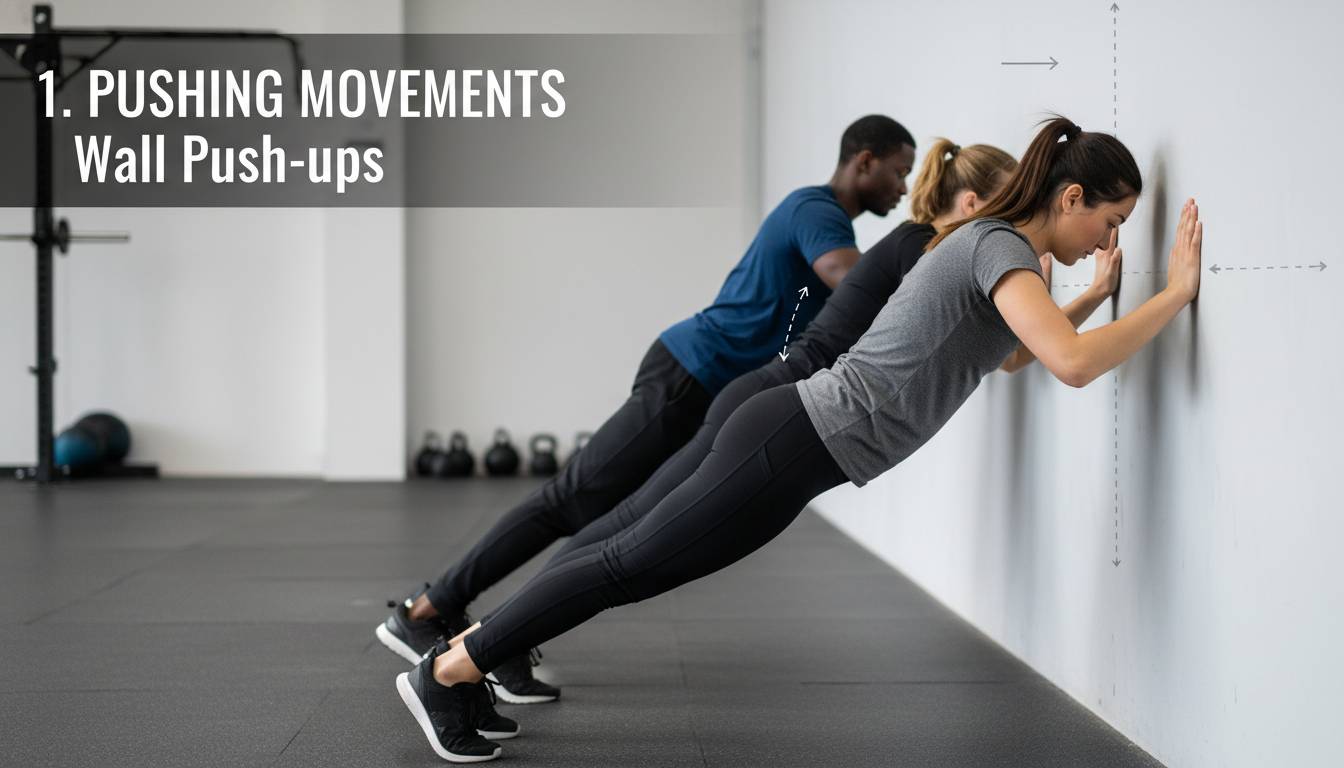
The push-up is a foundational calisthenics movement that builds upper body pushing strength. For complete beginners, start with wall push-ups, which reduce the load while you build basic strength. As you grow stronger, progress to incline push-ups on a sturdy surface, then to knee push-ups, and eventually to full push-ups on the floor.
Proper push-up form includes:
– Hands placed slightly wider than shoulder-width apart
– Body forming a straight line from head to heels
– Elbows at approximately 45-degree angle to your body
– Full range of motion with chest nearly touching the floor
– Core engaged throughout the movement
Pull-Up Progressions
Pull-ups are often considered the gold standard of upper body pulling strength, but they can be one of the most challenging exercises for beginners. Don’t be discouraged if you can’t perform a single pull-up initially—everyone builds up to it.
Beginner pull-up progressions include:
– Dead hang: Simply hang from the bar with arms fully extended to build grip strength
– Scapular pull-ups: Engage your shoulder blades without lifting your body
– Negative pull-ups: Jump or step up, then slowly lower yourself down
– Band-assisted pull-ups: Use resistance bands to reduce the load
Squat Progressions
Squats are essential for building lower body strength and mobility. While air squats might seem too simple, they form the foundation for more advanced movements like pistol squats.
Start with body-weight squats, ensuring proper form:
– Feet shoulder-width apart or slightly wider
– Knees tracking over toes
– Weight distributed through your heels
– Core engaged with chest up
– Full depth achieved (thighs at least parallel to the floor)
As you master air squats, you can progress to jump squats, Bulgarian split squats, and eventually pistol squats.
Core Exercises
A strong core is essential for virtually every calisthenics movement. Beginners should focus on basic core exercises that build stability and endurance.
Recommended beginner core exercises:
– Plank: Hold a straight body position on your forearms
– Hollow body hold: Lie on your back with arms and legs raised
– Leg raises: Lying on your back, raise legs while keeping them straight
– Dead bug: On all fours, extend opposite arm and leg while maintaining stability
Creating Your Beginner Routine
The First Four Weeks
When starting calisthenics, consistency matters more than intensity. Aim to train three to four times per week, allowing at least one rest day between sessions targeting the same muscle groups.
A simple beginner routine might look like this:
Workout A (Upper Body Push Focus):
– Wall push-ups: 3 sets of 8-12 reps
– Pike push-ups: 3 sets of 6-10 reps
– Plank: 3 sets of 20-30 seconds
– Diamond push-ups: 2 sets of 5-8 reps (if manageable)
Workout B (Upper Body Pull Focus):
– Dead hangs: 3 sets of 15-30 seconds
– Scapular pull-ups: 3 sets of 6-10 reps
– Inverted rows: 3 sets of 8-12 reps
– Hollow body hold: 3 sets of 15-20 seconds
Workout C (Lower Body Focus):
– Air squats: 4 sets of 15-20 reps
– Lunges: 3 sets of 10-12 reps per leg
– Glute bridges: 3 sets of 12-15 reps
– Calf raises: 3 sets of 15-20 reps
Progressive Overload
The key to continued improvement in calisthenics is progressive overload—gradually increasing the demands placed on your body. For beginners, this typically means increasing repetitions before moving to more difficult variations.
A practical progression might look like this:
– Week 1-2: Complete 3 sets of 5 wall push-ups
– Week 3-4: Complete 3 sets of 8 wall push-ups
– Week 5-6: Progress to incline push-ups, 3 sets of 5 reps
– Continue this pattern until you can perform full push-ups
Common Mistakes to Avoid
Training Too Intensely
Many beginners make the mistake of training too hard too soon. Muscle soreness is normal, but extreme soreness or joint pain indicates you’re likely overdoing it. Start conservatively and gradually increase volume and intensity.
Neglecting Recovery
Your muscles grow stronger during rest periods, not during workouts. Ensure you’re getting adequate sleep, eating nutritious foods, and allowing recovery time between training sessions. Aim for 7-9 hours of sleep per night and consider rest days as essential components of your training program.
Poor Form
While it’s tempting to rush through reps with poor form to hit higher numbers, this approach leads to injury and prevents true strength development. Focus on perfect form with fewer repetitions rather than sloppy form with more. Quality movements build quality strength.
Comparing Yourself to Others
Everyone’s fitness journey is different. Some people build pull-up strength quickly, while others need months of dedicated work. Comparing yourself to others online or in the gym can be discouraging and counterproductive. Focus on your own progress and celebrate small victories along the way.
Skipping Warm-Ups
Warming up before exercise is crucial for preventing injury and preparing your body for movement. Spend 5-10 minutes before each session doing light cardio and dynamic stretches. Focus on the muscle groups you’ll be training that day.
Nutrition for Calisthenics Success
While you don’t need a perfect diet to begin calisthenics, proper nutrition supports your training and recovery. Focus on these fundamentals:
Protein: Aim for 0.7-1 gram per pound of body weight daily to support muscle repair and growth. Good sources include chicken, fish, eggs, legumes, and dairy.
Carbohydrates: Provide energy for your workouts. Choose whole grains, fruits, vegetables, and legumes over refined carbohydrates.
Healthy Fats: Support hormone production and overall health. Include sources like nuts, seeds, avocados, and olive oil.
Hydration: Drink plenty of water throughout the day, especially before and after workouts.
Frequently Asked Questions
How long does it take to learn calisthenics basics?
Most beginners can develop basic proficiency in 8-12 weeks of consistent training. You should be able to perform a proper push-up, air squat, and potentially a pull-up negative within this timeframe. However, advanced skills like muscle-ups or handstands typically require 1-3 years of dedicated practice.
Do I need to be in shape to start calisthenics?
No, calisthenics is scalable for all fitness levels. If you’re currently sedentary or have physical limitations, you can start with very easy variations like wall push-ups or seated exercises. The key is starting where you are and progressing gradually.
Can I build muscle with just calisthenics?
Yes, calisthenics can build significant muscle mass, particularly for beginners. Push-ups, pull-ups, and other bodyweight exercises create progressive resistance that stimulates muscle growth. As you advance, you can make exercises more challenging through leverage and added complexity to continue building muscle.
How often should a beginner train calisthenics?
Most beginners benefit from training 3-4 times per week with at least one rest day between sessions. This frequency allows for adequate recovery while building consistency. Each workout session can last 30-45 minutes when starting out.
Do I need equipment to practice calisthenics at home?
You can start calisthenics with absolutely no equipment using exercises like push-ups, squats, planks, and lunges. However, a pull-up bar is highly recommended as it opens up many pulling exercises that are difficult or impossible to replicate without one. Pull-up bars are inexpensive and can be mounted in most doorways.
Is calisthenics better than weightlifting for beginners?
Neither is objectively better—both have merits. Calisthenics offers greater accessibility, develops functional strength, and improves body control. Weightlifting allows for more precise muscle isolation and easier progressive overload. Many fitness enthusiasts incorporate both into their training programs.
Conclusion
Starting your calisthenics journey is an exciting decision that can transform your fitness over time. Remember that every expert was once a beginner, and progress comes to those who are patient and consistent. Focus on mastering fundamental movements, maintain proper form, and celebrate each small victory along the way.
The beauty of calisthenics lies in its simplicity—you need only your body and dedication to begin. Start with the basic progressions outlined in this guide, train consistently three to four times per week, and watch as your strength grows month by month. Your first pull-up, push-up, or pistol squat is closer than you think.
Begin today. Your stronger, more capable self is waiting.