25+ Practical Generative AI Examples for Business Discover

Generative AI has moved beyond experimental pilots into mission-critical business operations. Organizations across every industry are deploying these technologies to cut costs, accelerate workflows, and unlock new revenue streams. McKinsey research indicates that generative AI could contribute between $2.6 trillion to $4.4 trillion annually to the global economy when fully scaled across use cases.
This guide provides 25+ actionable examples of how businesses are implementing generative AI today, organized by department and use case so you can identify opportunities relevant to your organization.
The Generative AI Business Landscape
Before diving into specific examples, understanding the current adoption trajectory matters. Gartner predicts that by 2026, more than 80% of enterprise applications will embed generative AI capabilities, up from less than 5% in 2023. This isn’t a future possibility—it’s an unfolding transformation.
The technology has matured beyond simple text generation. Modern generative AI systems process multiple data modalities: text, images, code, audio, and video. They can reason through complex problems, maintain context across extended conversations, and integrate with existing business systems through APIs.
Key Business Drivers:
- Cost reduction: Automation of repetitive tasks that previously required human labor
- Speed improvement: Content and code generation at scales impossible for humans alone
- Personalization: Customer experiences tailored to individual preferences at scale
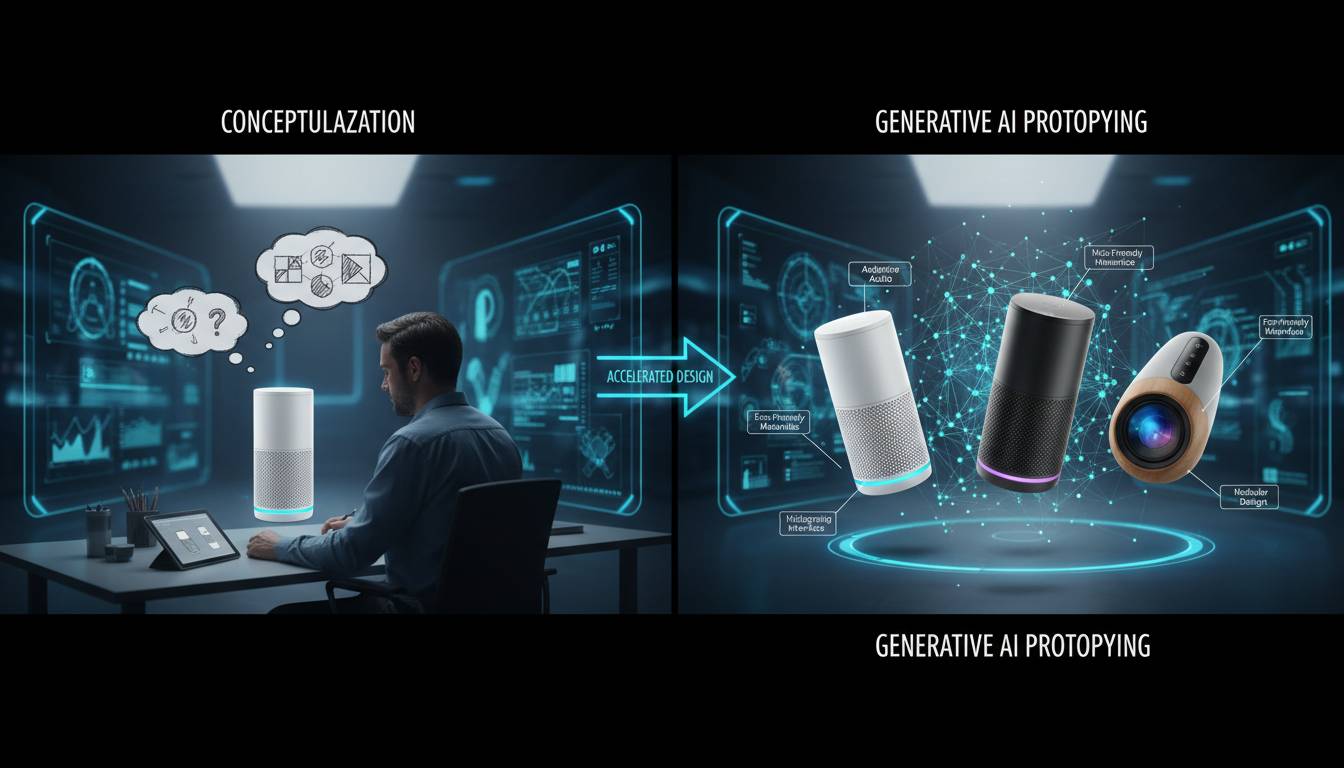
- Innovation acceleration: Rapid prototyping and hypothesis testing
Enterprise adoption follows a clear pattern: start with low-risk, high-impact applications in customer service and content creation, then expand into more complex domains like software development and strategic planning as teams build confidence and expertise.
Customer Service & Support Transformation
Customer service represents the highest-ROI application area for most organizations. Generative AI enables 24/7 support availability, instant response times, and consistent service quality while dramatically reducing operational costs.
AI-Powered Chatbots and Virtual Assistants
Example 1: Shopify’s Sidekick
Shopify deployed an AI assistant specifically designed for merchants. Sidekick helps users with store setup, product listings, and business analytics through natural conversation. The system understands context about e-commerce operations and provides actionable recommendations.
Example 2: Bank of America’s Erica
With over 20 million users, Erica uses generative AI to help customers with financial tasks including transaction categorization, bill payment reminders, and spending insights. The virtual assistant handles 100 million+ interactions annually, reducing call center volume by significant margins.
Example 3: Wendy’s FreshAI
Wendy’s implemented a generative AI drive-thru ordering system that understands natural speech, handles complex modifications, and reduces order errors. The system operates in hundreds of locations with accuracy rates exceeding traditional automated systems.
Support Ticket Automation
Example 4: Zendesk AI Agents
Zendesk’s autonomous AI agents resolve customer issues without human intervention. These systems understand context, access customer history, and generate personalized responses. Enterprises using this technology report 40-60% ticket deflection rates.
Example 5: Spotify’s Support Automation
Spotify deployed generative AI to handle subscriber billing inquiries, playlist troubleshooting, and account recovery requests. The system maintains the brand voice while resolving 2 million+ monthly interactions.
Example 6: Salesforce Service Cloud Einstein
Integration of generative AI into Service Cloud enables automatic case summarization, suggested responses, and next-best-action recommendations for support agents. Agents using Einstein complete tickets 30% faster.
| Use Case | Cost Savings | Customer Satisfaction Impact |
|---|---|---|
| AI Chatbots | 30-50% cost reduction | +15-25% satisfaction scores |
| Ticket Deflection | 40-60% self-service rate | +10-20% NPS improvement |
| Agent Assist | 25-35% productivity gain | -20% resolution time |
Content Creation & Creative Operations
Marketing and creative teams leverage generative AI to produce content at scale while maintaining quality and brand consistency.
Marketing Content Generation
Example 7: Copy.ai for Marketing Teams
Companies use Copy.ai to generate ad copy, email campaigns, social media posts, and landing page content. Marketing teams report 70% time savings on first-draft content creation.
Example 8: Jasper AI for Brand Content
Jasper integrates with brand guidelines to produce consistent tone-of-voice content across channels. The platform maintains brand memory, ensuring all generated content aligns with established standards.
Example 9: Persado for Personalized Messaging
Persado uses generative AI to create personalized marketing messages optimized for specific audience segments. The platform generates thousands of message variants and uses performance data to optimize delivery.
Visual Content Creation
Example 10: Midjourney for Product Imagery
E-commerce companies use Midjourney to generate product lifestyle images, eliminating the need for expensive photoshoots. Fashion brands create virtual try-on experiences using AI-generated imagery.
Example 11: Adobe Firefly for Creative Workflows
Adobe’s Firefly integrates into Creative Cloud, enabling designers to generate images from text descriptions, remove backgrounds, extend images, and create variations. Enterprise deployment shows 40% reduction in repetitive design tasks.
Example 12: Canva’s Magic Design
Canva’s AI features automate presentation creation, generate design variations, and suggest layouts based on content input. The tool processes 100 million+ designs monthly.
Example 13: Synthesia for Video Content
Companies create training videos, product demonstrations, and marketing content using AI-generated video avatars. This eliminates production costs while enabling localization into 120+ languages.
| Content Type | Time Savings | Quality Score |
|---|---|---|
| Blog Posts | 60-75% reduction | 85% usable first draft |
| Social Media | 50-70% faster | 90% engagement parity |
| Email Campaigns | 65-80% reduction | +12% open rates |
| Video Production | 80-90% cost reduction | Comparable engagement |
Software Development & Code Generation
Developer productivity represents one of the fastest-adopting use cases, with clear metrics and immediate ROI.
Code Assistance
Example 14: GitHub Copilot
With over 2 million subscribers, GitHub Copilot suggests code completions, generates functions from comments, and explains existing code. Studies show developers complete tasks 55% faster using Copilot.
Example 15: Amazon CodeWhisperer
Amazon’s code generation tool integrates with IDEs to provide real-time suggestions, security scanning, and reference tracking. CodeWhisperer generates relevant code snippets based on context and comments.
Example 16: Cursor for IDE Integration
Cursor combines AI capabilities with traditional IDE features, enabling natural language code editing, multi-file editing, and intelligent debugging assistance.
Documentation & Testing
Example 17: GitHub Copilot for Docs
Organizations use AI to automatically generate and update technical documentation. The system reads code and produces explanatory documentation, API references, and README files.
Example 18: Automated Test Generation
Tools like Diffblue and MagicTest use generative AI to create unit tests, integration tests, and end-to-end test scenarios. Financial services companies report 60% faster test coverage expansion.
Example 19: Code Review Assistance
AI-powered code review tools like CodeRabbit analyze pull requests, suggest improvements, identify potential bugs, and ensure compliance with coding standards before human review.
Data Analytics & Business Intelligence
Generative AI transforms how organizations extract insights from data, making analytics accessible to non-technical users.
Natural Language Querying
Example 20: Microsoft’s Copilot for Power BI
Users ask questions in natural language and receive instant visualizations and insights. The system translates queries into complex data transformations without requiring DAX or SQL knowledge.
Example 21: ThoughtSpot’s AI Analytics
ThoughtSpot’s AI-driven analytics enables business users to search across data sources and receive AI-generated insights with explanations. Organizations report 85% reduction in time-to-insight.
Example 22: Tableau Pulse
Tableau’s AI features automatically surface trends, anomalies, and insights from data, pushing actionable intelligence to stakeholders without requiring queries.
Report Automation
Example 23: Narrative Science (Now Part of Tableau)
Automated narrative generation transforms data into written insights. Financial services use this for client reporting, automatically generating personalized performance summaries.
Example 24: Polymer for Data Stories
Polymer uses AI to automatically generate data visualizations and narratives from uploaded datasets, creating presentation-ready analytics in minutes.
Marketing & Sales Enablement
Revenue teams leverage AI for personalization, forecasting, and content optimization at scale.
Sales Acceleration
Example 25: Gong’s Revenue Intelligence
Gong uses AI to analyze sales conversations, automatically identify key moments, and provide coaching recommendations. Users report 20-30% improvement in win rates.
Example 26: Outreach.ai
Outreach’s AI generates personalized email sequences, optimizes send times, and suggests conversation topics based on prospect data. Sales teams using these features see 25% more meetings booked.
Example 27: Clari for Forecasting
Clari’s AI-powered forecasting analyzes deal signals to predict revenue with higher accuracy than traditional methods, reducing forecast error by 30-50% for enterprise users.
Personalization at Scale
Example 28: Dynamic Yield (Now Mastercard Audiences)
Real-time personalization engine uses AI to tailor website content, offers, and recommendations to individual visitors. Retail clients report 20% conversion rate improvements.
Example 29: Albert AI for Ad Optimization
Autonomous digital marketing platform manages paid campaigns across channels, continuously optimizing targeting, creative, and bidding. Users report 30%+ efficiency improvements.
Implementation Strategy & Considerations
Successfully deploying generative AI requires more than technology acquisition. Organizations need clear strategies for integration, governance, and talent development.
Getting Started Framework
Phase 1: Assessment (2-4 weeks)
Identify high-volume, repetitive tasks with clear success metrics. Prioritize use cases where AI can demonstrate quick wins. Common starting points include customer support, content drafts, and code assistance.
Phase 2: Pilot Selection
Choose 2-3 pilot projects with manageable scope. Ensure pilots generate measurable outcomes. Set clear success criteria before deployment.
Phase 3: Integration
Connect AI tools with existing systems through APIs. Train teams on effective prompting and workflow integration. Establish feedback loops for continuous improvement.
Phase 4: Scale
Expand successful pilots to additional use cases and departments. Build internal expertise through center-of-excellence models. Implement governance frameworks for responsible use.
Governance Essentials
- Data privacy: Ensure customer data isn’t used to train public models without consent
- Accuracy verification: Maintain human oversight for high-stakes decisions
- Bias monitoring: Regularly audit outputs for unfair discrimination
- Intellectual property: Understand training data sources and output ownership
- Security: Protect against prompt injection and unauthorized access
| Implementation Stage | Timeline | Typical Investment | Expected ROI |
|---|---|---|---|
| Assessment | 2-4 weeks | $10-25K | N/A |
| Pilot | 2-3 months | $25-100K | 200-400% |
| Scale | 6-18 months | $200K-2M | 300-500% |
Future Outlook
The generative AI landscape continues evolving rapidly. Several trends will reshape business applications over the next 2-3 years.
Multimodal capabilities will enable AI to process and generate text, images, video, and audio seamlessly within single workflows. Organizations will create integrated experiences impossible with single-modality systems.
Agentic AI will shift from reactive response to proactive task execution. AI systems will autonomously plan and execute complex workflows across multiple applications, handling multi-step processes without constant human guidance.
Vertical specialization will produce industry-specific models with deeper domain expertise. Healthcare, legal, financial, and manufacturing applications will see increasingly sophisticated capabilities.
Regulatory frameworks will mature, providing clearer guidelines for deployment, data handling, and accountability. Organizations that build compliant systems early will gain competitive advantages.
The businesses succeeding with generative AI treat it as a capability multiplier rather than a replacement for human judgment. The most effective implementations combine AI efficiency with human creativity and oversight.
Frequently Asked Questions
What is the most effective first use case for generative AI in business?
Customer service chatbots and virtual assistants typically offer the highest return on investment as an initial implementation. These applications have clear metrics, handle high volumes, and generate immediate cost savings while building organizational expertise with the technology.
How much does enterprise generative AI implementation cost?
Enterprise implementations range from $50,000 for initial pilots to $1-5 million for full-scale deployments. Costs include technology subscriptions, integration development, change management, and ongoing optimization. Most organizations start small and scale based on demonstrated results.
What are the main risks of generative AI in business applications?
Primary risks include output inaccuracy (hallucinations), data privacy breaches, intellectual property concerns, and brand reputation damage from inappropriate outputs. Successful organizations implement human oversight, regular auditing, and clear use-case guidelines to mitigate these risks.
How do I measure generative AI ROI?
Track metrics specific to each use case: for customer service, measure deflection rate and cost per interaction; for content creation, track time savings and quality scores; for development, measure velocity improvement and defect reduction. Compare pre- and post-implementation performance over 3-6 month periods.
Do I need technical expertise to implement generative AI?
Technical requirements vary by implementation. Many SaaS AI tools require minimal technical expertise, while custom integrations need engineering resources. Most organizations benefit from starting with pre-built solutions and building internal capabilities progressively.
How long does it take to see results from generative AI implementation?
Simple use cases like chatbots show results within 1-2 months. Complex implementations like development tools or analytics platforms typically demonstrate measurable impact within 3-6 months. Organization-wide transformation takes 12-24 months.