Top Software Development Trends Shaping the Future

The software development landscape is experiencing unprecedented transformation. According to a 2024 Gartner survey, 87% of enterprise software leaders report accelerating their digital transformation initiatives, while the global software development market is projected to reach $507 billion by 2027. These numbers mask a deeper reality: the tools, methodologies, and philosophies defining how software gets built are fundamentally changing. Understanding these shifts isn’t optional for developers, architects, and technology leaders—it’s essential for remaining competitive.
Key Insights
– AI-assisted development tools increased developer productivity by 26% in 2024 (GitHub)
– Platform engineering roles grew 340% since 2022 (DevOps Institute)
– 78% of enterprises adopted GitOps practices (Cloud Native Computing Foundation)
– Low-code platforms expected to generate $65 billion annually by 2027 (Forrester)
This article examines the most significant software development trends reshaping the industry, providing practical context for each and guidance on how teams can adapt.
Artificial Intelligence in Development Workflows
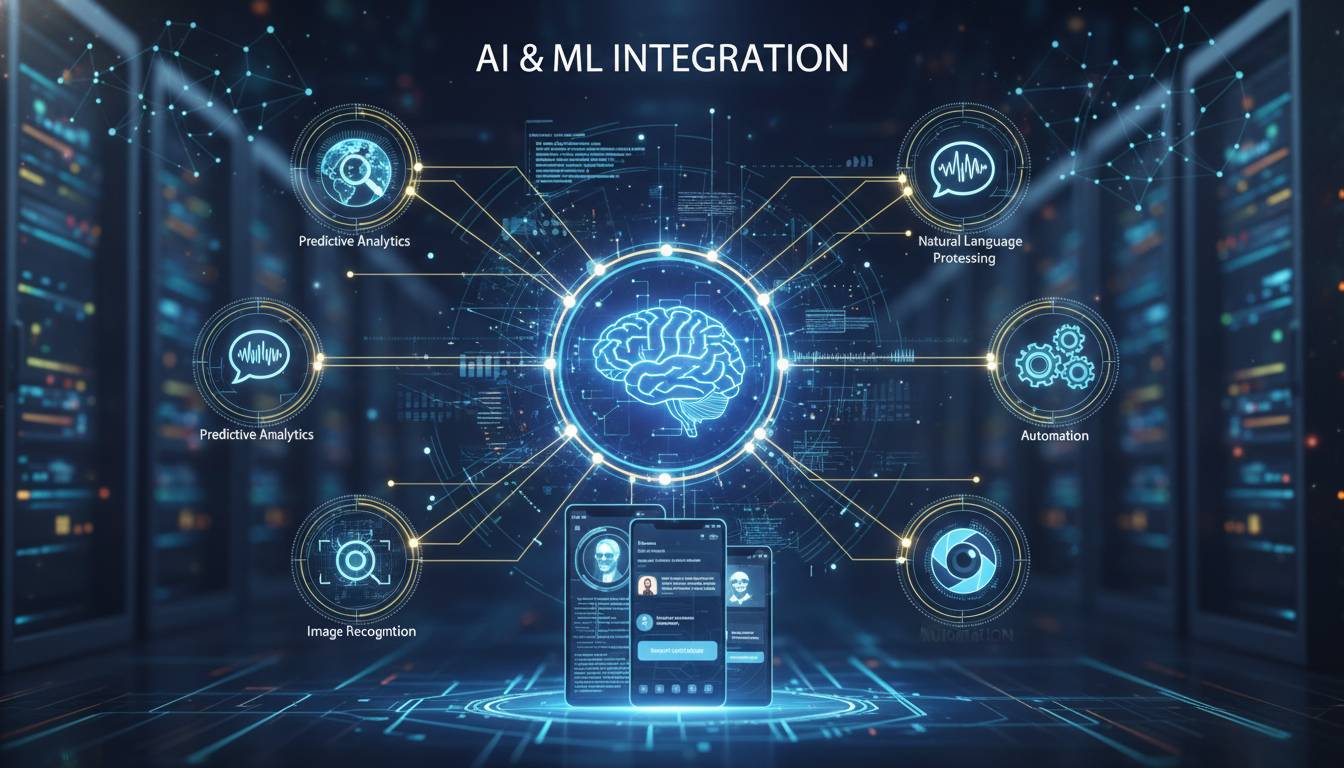
The integration of artificial intelligence into software development represents the most consequential shift in how code gets written, tested, and maintained. AI coding assistants like GitHub Copilot, Amazon CodeWhisperer, and Cursor have moved from experimental tools to production essentials. A 2024 GitHub study found that developers using AI assistants completed tasks 26% faster and wrote code with 26% fewer bugs than those working without assistance.
The technology extends beyond simple autocomplete. Modern AI development tools now handle code review suggestions, vulnerability detection, test generation, and documentation writing. Microsoft reported that their internal AI tools automated approximately 30% of code review comments, allowing human reviewers to focus on architectural decisions and security considerations.
Real-World Application:
Stripe’s engineering team implemented AI-assisted code review and found that average review time decreased from 4.2 hours to 1.8 hours while catching 15% more security issues. The key was using AI for pattern recognition while maintaining human oversight for business logic decisions.
The trend is also spawning new development paradigms. Prompt-based programming allows non-developers to generate functional code through natural language descriptions, though this raises questions about code quality, security, and the future role of traditional programmers.
Platform Engineering and Internal Developer Platforms
As organizations scale, the complexity of developer workflows becomes a significant bottleneck. Platform engineering has emerged as a discipline focused on building and maintaining internal developer platforms (IDPs) that abstract away infrastructure complexity.
The DevOps Institute’s 2024 report indicates that platform engineering roles increased 340% since 2022, making it one of the fastest-growing disciplines in technology. Companies like Spotify, Airbnb, and Netflix pioneered this approach with their internal platform teams, and the practice has now spread to enterprises across industries.
Key Components of Internal Developer Platforms:
| Component | Function | Benefit |
|---|---|---|
| Self-service provisioning | Automated environment creation | 70% faster onboarding |
| Standardized pipelines | Pre-configured CI/CD workflows | Consistent deployment practices |
| Service catalog | Centralized service inventory | Reduced duplicate work |
| Observability integration | Built-in monitoring and logging | Faster incident resolution |
The goal isn’t to restrict developers but to provide golden paths—standardized, supported workflows that handle repetitive tasks automatically. When developers spend less time configuring infrastructure and more time writing business logic, productivity increases measurably. According to Google Cloud’s 2024 DORA report, high-performing teams using platform engineering practices deploy 200 times more frequently than low performers.
GitOps and Cloud-Native Operations
GitOps has transformed from a niche methodology to a mainstream practice. The Cloud Native Computing Foundation’s 2024 survey found that 78% of enterprises have adopted GitOps practices in some form, up from 45% in 2022. This approach treats Git repositories as the single source of truth for infrastructure and application state.
The appeal lies in its simplicity and reliability. When all infrastructure changes flow through Git, teams gain version control for their entire environment, including automatic rollback capabilities, audit trails, and collaborative review processes. ArgoCD and Flux have become standard tools in this space, with ArgoCD surpassing 10,000 GitHub stars and becoming a CNCF graduated project.
How GitOps Works:
Instead of manually applying changes to Kubernetes clusters or cloud environments, teams declare the desired state in Git repositories. GitOps controllers continuously compare the actual state against the desired state, automatically correcting any drift. This approach reduces human error, improves security posture, and enables teams to manage complex multi-cluster environments with confidence.
Financial services companies have been particularly aggressive adopters. JPMorgan Chase reported managing over 5,000 Kubernetes clusters through GitOps principles, achieving 99.99% deployment success rates and reducing infrastructure-related incidents by 60%.
Low-Code and No-Code Development Platforms
The democratization of software development continues accelerating through low-code and no-code platforms. Forrester projects the low-code market will generate $65 billion annually by 2027, with compound annual growth exceeding 20%. This growth reflects both technical advancement in these platforms and strategic recognition that not every application requires custom code.
Modern low-code platforms have evolved beyond simple form builders. ServiceNow’s Now Platform, Mendix, and OutSystems now support complex enterprise applications including ERP integrations, data processing pipelines, and customer-facing portals. The platforms handle significant infrastructure concerns automatically, including scaling, security, and compliance.
When to Consider Low-Code:
| Scenario | Low-Code Suitable? | Traditional Code Better? |
|---|---|---|
| Rapid internal tools | ✅ Yes | Overkill for simple needs |
| Prototypes and MVPs | ✅ Yes | Faster time-to-value |
| Enterprise applications with complex logic | ❌ Limited | Custom code preferred |
| Highly specialized systems | ❌ No | Requires full control |
| Regulatory-heavy industries | ⚠️ Careful evaluation | Compliance concerns |
The key insight is that low-code platforms excel for standardization and speed while traditional development remains superior for complex, differentiated, or highly specialized requirements. Progressive organizations use both approaches, selecting based on specific use cases rather than ideological positions.
Edge Computing and Distributed Architecture
Edge computing has moved from telecommunications infrastructure to mainstream software architecture. With the proliferation of IoT devices, real-time applications, and requirements for minimal latency, processing data at the network edge instead of centralized cloud data centers has become essential.
The global edge computing market is expected to reach $232 billion by 2027, according to MarketsandMarkets. Major cloud providers have responded with edge-focused services: AWS Local Zones, Azure Edge Zones, and Google Cloud Distributed Cloud. These offerings bring compute and storage closer to end users and devices while maintaining centralized management.
Practical Applications:
Retail companies use edge computing for real-time inventory tracking across stores. Manufacturing firms deploy edge analytics for predictive maintenance on factory equipment. Autonomous vehicle systems rely entirely on edge processing for safety-critical decisions where network latency would be unacceptable.
For software developers, this trend means designing applications that gracefully handle distributed state, intermittent connectivity, and geographic data residency requirements. It also creates demand for new skills around container orchestration at the edge, embedded systems programming, and real-time data processing frameworks.
Shift-Left Security and DevSecOps
Security has fundamentally shifted from a final checkpoint to an integrated concern throughout the development lifecycle. The “shift-left” movement brings security testing, vulnerability scanning, and compliance validation earlier in the development process, when fixing issues costs significantly less.
Sonatype’s 2024 State of Software Supply Chain report found that 95% of organizations have adopted some form of DevSecOps practices, up from 40% in 2019. This adoption correlates with measurable improvements: organizations with mature DevSecOps programs experience 80% fewer security incidents and resolve vulnerabilities 50% faster than those with traditional security models.
The tools landscape has expanded dramatically. Static application security testing (SAST), dynamic application security testing (DAST), software composition analysis (SCA), and interactive application security testing (IAST) tools have become standard components of CI/CD pipelines. GitHub Advanced Security, Snyk, and Checkmarx offer integrated solutions that catch vulnerabilities during code review rather than in production.
Implementation Maturity Model:
| Level | Practice | Security Coverage |
|---|---|---|
| Level 1 | Manual security reviews | Limited, inconsistent |
| Level 2 | Automated SAST in CI | Code-level scanning |
| Level 3 | SCA and dependency scanning | Supply chain security |
| Level 4 | Runtime protection | Production monitoring |
| Level 5 | Continuous compliance | Full lifecycle security |
WebAssembly and the Future of Portable Code
WebAssembly (Wasm) has evolved from a browser technology to a universal runtime for portable, high-performance code. Originally designed to enable near-native execution speed in web browsers, Wasm’s characteristics—small binary size, fast execution, sandboxed memory, and language independence—have made it attractive for server-side and edge computing scenarios.
The Bytecode Alliance, which includes Mozilla, Red Hat, Intel, and Google, has driven standardization efforts that position Wasm as a runtime for cloud-native applications. Projects like Fermyon, Wasmer, and Wasmtime enable running Wasm modules outside browsers as secure, lightweight serverless functions or embedded extensions.
Emerging Use Cases:
Cloudflare Workers uses Wasm to execute user code at the edge with cold start times under 5 milliseconds. Microsoft’s Azure Kubernetes Service supports Wasm workloads alongside containerized applications. Shopify has adopted Wasm for plugin execution, allowing merchants to run third-party extensions safely without compromising platform security.
The technology isn’t without challenges. The ecosystem remains immature compared to established container runtimes, and tooling continues evolving. However, for specific use cases—edge functions, plugin systems, secure code execution—Wasm offers compelling advantages that justify exploration.
Sustainable and Green Software Engineering
Environmental considerations have entered software architecture discussions. Green software engineering focuses on reducing the carbon footprint of software systems through efficient code, optimized infrastructure, and conscious architectural decisions.
The Green Software Foundation, which includes Microsoft, Google, Accenture, and GitHub, has established standards for measuring and reducing software’s environmental impact. Their open-source tools, including the Software Carbon Intensity (SCI) specification, provide frameworks for quantifying emissions and identifying optimization opportunities.
Practical Considerations:
Cloud providers have responded with carbon-aware computing options. Google Cloud’s carbon-aware computing automatically schedules workloads during periods of lower grid carbon intensity. AWS offers instance scheduling to reduce unused resource consumption. These capabilities require software architects to consider when computations run, not just how they run.
The trend intersects with other developments. Efficient code reduces computational requirements, which simultaneously improves cost, performance, and environmental impact. Container optimization, right-sizing cloud resources, and serverless architectures all contribute to both operational efficiency and sustainability goals.
Conclusion
The software development trends reshaping the industry share common themes: automation of repetitive tasks, abstraction of complexity, integration of security throughout the lifecycle, and distribution of computation across diverse environments. Organizations that successfully navigate these shifts will prioritize continuous learning, maintain experimental mindssets, and balance adoption of new technologies against operational stability.
For individual developers, the implications are clear. Core programming skills remain essential, but proficiency with AI-assisted development tools, cloud-native platforms, and automated security practices has become equally important. The developers who thrive will be those who treat these trends as continuous evolution rather than discrete revolutions, building expertise incrementally while remaining adaptable to further change.
The future of software development isn’t about choosing between these trends—it’s about understanding how they interconnect and applying appropriate solutions to specific problems. The organizations and individuals who master this integration will define the next generation of software.
Frequently Asked Questions
Which software development trend has the biggest immediate impact?
AI-assisted development tools like GitHub Copilot are having the most immediate impact on daily productivity. These tools are widely available, require minimal organizational change to adopt, and provide measurable efficiency gains. Most developers can integrate AI assistants into their workflow within days rather than months.
Do I need to learn new programming languages for these trends?
Not necessarily. Most trends work with existing languages through tooling and framework support. However, languages like Rust are gaining prominence for performance-critical and systems programming roles, and understanding concepts like WebAssembly will expand your architectural options regardless of which language you primarily use.
How should small teams prioritize these trends?
Small teams should focus on platform engineering and DevSecOps practices that reduce manual work and improve reliability. GitOps adoption provides significant benefits without requiring large teams. AI-assisted development tools offer immediate productivity gains. Defer edge computing and advanced green computing initiatives unless specific business requirements justify the investment.
Are low-code platforms replacing developers?
No. Low-code platforms address different problems than custom software development. They’re most effective for internal tools, rapid prototyping, and standardized business applications. Complex, differentiated, and highly specialized systems still require custom development. The most effective organizations use both approaches strategically.
How long does it take to adopt GitOps practices?
Basic GitOps implementation can be achieved within 2-4 weeks for teams already using Kubernetes. Full adoption across larger organizations typically takes 3-6 months, including training, tooling evaluation, and process changes. The learning curve is manageable, but organizational change management often takes longer than technical implementation.
What skills should I develop to stay relevant in software development?
Prioritize cloud platform expertise (AWS, Azure, or GCP), container orchestration (Kubernetes), infrastructure as code (Terraform or Pulumi), and security fundamentals. Understanding DevOps principles, CI/CD pipelines, and observability practices is equally important. AI tool proficiency has become essential—understanding how to effectively collaborate with AI assistants distinguishes productive developers from those struggling with the new paradigm.