IoT Devices 2024: Complete Guide to Smart Connectivity

The Internet of Things (IoT) has transformed from an emerging technology concept into a fundamental part of daily life for millions of Americans. From smart thermostats that learn your preferences to industrial sensors monitoring equipment health across manufacturing floors, IoT devices now permeate nearly every sector of the economy. In 2024, the number of connected IoT devices globally exceeded 17 billion, with the United States leading adoption in the consumer and healthcare segments. This comprehensive guide explores the current state of IoT technology, examines key trends shaping the industry, and provides actionable insights for individuals and businesses seeking to leverage smart connectivity.
The rapid expansion of 5G networks, coupled with decreasing costs of sensors and microprocessors, has accelerated IoT adoption beyond early adopter phases into mainstream utilization. Understanding the landscape of available devices, their capabilities, and the underlying infrastructure becomes essential for making informed decisions about implementation and integration.
Understanding IoT Devices: Definition and Core Concepts
The Internet of Things encompasses physical objects embedded with sensors, software, and connectivity capabilities that enable them to collect and exchange data with other devices and systems over the internet. Unlike traditional computing devices that require human input to function, IoT devices operate autonomously, gathering real-time information and responding to environmental changes without direct human intervention.
The fundamental architecture of any IoT system consists of four interconnected layers. The perception layer contains the sensors and actuators that interact with the physical world—temperature sensors, motion detectors, cameras, and GPS receivers. The network layer handles data transmission through various protocols including Wi-Fi, Bluetooth, Zigbee, cellular networks, and LoRaWAN. The processing layer analyzes collected data through edge computing or cloud platforms, making decisions and extracting valuable insights. Finally, the application layer delivers specific functionalities to end-users through mobile apps, dashboards, and automated systems.
Modern IoT devices range from simple single-purpose sensors costing less than $10 to complex industrial systems valued at hundreds of thousands of dollars. Consumer devices typically emphasize ease of use, aesthetic design, and seamless integration with existing smart home ecosystems. Enterprise and industrial IoT solutions prioritize reliability, precision, data security, and scalability to handle massive deployments across facilities.
The distinction between IoT and related technologies warrants clarification. While Industrial IoT (IIoT) focuses specifically on industrial applications including manufacturing automation and supply chain optimization, IoT encompasses both consumer and business implementations. Similarly, Machine-to-Machine (M2M) communication represents a subset of IoT emphasizing direct device-to-device data exchange without human involvement, though the terms often appear interchangeably in marketing contexts.
Market Overview and Growth Trajectory in 2024
The global IoT market demonstrated remarkable resilience and expansion throughout 2024, driven by sustained enterprise investment and accelerating consumer adoption. According to industry analyses from leading technology research firms, the global IoT market reached approximately $650 billion in 2024, with projections indicating growth exceeding $1 trillion by 2030. The compound annual growth rate (CAGR) hovers around 13-16% depending on the specific market segment analyzed.
The United States represents the largest regional market for IoT technology, accounting for roughly 30% of global spending. Healthcare IoT adoption surged particularly dramatically, with hospitals and clinics increasingly deploying connected medical devices for patient monitoring, asset tracking, and operational efficiency. The smart home market, while matured from earlier explosive growth phases, continues steady expansion with penetration rates approaching 50% of U.S. households for at least one smart device category.
| Market Segment | 2024 Revenue (USD) | Growth Rate | Key Drivers |
|---|---|---|---|
| Consumer Smart Home | $45 billion | 12% | Security, energy savings |
| Healthcare IoT | $89 billion | 18% | Remote monitoring, aging population |
| Industrial IoT | $320 billion | 14% | Automation, predictive maintenance |
| Smart Cities | $95 billion | 11% | Infrastructure, traffic management |
| Agriculture | $22 billion | 15% | Precision farming, sustainability |
Investment patterns reveal shifting priorities among enterprises. While early IoT implementations focused primarily on operational efficiency and cost reduction, 2024 deployments increasingly emphasize sustainability, supply chain visibility, and enhanced customer experiences. The integration of artificial intelligence and machine learning with IoT data streams has become standard practice, enabling predictive capabilities that were previously impossible.
Small and medium businesses have emerged as a significant growth vector, accessing IoT solutions through as-a-service models that eliminate substantial upfront capital requirements. Cloud providers now offer plug-and-play IoT platforms that dramatically reduce implementation complexity, enabling organizations without dedicated IT staff to deploy connected solutions.
Categories and Types of IoT Devices
IoT devices span an extraordinarily diverse range of form factors and functionalities. Understanding the primary categories helps buyers and implementers identify solutions appropriate to their specific requirements.
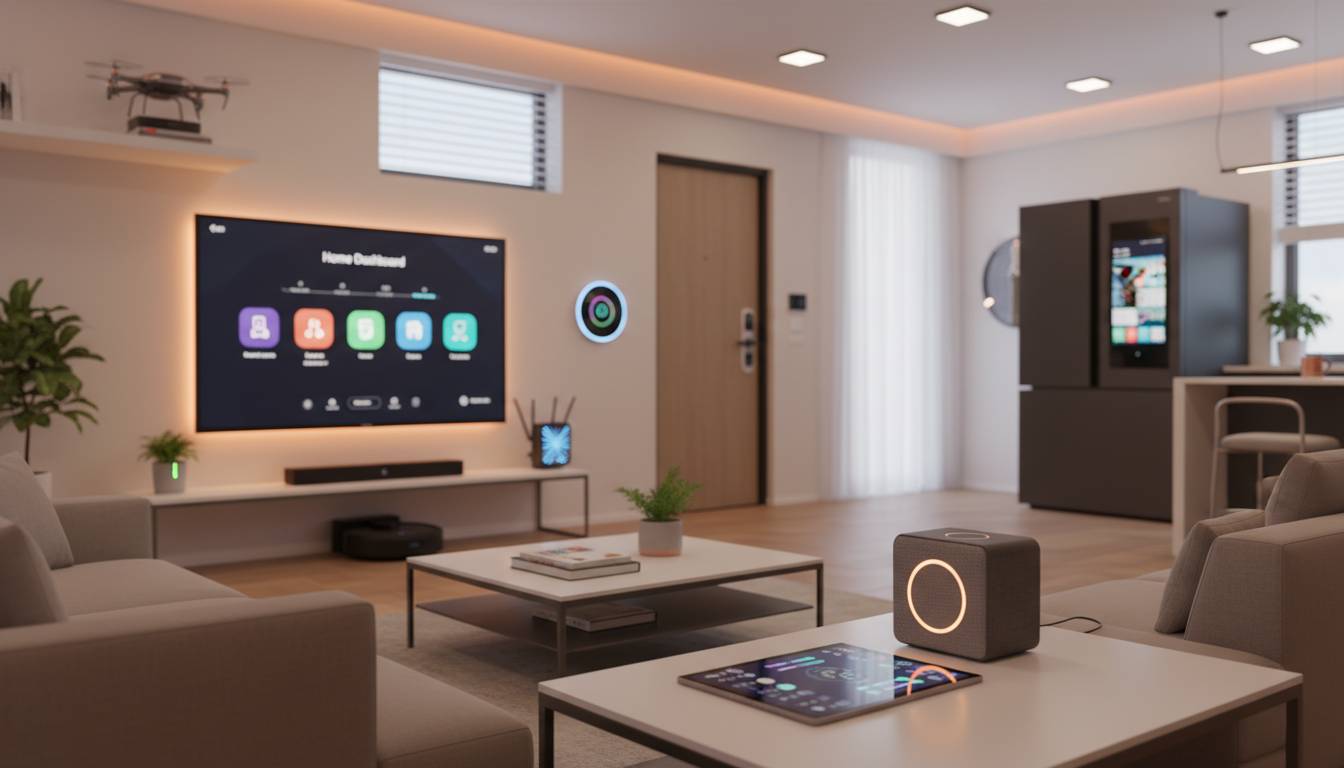
Consumer IoT Devices form the most visible segment, encompassing smart home products that consumers encounter daily. Smart speakers and displays from Amazon, Google, and Apple serve as central hubs for home automation, controlling lighting, climate, entertainment systems, and security devices through voice commands. Smart thermostats from ecobee and Nest learn household patterns, optimizing energy consumption while maintaining comfort. Smart lighting systems including Philips Hue and LIFX offer color customization and scheduling capabilities. Security cameras, smart locks, and video doorbells provide remote monitoring and access control, with brands like Ring, Arlo, and SimpliSafe dominating the market.
Wearable IoT devices represent another substantial consumer category. Smartwatches from Apple, Samsung, and Garmin track fitness metrics, monitor health indicators, and provide notifications. Fitness trackers from Fitbit and Whoop focus specifically on health monitoring, sleep analysis, and activity tracking. Medical-grade wearables now enable continuous glucose monitoring for diabetics and cardiac monitoring for patients with heart conditions, blurring the line between consumer and medical devices.
Enterprise and Industrial IoT encompasses devices designed for business and organizational use. Manufacturing facilities deploy industrial sensors monitoring temperature, vibration, humidity, and equipment status across production lines. Connected cameras and LiDAR systems enable warehouse automation, inventory tracking, and quality control. Retail environments utilize IoT for smart shelving, electronic price tags, foot traffic analysis, and loss prevention.
Smart city infrastructure represents an expanding category including connected traffic signals that adapt to real-time conditions, environmental sensors monitoring air quality, smart parking systems guiding drivers to available spaces, and intelligent street lighting that adjusts based on ambient conditions. Municipal water systems increasingly employ IoT for leak detection and consumption monitoring, addressing aging infrastructure challenges.
Agricultural IoT has gained significant traction as farmers deploy sensors monitoring soil moisture, weather conditions, crop health, and livestock locations. Precision agriculture enabled by these devices optimizes irrigation, fertilizer application, and harvesting timing, improving yields while reducing resource consumption—a critical capability as climate variability increases.
Key Trends Shaping IoT in 2024
Several pivotal trends defined the IoT landscape throughout 2024, reflecting both technological advancement and evolving market priorities.
Edge Computing Integration emerged as perhaps the most significant architectural shift. Rather than transmitting all data to centralized cloud servers for processing, IoT systems increasingly incorporate local computing capability at the network edge. This approach reduces latency for time-critical applications, decreases bandwidth requirements, improves reliability by enabling operation during connectivity interruptions, and addresses growing concerns about data privacy by processing sensitive information locally. Processors from companies like Intel, NVIDIA, and specialized edge AI chips enable sophisticated on-device machine learning, allowing IoT devices to make intelligent decisions without cloud connectivity.
Matter Protocol Adoption marked a major milestone for consumer IoT interoperability. Launched in late 2022, the Matter standard gained substantial momentum in 2024, with major manufacturers including Apple, Google, Samsung, and Amazon implementing the protocol across their device ecosystems. Matter enables smart home devices from different manufacturers to communicate seamlessly, addressing one of the most significant pain points that had hindered smart home adoption—fragmentation among competing platforms and protocols.
Sustainability and Energy Efficiency moved from marketing talking points to core product requirements. Organizations across sectors face pressure to demonstrate environmental responsibility, driving demand for IoT solutions that optimize resource consumption. Smart building systems reduce energy waste through automated lighting and climate control. Industrial IoT platforms minimize material waste through precise process control. Agricultural IoT reduces water and fertilizer consumption through precision application. Device manufacturers increasingly emphasize low-power designs, extended battery life, and recyclable materials in response to both regulatory requirements and consumer preferences.
AI and Machine Learning Sophistication transformed raw IoT data into actionable intelligence. Rather than simply collecting and displaying metrics, modern IoT systems employ artificial intelligence to identify patterns, predict failures, detect anomalies, and optimize performance. Predictive maintenance algorithms analyze equipment sensor data to forecast failures before they occur, reducing unplanned downtime in manufacturing and infrastructure contexts. Energy management systems learn building occupancy patterns and weather forecasts to optimize HVAC operation automatically.
Security Enhancement received unprecedented attention following high-profile IoT botnet attacks and vulnerabilities exposed in previous years. The U.S. Cyber Trust Mark program, announced by the Federal Communications Commission, established security certification standards for consumer IoT devices. Manufacturers responded by implementing stronger encryption, secure boot processes, automatic security updates, and vulnerability disclosure policies. Enterprise IoT deployments increasingly incorporate zero-trust security architectures assuming no device or network segment should be inherently trusted.
Benefits and Practical Applications
The value proposition of IoT technology extends across operational efficiency, safety improvements, cost reduction, and entirely new capability enablement.
Operational efficiency gains manifest most dramatically in industrial contexts. Predictive maintenance powered by IoT sensor data reduces equipment downtime by 30-50% while cutting maintenance costs 20-35%, according to industry research from Deloitte and McKinsey. Smart manufacturing facilities achieving high levels of IoT integration report productivity improvements of 20-25% compared to traditional operations. Supply chain visibility enabled by connected tracking devices reduces inventory carrying costs while improving order fulfillment accuracy.
Healthcare applications demonstrate IoT’s life-enhancing potential. Remote patient monitoring enables chronically ill patients to remain at home while physicians track vital signs and medication adherence. Connected insulin pumps and continuous glucose monitors improve diabetes management outcomes. Hospital asset tracking systems reduce equipment search time, improving staff efficiency and patient care. Smart pills and ingestible sensors enable medication adherence monitoring, addressing a significant challenge in treatment effectiveness.
Energy management represents a universally applicable benefit category. Commercial buildings equipped with IoT-enabled smart systems achieve 15-30% energy savings through automated optimization. Utility companies employ smart meters and distribution sensors to balance loads, reduce losses, and integrate renewable energy sources more effectively. Homeowners utilizing smart thermostats and energy monitoring systems typically realize 10-20% reductions in utility expenses.
Safety and environmental monitoring applications protect workers and communities. Industrial facilities deploy gas detectors, noise monitors, and equipment health sensors to prevent accidents and exposures. Environmental agencies employ IoT networks for air and water quality monitoring, enabling rapid response to contamination events. Smart fire detection and suppression systems provide earlier warning and more precise response than traditional alternatives.
Challenges and Security Considerations
Despite substantial benefits, IoT implementation presents significant challenges that organizations and individuals must address thoughtfully.
Security Vulnerabilities remain the most serious concern. Many IoT devices ship with default passwords, unpatched software components, and limited processing capability for robust encryption. The Mirai botnet demonstrated how compromised IoT devices can be aggregated into powerful attack infrastructure. Securing IoT deployments requires defense-in-depth approaches including network segmentation, strong authentication, regular updates, monitoring for unusual behavior, and careful vendor selection prioritizing security commitments.
Interoperability Issues persist despite progress on standards like Matter. Organizations deploying IoT solutions frequently encounter integration challenges between devices from different manufacturers, legacy systems, and cloud platforms. Proprietary protocols and closed ecosystems complicate multi-vendor strategies. Thorough integration testing and preference for standards-based solutions mitigate these challenges.
Data Management Complexity escalates with IoT scale. The volume, velocity, and variety of data generated by IoT deployments strain traditional storage and analytics infrastructure. Organizations must establish clear data governance policies addressing retention, privacy, access controls, and analytical utilization. Edge computing partially addresses data management challenges but introduces architectural complexity.
Skills and Expertise Gaps hinder implementation success. IoT deployments require cross-functional knowledge spanning hardware, networking, cloud platforms, software development, and domain expertise. Many organizations underestimate the specialized skills required, leading to project delays and suboptimal outcomes. Partnering with experienced integrators and managed service providers offers an alternative for organizations lacking internal capabilities.
Return on Investment Uncertainty affects enterprise decision-making. While IoT benefits seem substantial in aggregate, quantifying specific returns for particular deployments proves challenging. Pilot programs and phased rollouts help validate assumptions before full-scale implementation. Focusing on clearly defined use cases with measurable outcomes improves investment justification.
The Future Outlook: What to Expect
The IoT trajectory points toward continued expansion, sophistication, and integration into daily life and business operations. Several developments will shape the near-term future.
Artificial intelligence integration will deepen further. Large language models and multimodal AI systems will enable more natural human interaction with IoT devices and systems. Ambient intelligence—systems that proactively anticipate needs without explicit commands—will become more prevalent as AI capabilities improve.
Sustainability focus will intensify. Regulatory requirements and market pressure will drive IoT adoption for environmental monitoring, resource optimization, and carbon footprint measurement. Devices will increasingly incorporate circular design principles supporting repair, reuse, and recycling.
Regulatory frameworks will mature. The U.S. Cyber Trust Mark and similar programs internationally will establish baseline security requirements. Data privacy regulations will increasingly address IoT-specific concerns including collection scope, retention periods, and consumer rights. Organizations will need robust compliance programs addressing IoT regulatory requirements.
Digital-physical integration will accelerate. Augmented reality interfaces will provide new ways to interact with IoT data and control connected systems. Digital twin implementations will enable sophisticated simulation and optimization. The boundaries between digital and physical systems will continue blurring.
Connectivity evolution will unlock new possibilities. 5G network maturation enables new IoT applications requiring high bandwidth and low latency. Satellite IoT connectivity extends coverage to remote areas previously impractical to serve. Specialized protocols for massive machine-type communications will support deployments involving hundreds of thousands of devices per square kilometer.
Frequently Asked Questions
What are the most popular IoT devices in 2024?
Smart speakers and displays (Amazon Echo, Google Home, Apple HomePod), smart thermostats (Nest, ecobee), smart security cameras (Ring, Arlo), smart locks, and wearable devices (Apple Watch, Fitbit) represent the most widely adopted consumer IoT devices. In enterprise contexts, industrial sensors, connected HVAC systems, and asset tracking devices see extensive deployment.
How do I secure my IoT devices at home?
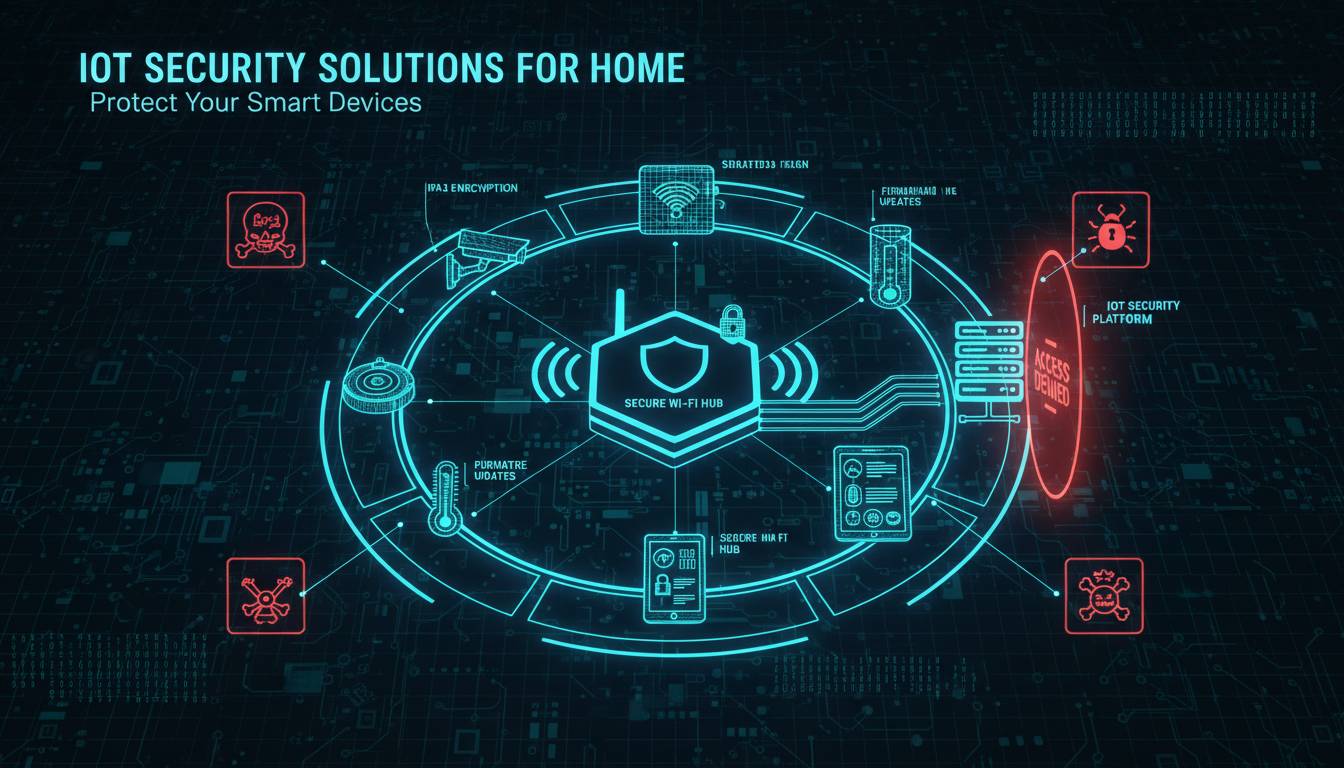
Essential security practices include changing default passwords immediately upon setup, enabling automatic software updates, using a separate network for IoT devices, disabling unnecessary features, using strong Wi-Fi encryption, and selecting devices from manufacturers with demonstrated security commitments. Regularly reviewing connected device lists and removing unused devices reduces attack surface.
What is the difference between IoT and IIoT?
IoT (Internet of Things) encompasses all connected devices including consumer, commercial, and industrial applications. IIoT (Industrial Internet of Things) specifically refers to IoT applications in industrial settings like manufacturing, energy, and logistics, typically emphasizing reliability, precision, and integration with operational technology systems.
Are IoT devices compatible with each other?
Compatibility varies significantly by manufacturer and protocol. The Matter standard launched in 2022-2023 has improved interoperability among major consumer brands, enabling devices from different manufacturers to work together within certain constraints. However, complete universal compatibility remains elusive, and consumers should verify integration capabilities before purchasing.
How many IoT devices are there globally in 2024?
The global count of active IoT devices exceeded 17 billion in 2024, with projections indicating growth to over 27 billion by 2030. The United States accounts for approximately 1.5-2 billion of these connections, representing the largest national market.
What industries benefit most from IoT technology?
Healthcare, manufacturing, transportation and logistics, agriculture, energy, and smart cities represent sectors experiencing the most transformative IoT impact. Healthcare benefits through remote monitoring and operational efficiency; manufacturing through predictive maintenance and automation; agriculture through precision farming techniques.