Cloud Computing Solutions – Scale Faster & Cut Costs | Brand

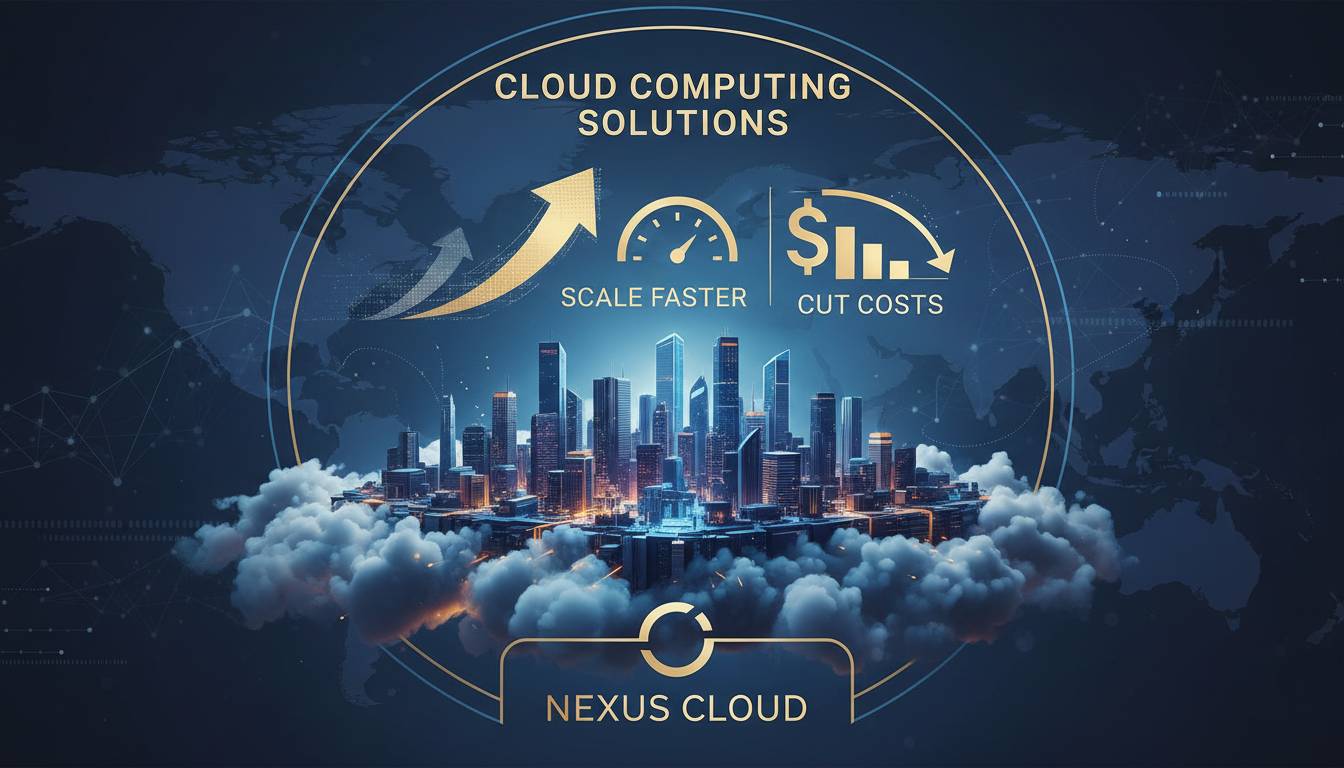
The average enterprise now runs 89% of workloads in the cloud, yet nearly 60% of cloud migration projects exceed budget and timeline expectations. This paradox reveals a critical truth: cloud adoption is no longer optional, but executing it successfully requires more than just lifting-and-shifting servers. Organizations that master cloud computing solutions achieve 2.5x faster time-to-market, reduce infrastructure costs by 30-40%, and gain the flexibility to pivot during market disruptions—advantages that competitors simply cannot match.
This guide provides a comprehensive framework for evaluating, selecting, and implementing cloud computing solutions that align with your business objectives. Whether you’re a startup seeking agility or an enterprise modernizing legacy systems, the following sections equip you with actionable strategies backed by industry data and expert insights.
The Business Case for Cloud Computing in 2024
Why Organizations Are Accelerating Cloud Adoption
Cloud computing has evolved from a cost-saving infrastructure choice to a strategic business enabler. According to Gartner’s 2024 forecasts, worldwide end-user spending on public cloud services will reach $679 billion, reflecting a 21.7% increase from the previous year. This growth trajectory signals that cloud adoption has crossed the early-adopter phase and entered mainstream business strategy.
Key Business Drivers:
- Scalability on demand: Cloud infrastructure elastic scaling allows organizations to handle traffic spikes without overprovisioning hardware
- Capital expenditure reduction: The shift from CapEx to OpEx transforms large upfront hardware investments into predictable monthly costs
- Geographic reach: Deploy applications globally within minutes, reaching customers in new markets without establishing physical infrastructure
- Innovation velocity: Access to emerging technologies—AI/ML services, serverless computing, edge deployment—without internal development
📊 MARKET GROWTH
| Metric | Value | Source |
|---|---|---|
| Global cloud spending (2024) | $679B | Gartner, 2024 |
| YoY growth rate | 21.7% | Gartner, 2024 |
| Enterprise workloads in cloud | 89% | Flexera, 2024 |
| Organizations with multi-cloud strategy | 87% | Flexera, 2024 |
“The competitive landscape has fundamentally shifted. Organizations without cloud-native capabilities cannot respond to market changes at the speed required in 2024 and beyond.”
— Daniel Zhang, Chief Technology Officer at a Fortune 500 retailer
Understanding Cloud Deployment Models
Infrastructure That Matches Your Requirements
Selecting the appropriate deployment model forms the foundation of your cloud strategy. Each model offers distinct advantages based on your control requirements, security needs, and operational capabilities.
Public Cloud
Public cloud services run on shared infrastructure owned and operated by third-party providers. This model delivers maximum scalability with minimal management overhead.
Best suited for: Startup workloads, development environments, burst capacity needs, applications without strict regulatory constraints
| Characteristic | Public Cloud |
|---|---|
| Infrastructure ownership | Cloud provider |
| Management responsibility | Provider-managed |
| Scalability | Near-infinite |
| Cost model | Pay-as-you-go |
| Security controls | Shared responsibility |
Private Cloud
Private cloud infrastructure serves single-organization use, either hosted on dedicated hardware or within an on-premises data center. This model provides enhanced control and security isolation.
Best suited for: Financial services, healthcare organizations, government agencies, enterprises with strict compliance requirements
Hybrid Cloud
Hybrid cloud architectures combine public cloud with private infrastructure or on-premises data centers, enabling workload portability between environments. This approach offers flexibility to keep sensitive workloads isolated while leveraging public cloud for scalable resources.
Best suited for: Organizations with regulatory data residency requirements, legacy application modernization, disaster recovery strategies
Multi-Cloud Strategy
Rather than committing to a single provider, multi-cloud deployments distribute workloads across multiple cloud platforms. According to Flexera’s 2024 State of Cloud report, 87% of enterprises have adopted multi-cloud strategies to avoid vendor lock-in and optimize for specific workload requirements.
Major Cloud Service Categories Explained
Matching Service Types to Business Needs
Cloud providers offer services organized into three primary categories, each addressing different operational requirements and technical capabilities.
Infrastructure as a Service (IaaS)
IaaS provides virtualized computing resources—servers, storage, and networking—over the internet. This foundational layer offers maximum control but requires significant operational expertise.
Core components:
- Virtual machines and bare-metal servers
- Block and object storage solutions
- Virtual networks and load balancers
- Identity and access management
When to choose IaaS: Organizations with dedicated IT teams seeking maximum control over infrastructure configuration, those migrating legacy applications, or businesses requiring custom operating environments.
Platform as a Service (PaaS)
PaaS abstracts infrastructure management, providing developers with a complete development and deployment environment. The provider handles servers, storage, networking, and runtime, enabling teams to focus on application code.
Core components:
- Application hosting runtimes
- Database management systems
- Development frameworks and tools
- CI/CD pipeline integration
When to choose PaaS: Development teams prioritizing rapid application delivery, organizations building cloud-native applications, teams without infrastructure engineering resources.
Software as a Service (SaaS)
SaaS delivers complete applications over the internet, eliminating all infrastructure and application management responsibilities. Users access software through web browsers or mobile apps.
Core components:
- Fully hosted applications
- User authentication and authorization
- Data storage and backup
- Feature updates and maintenance
When to choose SaaS: Organizations seeking immediate functionality without implementation complexity, teams needing cross-device access, businesses prioritizing ease of use over customization.
Comparing Top Cloud Providers
Evaluating the Major Players
The public cloud market is dominated by three major providers, each offering comprehensive service portfolios with distinct strengths.
| Provider | Market Share | Strengths | Best For |
|---|---|---|---|
| AWS | 32% | Service breadth, mature ecosystem | Startups, enterprises, complex workloads |
| Microsoft Azure | 23% | Enterprise integration, hybrid cloud | Microsoft-centric organizations |
| Google Cloud | 11% | Data/analytics, AI/ML, pricing | Data-intensive workloads, AI applications |
Amazon Web Services (AWS)
AWS maintains the broadest service portfolio with over 200 fully featured services, offering organizations unparalleled choice for specialized requirements. AWS dominates in startup ecosystems and provides extensive certification programs for technical teams.
Key differentiators:
- Largest global infrastructure footprint
- Most mature serverless offerings (Lambda)
- Extensive partner ecosystem
- Strong startup accelerator programs
Microsoft Azure
Azure provides seamless integration with Microsoft enterprise products, making it the natural choice for organizations heavily invested in Windows Server, SQL Server, and Microsoft 365. Azure’s hybrid cloud capabilities, particularly Azure Arc and Azure Stack, excel for organizations maintaining on-premises infrastructure.
Key differentiators:
- Native Active Directory integration
- Enterprise-grade compliance certifications
- Strong hybrid cloud offerings
- Seamless Microsoft product compatibility
Google Cloud Platform (GCP)
Google Cloud excels in data analytics, machine learning, and containerized workloads, leveraging Google’s internal infrastructure expertise. Organizations prioritizing Kubernetes adoption often select GCP due to its role in originating the technology.
Key differentiators:
- Industry-leading AI/ML services (Vertex AI)
- Superior data analytics (BigQuery)
- Competitive pricing for compute-heavy workloads
- Kubernetes-native architecture
“The provider decision should center on workload requirements, existing technology investments, and team expertise—not marketing claims or list pricing. Each major provider can accommodate enterprise requirements; the differentiation lies in operational efficiency for your specific use cases.”
— Sarah Chen, Cloud Strategy Principal at a global consulting firm
How to Evaluate Your Cloud Readiness
A Practical Assessment Framework
Successful cloud migration requires honest evaluation of your organization’s current state and readiness factors. Rushing this assessment typically results in costly rework or failed implementations.
Step 1: Workload Analysis
Before selecting cloud services, categorize your applications based on migration complexity and business criticality.
Assessment criteria:
- Application dependencies and integration points
- Current performance requirements and constraints
- Data sovereignty and compliance requirements
- Licensing considerations and vendor mobility
Step 2: Technical Readiness Evaluation
| Factor | Assessment Question | Target Score |
|---|---|---|
| Team expertise | Do staff have cloud certifications? | >50% certified |
| Documentation | Are applications well-documented? | Complete runbooks |
| Security posture | Is security architecture defined? | Zero-trust model |
| Monitoring | Are applications instrumented? | Full observability |
Step 3: Financial Readiness
Calculate total cost of ownership (TCO) comparing current infrastructure against cloud alternatives. Include:
- Current hardware depreciation
- Data center facility costs
- Power and cooling expenses
- IT staff allocation
- Software licensing
Phase-Based Migration Approach
Phase 1: Quick Wins (Months 1-3)
- Migrate development and testing environments
- Move applications with low complexity and high cloud affinity
- Establish baseline cost metrics
Phase 2: Core Migration (Months 4-9)
- Migrate business-critical applications
- Implement hybrid connectivity
- Establish cloud governance frameworks
Phase 3: Optimization (Months 10-18)
- Refactor monolithic applications
- Implement advanced cloud-native services
- Optimize costs through rightsizing and reservations
Common Cloud Migration Mistakes to Avoid
Lessons from Enterprise Implementations
Industry research reveals consistent patterns in cloud migration failures. Understanding these pitfalls enables proactive avoidance.
Mistake #1: Lift-and-Shift Without Optimization
Simply moving virtual machines to cloud infrastructure without architectural changes defeats the primary benefits of cloud computing. This approach, sometimes called “cloud washing,” often results in higher costs and reduced performance.
Impact: Organizations spend 20-30% more than necessary on cloud infrastructure while achieving minimal agility benefits.
Solution: Evaluate each workload for cloud-native refactoring opportunities during migration planning.
Mistake #2: Neglecting Cloud Cost Management
Without proactive cost governance, cloud spending often exceeds expectations. The pay-as-you-go model, while flexible, can produce unexpected bills when teams provision resources without constraints.
Impact: Gartner reports that 35% of organizations exceed their cloud budget annually, with wasted spending reaching 45% of total cloud expenditure in some cases.
Solution: Implement tagging strategies, establish budget alerts, and conduct regular cost reviews with clear accountability.
Mistake #3: Underestimating Security Complexity
Cloud security operates under a shared responsibility model. Organizations frequently assume the cloud provider handles all security, leading to misconfigurations and vulnerabilities.
Impact: Misconfigured cloud resources account for significant data breaches annually. The 2023 Verizon Data Breach Investigations Report identifies misconfiguration as a leading attack vector.
Solution: Deploy cloud security posture management (CSPM) tools, implement infrastructure-as-code with security scanning, and conduct regular compliance audits.
Mistake #4: Insufficient Training and Change Management
Technology implementations fail without corresponding organizational preparation. Technical teams require training, and business stakeholders need education on new capabilities.
Solution: Allocate 15-20% of migration budget to training and change management activities.
ROI and Cost Analysis: Cloud vs. On-Premises
Data-Driven Comparison
Financial analysis of cloud versus on-premises infrastructure requires comprehensive evaluation beyond simple infrastructure costs.
Total Cost of Ownership Comparison
| Cost Category | On-Premises | Cloud (3-Year) |
|---|---|---|
| Hardware acquisition | $500,000 | $0 |
| Data center facilities | $150,000 | $0 |
| Power and cooling | $75,000 | $0 |
| Hardware maintenance | $60,000 | $0 |
| Software licensing | $120,000 | $80,000 |
| IT staff (infrastructure) | $300,000 | $180,000 |
| Cloud infrastructure | $0 | $450,000 |
| Total (3-Year) | $1,205,000 | $710,000 |
Analysis based on typical mid-size enterprise workload profile
Hidden Cost Considerations
On-premises hidden costs:
- Hardware refresh cycles (typically 3-5 years)
- Facility expansion or colocation fees
- Disaster recovery infrastructure
- Physical security compliance
Cloud hidden costs:
- Data egress charges
- API call overages
- Cross-region replication
- Reserved instance commitments
Calculating Your Organization’s ROI
The cloud migration financial model should incorporate:
- Direct cost savings: Infrastructure elimination, reduced staffing
- Opportunity cost: Faster feature deployment, improved competitive positioning
- Risk reduction: Disaster recovery capabilities, security improvements
- Business agility: Ability to scale, enter new markets, respond to demand
The Future of Cloud Computing
Emerging Trends Reshaping the Landscape
Cloud computing continues evolving, with several significant trends expected to reshape enterprise strategies through 2025 and beyond.
Serverless and Event-Driven Architectures
Serverless computing eliminates server management entirely, enabling developers to focus purely on business logic. According to IDC, serverless architecture adoption will grow at 22% annually through 2028, as organizations seek maximum development velocity.
Edge Computing Expansion
Processing data closer to its source reduces latency and bandwidth requirements. Edge computing complements cloud infrastructure rather than replacing it, particularly for IoT applications, content delivery, and real-time analytics.
AI/ML Cloud Services
Cloud providers increasingly embed artificial intelligence capabilities into platform services. Organizations can now deploy production AI systems without specialized ML engineering teams, democratizing access to advanced capabilities.
Increased FinOps Adoption
Financial operations (FinOps) practices bring financial accountability to cloud spending. Organizations implement cross-functional teams combining finance, engineering, and operations to optimize cloud costs while maintaining performance requirements.
Frequently Asked Questions
What is the difference between cloud computing and traditional IT infrastructure?
Cloud computing delivers computing resources (servers, storage, databases, networking, software) over the internet on a pay-as-you-go basis. Traditional IT infrastructure requires organizations to purchase, maintain, and manage physical hardware in their own data centers. Cloud computing eliminates capital expenses, provides elastic scaling, and shifts operational burden to the provider.
How long does a typical cloud migration take?
Migration timelines vary significantly based on workload complexity, organizational readiness, and migration strategy. Simple lift-and-shift migrations can complete within weeks, while comprehensive transformation projects requiring application refactoring may take 12-24 months. The average enterprise cloud migration spans 6-12 months for initial production workloads.
Can I keep some applications on-premises while using cloud for others?
Yes—this hybrid cloud approach is extremely common. Organizations typically maintain on-premises infrastructure for regulatory compliance, latency-sensitive workloads, or applications approaching end-of-life. Cloud services connect to on-premises systems through secure networking, enabling hybrid architectures that optimize each workload for its specific requirements.
How do I choose between AWS, Azure, and Google Cloud?
Select based on your specific workload requirements, existing technology investments, and team expertise. AWS offers the broadest service portfolio and is well-suited for startups and complex enterprise workloads. Azure provides superior integration with Microsoft products and is ideal for organizations with existing Microsoft investments. Google Cloud excels in data analytics, machine learning, and Kubernetes-based architectures.
What are the main security risks with cloud computing?
Primary security concerns include misconfigured access controls, inadequate identity management, insufficient data encryption, and lack of visibility into multi-cloud environments. The shared responsibility model requires organizations to actively manage their security configuration—the cloud provider secures the infrastructure, but you secure your data and access. Implement cloud security posture management tools and conduct regular security assessments to mitigate risks.
How much does cloud computing cost compared to on-premises infrastructure?
While costs vary by workload profile, organizations typically achieve 30-40% infrastructure cost reduction when migrating to cloud, though this requires active cost management. Cloud eliminates hardware purchase and maintenance costs but introduces new cost structures around compute time, storage consumption, and data transfer. Comprehensive TCO analysis should include staffing, facilities, and opportunity costs alongside direct infrastructure expenses.
Conclusion: Building Your Cloud Strategy
Cloud computing solutions have matured beyond simple infrastructure alternatives to become fundamental business enablers. Organizations that approach cloud adoption strategically—aligning technology decisions with business objectives, investing in team capabilities, and maintaining rigorous governance—achieve the promised benefits of scalability, cost optimization, and competitive agility.
The path forward requires honest assessment of your current state, clear definition of desired outcomes, and commitment to ongoing optimization. Start with workloads that demonstrate quick wins, build organizational capabilities progressively, and maintain flexibility to adapt as cloud technologies and your business requirements evolve.
The cloud transformation journey is not a destination but a continuous evolution. Organizations that embrace this reality position themselves to capitalize on emerging opportunities while building resilient, efficient infrastructure capable of supporting business objectives through rapid technological change.