8 Cloud Computing Trends Every Enterprise Needs to Know

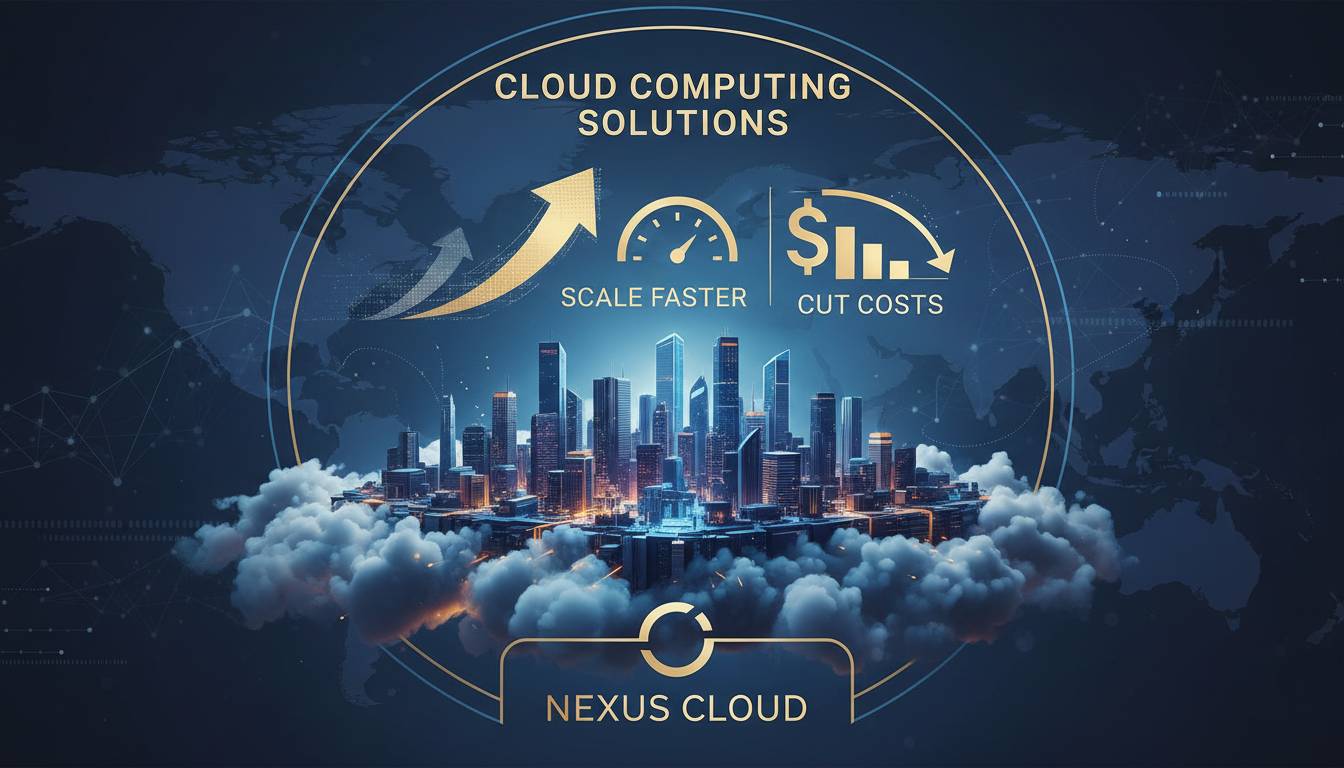
Cloud computing has transformed from a cost-saving infrastructure choice into the backbone of enterprise digital transformation. As organizations navigate an increasingly complex technological landscape, understanding emerging cloud trends becomes critical for maintaining competitive advantage. The enterprises that successfully adopt these technologies report 40% faster time-to-market and 25% reduction in operational costs, according to industry research. This comprehensive guide examines eight pivotal cloud computing trends shaping enterprise strategy in 2024 and beyond, providing actionable insights for technology leaders and decision-makers.
The Enterprise Cloud Landscape in 2024
The enterprise cloud market reached $395 billion globally in 2023, with projections indicating growth to $625 billion by 2027, representing a compound annual growth rate of 16.4%. This explosive growth reflects not merely increased adoption but fundamental shifts in how enterprises conceptualize and deploy technology infrastructure. The pandemic accelerated digital transformation initiatives by an estimated five to seven years, forcing organizations to reevaluate their cloud strategies fundamentally.
Key Market Insights
– 85% of enterprises operate multi-cloud environments as of 2024
– Hybrid cloud adoption increased 28% year-over-year
– Enterprise cloud spending now represents 35% of total IT budgets
– 72% of Fortune 500 companies have cloud-first strategies officially mandated
This market evolution creates both opportunities and challenges. Organizations must balance innovation velocity against operational complexity while managing escalating security requirements and cost pressures. The trends examined below represent strategic responses to these competing demands.
Trend 1: Multi-Cloud and Hybrid Cloud Strategies Become Standard
The era of single-cloud vendor dependency has definitively ended. Enterprise architecture now routinely spans multiple cloud providers, with 85% of organizations operating multi-cloud environments according to recent industry surveys. This shift reflects strategic imperatives around vendor independence, regulatory compliance, and service optimization.
Why Enterprises Adopt Multi-Cloud
Multi-cloud strategies emerge from practical business requirements rather than technical ideology. Organizations seek to avoid vendor lock-in, optimize costs across providers, leverage best-of-breed services, and maintain business continuity. Additionally, regulatory requirements increasingly mandate data residency in specific geographic regions, making multi-cloud almost mandatory for global enterprises.
Primary Drivers:
– Vendor negotiation leverage (organizations report 15-25% better pricing)
– Regulatory compliance across jurisdictions
– Service specialization optimization
– Disaster recovery and business continuity
Hybrid Cloud Integration Approaches
Hybrid cloud combines on-premises infrastructure with public cloud services, enabling organizations to maintain sensitive workloads locally while leveraging cloud scalability for elastic requirements. Enterprise hybrid cloud adoption grew 28% year-over-year, driven by data sovereignty concerns and legacy application integration needs.
Successful hybrid implementations require robust networking infrastructure, unified management platforms, and clearly defined workload placement strategies. Organizations report selecting hybrid approaches for regulatory compliance (64%), cost optimization (58%), and application performance requirements (51%).
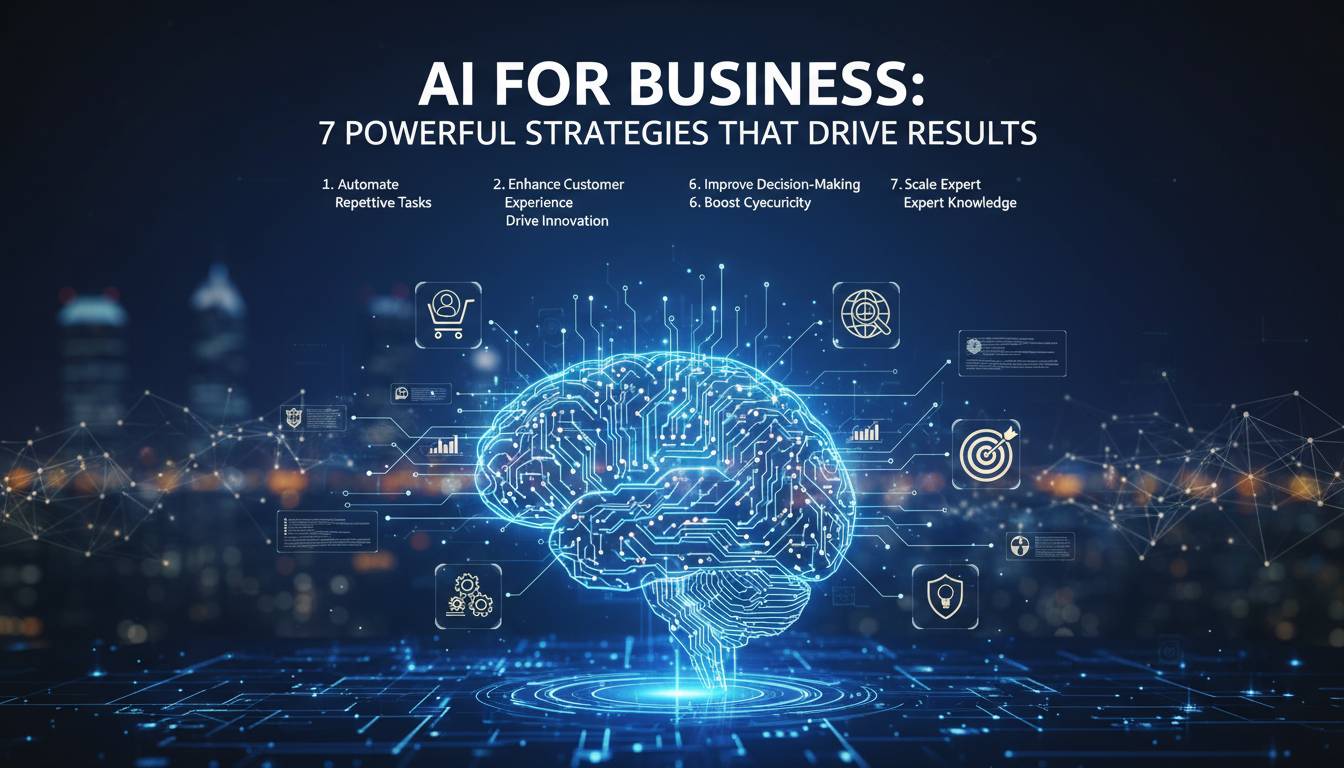
Trend 2: AI and Machine Learning Cloud Services Dominate Investment
Artificial intelligence integration represents the fastest-growing segment of enterprise cloud spending. Organizations allocated 40% more budget to AI-powered cloud services in 2023 compared to the previous year, reflecting the technology’s transformative potential across business functions.
Enterprise AI Cloud Adoption Patterns
The democratization of AI through cloud services has dramatically reduced implementation barriers. Pre-built machine learning models, automated ML workflows, and managed AI services enable organizations to deploy sophisticated capabilities without specialized data science expertise. This accessibility drives adoption beyond early adopters into mainstream enterprise deployments.
AI Cloud Service Categories Growing:
– Natural language processing APIs
– Computer vision and image recognition
– Predictive analytics platforms
– Autonomous decision-making systems
– Generative AI enterprise applications
Enterprise spending on AI cloud services is projected to reach $150 billion globally by 2027, with the largest growth in industry-specific solutions. Healthcare, financial services, and manufacturing lead adoption, deploying AI for customer service automation, fraud detection, predictive maintenance, and supply chain optimization.
Implementation Considerations
Successful AI cloud integration requires strategic data architecture, skilled personnel, and realistic implementation timelines. Organizations underestimate required data preparation efforts by an average of 40%, leading to project delays. Additionally, AI governance frameworks must address model transparency, bias detection, and regulatory compliance proactively.
Trend 3: Edge Computing Extends Cloud Capabilities
Edge computing addresses fundamental limitations in cloud architecture by processing data closer to its source. As Internet of Things deployments proliferate and real-time processing requirements intensify, edge computing becomes essential for enterprise cloud strategies.
The Edge Computing Imperative
Cloud architectures introduce latency by design—data travels to centralized data centers for processing before results return to endpoints. For applications requiring real-time responses, such as autonomous systems, industrial automation, and immersive experiences, this latency proves unacceptable. Edge computing solves this problem by deploying compute resources at network periphery locations.
Enterprise Edge Adoption Metrics:
– 75% of enterprises will deploy edge computing by 2026
– Edge infrastructure spending exceeds $200 billion annually
– Manufacturing and logistics lead edge adoption at 34% implementation rates
– Healthcare edge deployments grew 45% in 2023
Edge-Cloud Continuum Architecture
Modern enterprise architecture treats edge and cloud as complementary rather than competing platforms. The edge-cloud continuum enables workload placement based on requirements—latency-sensitive processing occurs at the edge while analytics, machine learning training, and storage leverage cloudScale. This approach optimizes both performance and cost.
Successful edge implementations require careful planning around connectivity, security, and management. Organizations report that edge deployment complexity exceeds initial projections, particularly regarding consistent security policies and unified operational visibility across edge and cloud environments.
Trend 4: FinOps Transforms Cloud Cost Management
Cloud cost optimization evolves from a tactical exercise to strategic discipline through FinOps—the practice of bringing financial accountability to cloud spending. As enterprises aggregate cloud infrastructure costs exceeding hundreds of millions of dollars annually, financial governance becomes essential.
The FinOps Maturity Model
FinOps practices progress through maturity stages:informational (visibility), tactical (optimization), and strategic (business alignment). Most enterprises currently operate between informational and tactical maturity, with leading organizations achieving strategic FinOps integration that directly links cloud spending to business outcomes.
FinOps Key Capabilities:
– Real-time cloud spend visibility and attribution
– Automated resource optimization recommendations
– Reserved instance and savings plan optimization
– Showback and chargeback mechanisms
– Continuous improvement processes
Organizations implementing mature FinOps practices report 20-30% cloud cost reductions without service degradation. These savings typically exceed initial transformation investments within 12-18 months, making FinOps a priority investment for cloud-forward enterprises.
Technology Integration
FinOps platforms integrate with major cloud providers through native APIs, enabling automated recommendations and enforcement. Leading solutions combine cost intelligence with performance monitoring, helping organizations balance economics against service quality. The integration of AI into FinOps tools enables predictive cost modeling and anomaly detection, further improving optimization accuracy.
Trend 5: Security and Compliance Automation Accelerates
Cloud security evolves from perimeter defense to identity-centric, automated protection models. As attack surfaces expand and threat sophistication increases, manual security processes prove inadequate for enterprise protection requirements.
Zero Trust Architecture Implementation
Zero trust security—assuming no implicit trust based on network location or credentials—becomes the default enterprise cloud security model. Implementation requires comprehensive identity verification, micro-segmentation, continuous monitoring, and least-privilege access controls. Organizations report that zero trust implementations reduce security incident severity by 35% on average.
Automation Security Capabilities:
– Identity and access management automation
– Infrastructure-as-code security scanning
– Automated compliance monitoring and reporting
– Threat detection and response orchestration
– Security posture continuous assessment
Compliance as Code
Regulatory requirements increasingly mandate demonstrable control effectiveness. Organizations adopt compliance-as-code approaches, embedding policy definitions directly into infrastructure provisioning and deploying automated compliance verification. This approach reduces audit preparation time by 60% while improving control consistency.
Cloud-native security tools now offer integrated compliance frameworks mapping to major regulations including SOC 2, ISO 27001, GDPR, HIPAA, and industry-specific requirements. This consolidation simplifies compliance management for multi-cloud environments where different providers previously required separate compliance approaches.
Trend 6: Serverless Computing Achieves Enterprise Maturity
Serverless computing—where cloud providers manage infrastructure abstraction entirely—matures from developer novelty to enterprise-validated architecture. Function-as-a-Service offerings now support production workloads with demanding performance requirements.
Enterprise Serverless Adoption Growth
Serverless computing eliminates server management overhead, enabling development teams to focus purely on business logic. This abstraction accelerates development velocity while providing automatic scaling and pay-per-use economics. Enterprise adoption increased 30% year-over-year, with production deployments now common across industries.
Serverless Use Cases Expanding:
– API backends and microservices
– Event-driven processing pipelines
– Real-time file and stream processing
– Scheduled tasks and batch operations
– Chatbot and conversational AI backends
Organizations report 50% reduction in infrastructure management time for serverless workloads, along with improved scalability and reduced idle capacity costs. However, serverless introduces new considerations around cold start latency, vendor lock-in, and cost predictability at scale that require architectural consideration.
Architecture Patterns
Successful serverless implementations typically combine functions with managed data services, creating loosely coupled, event-driven architectures. This pattern enables independent scaling and deployment of components while simplifying testing through function-level isolation. Organizations adopting serverless report improved deployment frequency and reduced regression incidents.
Trend 7: Cloud-Native Development Redefines Application Architecture
Cloud-native development—building applications specifically for cloud execution environments—transforms enterprise software delivery. Container orchestration, microservices, and immutable infrastructure patterns become standard practice for modern application development.
Kubernetes Dominates Orchestration
Kubernetes has achieved container orchestration dominance, with 96% of organizations evaluating or using the technology. The CNCF ecosystem provides enterprise-grade capabilities for deployment, scaling, and management of containerized applications across cloud and on-premises environments.
Cloud-Native Adoption Statistics:
– 84% of enterprises run containers in production
– Container adoption grew 23% year-over-year
– Kubernetes deployments increased 67% in enterprise environments
– Service mesh adoption grew 50% as microservices complexity increased
Platform Engineering Emerges
As cloud-native complexity increases, organizations establish platform engineering functions to provide self-service developer capabilities. Internal developer platforms abstract infrastructure complexity, enabling application teams to deploy and operate workloads without deep platform expertise. Organizations report 40% improvement in developer productivity following platform engineering implementation.
Trend 8: Green Cloud and Sustainability Initiatives Gain Momentum
Environmental sustainability transitions from corporate social responsibility initiative to strategic business imperative. Cloud providers and enterprises increasingly prioritize carbon reduction, driving innovation in sustainable cloud architecture.
Cloud Provider Sustainability Commitments
Major cloud providers collectively committed to net-zero carbon emissions by 2030, driving substantial investment in renewable energy and carbon-free infrastructure. Regional availability zones now include carbon intensity metrics, enabling organizations to make environmentally informed deployment decisions.
Sustainability Metrics Tracked:
– Carbon emissions per compute workload
– Power usage effectiveness (PUE)
– Renewable energy percentage
– Water usage for cooling
– E-waste reduction through hardware lifecycle extension
Enterprise Sustainability Integration
Organizations increasingly incorporate cloud sustainability into procurement decisions and architecture choices. Sustainable computing practices include workload scheduling during renewable energy availability, right-sizing resources to minimize waste, and selecting cloud regions with lower carbon intensity. These practices align environmental responsibility with operational efficiency, creating mutual benefit.
Strategic Implementation Framework
Enterprise cloud transformation requires structured approaches balancing innovation with operational stability. Successful organizations establish clear cloud strategies aligned with business objectives while maintaining flexibility for emerging technologies.
Assessment and Planning
Begin with comprehensive workload analysis categorizing applications by cloud readiness, regulatory requirements, and strategic importance. This analysis informs migration sequencing and architecture decisions. Organizations report that assessment phase skipping leads to 25% higher transformation costs and extended timelines.
Governance and Operating Models
Effective cloud governance requires clear ownership, standardized patterns, and automated enforcement. Establish cloud center-of-excellence functions responsible for architecture standards, security policies, and cost optimization. These functions balance innovation enablement against risk management, enabling velocity without compromising operational stability.
Continuous Evolution
Cloud technology evolution requires ongoing strategy review and capability development. Establish mechanisms for emerging technology evaluation, pilot programs for promising innovations, and structured processes for technology retirement. Organizations treating cloud strategy as static documents rather than living programs report competitive disadvantage within 18-24 months.
Frequently Asked Questions
What is the difference between multi-cloud and hybrid cloud?
Multi-cloud refers to using services from multiple cloud providers (such as AWS, Azure, and Google Cloud), while hybrid cloud combines on-premises infrastructure with public cloud services. Multi-cloud focuses on vendor diversification and optimization, while hybrid cloud enables running workloads across owned infrastructure and cloud environments based on requirements like data sovereignty or latency.
How long does enterprise cloud transformation typically take?
Full enterprise cloud transformation typically requires 3-5 years for complete implementation, though significant value realization occurs within 12-18 months. Timeline varies based on organization size, application portfolio complexity, regulatory requirements, and existing technical debt. Most enterprises operate in perpetual transformation states rather than achieving definitive completion.
What are the biggest challenges in cloud cost optimization?
The primary challenges include lack of visibility into actual usage patterns, distributed spending authority across departments, complex pricing models, and difficulty attributing costs to business outcomes. Organizations also struggle with identifying optimization opportunities while maintaining performance requirements and avoiding excessive manual optimization efforts.
How do enterprises ensure security across multi-cloud environments?
Enterprises implement security through unified identity and access management, consistent policy enforcement via infrastructure-as-code, centralized security monitoring, and automated compliance verification. Cloud-native security tools provide cross-provider visibility, though many organizations employ third-party security platforms for consolidated management and additional capabilities.
What skills are needed for successful cloud operations?
Successful cloud operations require combinations of cloud architecture, DevOps practices, security engineering, data engineering, and FinOps expertise. Many organizations face skills gaps requiring strategic workforce development through training, hiring, and partnership with managed service providers. Platform engineering roles increasingly bridge technical and operational requirements.
How should enterprises approach AI adoption in cloud environments?
Enterprises should begin with clear use case identification aligned to business value, followed by data infrastructure assessment and preparation. Starting with managed AI services reduces implementation complexity before advancing to custom model development. Governance frameworks addressing bias, transparency, and regulatory compliance should accompany AI deployment from initial implementation.