Altcoin Season 2024: How to Maximize Your Crypto Gains

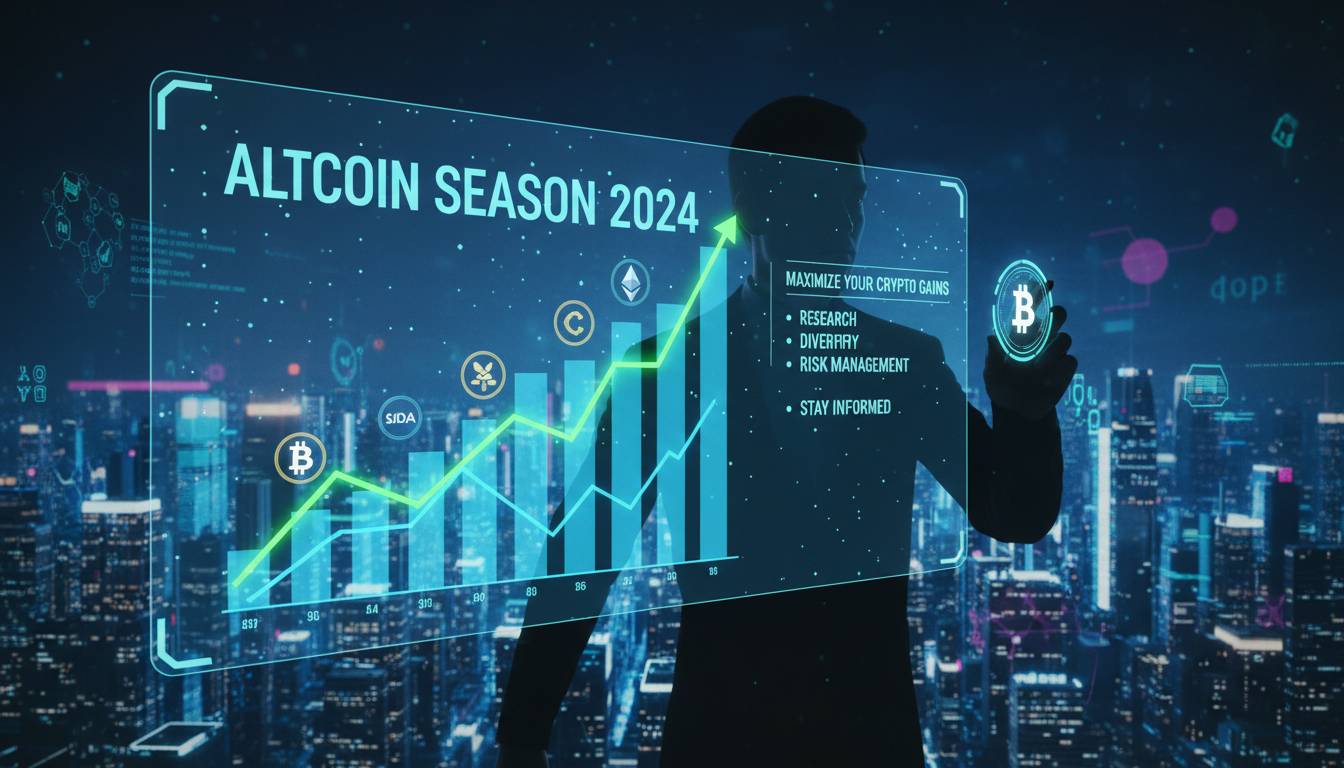
The cryptocurrency market moves in distinct cycles, and experienced investors know that altcoin seasons—periods when alternative cryptocurrencies outperform Bitcoin—represent some of the most lucrative opportunities in digital assets. As we progress through 2024, multiple indicators suggest the market is transitioning into a phase where altcoins could deliver substantial returns for those who understand how to navigate this complex landscape.
Understanding altcoin season dynamics requires more than just recognizing that “Bitcoin goes up, then altcoins go up.” It demands awareness of market capitalization shifts, trading volume patterns, sector rotations, and the underlying narratives driving capital allocation across the crypto ecosystem. This guide provides a comprehensive framework for positioning your portfolio to maximize gains during altcoin season 2024 while managing the significant risks that accompany these explosive moves.
What Is Altcoin Season and Why Does It Matter
Altcoin season, often called “alt season,” refers to a market condition where alternative cryptocurrencies (everything except Bitcoin) collectively outperform Bitcoin in terms of price appreciation and trading volume. While Bitcoin remains the dominant cryptocurrency by market capitalization, altcoin seasons represent periods when trader appetite for higher-risk, higher-reward assets increases, driving capital flow into smaller-cap digital assets.
The typical altcoin season follows a recognizable pattern. Bitcoin establishes a bottom and begins an upward trajectory. As BTC gains momentum and reaches certain price levels, traders begin rotating profits into altcoins seeking greater percentage gains. This rotation intensifies as the cycle progresses, with capital flowing from Bitcoin to established altcoins (Ethereum, Solana) and then to smaller-cap projects offering exponential upside potential.
The significance of altcoin season for portfolio growth cannot be overstated. During the 2020-2021 bull market, many altcoins delivered returns measured in multiples rather than percentages. Ethereum gained over 1,500% from its March 2020 lows to its November 2021 high. Smaller-cap projects like Solana emerged from obscurity to reach $200+ billion market capitalizations. These moves don’t happen randomly—they occur during specific market conditions that define altcoin season.
Market Indicators That Signal Altcoin Season
Identifying altcoin season requires monitoring several key indicators that precede and accompany these market phases. Understanding these signals helps you position before the major moves rather than chasing after prices have already appreciated significantly.
Bitcoin Dominance Decline: This metric measures Bitcoin’s share of total cryptocurrency market capitalization. When Bitcoin dominance begins declining from its cycle highs, it typically signals that capital is rotating into altcoins. In 2021, Bitcoin dominance peaked around 73% in early January before declining to around 40% by late November—a clear signal that altcoin season was underway. Watch for a sustained decline in Bitcoin dominance as an early indicator.
ETH/BTC Ratio: The Ethereum-to-Bitcoin trading pair serves as a barometer for altcoin market health. When ETH begins gaining value against BTC, it often signals the beginning of broader altcoin outperformance. The ETH/BTC ratio moved from 0.015 in March 2020 to 0.08 by early 2021—a five-fold increase that preceded massive altcoin gains.
Total Market Cap Excluding Bitcoin: This metric strips out Bitcoin’s dominance to show the collective value of all altcoins. A rising line here indicates altcoins are gaining traction independent of Bitcoin’s movement. During true alt seasons, this metric often increases faster than Bitcoin’s.
Altcoin Trading Volume: Increased trading volume across altcoin markets, particularly in smaller-cap pairs, indicates heightened interest and participation. Monitor volume spikes in altcoin markets as a leading indicator.
Social Sentiment and Search Trends: Rising interest in cryptocurrency beyond Bitcoin—evidenced by increased search volume for specific altcoins, trending topics on crypto Twitter, and growing Discord/Telegram community sizes—often precedes price appreciation.
Historical Performance and Seasonal Patterns
Analyzing historical data reveals patterns that inform expectations for altcoin season 2024. While past performance doesn’t guarantee future results, understanding these cycles provides context for current market conditions.
The 2017 bull market remains the most dramatic example of altcoin season in crypto history. Bitcoin dominance collapsed from over 80% to around 38% as thousands of ICOs launched and altcoins surged. Many altcoins gained 10x to 100x their Bitcoin values during this period, though the majority of these projects later failed.
The 2020-2021 cycle demonstrated a more structured progression. Bitcoin reached new all-time highs in late 2020 and early 2021. Altcoin season followed in early 2021, with Ethereum and other Layer 1 protocols leading. A second altcoin season wave occurred from July through November 2021, driven by NFT mania and DeFi summer.
The 2022-2023 period represented a prolonged bear market with no meaningful altcoin season. Total crypto market cap declined from nearly $3 trillion to around $800 billion. Most altcoins lost 80-95% from their cycle highs. This destruction created the foundation for the next cycle.
Now in 2024, we observe conditions reminiscent of cycle beginnings. Bitcoin has established new cycle highs above $70,000. Institutional adoption has accelerated through spot ETF approvals. Historical patterns suggest altcoin season typically begins 6-12 months after Bitcoin reaches new highs—and we’re approaching that timeframe.
Key Altcoin Categories for 2024
Successful altcoin season investing requires understanding which categories tend to outperform and why. Different narratives dominate different cycles, but certain sectors consistently deliver outsized returns.
Layer 1 Blockchains: These are the foundational networks upon which decentralized applications are built. Ethereum remains the dominant smart contract platform, but competitors like Solana, Avalanche, and Polygon have gained significant market share. Layer 1 protocols typically lead altcoin rallies because they represent infrastructure plays with multiplicative value capture.
DeFi (Decentralized Finance): Protocols enabling financial services without traditional intermediaries—lending, borrowing, trading—have historically outperformed during altcoin seasons. Total value locked in DeFi protocols serves as a key metric. Expect significant gains from established DeFi protocols if the sector attracts renewed interest.
AI-Crypto Intersection: The convergence of artificial intelligence and blockchain represents a emerging narrative in 2024. Projects combining AI services with crypto token incentives have attracted substantial investment. While many of these projects are speculative, the narrative has demonstrated momentum.
Gaming and Metaverse: The intersection of gaming and blockchain generated massive interest in 2021-2022. While many gaming tokens collapsed, the sector continues developing real utility. Projects with actual gameplay and user bases may outperform those with purely speculative value propositions.
Meme Coins: While risky, meme coins have produced outsized returns during every altcoin season. Dogecoin, Shiba Inu, and newer entrants like PEPE have demonstrated that community-driven tokens can generate extraordinary gains. Position only risk capital here, as the majority of meme coins go to zero.
Risk Management Strategies
Altcoin season offers extraordinary profit potential but carries substantial risk. Protecting capital requires disciplined risk management that accounts for the volatility inherent in these assets.
Position Sizing: Never allocate more than you can afford to lose to any single altcoin position. A common framework is the “10% rule”—no single altcoin position exceeds 10% of your total portfolio, with the majority of holdings in established assets like Bitcoin and Ethereum.
Take Profit Discipline: Altcoin prices can reverse rapidly. Establishing take-profit targets at various levels (50%, 100%, 200% gains) ensures you lock in returns rather than watching profits evaporate. Consider taking initial principal off the table when any position doubles.
Stop Losses: While crypto markets can experience flash crashes that trigger stop losses, using trailing stop losses protects against significant drawdowns. A 50% decline requires a 100% gain to recover—protecting against large losses is essential.
Diversification Across Sectors: Don’t concentrate entirely in one category. Spread positions across Layer 1s, DeFi, and other sectors. If one narrative underperforms, others may compensate.
Time Horizon: Altcoin season can end abruptly. Many traders treat altcoin positions as medium-term (weeks to months) rather than long-term holds, exiting positions when Bitcoin dominance begins reversing or when the broader market shows exhaustion signs.
How to Position Your Portfolio
Building an altcoin portfolio for 2024 requires balancing potential upside with protection against permanent loss. Consider this framework when constructing positions.
Core Holdings (60-70%): Allocate the majority to Bitcoin and Ethereum. These assets have survived multiple cycles, have institutional adoption, and serve as the foundation of any crypto portfolio. They’ll participate in altcoin season moves while providing downside protection.
Satellite Positions (20-30%): Mid-cap altcoins with established track records, strong communities, and real utility belong here. Look for tokens with positive cash flows, active development, and clear use cases. Examples include established DeFi protocols, scaling solutions, and interoperability projects.
Speculative Allocation (5-10%): This portion is for higher-risk, higher-reward positions—meme coins, newer projects, or tokens with compelling but unproven narratives. Accept that many of these positions will go to zero, but the winners can significantly outperform.
Timing Considerations: Rather than timing your entire entry, consider dollar-cost averaging into altcoin positions over time. This reduces the risk of mistiming and allows you to accumulate positions as the market provides opportunities.
Common Mistakes to Avoid
Many investors underperform during altcoin season due to behavioral biases and common errors. Understanding these mistakes helps you avoid them.
FOMO Buying: The most damaging mistake is buying altcoins after they’ve already doubled or tripled, driven by Fear Of Missing Out. By the time an altcoin is trending everywhere, much of the upside has typically been captured. Do your own research and enter positions at your planned levels rather than chasing price.
Ignoring Bitcoin: Some investors abandon Bitcoin entirely during altcoin season, but this exposes them to significant risk. Bitcoin typically leads market recoveries, and many altcoins lose value against Bitcoin even during “altcoin seasons” when measured in BTC pairs.
Holding Through the Entire Cycle: Altcoin season eventually ends. Holding through the entire cycle often means watching gains disappear. Establish exit strategies before entering positions.
Overtrading: The excitement of altcoin season leads many traders to constantly rotate positions. This generates fees and often underperforms simply holding quality positions through the rally.
Scam Projects: The altcoin space attracts significant fraud. Avoid projects with anonymous teams, unrealistic promises, or no working product. Research thoroughly before allocating capital to any project.
The Road Ahead: Outlook for Altcoin Season 2024
Multiple factors suggest favorable conditions for altcoin season in 2024. Institutional adoption through spot Bitcoin ETFs has brought significant capital into the ecosystem. Interest rate stabilization may reduce selling pressure and encourage risk-taking. Historical cycle patterns suggest we’re approaching the timeframe when altcoins typically outperform.
However, uncertainty remains. Regulatory concerns continue affecting the market. Macroeconomic conditions could dampen risk appetite. The timing and magnitude of altcoin season remain unpredictable.
The most likely scenario involves Bitcoin establishing clear support levels followed by capital rotation into altcoins. The sectors leading this rotation will depend on prevailing narratives—whether AI-crypto projects, DeFi protocols, or newer innovations.
Prepare by researching projects, establishing positions in quality assets, and defining your exit strategies. Altcoin season rewards the prepared while punishing those who approach without plan or discipline.
Conclusion
Altcoin season 2024 represents a significant opportunity for cryptocurrency investors willing to do their homework and manage risk appropriately. The convergence of institutional adoption, favorable technical indicators, and historical cycle patterns creates conditions for substantial altcoin appreciation.
Success requires understanding the mechanics of altcoin season, identifying quality projects across different categories, implementing strict risk management, and avoiding common behavioral pitfalls. While no one can predict exact timing or magnitude, positioning your portfolio to benefit from altcoin season while protecting against permanent loss positions you to capture the explosive gains these market phases offer.
Remember that altcoin season is a temporary phenomenon within longer market cycles. Approach these opportunities with clear strategies, disciplined execution, and realistic expectations. The investors who perform best are those who combine thorough research with emotional discipline—capturing gains when available while protecting capital for future opportunities.
Frequently Asked Questions
When does altcoin season typically start?
Altcoin season usually begins 6-12 months after Bitcoin reaches new cycle highs. As Bitcoin stabilizes and traders become comfortable with higher prices, capital rotates into altcoins seeking greater returns. However, exact timing depends on market conditions, sentiment, and macroeconomic factors.
How much can you realistically make during altcoin season?
While some altcoins deliver 10x-100x returns during strong seasons, these gains are exceptional rather than typical. More realistic expectations for quality altcoin positions range from 50% to 300% gains during active periods. Many smaller-cap speculative tokens lose significant value after initial pumps.
Which altcoins will perform best in 2024?
No one can predict with certainty which specific altcoins will outperform. However, established Layer 1 protocols, DeFi platforms with real utility, and emerging narratives like AI-crypto projects tend to attract capital during altcoin seasons. Research projects with strong teams, working products, and clear use cases.
Is it too late to invest in altcoins for 2024?
Whether it’s “too late” depends on where we are in the cycle. If altcoin season is just beginning, opportunities remain substantial. If prices have already appreciated significantly, waiting for pullbacks or identifying underappreciated sectors may be wiser. Avoid FOMO buying after major moves have already occurred.
How do I identify when altcoin season is ending?
Watch for Bitcoin dominance bottoming and beginning to rise, major altcoins failing to make new highs while Bitcoin advances, and declining trading volume across altcoin markets. These signals often precede the end of altcoin season and signal a rotation back toward Bitcoin.
Should I hold altcoins through altcoin season or trade actively?
Both approaches can be valid. Holding quality positions through altcoin season captures the broad rally without requiring precise timing. Active trading allows you to lock in profits at various levels but requires skill and generates fees. Many investors use a hybrid approach—holding core positions while taking profit on partial holdings at predetermined levels.