Solana Wallet: Fast, Secure & Easy Crypto Trading

If you’re looking to store, send, or receive Solana (SOL) and Solana-based tokens, a Solana wallet is your essential gateway to the ecosystem. Unlike traditional banking apps, Solana wallets give you complete control over your digital assets with near-instant transaction speeds and minimal fees—typically fractions of a cent per transaction.
Key Insights
– Solana processes up to 65,000 transactions per second, with average costs under $0.001
– Over 100 million Solana transactions occur daily, making wallet compatibility critical
– The network’s proof-of-history mechanism enables speeds 10,000x faster than Bitcoin
– Self-custody wallets eliminate third-party risk but require personal responsibility for security
– Mobile, browser extension, hardware, and paper wallet options serve different user needs
This guide walks you through everything from selecting the right wallet type to securing your assets against common threats. Whether you’re a DeFi enthusiast, NFT collector, or casual holder, understanding how Solana wallets function empowers you to navigate the ecosystem confidently.
What Is a Solana Wallet and How Does It Work?
A Solana wallet is a digital tool that allows you to interact with the Solana blockchain. It doesn’t actually “store” your tokens in the way a physical wallet holds cash—instead, your cryptocurrency remains on the blockchain, and your wallet provides the cryptographic keys needed to access and manage those funds.
Every Solana wallet operates using a public-private key pair. Your public key functions like a bank account number, allowing others to send you SOL or SPL tokens. Your private key, however, acts as your password—it proves ownership and authorizes transactions. Losing your private key means losing access to your funds permanently, with no customer service hotline to call.
The Solana blockchain uses the Ed25519 elliptic curve signature scheme, which offers faster signature verification than Bitcoin’s ECDSA. When you sign a transaction, your wallet broadcasts it to Solana’s network of validators, who confirm it within 400-500 milliseconds under normal conditions. This speed advantage makes Solana particularly attractive for trading, gaming, and high-frequency applications.
Solana wallets also support the Solana Program Library (SPL) token standard, meaning they can handle not just SOL but thousands of other tokens built on Solana—including stablecoins like USDC and USDT, utility tokens, and NFTs. This multi-token support eliminates the need for separate wallets for each asset type.
Types of Solana Wallets: Finding Your Best Fit
Solana wallets fall into four primary categories, each with distinct trade-offs between convenience, security, and control.
Hot Wallets (Browser Extensions & Mobile Apps)
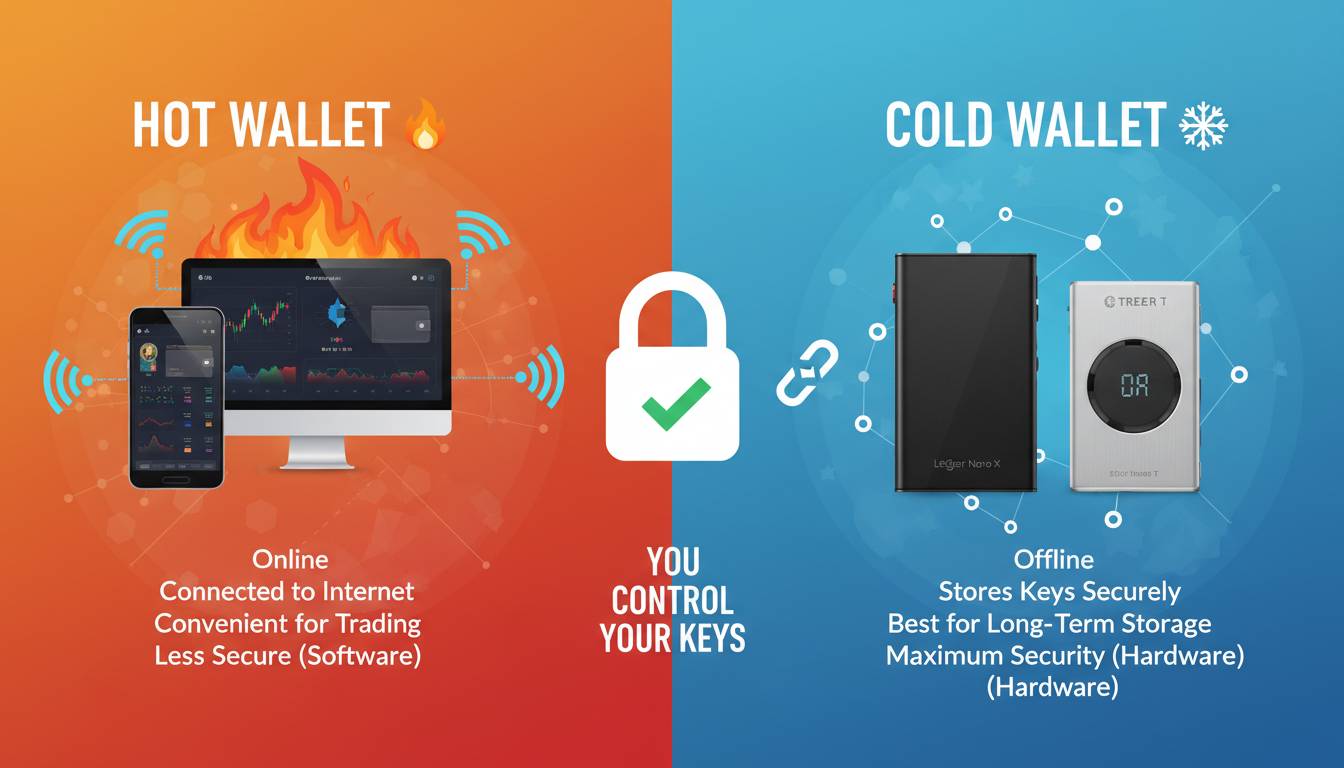
Hot wallets remain connected to the internet, offering maximum convenience for frequent trading and interaction with decentralized applications (dApps). The Phantom wallet dominates the browser extension market, while Solflare provides both mobile and extension options with strong security features.
| Wallet Type | Examples | Best For | Security Level |
|---|---|---|---|
| Browser Extension | Phantom, Solflare | Daily trading, dApps | Medium |
| Mobile App | Phantom, Exodus, Coin98 | On-the-go access | Medium |
| Web Wallet | Sollet (legacy) | Quick access | Lower |
Hot wallets excel for users who prioritize accessibility and seamless dApp integration. Phantom, for instance, integrates directly with Solana’s largest DeFi platforms, NFT marketplaces, and gaming ecosystems. However, internet connectivity exposes these wallets to phishing attacks, malware, and exchange hacks.
Hardware Wallets
Hardware wallets store your private keys offline in dedicated physical devices, providing the highest security standard for significant holdings. Ledger devices (Ledger Nano X, Ledger Nano S Plus) support Solana through the Ledger Live app, while Trezor Model T offers native Solana integration.
The security advantage is straightforward: even if your computer is compromised by malware, your private keys never leave the hardware device. Transactions get built on your computer, sent to the hardware wallet for signing, then broadcast—the signed transaction travels, but your keys do not.
Hardware wallets suit investors holding substantial SOL amounts, long-term holders who don’t need frequent access, and anyone prioritizing security over convenience. The trade-off involves slower transaction signing (requiring physical device confirmation) and the upfront cost of purchasing hardware ($79-$259 depending on model).
Paper Wallets
Paper wallets involve printing your private and public keys on paper, storing them completely offline. While theoretically secure against digital threats, paper wallets have largely fallen out of favor due to their fragility—physical damage, loss, or deterioration can permanently destroy access to funds.
Solana’s ecosystem no longer actively promotes paper wallets, and most users find hardware wallets provide superior security without the impracticality of paper storage. If you still consider this option, use reputable generators like sollet.io (with extreme caution given its legacy status) and store the paper in a secure physical location, such as a safe deposit box.
Custodial vs. Non-Custodial Wallets
Beyond technical implementation, wallets divide into custodial and non-custodial categories. Custodial wallets (like those offered by crypto exchanges such as Coinbase or Binance) hold your private keys on your behalf—similar to a traditional bank. This arrangement provides password recovery options and familiar user interfaces but introduces counterparty risk: if the exchange is hacked or goes bankrupt, your funds may be inaccessible.
Non-custodial wallets put you in complete control. No middleman holds your keys, and your funds can’t be frozen or seized by third parties. The responsibility, however, rests entirely on you: there’s no “forgot password” option when you lose your private key. For most Solana users seeking true ownership and ecosystem participation, non-custodial options represent the standard choice.
How to Choose the Right Solana Wallet
Selecting the appropriate wallet requires evaluating your specific needs, technical comfort level, and risk tolerance. Consider these factors systematically.
Asset Value and Threat Profile
The amount you hold directly impacts your security requirements. Holding $100 in SOL for testing requires different security than managing $50,000 in assets. As a general guideline, hardware wallets become worthwhile when holdings exceed amounts you’d feel uncomfortable carrying in cash.
Transaction Frequency and Use Cases
Daily traders and DeFi farmers benefit from hot wallet convenience—Phantom’s one-click dApp connections exemplify this workflow. Infrequent holders, especially those accumulating for long-term appreciation, should strongly consider hardware wallets despite the additional friction.
Technical Comfort
Wallet interfaces range from beginner-friendly (Exodus, Phantom) to developer-oriented (CLI wallets, Solflare Pro). Choose an interface matching your willingness to learn. Most users find Phantom or Solflare strike the ideal balance between functionality and accessibility.
Ecosystem Integration
Different wallets emphasize different features. Phantom excels at NFT integration and DeFi, making it popular among collectors and yield farmers. Solflare offers robust staking features within the wallet. Ledger provides maximum security with integrated staking through Ledger Live. Match your wallet to your primary activities.
Recovery Options
Hardware wallets typically offer seed phrase recovery—your 12 or 24-word phrase can restore access if the device is lost or damaged. Software wallets vary; ensure any wallet you choose provides clear backup procedures and verify you understand them before transferring significant funds.
Setting Up Your Solana Wallet: Step-by-Step
Proper wallet setup establishes your security foundation. Follow these steps whether choosing Phantom, Solflare, or another reputable wallet.
Step 1: Download from Official Sources
Only download wallets from official websites or app stores. Phantom’s official URL is phantom.app—bookmark it directly rather than searching. Fake wallet apps regularly appear in app stores, so verify developer names carefully: Phantom is developed by Phantom Technologies, Inc.
Step 2: Create Your Wallet
Open your downloaded app and select “Create New Wallet.” The wallet will generate a cryptographic seed phrase—typically 12 or 24 words. This seed phrase is your master key. Write it down on paper (never digitally), and store it securely. Anyone with this phrase can access your funds.
Step 3: Verify Your Seed Phrase
Most wallets prompt you to verify your seed phrase by selecting words in order. Complete this verification—it’s not optional testing. If you can’t verify your phrase now, you certainly won’t be able to when you need it later.
Step 4: Secure Your Device
Enable device-level security: biometric locks (fingerprint or face recognition), PIN codes, and auto-lock timers. These protections help if your device is lost or stolen.
Step 5: Fund Your Wallet
Never transfer your entire holdings at once. Send a small test amount first—perhaps $5-10 worth of SOL—verify receipt, then transfer larger amounts in stages. This practice protects against catastrophic errors like sending to the wrong address.
Security Best Practices for Solana Holders
The blockchain’s security model differs fundamentally from traditional finance. Understanding these differences prevents costly mistakes.
Never Share Your Private Key or Seed Phrase
No legitimate service ever needs your private key or seed phrase. Anyone asking for these—support representatives, tech support callers, website forms—is attempting theft. Delete such requests immediately.
Verify Transaction Addresses
Cryptocurrency transactions are irreversible. Before confirming any transfer, verify the recipient address matches your intended destination character-for-character. Malware can modify addresses in your clipboard, so always double-check before signing.
Use Hardware Wallets for Large Holdings
This cannot be stressed enough: hardware wallets provide meaningful security improvements for holdings exceeding a few hundred dollars. The $100-200 investment protects against the most common attack vectors.
Staking Security
Solana’s delegated proof-of-stake system lets holders earn approximately 6-8% annual yield by staking SOL. When staking, your funds remain in your wallet—validators never take custody. However, choose validators carefully; smaller or newly-launched validators may have higher uptime risk or smaller security deposits.
Phishing Awareness
Phishing attempts target crypto holders relentlessly. Common attacks include fake airdrop websites, impersonated support accounts on Twitter/X, and malicious browser extensions. Always verify URLs, double-check domain spellings, and never connect your wallet to unknown websites.
Common Mistakes to Avoid
Even experienced crypto users make these errors. Learning from others’ mistakes spares you the same consequences.
Mistake #1: Storing Seed Phrases Digitally
Saving your seed phrase in a notes app, email, or cloud storage creates a single point of failure. If your accounts are hacked, attackers gain everything. Write your seed phrase on paper and store it physically.
Mistake #2: Ignoring Network Fees During Congestion
While Solana’s fees are typically negligible, network congestion (rare but possible during major events) can increase transaction costs. Always review fees before confirming during unusual network activity.
Mistake #3: Not Backing Up Recovery Options
Hardware wallets can fail. Without a properly recorded seed phrase, device failure means permanent fund loss. Test your backup procedures before relying on them.
Mistake #4: Connecting to Every dApp
Every wallet connection is a potential security vector. Only connect to reputable, established applications. Revoke permissions for unused connections regularly—Phantom and Solflare both offer connection management features.
Tools and Resources for Solana Users
Beyond wallets, several tools enhance your Solana experience.
Block Explorers
Solscan and SolanaFM provide transaction histories, token analytics, and wallet balance verification. Always verify transactions through explorers rather than trusting wallet displays alone.
Portfolio Trackers
Coingecko and CoinMarketCap offer portfolio tracking, but dedicated Solana dashboards like Solscan provide network-specific insights including token holdings, transaction history, and staking metrics.
Staking Platforms
Solana’s native staking occurs through CLI, Phantom, Solflare, or Ledger Live. For maximum security with staking, hardware wallet signing through Ledger Live provides the best combination of key security and yield generation.
NFT Management
Phantom handles NFTs natively within its interface, displaying collections and enabling marketplace connections. Solflare offers similar functionality with additional analytics features.
The Future of Solana Wallets
Solana’s wallet ecosystem continues evolving rapidly. Key trends shaping future development include:
- Account abstraction will enable features like social recovery (trusted contacts who can help restore access), multi-signature permissions, and automated spending limits—making wallets more user-friendly without compromising security.
- Mobile-first wallets are expanding capabilities, with Phantom and others building native mobile experiences that rival desktop functionality.
- Cross-chain compatibility is improving, with bridges and multi-chain wallets reducing friction between Solana and other networks like Ethereum.
- Hardware wallet integration continues deepening, with Ledger and Trezor both investing in Solana-specific features.
These developments suggest Solana wallets will become increasingly sophisticated while maintaining the ease-of-use that’s driven adoption. Staying current with wallet updates ensures you benefit from security improvements and new features.
Frequently Asked Questions
What is the best Solana wallet for beginners?
Phantom and Solflare rank as the best beginner wallets. Both offer intuitive interfaces, robust security features, and seamless integration with Solana’s ecosystem including DeFi platforms and NFT marketplaces. Phantom particularly excels for users focused on NFTs and dApps, while Solflare offers slightly more advanced staking features.
Are Solana wallets safe?
Solana wallets are safe when used correctly. Non-custodial wallets give you complete control over your funds, eliminating exchange hacks as a risk. Security depends primarily on your practices: protecting seed phrases, avoiding phishing attacks, using hardware wallets for significant holdings, and only downloading wallets from official sources.
Can I store Bitcoin in a Solana wallet?
No, Solana wallets only store SOL and SPL tokens (tokens built on Solana). For Bitcoin, you need a Bitcoin-specific wallet. However, wrapped versions of Bitcoin (like BTC on Solana, often acquired through bridges) can be held in Solana wallets—but these are synthetic assets, not native Bitcoin.
How do I recover my Solana wallet if I lose my device?
Recovery uses your seed phrase. Download a new wallet app on your replacement device, select “Import Wallet,” and enter your 12 or 24-word seed phrase. Your funds and transaction history restore automatically from the blockchain—wallets don’t store data locally. This is why your seed phrase backup is critical.
What happens if I send tokens to the wrong address?
Cryptocurrency transactions are irreversible. If you send SOL or tokens to an incorrect address, those funds are lost permanently unless the address owner voluntarily returns them (highly unlikely for random addresses). Always verify addresses character-by-character before confirming any transaction.
Do I need SOL to use a Solana wallet?
Yes, you need a small amount of SOL to pay transaction fees on the Solana network. However, fees are extremely low—typically less than $0.001 per transaction. Even with minimal SOL, you can perform hundreds or thousands of transactions. When you first create a wallet, you’ll need a tiny amount of SOL to activate it for token transfers.