Best Cryptocurrency to Buy Now: Top Picks for Massive Gains

The cryptocurrency market continues to evolve at a rapid pace, with over $2.4 trillion in total market capitalization as of early 2025. For investors seeking exposure to digital assets, understanding which cryptocurrencies offer the most compelling fundamentals—rather than chasing short-term price movements—remains the key to sustainable portfolio growth. This guide examines the leading cryptocurrencies by market cap, their use cases, and the critical factors every investor should evaluate before making a purchase decision.
Key Insights
– Bitcoin dominates with over 52% of total crypto market capitalization
– Institutional adoption has grown 312% since 2023, per Fidelity’s 2024 report
– The global crypto user base exceeded 420 million by late 2024
– Regulatory clarity has improved in key markets including the US and EU
Understanding the Current Crypto Market Landscape
The cryptocurrency market in 2025 looks markedly different from the speculative frenzy of previous cycles. Institutional investors have entered the space through regulated products, and major corporations now hold Bitcoin as part of their treasury strategies. This maturation has brought increased liquidity and reduced volatility compared to earlier years, though significant price fluctuations remain characteristic of the asset class.
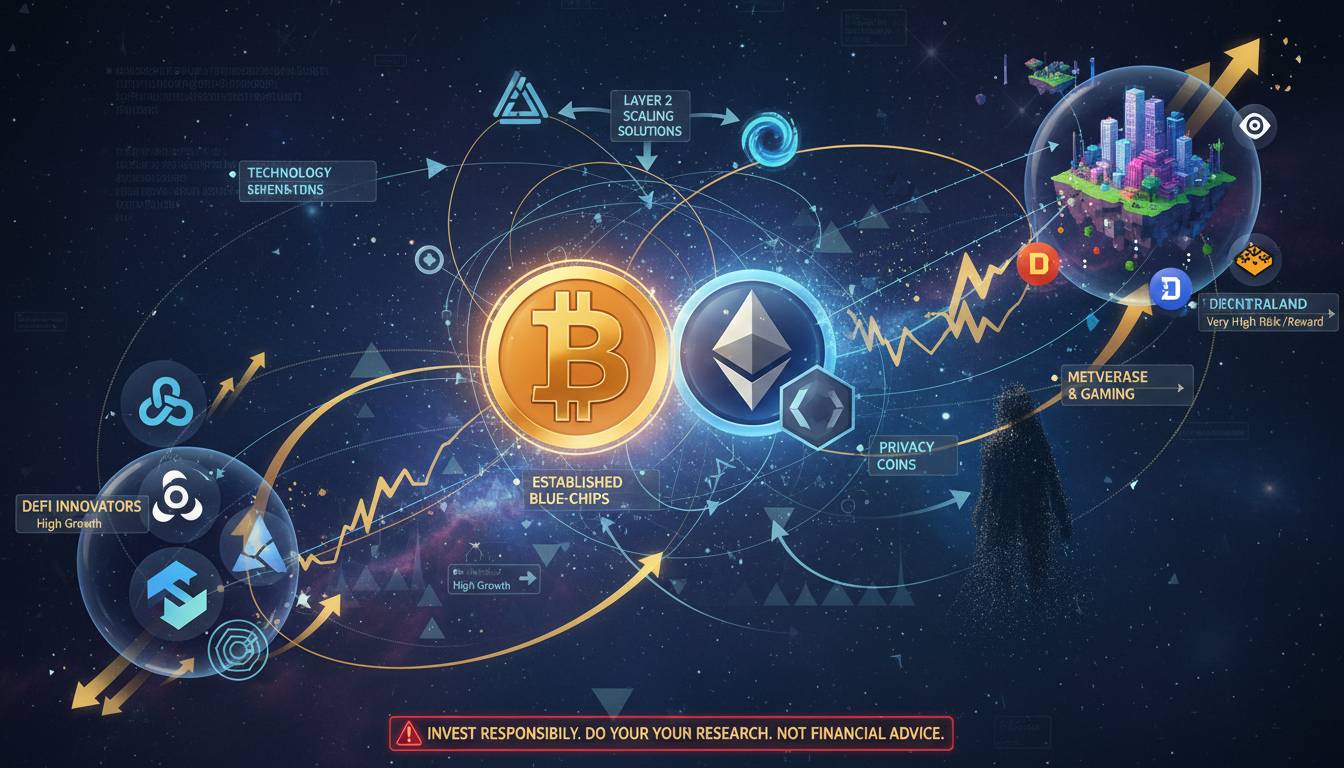
The market operates 24/7 across global exchanges, with approximately $100-150 billion in daily trading volume. Bitcoin and Ethereum continue to anchor most crypto portfolios, while layer-2 solutions, DeFi protocols, and emerging sectors like real-world asset tokenization have gained substantial traction. Understanding this broader context helps investors make informed decisions rather than reacting to short-term price movements.
Regulatory developments have also shaped the landscape. The US Securities and Exchange Commission approved spot Bitcoin ETFs in January 2024, marking a watershed moment for mainstream adoption. The European Union’s MiCA framework has provided regulatory clarity, while countries like Switzerland and Singapore continue to maintain crypto-friendly environments.
Critical Factors to Evaluate Before Buying Cryptocurrency
Before examining specific cryptocurrencies, investors should understand the evaluation framework that separates fundamentally strong projects from speculative bets. These factors apply regardless of which digital asset you’re considering.
Market Position and Network Effects
The largest cryptocurrencies by market capitalization generally offer the strongest network effects—the phenomenon where a platform becomes more valuable as more people use it. Bitcoin’s first-mover advantage has created the most robust decentralized monetary network, while Ethereum’s developer ecosystem remains the largest in the blockchain space. These network effects create barriers to entry for competitors and tend to reinforce existing market leadership.
Utility and Real-World Adoption
Cryptocurrencies with clear utility use cases tend to sustain value better than those relying solely on speculative demand. Bitcoin functions as a store of value and medium of exchange. Ethereum powers smart contracts and decentralized applications. Solana processes thousands of transactions per second for decentralized finance and NFT applications. Evaluating whether a cryptocurrency solves genuine problems helps separate investment opportunities from passing trends.
Development Activity and Team
The strength of a project’s development team and ongoing code contributions indicate long-term viability. Active GitHub repositories, regular protocol upgrades, and transparent communication from development teams signal sustainable projects. Conversely, abandoned or stagnant projects often precede price collapses.
Regulatory Environment
Cryptocurrencies facing regulatory uncertainty in major markets carry additional risk. Projects with clear regulatory compliance strategies and legal standing in jurisdictions like the US, EU, and Singapore typically present more favorable risk-reward profiles for institutional and retail investors alike.
Top Cryptocurrencies by Market Cap: Analysis and Use Cases
The following analysis examines the largest cryptocurrencies by market capitalization, providing context on their fundamentals, use cases, and investment considerations.
Bitcoin (BTC): The Digital Standard
| Attribute | Details |
|---|---|
| Market Cap | ~$1.3 trillion |
| 24h Trading Volume | ~$45 billion |
| Circulating Supply | ~19.6 million BTC |
| All-Time High | ~$108,000 |
Bitcoin remains the dominant cryptocurrency by every metric—market cap, trading volume, and institutional adoption. Often called “digital gold,” Bitcoin functions as a hedge against inflation and a store of value asset. The network’s security through proof-of-work mining and its fixed supply of 21 million coins create scarcity mechanics that appeals to long-term holders.
The approval of spot Bitcoin ETFs in the US has dramatically expanded institutional access to the asset. Major financial institutions including BlackRock, Fidelity, and Vanguard now offer Bitcoin exposure to retail and institutional clients through regulated products. This structural shift has brought billions of dollars in new capital to the market and reduced the premium previously associated with direct Bitcoin ownership.
Considerations: Bitcoin’s energy consumption remains controversial despite increasing renewable energy usage in mining operations. Transaction speeds and fees can be high during network congestion, though the Lightning Network layer-2 solution addresses scalability for everyday payments.
Ethereum (ETH): The Smart Contract Platform
| Attribute | Details |
|---|---|
| Market Cap | ~$350 billion |
| 24h Trading Volume | ~$18 billion |
| Circulating Supply | ~120 million ETH |
Ethereum pioneered smart contract functionality, enabling developers to build decentralized applications, DeFi protocols, and NFT marketplaces on its blockchain. The transition to proof-of-stake consensus (The Merge) reduced Ethereum’s energy consumption by approximately 99.95%, addressing earlier environmental criticisms.
The Ethereum ecosystem hosts the majority of DeFi applications, including lending protocols, decentralized exchanges, and stablecoins. Enterprise adoption has grown substantially, with major companies including Walmart, Samsung, and various financial institutions experimenting with Ethereum-based solutions.
Considerations: Gas fees (transaction costs) can spike during high network activity, making micro-transactions impractical. Competition from alternative layer-1 blockchains like Solana and Avalanche has intensified, though Ethereum’s developer community remains the largest in the industry.
Solana (SOL): High-Performance Blockchain
| Attribute | Details |
|---|---|
| Market Cap | ~$65 billion |
| 24h Trading Volume | ~$3 billion |
| Transaction Speed | Up to 65,000 TPS |
Solana has emerged as a leading alternative to Ethereum, offering significantly faster transaction speeds and lower fees. The blockchain processes thousands of transactions per second, making it attractive for high-frequency applications including DeFi, gaming, and payment solutions.
The ecosystem has experienced substantial growth, with major projects including Serum, Raydium, and Magic Eden building on Solana. Mobile payments integration and consumer-facing applications have driven retail adoption, particularly in regions where traditional banking infrastructure is less developed.
Considerations: Solana has experienced multiple network outages historically, raising questions about its reliability. The concentration of validator power has also drawn scrutiny from decentralization advocates.
Binance Coin (BNB): Exchange Utility Token
| Attribute | Details |
|---|---|
| Market Cap | ~$85 billion |
| Primary Use | Trading fee discounts on Binance |
| Burn Mechanism | Quarterly BNB burn reduces supply |
Binance Coin derives its value from being the native token of the world’s largest cryptocurrency exchange by trading volume. Holders receive trading fee discounts, access to token sales, and can use BNB for transaction fees on BNB Chain. The quarterly burn mechanism—where Binance destroys a portion of its BNB holdings—creates artificial scarcity.
BNB Chain has developed into a significant blockchain ecosystem, hosting numerous DeFi projects and decentralized applications. The dual-chain architecture (BNB Beacon Chain and BNB Smart Chain) provides flexibility for different use cases.
Considerations: Regulatory scrutiny of Binance globally has created uncertainty. The token’s value remains closely tied to exchange performance, creating concentration risk.
Risk Considerations and Investment Strategy
Cryptocurrency investments carry substantial risks that investors must carefully consider. The market’s high volatility means prices can fluctuate 20-30% within single trading days. Past performance does not guarantee future results, and many cryptocurrencies ultimately fail entirely—estimates suggest over 90% of cryptocurrencies launched before 2020 no longer trade.
Diversification Principles
No single cryptocurrency should represent more than 5-10% of a diversified investment portfolio, regardless of conviction. The high correlation among crypto assets means diversification within the sector provides limited protection, but combining crypto positions with traditional assets reduces overall portfolio volatility.
Dollar-Cost Averaging
Rather than timing market entry, systematic investment through dollar-cost averaging—investing fixed amounts at regular intervals—reduces the impact of volatility. This approach removes emotional decision-making and ensures consistent exposure regardless of price movements.
Security Best Practices
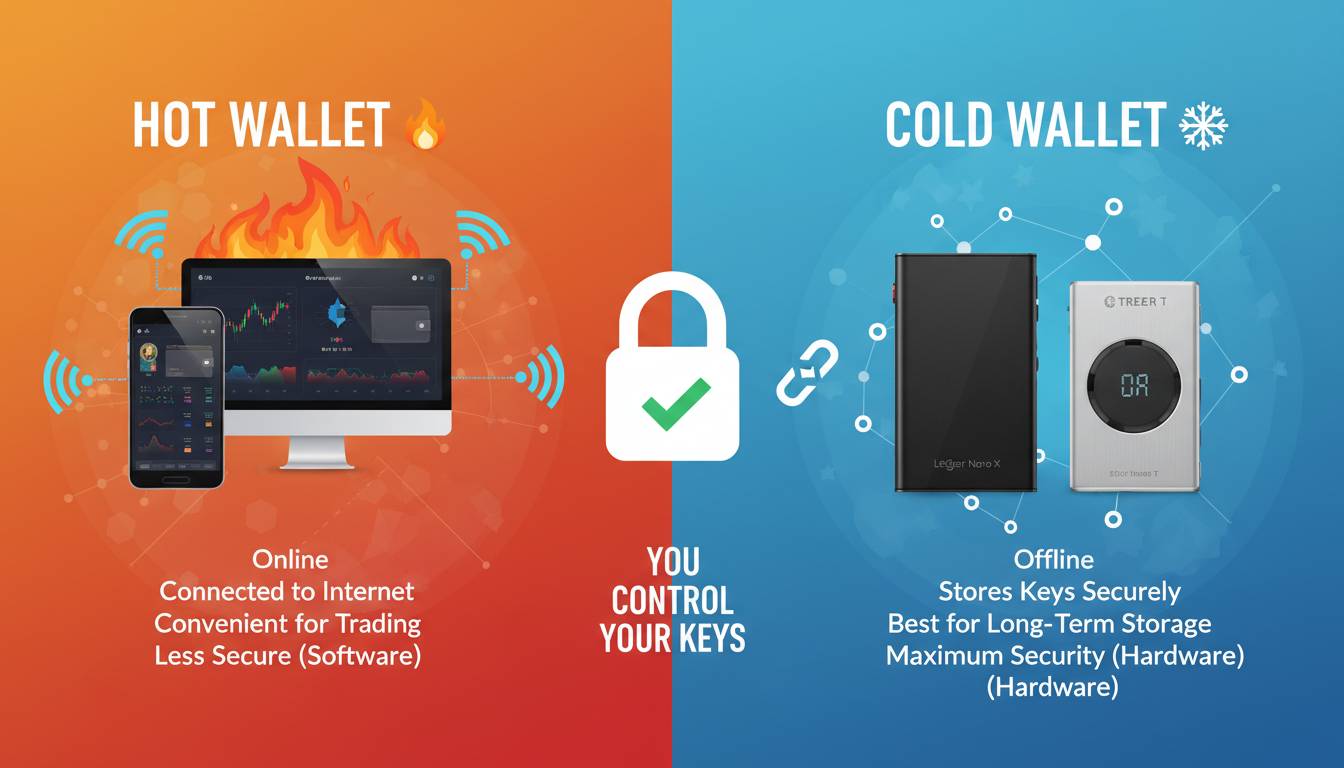
Cryptocurrency ownership requires self-custody responsibility. Hardware wallets provide the strongest security for significant holdings. Two-factor authentication on exchanges, unique passwords, and phishing awareness protect against common attack vectors. Never share private keys or seed phrases with anyone.
The Future Outlook: Trends Shaping the Market
Several emerging trends will likely influence cryptocurrency markets in coming years.
Real-World Asset Tokenization represents a significant growth area, with traditional financial institutions exploring blockchain-based representations of real estate, securities, and commodities. BlackRock and other major firms have announced tokenization initiatives, potentially bringing trillions in traditional assets on-chain.
Central Bank Digital Currencies (CBDCs) continue development globally, with over 130 countries exploring or piloting digital currencies. While distinct from decentralized cryptocurrencies, CBDC development may increase familiarity with digital asset technology.
Interoperability between different blockchain networks is improving, allowing assets and data to flow across platforms. Cross-chain bridges and communication protocols are reducing the fragmentation that has historically divided the crypto ecosystem.
Frequently Asked Questions
Is cryptocurrency a good investment for beginners?
Cryptocurrency can be part of a diversified portfolio, but beginners should start with established assets like Bitcoin and Ethereum, invest only what they can afford to lose, and understand the fundamental technology before allocating significant capital. The high volatility requires higher risk tolerance than traditional investments.
How much should I invest in cryptocurrency?
Financial advisors generally recommend allocating 1-5% of a diversified portfolio to cryptocurrencies, depending on individual risk tolerance and investment timeline. Never invest money needed for near-term expenses or essential financial goals.
Are cryptocurrencies regulated in the United States?
The US regulatory landscape remains complex. The SEC regulates securities offerings, the CFTC has authority over derivatives, and FinCEN oversees money transmission. Spot Bitcoin and Ethereum ETFs trade on regulated exchanges, but many other tokens face regulatory uncertainty.
Which cryptocurrency has the highest potential for growth?
No cryptocurrency can be guaranteed to grow, and those with highest potential returns typically carry the highest risk. Smaller market cap cryptocurrencies may offer larger percentage gains but also face higher failure rates. Research thoroughly and consider consulting a qualified financial advisor.
How do I safely buy cryptocurrency?
Use reputable, regulated exchanges with strong security track records. Enable two-factor authentication, use hardware wallets for significant holdings, and verify website URLs carefully to avoid phishing attacks. Start with small amounts to understand the process before larger investments.
What is the difference between Bitcoin and Ethereum?
Bitcoin functions primarily as a store of value and digital currency, while Ethereum is a platform for building decentralized applications and smart contracts. Bitcoin has a fixed supply and uses proof-of-work (with ongoing upgrades), while Ethereum’s supply is more flexible and supports programmable functionality.
Conclusion
The cryptocurrency market offers genuine investment opportunities alongside substantial risks. Bitcoin and Ethereum remain the foundational assets for crypto exposure, offering the strongest network effects, institutional adoption, and regulatory clarity. Smaller cryptocurrencies may offer higher growth potential but require deeper research and higher risk tolerance.
Successful cryptocurrency investing requires patience, disciplined risk management, and realistic expectations. The market’s 24/7 nature and volatility can trigger emotional decisions—dollar-cost averaging and diversified allocation help mitigate these challenges. Before investing, ensure you understand the technology, the specific project’s utility, and your own financial situation. Cryptocurrency represents an emerging asset class with transformative potential, but approached responsibly as part of a diversified investment strategy.