Tech News Trends: The Innovations Defining Our Future

The technology landscape is experiencing unprecedented transformation in 2024-2025, with artificial intelligence, quantum computing, and sustainable tech leading a revolution that will reshape every industry. Global spending on digital transformation is projected to reach $3.9 trillion by 2027, according to IDC research, marking a fundamental shift in how businesses operate and compete. These aren’t incremental improvements—they represent paradigm shifts that are redefining the boundaries of what’s possible.
Key Insights
– AI investment is projected to grow 30% annually through 2027, reaching $500 billion globally
– Quantum computing market will expand from $1.1 billion in 2024 to $8.6 billion by 2030
– Edge computing is expected to handle 75% of enterprise data processing by 2025
– Sustainable tech investments have doubled since 2020, with $2 trillion flowing into green technology
Understanding these trends isn’t optional for business leaders, technologists, and informed citizens—it’s essential for navigating the coming decade.
Artificial Intelligence and Machine Learning: The New Operating System
Artificial intelligence has transitioned from experimental technology to operational necessity in just 18 months. The release of generative AI systems in 2023 fundamentally altered the technology adoption curve, with enterprise AI deployment increasing 55% between 2023 and 2024, according to McKinsey’s latest Global Survey.
AI Investment Landscape
| Sector | 2024 AI Spending | 2025 Projected | Growth Rate |
|---|---|---|---|
| Enterprise Software | $48 billion | $62 billion | 29% |
| Financial Services | $35 billion | $45 billion | 28% |
| Healthcare | $28 billion | $38 billion | 35% |
| Manufacturing | $22 billion | $30 billion | 36% |
The distinction between narrow AI and emerging general-purpose systems is blurring. Large language models now power everything from customer service to code generation, while multimodal AI systems process text, images, audio, and video simultaneously. This convergence enables applications that seemed impossible two years ago.
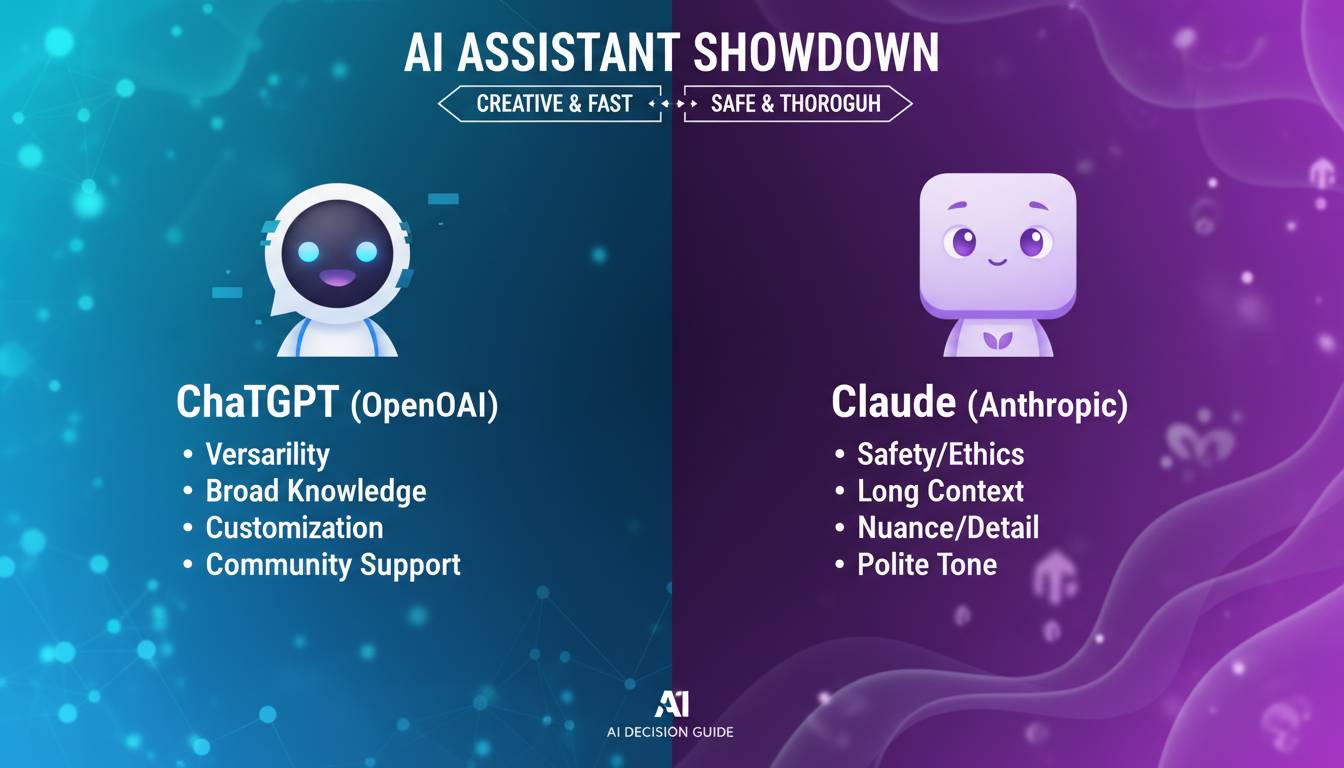
OpenAI, Anthropic, and Google DeepMind are racing toward more capable systems, while enterprise adoption focuses on practical deployment. Microsoft has integrated AI across its productivity suite, reaching 75 million paid Copilot users by early 2025. Salesforce’s Agentforce platform enables autonomous business processes, and Amazon’s AWS now offers over 100 AI-powered services.
The competitive landscape is shifting from model training to inference optimization. Companies that can deploy AI efficiently at scale—reducing computational costs while maintaining accuracy—are gaining market advantage. This “inference war” represents the next frontier where AI value will be captured.
Key Challenge: AI governance and regulation remain fragmented across jurisdictions. The EU’s AI Act, China’s AI regulations, and the US Executive Order on AI create compliance complexity for global enterprises. Organizations must balance innovation velocity against regulatory risk, with 67% of tech executives citing regulatory uncertainty as their primary AI concern, per Gartner research.
Quantum Computing: From Laboratory to Business Application
Quantum computing has crossed the threshold from theoretical promise to practical application. IBM’s recent announcement of systems exceeding 1,000 qubits, combined with error-correction breakthroughs, signals that quantum advantage—the point where quantum computers outperform classical ones for real business problems—is approaching faster than anticipated.
Quantum Market Trajectory
| Year | Global Market Size | Enterprise Adoption Rate |
|---|---|---|
| 2024 | $1.1 billion | 5% of Fortune 500 |
| 2025 | $1.8 billion | 12% of Fortune 500 |
| 2027 | $4.5 billion | 28% of Fortune 500 |
| 2030 | $8.6 billion | 55% of Fortune 500 |
Financial services lead early quantum adoption. JPMorgan Chase has partnered with Quantinuum to explore portfolio optimization and risk analysis. Goldman Sachs continues quantum algorithm research for derivatives pricing. Pharmaceutical companies including Merck and Biogen are investing heavily in quantum-powered molecular simulation, potentially accelerating drug discovery timelines by years.
The technology’s impact extends beyond specific industries. Quantum cryptography will eventually render current encryption methods obsolete, creating urgent need for post-quantum security preparation. The US National Institute of Standards and Technology (NIST) has finalized post-quantum cryptographic standards, with major technology vendors beginning implementation.
What Quantum Can and Cannot Do: Current quantum systems excel at optimization problems, molecular simulation, and certain machine learning tasks. They will not replace classical computers for general computing. The most valuable near-term applications involve hybrid approaches—quantum computers handling specific computational bottlenecks within larger classical workflows.
Industry Perspective: “We’re seeing customer interest shift from curiosity to concrete pilot programs,” noted Dario Gil, IBM’s Senior Vice President and Director of Research. “The question is no longer whether quantum computing matters, but how quickly organizations can prepare their data and algorithms for quantum advantage.”
Sustainable Technology: Innovation Meets Urgency
Climate technology investment has evolved from corporate social responsibility to strategic imperative. The intersection of AI’s energy demands and global decarbonization commitments has created unprecedented focus on sustainable computing, green data centers, and renewable energy infrastructure.
Green Tech Investment Trends
- Global clean energy investment reached $2.1 trillion in 2024, exceeding fossil fuel spending for the first time
- Data center operators committed $50 billion to renewable energy procurement through power purchase agreements
- AI infrastructure companies invested $12 billion in next-generation cooling technologies
Major technology companies have announced ambitious sustainability timelines. Google committed to running on 100% carbon-free energy by 2030. Microsoft has become carbon negative, removing more emissions than it produces. Amazon’s Climate Pledge Fund has invested $2 billion in decarbonization technologies.
The energy consumption challenge is acute. Training large AI models requires significant electricity—a single model training can consume as much electricity as 100 US homes use in a year. Inference (running trained models) consumes more energy over time as AI systems process billions of requests daily.
Innovations Driving Sustainability:
- Liquid cooling systems are replacing air cooling for high-density AI hardware, reducing energy consumption by 40%
- Nuclear power is experiencing a renaissance, with Microsoft and Amazon signing agreements with nuclear energy providers
- Hardware efficiency improvements have reduced AI training energy requirements by 65% since 2020, even as model capability increases
- Carbon-aware computing schedules workloads to align with renewable energy availability
The sustainable technology sector is generating substantial venture capital activity. Climate tech startups raised $71 billion in 2024, with particular focus on carbon capture, green hydrogen, and battery storage technologies.
Cybersecurity Evolution: Zero Trust and AI Defense
Cybersecurity spending continues its upward trajectory, driven by escalating threat sophistication and regulatory pressure. Global cybersecurity expenditure is projected to exceed $300 billion by 2025, with AI-powered threats and ransomware driving budget increases across enterprises.
Threat Landscape Overview
| Threat Category | 2024 Incidents | Year-over-Year Growth | Average Cost |
|---|---|---|---|
| Ransomware | 4,200+ major attacks | 73% | $4.5 million |
| AI-Powered Phishing | 2.5 million attempts | 300% | $4.9 million |
| Supply Chain | 180,000 vulnerabilities | 45% | $4.8 million |
| Cloud Misconfigurations | 30,000 incidents | 25% | $3.2 million |
The zero trust security model has become the dominant paradigm. Rather than trusting users or devices within corporate networks, zero trust requires continuous verification for every access request. Federal agencies have mandated zero trust implementation, and commercial adoption is accelerating.
AI is transforming both attack and defense capabilities. Attackers use AI to generate convincing phishing campaigns, create deepfakes for social engineering, and automate vulnerability discovery. Defenders deploy AI for threat detection, incident response automation, and predictive analytics.
Key Technologies:
- Extended Detection and Response (XDR) platforms integrate security data across endpoints, networks, and cloud environments
- Security Orchestration, Automation, and Response (SOAR) reduces incident response times by 70%
- Confidential computing protects data during processing, addressing a critical gap in traditional encryption
Expert Insight: “The security landscape has fundamentally changed,” stated General (Ret.) Keith Alexander, former Director of NSA and founder of IronNet. “We’re no longer protecting perimeters—we’re assuming compromise and minimizing blast radius. AI both enables and threatens this reality, making human-machine collaboration essential.”
Extended Reality and Spatial Computing
Spatial computing has emerged as the next major computing platform following smartphones. Apple’s Vision Pro, Meta’s Quest line, and new entrants are creating an ecosystem for work, entertainment, and social interaction in mixed reality environments.
Spatial Computing Market
The combined AR/VR market is projected to reach $52 billion by 2027, with enterprise applications growing faster than consumer use cases. Manufacturing companies use AR for assembly instructions and quality control. Healthcare providers are adopting VR for surgical training and patient therapy. Retailers implement AR for virtual try-ons and store navigation.
The workplace transformation is significant. Virtual collaboration tools now support immersive meetings where participants feel physically present despite geographic distribution. Training simulations reduce costs and improve retention compared to traditional methods. Remote assistance applications allow experts to guide field workers through complex repairs using AR overlays.
Challenges Remaining:
- Hardware weight and comfort improvements are needed for extended wear
- Content creation remains expensive and time-consuming
- Interoperability between platforms is limited
- Privacy concerns around eye tracking and biometric data collection persist
Edge Computing and the Internet of Things
The proliferation of connected devices is generating data volumes that traditional cloud architectures cannot efficiently handle. Edge computing—processing data closer to where it’s generated—is becoming essential for real-time applications.
IoT and Edge Growth Metrics
| Category | Connected Devices (2024) | Projected (2027) |
|---|---|---|
| Consumer IoT | 15 billion | 23 billion |
| Industrial IoT | 14 billion | 25 billion |
| Edge Computing Nodes | 5 million | 15 million |
Self-driving vehicles exemplify edge computing necessity. The latency between capturing sensor data and receiving cloud processing results is measured in seconds—far too slow for safety-critical decisions. Edge processors analyze data locally, enabling millisecond response times.
Smart cities deploy edge computing for traffic management, public safety, and utility optimization. Manufacturing facilities use edge analytics for real-time quality control and predictive maintenance. Retail environments process customer behavior data on-site to enable instant personalization.
The convergence of 5G networks and edge computing enables new applications previously impossible due to latency or bandwidth constraints. Private 5G networks for enterprise are expanding rapidly, with manufacturing, logistics, and healthcare leading adoption.
Biotechnology and Health Technology
The intersection of artificial intelligence and biology is accelerating medical innovation. AI drug discovery platforms are reducing pharmaceutical development timelines, while wearable devices are transforming preventive healthcare.
Health Tech Investment Areas
- AI drug discovery: $15 billion in 2024, projected to reach $50 billion by 2028
- Digital therapeutics: $8 billion market, growing 25% annually
- Wearable health devices: 500 million units shipped annually
The success of AI in drug discovery is becoming measurable. Insilico Medicine used AI to identify a novel drug candidate in 18 months—a fraction of traditional timelines. Clinical trials for AI-designed drugs are now underway for treatments targeting cancer, fibrosis, and other conditions.
Gene editing technologies continue advancing. CRISPR applications have expanded beyond initial demonstrations to therapeutic trials for sickle cell disease, beta-thalassemia, and hereditary blindness. Base editing and prime editing offer even more precise genetic modifications.
Regulatory Evolution: The FDA has approved over 500 AI-enabled medical devices, with approval timelines accelerating. The agency is developing frameworks for AI/ML-enabled software as a medical device, recognizing both the technology’s potential and the need for appropriate oversight.
Frequently Asked Questions
What technology trends should businesses prioritize in 2025?
Businesses should prioritize artificial intelligence operationalization—moving from pilot programs to production deployment. Focus on areas with clear ROI: customer service automation, predictive analytics, and process optimization. Simultaneously, invest in cybersecurity infrastructure and sustainable technology to address regulatory and stakeholder pressures.
How will AI change the job market in the next five years?
AI will automate routine cognitive tasks while creating demand for roles involving creativity, complex problem-solving, and human interaction. The World Economic Forum projects 97 million new AI-related roles emerging by 2025, while some routine positions will be displaced. Adaptability and continuous learning will be essential career skills.
Is quantum computing relevant for small and medium businesses?
Not yet for most SMBs. Quantum computing remains expensive and requires specialized expertise. However, SMBs should monitor developments in quantum-safe cryptography, as encryption standards will eventually shift. Cloud-based quantum services from IBM, AWS, and Google offer pay-per-use access for experimentation.
What are the biggest cybersecurity threats facing organizations?
Ransomware remains the top threat, with attacks becoming more sophisticated and destructive. AI-powered social engineering, including voice cloning and deepfake video, is increasingly common. Supply chain vulnerabilities and cloud misconfigurations represent significant exposure. Organizations should prioritize zero trust architecture and employee training.
How is sustainable technology affecting IT budgets?
Sustainability is becoming a budget line item rather than a peripheral concern. Organizations are allocating 10-15% of IT infrastructure spending to energy efficiency, renewable energy, and sustainable hardware lifecycle management. This includes data center efficiency improvements, hardware refresh strategies, and carbon accounting tools.
When will spatial computing become mainstream?
Enterprise spatial computing is mainstream in specific use cases—manufacturing, healthcare, and design. Consumer mainstream adoption likely requires 3-5 more years for hardware improvements, content ecosystem development, and price reduction. The transition will be gradual, with mixed reality features becoming standard in smartphones before dedicated headsets achieve mass adoption.
Conclusion: Navigating the Technology Transformation
The technology trends defining this era share common characteristics: they compound upon each other, they operate at global scale, and they create both opportunity and disruption. Organizations that understand these interconnections—how AI enables sustainability, how edge computing empowers IoT, how quantum will reshape security—will navigate the transition successfully.
The imperative is action, not observation. Technology adoption timelines have compressed dramatically; advantages compound quickly. Leaders must balance immediate competitive pressure against long-term structural changes. This requires both strategic vision and operational agility.
The innovations transforming technology today aren’t just news—they’re the foundation for how business, society, and daily life will function for decades to come. Understanding these trends isn’t optional. It’s the price of participation in an increasingly digital world.
The future isn’t something that happens to us. It’s something we build, one technology decision at a time.