Digital Marketing Trends: What Top Brands Do Differently

The digital marketing landscape has undergone a fundamental transformation in recent years. What worked yesterday—mass advertising, broad targeting, third-party cookies—has become obsolete today. Top brands aren’t just adapting to change; they’re driving it. Understanding what separates market leaders from the competition reveals a clear pattern: successful brands approach digital marketing with strategic intentionality that most organizations simply don’t replicate.
This analysis examines the dominant trends shaping digital marketing in 2024 and beyond, focusing specifically on what distinguishes high-performing brands from the rest. The evidence points to five critical differentiators that top brands consistently execute at levels most companies fail to match.
The AI Revolution in Marketing Operations
Artificial intelligence has moved from experimental curiosity to operational necessity. According to McKinsey’s 2024 Global Marketing Trends report, companies that fully integrate AI into their marketing operations report 15-20% improvements in marketing efficiency alongside measurable gains in customer engagement metrics.
Top brands approach AI differently than most organizations. Rather than implementing AI as a standalone tool, leading companies embed artificial intelligence across their entire marketing stack—from content creation and personalization to predictive analytics and automated customer service. This integration creates compounding returns that isolated implementations cannot achieve.
What top brands do differently:
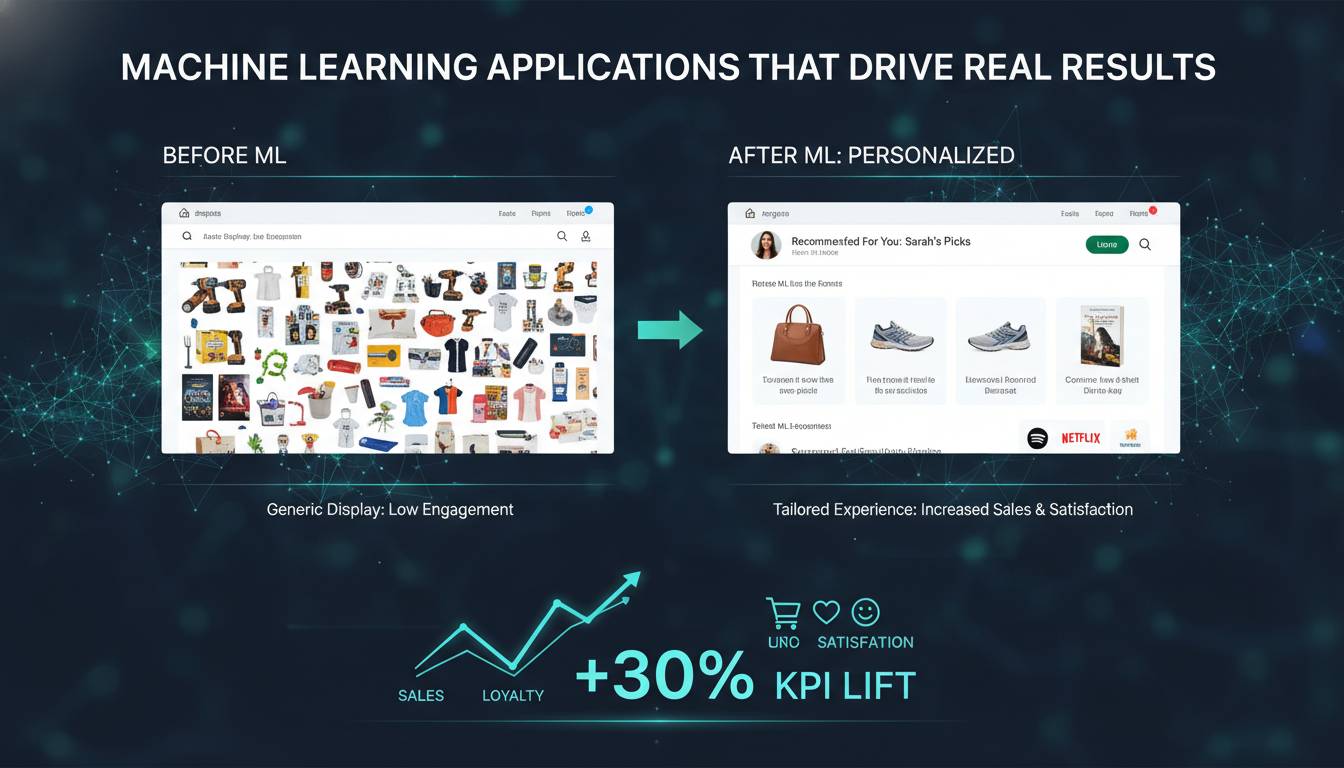
- Predictive personalization: Rather than reacting to customer behavior, leading brands use AI to anticipate needs before customers recognize them themselves. Amazon’s recommendation engine, which drives approximately 35% of the company’s revenue, represents the mature endpoint of this approach.
- Content generation at scale: Gartner research indicates that by 2025, 30% of outbound marketing messages from large organizations will be synthetically generated. Top brands are already there, using AI to draft initial content versions that human marketers then refine.
- Dynamic pricing and offers: Companies like Netflix and Uber have demonstrated how AI-driven pricing maximizes revenue across different customer segments. This approach is now spreading to retail and B2B contexts.
Most organizations still treat AI as an add-on to existing processes. The strategic difference lies in treating AI as foundational infrastructure—a distinction that compounds over time as these brands build proprietary data advantages that competitors cannot easily replicate.
First-Party Data Strategies: The Post-Cookie Reality
The deprecation of third-party cookies has forced a fundamental restructuring of how brands collect, store, and activate customer data. Google delayed the full phase-out multiple times, but the direction remains clear: third-party tracking is ending. The brands thriving in this environment have built robust first-party data strategies that most organizations are still struggling to implement.
HubSpot’s 2024 Marketing Industry Trends report found that 71% of high-performing marketing teams consider first-party data collection a top priority, compared to only 34% of underperforming teams. This gap explains much of the performance differential in contemporary digital marketing.
What top brands do differently:
| Strategy | Top Performers | Average Companies |
|---|---|---|
| Email capture rate | 15-25% of website visitors | 2-5% |
| Customer data platform adoption | 67% | 23% |
| Consent rate for tracking | 75%+ | 40-50% |
| Data unification across channels | Integrated | Siloed |
The most successful brands have transformed privacy compliance from a constraint into a competitive advantage. When customers willingly share data because they perceive clear value in return, these brands gain insights that cookie-dependent competitors simply cannot access. Sephora’s Beauty Insider program exemplifies this approach—the loyalty program generates over $2 billion annually while providing rich first-party data that drives personalized marketing across every touchpoint.
Average companies treat first-party data collection as a technical challenge. Top brands understand it’s a value exchange that requires delivering genuine customer value in return for data sharing.
Video-First Content Strategies
Video dominates digital consumption, but most brands still treat video as one content type among many. Top brands have recognized that video—particularly short-form video—has become the primary discovery mechanism for younger demographics and is rapidly expanding across all age groups.
The numbers support this shift. According to eMarketer’s 2024 video marketing forecasts, U.S. adults now spend over 90 minutes daily with digital video content. More significantly, TikTok and Instagram Reels have fundamentally changed how consumers discover brands—search is being supplemented, and in some cases replaced, by algorithmic video discovery.
What top brands do differently:
- Platform-native content: Instead of repurposing long-form content for short-form platforms, leading brands create distinct content optimized for each platform’s specific format and algorithm. This requires significantly more production volume but generates dramatically better engagement.
- Creator partnerships: High-performing brands have moved beyond one-off influencer sponsorships to sustained creator relationships that integrate products authentically into creator content. This approach generates higher engagement and feels less like advertising to audiences fatigued by traditional promotional content.
- Video-first SEO: Top brands now optimize video content for search discovery, treating video thumbnails, titles, and descriptions with the same strategic care they previously reserved for blog posts and landing pages.
The production volume required for effective short-form video creates a significant barrier that many organizations cannot overcome. Brands that have invested in content engines—systems that can produce high volumes of quality video consistently—enjoy compounding advantages as they build libraries of searchable, discoverable video content.
Omnichannel Integration Versus Multichannel Presence
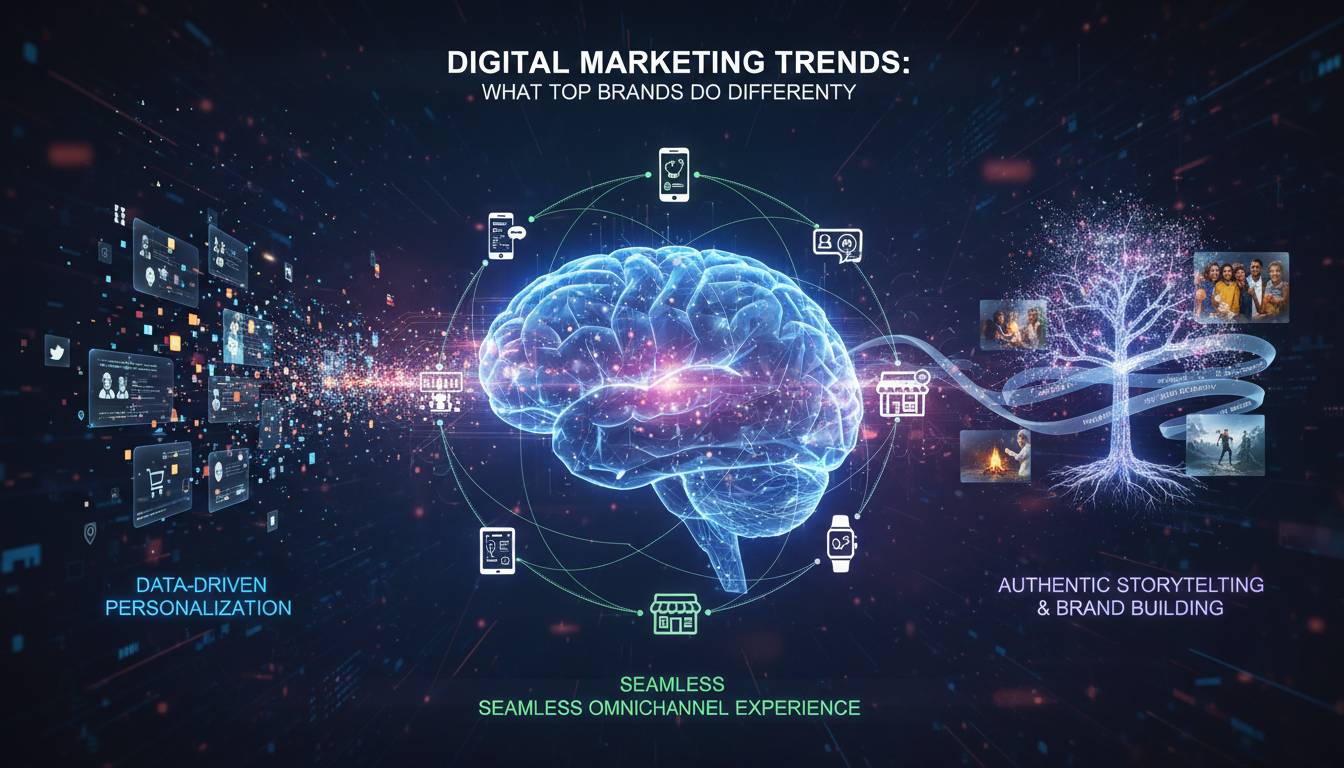
A critical distinction separates high-performing brands from the majority: integration versus presence. Most organizations maintain presence across multiple channels—email, social media, search, display, mobile apps—but treat each channel as an independent operation. Top brands achieve true integration, creating seamless customer experiences that adapt fluidly across touchpoints.
Gartner’s research on customer experience indicates that organizations with highly integrated omnichannel strategies achieve 91% higher year-over-year customer retention rates compared to those with fragmented channel strategies. This integration requires substantial investment in technology infrastructure and organizational alignment, but the performance differential justifies the cost.
What top brands do differently:
- Unified customer profiles: Rather than maintaining separate customer records for each channel, leading brands build unified customer identities that persist across every touchpoint. This requires sophisticated identity resolution technology but enables genuinely personalized experiences.
- Coordinated messaging: When a customer researches a product on mobile, then visits a desktop site, then receives an email—the messaging across these touchpoints reflects their complete journey rather than treating each interaction in isolation.
- Real-time personalization: Integrated data infrastructure enables top brands to personalize content in real-time based on behavior across all channels, not just the current session.
The technology investment required for true omnichannel integration is substantial, but leading brands understand that customers don’t experience channels—they experience brands. Every touchpoint represents either an opportunity to strengthen the relationship or a moment where fragmentation creates friction that drives customers toward competitors.
Authenticity and Values-Based Marketing
Consumers increasingly make purchasing decisions based on brand values, and this pattern is accelerating among younger demographics. Deloitte’s 2024 Consumer Products Outlook found that 73% of Gen Z consumers consider brand values alignment important when making purchase decisions, and nearly half have stopped buying from brands that disappointed them on social or environmental issues.
This isn’t a new phenomenon, but top brands have become significantly more sophisticated in how they communicate values. The era of superficial “we care” messaging has ended. Modern consumers demand demonstrated commitment, not claimed commitment.
What top brands do differently:
- Authentic purpose integration: Rather than launching separate corporate social responsibility initiatives, leading brands integrate values into core business operations. Patagonia’s environmental activism isn’t separate from its business—it’s fundamental to product design, supply chain decisions, and customer communication.
- Transparent communication: High-performing brands acknowledge challenges and limitations rather than projecting impossible perfection. This transparency builds trust that polished messaging cannot achieve.
- Stakeholder engagement: Top brands involve customers and employees in values-driven initiatives, creating communities around shared purposes rather than broadcasting one-directional messages.
The risk in values-based marketing is significant—consumers quickly identify hypocrisy, and brands that overclaim values commitments face severe reputational consequences. This creates a natural selection dynamic where only brands with genuine commitments can compete in this space, while those with superficial approaches actually suffer compared to more understated competitors.
Implementation Framework: From Trend Awareness to Competitive Advantage
Understanding these trends provides strategic awareness, but implementation determines competitive outcomes. The brands achieving superior results share common implementation characteristics that organizations can systematically replicate.
Phase 1: Foundation Building
Before adopting advanced tactics, successful brands ensure foundational elements are solid: clean customer data infrastructure, functional analytics attribution, content production capabilities, and baseline testing processes. Many organizations attempt sophisticated strategies while these fundamentals remain broken, ensuring poor results regardless of trend adoption.
Phase 2: Strategic Prioritization
Not every trend deserves equal investment. Top brands prioritize based on three factors: alignment with customer behavior changes, competitive urgency, and organizational capability requirements. The highest-performing organizations typically focus on two or three major initiatives simultaneously rather than attempting comprehensive transformation.
Phase 3: Integration Over Addition
Each new capability must connect to existing systems rather than creating additional operational silos. Before launching a new channel or tactic, leading brands require clear integration architecture that enables unified customer experiences.
Phase 4: Continuous Optimization
The digital marketing landscape evolves continuously. Top brands maintain optimization as an ongoing operational function rather than periodic project work. This requires dedicated resources and clear ownership, typically reporting directly to marketing leadership.
Frequently Asked Questions
How quickly should my brand adopt new digital marketing trends?
Adoption speed depends on your organization’s readiness rather than the trend’s emergence. Before implementing any new capability, ensure your data infrastructure can support it and your team has the skills to execute effectively. Implementing trends poorly often produces worse results than maintaining proven approaches—the damage to customer experience and brand perception can be difficult to reverse.
What is the most important digital marketing trend for small businesses?
For small businesses with limited resources, focus on first-party data collection and content marketing rather than attempting to match enterprise-level AI investments or video production volume. Building a quality email list and creating genuinely valuable content delivers sustainable competitive advantages that don’t require large budgets to execute well.
How do I measure ROI on digital marketing trends like AI implementation?
Traditional marketing attribution models struggle with emerging technologies. Focus on measuring outcomes that matter: customer acquisition cost trends, customer lifetime value improvements, and efficiency gains in marketing operations. Set baseline measurements before implementation and track changes systematically over 6-12 month periods rather than expecting immediate results.
Are traditional digital marketing channels still effective?
Yes, but their effectiveness continues evolving. Email marketing still delivers the highest ROI of any digital channel for most businesses. Search engine optimization remains essential for organic discovery. The key insight is that channels don’t disappear—they evolve, and their evolution typically rewards integration with newer capabilities rather than isolation from them.
How important is video content for B2B companies?
Video content has become essential for B2B marketing, though the format differs from consumer-focused short-form video. Product demonstrations, customer case studies, thought leadership presentations, and educational content perform well in B2B contexts. LinkedIn has become a primary distribution platform for B2B video, with native video content generating significantly higher engagement than external links.
What role does AI play in content marketing beyond generation?
AI’s most valuable content marketing applications include content optimization (analyzing headlines, formats, and topics for performance prediction), distribution optimization (determining optimal posting times and channel selection), content personalization (adapting content for different audience segments), and performance analysis (identifying patterns in content performance that inform strategy). Content generation is the most visible application but represents only a fraction of AI’s potential value.