How to Buy Bitcoin – Complete Beginner’s Guide

Bitcoin has transformed from a niche digital experiment into a mainstream financial asset that millions of Americans own today. With institutional adoption accelerating and regulatory clarity improving, understanding how to buy Bitcoin safely has become an essential financial literacy skill. This guide walks you through every step of purchasing Bitcoin in the United States, from selecting the right platform to securing your investment.
Why Bitcoin Matters in Your Portfolio
Bitcoin operates as a decentralized digital currency, meaning it isn’t controlled by any government or financial institution. Transactions are recorded on a public ledger called the blockchain, which is maintained by a network of computers worldwide. This architecture creates transparency while allowing users to maintain control over their funds without traditional banking intermediaries.
The United States has seen remarkable growth in Bitcoin ownership. According to a 2024 Pew Research Center survey, approximately 17% of American adults—roughly 43 million people—have invested in, traded, or used cryptocurrency. More significantly, the approval of spot Bitcoin ETFs by the Securities and Exchange Commission in January 2024 opened the asset class to mainstream investors through traditional brokerage accounts, eliminating the need to manage private keys or understand blockchain technology directly.
Bitcoin’s performance has attracted both retail and institutional investors. The cryptocurrency reached new all-time highs in late 2024, with major corporations adding Bitcoin to their balance sheets and financial institutions offering cryptocurrency custody and trading services. This mainstream acceptance has reduced many of the barriers that previously made Bitcoin seem inaccessible to average investors.
Key Insights
– 17% of American adults have used cryptocurrency
– Spot Bitcoin ETFs have attracted billions in net inflows since approval
– Major financial institutions now offer Bitcoin trading and custody
– Regulatory frameworks have become clearer in recent years
Where to Buy Bitcoin: Platform Options Explained
Selecting the right platform is the most consequential decision you’ll make when entering the Bitcoin market. Each option offers different tradeoffs between convenience, fees, security, and control. Understanding these differences ensures you choose a solution aligned with your investment goals and risk tolerance.
Cryptocurrency Exchanges
Centralized exchanges like Coinbase, Kraken, and Gemini function as intermediaries that match buyers and sellers. These platforms offer the easiest user experience, making them ideal for beginners. Coinbase, the largest US-based exchange, reported over 100 million verified users as of 2024. These platforms handle the complex technical aspects of blockchain transactions, allowing you to buy Bitcoin with a bank transfer or debit card in just a few clicks.
The primary drawback is that you don’t control your private keys when funds remain on the exchange. This means you’re relying on the platform’s security measures and trustworthiness. Major exchanges carry insurance against breaches but generally advise users to transfer significant holdings to personal wallets.
Bitcoin Brokers
Traditional financial brokers like Robinhood, Fidelity, and Charles Schwab now offer Bitcoin trading to US customers. If you already use these platforms for stocks and bonds, buying Bitcoin through them provides a familiar interface and consolidated account management. These brokers typically offer spot Bitcoin ETFs and cryptocurrency trusts rather than actual Bitcoin ownership, which affects how you can use your holdings.
Bitcoin ATMs
Bitcoin ATMs allow you to purchase Bitcoin using cash at physical locations throughout the United States. Coin ATM Radar reports over 38,000 Bitcoin ATMs installed nationwide. These machines offer privacy advantages since they don’t require bank accounts or extensive identity verification for smaller transactions. However, Bitcoin ATM fees typically range from 8% to 25%, making them expensive for regular purchases.
Peer-to-Peer Platforms
Platforms like Paxful and LocalBitcoins connect individual buyers and sellers, enabling trades through various payment methods including cash in person, gift cards, and online payment systems. This method offers maximum privacy and flexibility but requires more trust in counterparty reliability and introduces more opportunities for fraud.
| Platform Type | Best For | Typical Fees | Control Level |
|---|---|---|---|
| Exchanges | Beginners, regular trading | 0.1%-0.5% | Medium (keys on platform) |
| Brokers | ETF investors, traditional accounts | Spread + management fees | Low (trust receipt) |
| ATMs | Privacy, cash transactions | 8-25% | Medium |
| P2P Platforms | Privacy, flexible payment | 0%-3% | High (you control keys) |
Setting Up Your Bitcoin Wallet
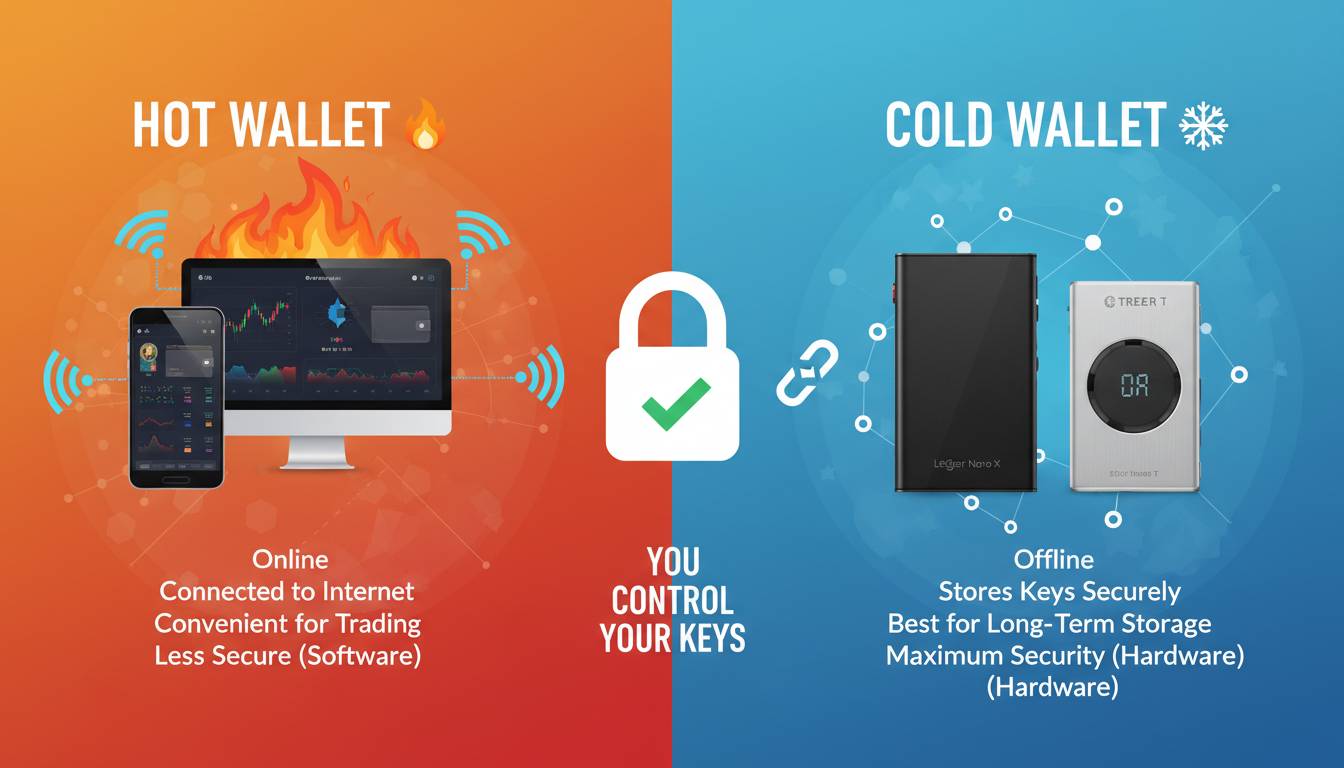
Before purchasing Bitcoin, you need a place to store it. A Bitcoin wallet doesn’t actually hold coins—it stores your private keys, which prove ownership of your Bitcoin and authorize transactions. Understanding the different wallet types helps you choose the right security level for your situation.
Hot Wallets (Software Wallets)
Hot wallets are applications connected to the internet, making them convenient for frequent trading but more vulnerable to hacking. Mobile apps like Coinbase Wallet, Exodus, and Trust Wallet offer user-friendly interfaces suitable for beginners. These wallets are free to download and set up instantly. For holding small amounts you plan to trade regularly, hot wallets provide appropriate security with maximum convenience.
Cold Storage (Hardware Wallets)
Hardware wallets like Ledger and Trezor store your private keys offline on physical devices. These wallets cost $50 to $200 but provide superior security for significant Bitcoin holdings. Even if your computer is compromised by malware, the private keys never touch an internet-connected device. Industry experts consistently recommend hardware wallets for anyone holding more than a few hundred dollars in Bitcoin.
Custodial vs. Non-Custodial Wallets
Custodial wallets, offered by exchanges like Coinbase and Gemini, hold your private keys on your behalf. This arrangement provides password recovery options and simplifies usage but means you don’t have true ownership—if the platform fails or freezes your account, you may lose access to your funds. Non-custodial wallets give you complete control but also complete responsibility. If you lose your recovery phrase, no one can help you recover your Bitcoin.
Step-by-Step: Making Your First Purchase
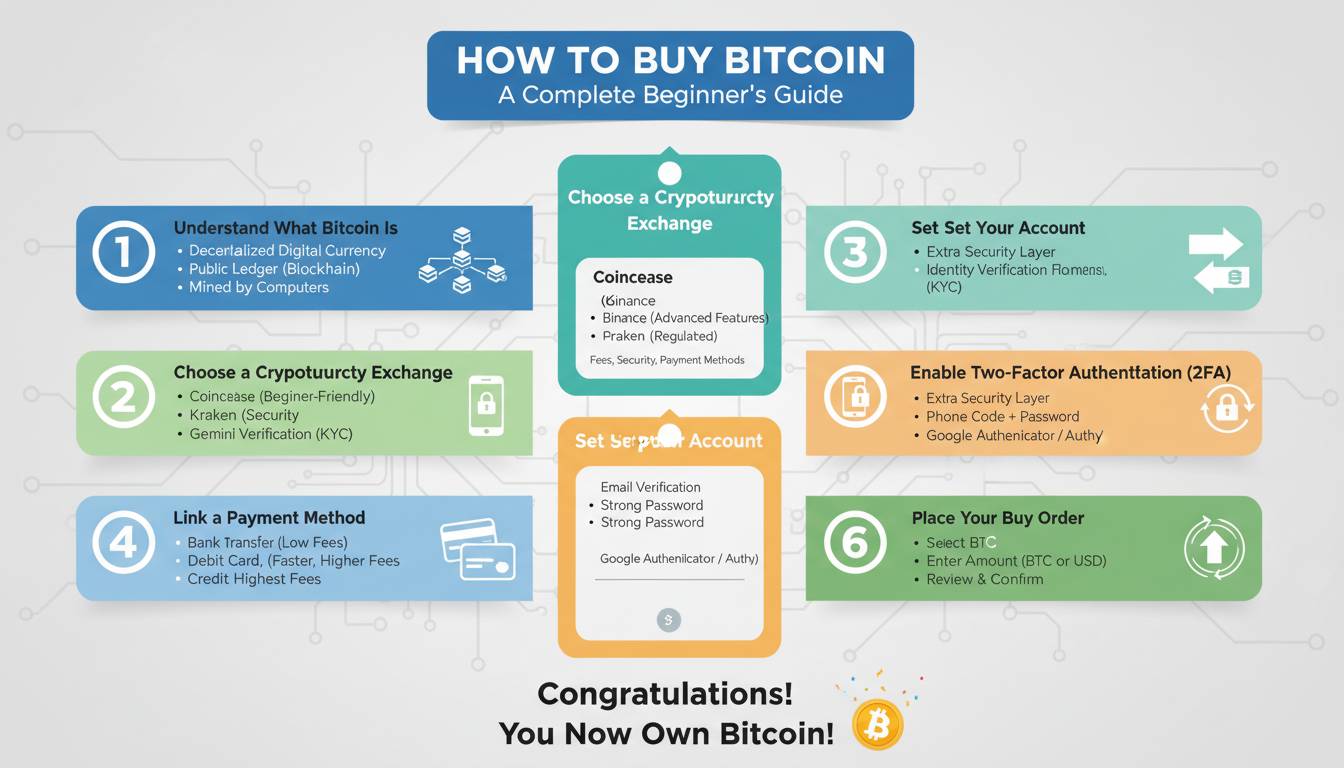
With a platform selected and wallet ready, you’re prepared to execute your first Bitcoin purchase. Following these steps ensures a smooth, secure transaction.
Account Setup and Verification
Create an account on your chosen exchange by providing your email address and creating a strong password. Complete identity verification as required by US regulations—this Know Your Customer (KYC) process typically requires a driver’s license or passport and takes 5-15 minutes on modern platforms. Verification enables bank transfers and higher transaction limits.
Funding Your Account
Link your bank account through ACH transfer for free or low-cost deposits, or add a debit card for instant funding with higher fees. ACH transfers typically take 2-5 business days to clear while debit card purchases process immediately. Starting with a small bank transfer lets you test the process with minimal risk.
Placing Your Order
Navigate to the Bitcoin trading page and enter the amount you wish to purchase. You can specify a dollar amount (such as $100) or a Bitcoin amount (such as 0.01 BTC). Market orders execute immediately at the current market price, while limit orders let you specify a price target and execute only when the market reaches that level.
For your first purchase, follow these guidelines:
- Start with an amount you’re comfortable losing—$25 to $100 provides meaningful exposure without significant risk
- Use a market order for immediate execution rather than waiting for price movements
- Review the total cost including any fees before confirming
- Consider dollar-cost averaging by splitting your intended investment across multiple purchases over weeks or months
Confirming Your Transaction
After executing your purchase, verify the Bitcoin appears in your wallet. On exchange platforms, this shows immediately in your portfolio. If you transferred to a personal wallet, confirm the transaction on a blockchain explorer using your transaction ID. Blockchain confirmations typically take 10-60 minutes depending on network congestion and the fee you paid.
Essential Security Practices
Bitcoin’s security model differs fundamentally from traditional financial accounts. Once a transaction executes, it cannot be reversed. This immutability protects against fraud but also means mistakes are permanent. Implementing proper security measures protects your investment from both theft and accidental loss.
Protecting Your Private Keys
Never share your private keys or recovery phrases with anyone. Legitimate companies will never ask for this information. Write down your recovery phrase on paper and store it securely—preferably in a safe or secure location separate from your home if you hold significant amounts. Consider creating multiple copies stored in different secure locations.
Enabling Two-Factor Authentication
Activate two-factor authentication (2FA) on every account holding your Bitcoin. Use authenticator apps like Google Authenticator or Authy rather than SMS-based codes, which are vulnerable to SIM-swapping attacks. Hardware security keys like YubiKey provide the strongest 2FA protection available.
Avoiding Common Scams
Phishing emails impersonating exchanges, fake investment websites, and fraudulent giveaways on social media consistently victimize cryptocurrency investors. Always verify URLs carefully before entering login credentials. Never send Bitcoin expecting larger amounts in return—a common scam tactic. Legitimate exchanges and individuals will never ask you to send Bitcoin to “verify your wallet.”
Common Mistakes to Avoid
New Bitcoin buyers frequently make predictable errors that cost money or create security vulnerabilities. Understanding these pitfalls helps you avoid them.
Buying at the Wrong Time: Attempting to time market peaks leads to emotional decisions and worse returns. Financial advisors consistently recommend dollar-cost averaging—investing fixed amounts regularly regardless of price—to smooth out volatility.
Ignoring Fees: Exchange fees, withdrawal fees, and network transaction fees add up quickly. Some platforms advertise low trading fees but charge significant spreads. Calculate your all-in costs before committing to a platform.
Storing Everything on Exchanges: While convenient for trading, keeping all Bitcoin on exchange platforms exposes you to counterparty risk. Exchange bankruptcies and hacks have resulted in billions in losses. Transfer significant holdings to personal wallets.
Failing to Back Up Recovery Phrases: Hardware wallet failures, lost devices, and computer crashes happen. Without a recovery phrase backup, you lose access permanently. Document your phrase and store it securely before funding your wallet.
Ignoring Tax Implications: The IRS treats Bitcoin as property, meaning every sale triggers capital gains calculations. Maintain records of your purchase prices, dates, and amounts. Using tax software designed for cryptocurrency simplifies reporting requirements.
Conclusion
Buying Bitcoin in the United States has become remarkably straightforward thanks to established exchanges, mainstream brokerage integration, and clear regulatory frameworks. The key to successful entry lies in choosing appropriate platforms, securing your holdings properly, and understanding that Bitcoin remains a volatile asset best approached with long-term perspective and money you can afford to lose.
Start with a small investment on a reputable exchange, enable all available security features, and consider transferring larger holdings to a hardware wallet. As you become comfortable with the process, you can explore more advanced strategies like dollar-cost averaging or self-custody solutions. Bitcoin’s potential as a store of value and hedge against monetary inflation continues attracting institutional and retail investors alike, making now a sensible time to understand how to participate safely.
Frequently Asked Questions
Is it legal to buy Bitcoin in the United States?
Yes, buying Bitcoin is legal in the United States. Cryptocurrency exchanges must register with FinCEN (Financial Crimes Enforcement Network) and comply with federal and state regulations. Several states also require specific licensing for cryptocurrency businesses. Major exchanges like Coinbase, Kraken, and Gemini operate legally and serve millions of US customers.
What is the minimum amount of Bitcoin I can buy?
Most exchanges allow purchases starting at $1 or $1 equivalent in Bitcoin. However, network transaction fees make small purchases economically inefficient. Industry consensus suggests a minimum of $25-$50 per purchase to keep fees below 5% of your investment. Some platforms have higher minimums—Fidelity, for example, requires minimum purchases of $10 for their Bitcoin ETF.
How long does it take to buy Bitcoin?
On exchanges, market orders execute instantly. However, funding your account with a bank transfer takes 2-5 business days for ACH transfers. Debit card purchases process immediately but carry higher fees. Once purchased, Bitcoin typically arrives in your wallet within 10-60 minutes depending on network congestion.
Should I use a hardware wallet?
If you’re storing more than $500-1,000 in Bitcoin, a hardware wallet provides significantly better security. Hardware wallets cost $50-$200 but protect your private keys from hacking and malware. For smaller amounts, reputable exchange wallets offer reasonable security with better convenience. Many investors use both—keeping trading funds on exchanges and long-term holdings in hardware wallets.
Do I have to pay taxes on Bitcoin gains?
Yes, the IRS treats Bitcoin as property, not currency. Every time you sell, trade, or use Bitcoin for purchases, you may trigger capital gains or losses. Holding Bitcoin without selling does not create a taxable event. Keep detailed records of your purchase prices and dates. Cryptocurrency tax software like CoinTracker or Bitcoin.Tax can help calculate your tax obligations.
Can I lose all my money buying Bitcoin?
Yes, Bitcoin’s price is highly volatile and you can lose your entire investment. The cryptocurrency has experienced multiple crashes of 50% or more throughout its history. Additionally, losing your private keys or recovery phrase, or sending Bitcoin to the wrong address, results in permanent loss with no recourse. Only invest money you can afford to lose completely.