AI Video Generator Free Online – Create Stunning Videos in Minutes

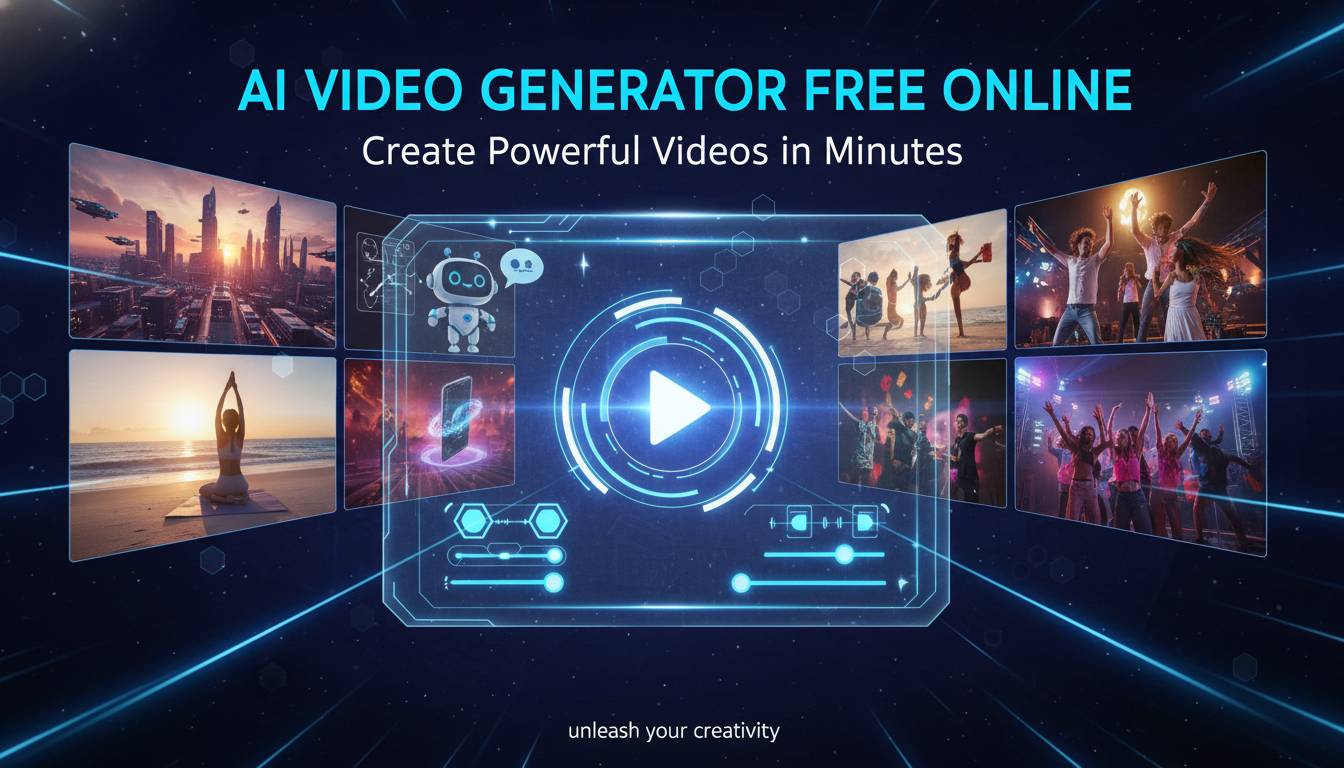
Creating professional-quality videos used to require expensive software, technical expertise, and hours of editing work. Today, free AI video generators have transformed this landscape, enabling anyone to produce compelling visual content directly from their browser without spending a dime. These tools leverage artificial intelligence to handle scripting, scene generation, voice synchronization, and editing—tasks that once demanded specialized skills and costly equipment.
What Is an AI Video Generator and How Does It Work
An AI video generator is a web-based tool that uses artificial intelligence to automatically create videos from text prompts, scripts, or existing content. These platforms combine multiple AI technologies including natural language processing, computer vision, and generative AI to produce video output that previously required human videographers and editors.
The technology operates through several interconnected processes. First, the system analyzes your input—whether that’s a written script, a blog post URL, or a simple description of what you want to create. The AI then generates a storyboard by breaking down your content into scenes, selecting appropriate visuals, and determining transitions between segments. Many platforms incorporate text-to-speech functionality that converts your written script into voice narration, with options to choose from multiple voice actors, languages, and accents. Finally, the AI assembles these elements, adding background music, applying visual effects, and synchronizing audio with imagery to produce a cohesive final video.
Free online AI video generators typically operate on a freemium model. The basic features remain accessible at no cost, while premium capabilities—such as higher resolution exports, longer video lengths, commercial usage rights, or access to advanced AI models—require payment. This approach allows users to experiment with the technology and create functional videos without initial investment.
Key Features to Look for in Free AI Video Tools
When evaluating free AI video generators, understanding which features matter most helps you select the right tool for your needs. The most capable free options share several essential characteristics that distinguish them from basic slideshow makers.
Template Variety and Customization: Quality AI video tools offer diverse template libraries spanning marketing, education, social media, and entertainment categories. The best platforms allow substantial customization within these templates, enabling you to adjust colors, fonts, layouts, and branding elements to match your specific requirements.
AI Voice and Audio Options: Natural-sounding voice narration significantly impacts video quality. Look for platforms providing multiple AI voices with adjustable speed, pitch, and tone. Background music libraries with royalty-free options that automatically sync with your video length add production value without copyright concerns.
Media Assets and Integration: The top free AI video generators include built-in stock media libraries containing millions of images, video clips, icons, and shapes. Integration with platforms like Unsplash or Pexels expands these options further. Some tools also accept your own uploads, allowing you to incorporate brand assets.
Export Quality and Formats: Even free tools should deliver usable output quality. Aim for platforms offering at least 720p resolution exports, with 1080p available on the free tier. Social media-optimized aspect ratios (vertical 9:16 for TikTok and Reels, square 1:1 for Instagram, horizontal 16:9 for YouTube) ensure your videos display correctly across platforms.
Ease of Use and Learning Curve: The most effective AI video tools prioritize intuitive interfaces. Drag-and-drop functionality, clear instructions, and streamlined workflows help you create videos quickly without extensive tutorials or technical background.
Top Free AI Video Generators Available Online
Several platforms offer genuinely capable free tiers that enable meaningful video creation. Understanding each tool’s strengths helps you match your requirements to the right service.
Runway stands out for its advanced generative AI capabilities. While its full-featured version requires subscription, the free tier provides access to Gen-2 video generation, allowing you to create videos from text descriptions or images. The platform excels at artistic and experimental video creation, though output length limits apply to free users.
Lumen5 specializes in transforming text content into engaging videos, making it ideal for converting blog posts, articles, or press releases into social media content. The free version includes basic features sufficient for creating short promotional videos, with watermarked exports on the free tier.
Pika has gained popularity for its ability to generate videos from images and extend existing video clips using AI. The free tier provides a reasonable number of credits monthly, suitable for experimentation and light production use.
Kaiber offers unique artistic video generation capabilities, particularly for musicians and creative professionals. Its free trial demonstrates the platform’s ability to transform images and audio into stylized video content.
InVideo provides a comprehensive video creation platform with over 5,000 templates accessible on its free tier. The tool emphasizes speed, with features designed to produce videos quickly from templates rather than generating entirely new content from scratch.
| Platform | Best For | Free Tier Limits | Export Quality |
|---|---|---|---|
| Runway | Generative AI video | Limited credits | 720p |
| Lumen5 | Text-to-video | Watermarked output | 720p |
| Pika | Image-to-video | Monthly credits | 720p |
| Kaiber | Creative/artistic | 3 credits/week | 480p |
| InVideo | Template-based | Full templates | 720p |
How to Create Your First AI-Generated Video in 5 Steps
Following a structured approach ensures your first AI-generated video turns out well while familiarizing you with the creation workflow. Most platforms share similar fundamental processes, so these steps apply broadly across different tools.
Step 1: Define Your Purpose and Audience: Before opening any tool, clarify what you want your video to accomplish. Are you creating educational content, marketing material, social media posts, or entertainment? Understanding your audience and goal shapes every subsequent decision, from tone and style to length and platform optimization.
Step 2: Prepare or Generate Your Script: Some AI video tools write scripts for you from prompts, while others require you to provide the text. For best results, prepare a clear script that communicates your message concisely. Videos typically work best with 150-200 words per minute of narration, so time your script accordingly.
Step 3: Select Your Template or Generation Method: Choose between starting from a template or generating from scratch. Templates provide structure and design guidance, while AI generation offers more creative freedom but requires more refinement. For beginners, starting with a template in your chosen category typically produces faster, more polished results.
Step 4: Customize Visuals and Audio: This step transforms the basic AI-generated content into something representing your brand. Swap placeholder images for your own visuals or search built-in stock libraries. Adjust voice narration settings, select background music, and modify text overlays. Pay attention to color schemes and fonts that align with your brand identity.
Step 5: Preview, Edit, and Export: Always preview your video completely before exporting. Look for timing issues where visuals don’t match narration, awkward transitions, or audio levels that seem off. Most platforms allow fine-tuning of scene duration, text positioning, and audio timing. Once satisfied, export in your desired format and resolution.
Best Practices for Creating Professional-Looking AI Videos
Understanding techniques that elevate AI-generated content helps you produce videos that stand out rather than appearing generic or automated. These practices bridge the gap between basic AI output and professional-quality results.
Write Compelling, Concise Scripts: AI voice narrators deliver whatever text you provide, making script quality directly determinative of final video quality. Craft scripts with conversational tone, short sentences, and clear messaging. Avoid jargon that sounds unnatural when spoken aloud. Each scene should communicate one main idea before transitioning to the next point.
Match Visuals to Message: The images and video clips AI selects may not perfectly align with your intended message. Take time to manually select visuals that reinforce rather than contradict your narrative. Search specifically for imagery that evokes the emotions and concepts you’re communicating.
Strategic Use of Typography: Text overlays reinforce key points and improve retention when viewers watch without sound. Use large, readable fonts with sufficient contrast against backgrounds. Limit text to essential phrases—full sentences often overwhelm and distract from verbal content.
Music Selection Matters: Background music sets emotional tone and pace. Choose tracks that complement rather than compete with narration. Ensure audio levels leave voice narration clearly audible. Many platforms offer “smart music” that automatically adjusts track length to match your video duration.
Maintain Visual Consistency: Stick to consistent color palettes, font families, and design elements throughout your video. This cohesion signals professionalism and strengthens brand recognition. Most platforms allow you to save brand kits or templates for consistent application across multiple videos.
Limitations and What to Expect from Free AI Video Tools
Honest assessment of free tool limitations prevents frustration and helps you plan projects appropriately. Understanding constraints allows you to work within boundaries while leveraging each tool’s strengths.
Watermarks and Branding: Most free tiers include platform watermarks on exported videos. For professional or commercial use, you’ll eventually need to upgrade or use a platform that doesn’t watermark outputs. Some tools place watermarks in corners, while others overlay them more prominently.
Resolution and Length Restrictions: Free exports typically max out at 720p, which appears pixelated on larger displays. Video length limits often cap at 1-3 minutes on free tiers, restricting content that requires longer runtimes. If you need 4K resolution or feature-length content, premium subscriptions become necessary.
AI Quality Variability: While impressive, AI-generated content sometimes produces unexpected or awkward results. Visual generation may create artifacts, unnatural movements, or images that don’t quite match descriptions. AI voices, though increasingly natural, sometimes mispronounce specialized terms or struggle with proper names. Always review generated content thoroughly before finalizing.
Limited Customization in Generation Mode: Tools that generate videos from text prompts offer less precise control than template-based approaches. You describe what you want, but the AI interprets your instructions based on its training, sometimes producing results differing from expectations. Template-based tools provide more predictable outcomes.
Usage Rights and Commercial Licensing: Free tiers may restrict commercial use of generated content. Review terms of service carefully if creating videos for business purposes. Some platforms grant full commercial rights on free tiers, while others reserve commercial usage for paying customers.
Conclusion
Free AI video generators have democratized video creation, making it accessible to anyone with an internet connection and a creative idea. These tools excel at producing social media content, marketing materials, educational videos, and quick visual explanations without requiring technical expertise or financial investment. The technology continues improving rapidly, with newer models producing increasingly natural results.
Start with one of the recommended platforms, create a simple video following the step-by-step process, and iterate based on your results. As you become comfortable with these tools, you’ll discover countless applications for AI-generated video in your personal projects, business marketing, or content creation endeavors. The key is beginning—the learning curve flattens considerably after your first completed video, and the skills you develop transfer across platforms as the technology evolves.
Frequently Asked Questions
Can I use AI-generated videos for commercial purposes on the free tier?
Usage rights vary significantly between platforms. Some free tiers allow personal and commercial use, while others restrict commercial applications to paid subscriptions. Always review the specific terms of service for your chosen platform before using generated videos commercially.
Do free AI video generators include copyright-free music?
Most quality platforms include licensed music libraries you can use without additional fees. These tracks are typically cleared for both personal and commercial use within the platform. However, the specific licensing terms differ, so verify usage rights for your intended application.
How long does it take to create a video with AI?
Simple videos from templates can be completed in 15-30 minutes, including customization time. More complex projects involving AI generation rather than template use may take 1-2 hours as you refine results and make adjustments. Most platforms produce initial outputs within minutes.
Will AI-generated videos look artificial or low-quality?
Quality varies based on the platform, your input, and customization effort. Basic outputs can appear generic, but strategic customization of visuals, text, and audio produces professional-looking results. Higher-tier platforms generally deliver more polished outputs than completely free alternatives.
Do I need any video editing experience to use these tools?
No prior video editing experience is required. AI video generators are specifically designed for users without technical backgrounds. The platforms handle complex editing tasks automatically, requiring only your input on content direction and basic customization decisions.
Can I create videos in languages other than English?
Yes, most AI video platforms support multiple languages for both text input and voice narration. Some platforms offer 50+ language options with various voice options within each language. Language selection typically happens during the setup phase before generation begins.