Crypto Trading for Beginners: Start Profiting Today


The cryptocurrency market reached a total capitalization of over $3 trillion at its peak in 2021, with Bitcoin and Ethereum leading a financial revolution that has transformed how people think about money, investing, and decentralized finance. If you’ve been curious about crypto trading but don’t know where to start, this comprehensive guide will walk you through everything you need to know to begin your journey with confidence.
Unlike traditional stock markets, cryptocurrency operates 24 hours a day, 7 days a week, offering unique opportunities—and risks—that every beginner must understand before risking their capital. This article breaks down the fundamentals of crypto trading, helps you choose the right exchange, explains essential strategies, and shows you how to protect your investments in a notoriously volatile market.
What Is Crypto Trading and How Does It Work
Crypto trading involves buying and selling digital currencies like Bitcoin (BTC), Ethereum (ETH), and thousands of smaller tokens through specialized online platforms called exchanges. Unlike traditional trading hours, cryptocurrency markets never sleep—they operate continuously around the clock, including weekends and holidays.
The fundamental principle is straightforward: you purchase a cryptocurrency at one price hoping to sell it later at a higher price. However, the execution and strategy behind profitable trading is considerably more complex. Traders use various methods to analyze the market, including technical analysis (studying price charts and patterns), fundamental analysis (evaluating the underlying technology and project value), and sentiment analysis (measuring market mood through social media and news).
Understanding Market Structure
The crypto market consists of several key components that beginners must understand. Exchanges serve as the primary marketplace where buyers and sellers come together. Wallets provide secure storage for your digital assets. Trading pairs allow you to exchange one cryptocurrency for another (such as BTC/ETH), while fiat pairs enable direct conversion between traditional currencies and cryptocurrencies.
Key Insights
– Over 420 million people globally use cryptocurrency as of 2023
– Bitcoin remains the dominant cryptocurrency with approximately 45% market share
– The average daily trading volume in crypto markets exceeds $100 billion
– Decentralized exchanges processed over $700 billion in trading volume during 2023
Understanding these fundamentals creates the foundation for making informed trading decisions. The market’s decentralized nature means there’s no central authority controlling prices—instead, supply and demand dynamics drive valuation across thousands of different cryptocurrencies, each with unique use cases, development teams, and growth potential.
Choosing the Right Crypto Exchange
Selecting the appropriate exchange represents one of the most critical decisions for new traders. The exchange you choose affects everything from security to available trading pairs to fee structures.
Major Exchange Options
| Exchange | Best For | Fees | Security Rating |
|---|---|---|---|
| Coinbase | Beginners, US users | 1.49%-3.99% | ⭐⭐⭐⭐⭐ |
| Binance | Low fees, variety | 0.10%-0.60% | ⭐⭐⭐⭐ |
| Kraken | Advanced trading | 0.00%-0.40% | ⭐⭐⭐⭐⭐ |
| Gemini | Regulatory compliance | 0.35%-2.5% | ⭐⭐⭐⭐⭐ |
| Crypto.com | Mobile trading | 0.00%-0.40% | ⭐⭐⭐⭐ |
Coinbase dominates the US market with over 110 million verified users, offering an intuitive interface that makes it particularly suitable for beginners. The platform provides educational content and rewards users with free cryptocurrency for learning about different coins—a feature that helps new traders understand what they’re actually purchasing.
Binance offers the lowest fees and the widest selection of trading pairs, making it attractive once you’ve moved beyond beginner status. However, its complex interface and regulatory challenges in the United States make it less ideal for those just starting.
Security should always be your primary concern when selecting an exchange. Look for platforms that offer two-factor authentication (2FA), cold storage for the majority of funds, insurance protection against hacks, and transparent proof-of-reserves systems. Gemini and Kraken particularly excel in this area, with both maintaining strong track records and regulatory compliance within the US framework.
Essential Strategies for Beginner Crypto Traders
Successful crypto trading requires more than simply buying low and selling high. Understanding market dynamics and developing a structured approach significantly improves your chances of profitability while managing risk effectively.
Technical Analysis Fundamentals
Technical analysis involves studying historical price data to predict future price movements. While no strategy guarantees success, understanding basic chart patterns helps you make more informed decisions.
Moving Averages
– SMA (Simple Moving Average): Calculates the average price over a specific period
– EMA (Exponential Moving Average): Gives more weight to recent prices, reacting faster to changes
The 50-day and 200-day moving averages are particularly significant. When the 50-day crosses above the 200-day, traders consider this a bullish signal (the “golden cross”). Conversely, when the 50-day falls below the 200-day, it’s considered bearish (the “death cross”).
Support and Resistance
Support levels represent price points where buying pressure historically exceeds selling pressure, causing prices to bounce upward. Resistance levels work in reverse—prices struggle to move above these points due to increased selling. Identifying these levels helps you determine optimal entry and exit points for your trades.
Risk Management Principles
Professional traders never risk more than 1-2% of their portfolio on a single trade. This discipline ensures that even a series of losses won’t devastate your account. Position sizing calculators help you determine exactly how much to invest based on your stop-loss level.
Risk-Reward Ratios
Always calculate your risk-reward ratio before entering any trade. A minimum 2:1 ratio means your potential profit should be at least twice your potential loss. If you’re risking $100 to potentially make $150, that’s a 1.5:1 ratio—which many experienced traders consider insufficient.
Common Mistakes to Avoid
New traders consistently make several predictable errors that diminish their chances of success. Recognizing these pitfalls before encountering them yourself provides a significant advantage.
Emotional Trading
The crypto market’s extreme volatility triggers strong emotional responses. Fear of missing out (FOMO) drives buying at market peaks, while panic selling during downturns locks in losses. Implementing a trading plan with predefined entry and exit points removes emotional decision-making from your strategy.
Ignoring Security
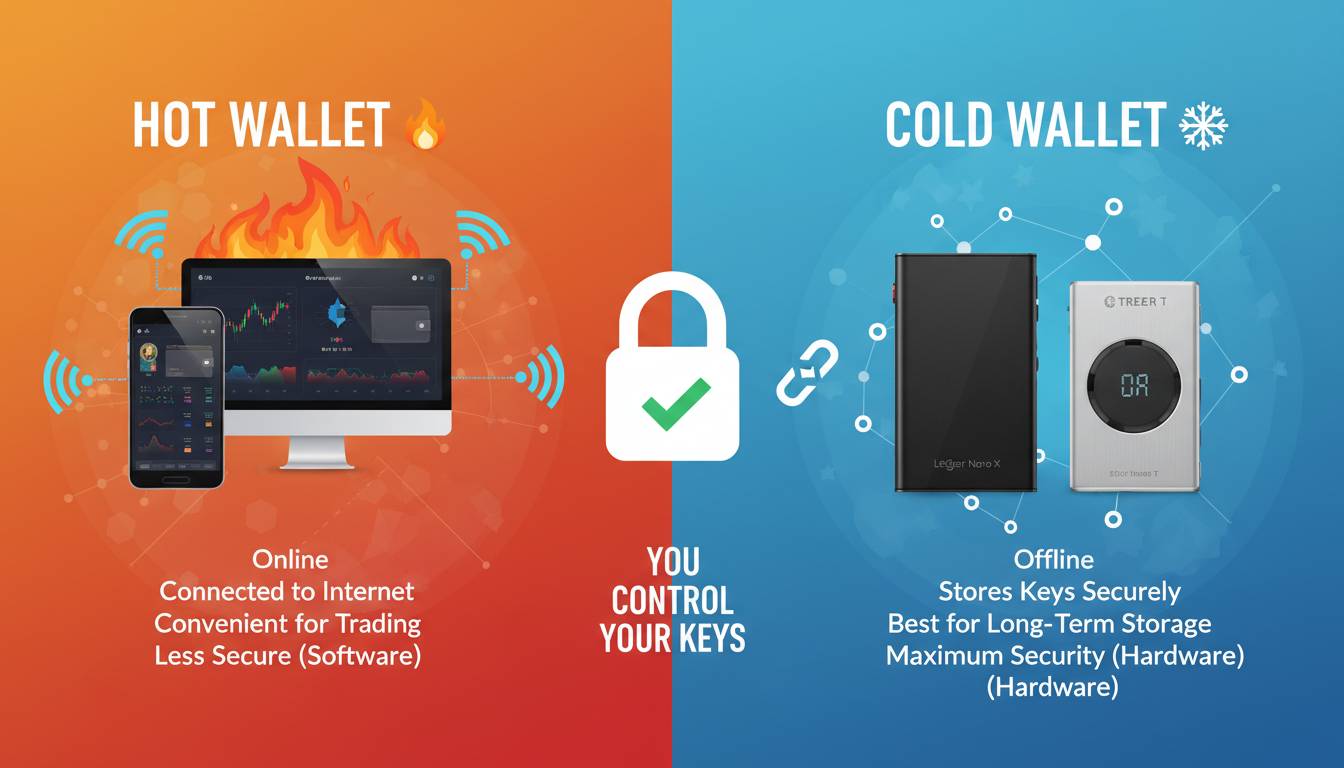
The cryptocurrency space has experienced numerous high-profile hacks resulting in billions of dollars in losses. Never store significant holdings on exchanges—transfer assets to hardware wallets like Ledger or Trezor for long-term storage. Enable every available security feature, including two-factor authentication, withdrawal whitelisting, and device monitoring.
Overtrading
Beginners often engage in excessive trading, driven by the false belief that more activity equals more profit. Each trade incurs fees and increases your exposure to market risk. Quality trades outperform quantity. Many successful traders execute just a few well-researched positions per month rather than daily trades.
How to Start Trading: A Step-by-Step Guide
Prerequisites Before Trading
Before executing your first trade, complete these essential steps:
Education: Spend at least one to two months studying cryptocurrency fundamentals, blockchain technology, and trading strategies using educational resources from reputable exchanges and platforms.
Financial Assessment: Ensure you have an emergency fund covering three to six months of expenses. Only invest money you can afford to lose entirely—cryptocurrency remains highly speculative.
Investment Amount: Start with an amount small enough that losing it entirely won’t affect your financial stability. Many experienced traders recommend beginning with $100 to $500.
Executing Your First Trade
Step 1: Create and Verify Your Account
Choose your exchange and complete the registration process, including identity verification (KYC). This typically takes 15 minutes to 24 hours depending on the platform and verification requirements.
Step 2: Fund Your Account
Connect your bank account or debit card to deposit fiat currency. Bank transfers usually offer lower fees but take longer (two to five business days). Debit card purchases provide instant funding but incur higher fees.
Step 3: Purchase Your First Cryptocurrency
Start with Bitcoin or Ethereum—these established cryptocurrencies have the highest liquidity and most extensive market data. Place a market order for immediate execution or a limit order to specify your desired purchase price.
Step 4: Transfer to Secure Storage
For amounts exceeding what you’d be comfortable losing in a single day, transfer your holdings to a personal wallet. Hardware wallets provide the best security for long-term storage.
The Future of Crypto Trading
The cryptocurrency landscape continues evolving rapidly. Institutional adoption has increased dramatically, with major financial institutions like BlackRock and Fidelity offering crypto investment products. Regulatory clarity is improving across multiple jurisdictions, creating more predictable operating environments for traders and exchanges.
Emerging Trends
– DeFi (Decentralized Finance): Trading platforms operating without traditional intermediaries
– NFT Trading: Non-fungible tokens representing digital ownership of unique items
– Tokenized Assets: Traditional securities represented on blockchain networks
– Central Bank Digital Currencies (CBDCs): Government-issued digital currencies
These developments suggest continued growth and maturation of the crypto market, though volatility and regulatory uncertainty remain significant factors. Successful traders will be those who adapt to changing conditions while maintaining disciplined risk management.
Frequently Asked Questions
Is crypto trading profitable for beginners?
Crypto trading can be profitable for beginners, but it’s important to understand that most retail traders lose money. Success requires substantial education, disciplined risk management, and realistic expectations. Starting with small amounts while learning the ropes significantly reduces your downside risk.
How much money do I need to start trading crypto?
You can start trading with as little as $10 to $25 on most exchanges. However, beginners should start with an amount they’re comfortable losing entirely. Many exchanges have minimum trade sizes of $1 to $10, making it accessible to start small and scale up as you gain experience.
Which cryptocurrency is best for beginners?
Bitcoin (BTC) and Ethereum (ETH) are generally considered the best starting points for beginners. They have the largest market capitalizations, highest liquidity, the most extensive educational resources available, and the longest track records. Starting with established cryptocurrencies reduces exposure to scam tokens and extreme volatility.
Is crypto trading legal in the United States?
Yes, crypto trading is legal in the United States, but it is regulated. Exchanges must comply with federal and state regulations, including Know Your Customer (KYC) and Anti-Money Laundering (AML) requirements. Some states have additional licensing requirements, and certain cryptocurrencies may be restricted depending on their classification as securities.
Conclusion
Crypto trading offers genuine opportunities for profit in one of the most dynamic financial markets in history. However, success requires commitment to education, disciplined risk management, and emotional control. Start by choosing a reputable exchange, funding your account with money you can afford to lose, and beginning with established cryptocurrencies like Bitcoin and Ethereum.
Never stop learning—the crypto market evolves continuously, with new technologies, regulations, and trading strategies emerging regularly. Join communities, follow reputable analysts, and most importantly, develop your own trading plan based on your financial goals and risk tolerance. The journey from beginner to experienced trader takes time, but the potential rewards make it worthwhile for those willing to put in the effort.
Remember: in crypto, as in all investing, the most important rule is never to invest more than you can afford to lose.