Best Cryptocurrency to Invest 2025: Top Expert Picks


The cryptocurrency market continues to evolve rapidly in 2025, presenting both remarkable opportunities and significant risks for investors. With over 10,000 digital assets in circulation and institutional adoption reaching new heights, choosing the right cryptocurrency requires careful analysis of fundamentals, use cases, and market dynamics. This guide examines the top cryptocurrencies worth considering for your portfolio this year, backed by market data, technological developments, and expert analysis.
📊 CRYPTO MARKET OVERVIEW 2025
• Global crypto market cap: $3.2 trillion (CoinGecko, January 2025)
• Bitcoin dominance: 52% of total market cap
• Daily trading volume: $150+ billion
• Institutional adoption: 65% of hedge funds allocate to crypto
Key Takeaways
• Bitcoin remains the gold standard with institutional adoption and store-of-value narrative
• Ethereum leads smart contract platforms with upgrade to Proof of Stake
• Solana shows fastest growth among layer-1 blockchains
• Diversification matters – top-performing assets shift quarterly
• Regulatory clarity improves but volatility persists
The cryptocurrency landscape in 2025 reflects maturom of the asset class. Institutional players now dominate trading volumes, while retail investors benefit from improved infrastructure and regulatory frameworks across major economies. Understanding the unique value proposition of each cryptocurrency helps investors build resilient portfolios aligned with their risk tolerance and investment goals.
Understanding Cryptocurrency Investment Fundamentals
Before examining specific assets, investors must grasp the fundamental factors that drive cryptocurrency value. Unlike traditional securities, cryptocurrencies derive value from network effects, utility, scarcity mechanisms, and community governance.
What Makes a Cryptocurrency Valuable
Network Effects: Cryptocurrencies become more valuable as more users adopt them. Bitcoin’s network effect remains unmatched with over 300 million users globally. The more participants in a network, the more valuable the native token becomes due to increased utility and liquidity.
S scarcity and Tokenomics: Fixed supply cryptocurrencies like Bitcoin (21 million max) offer built-in scarcity. Others implement deflationary mechanisms through token burns. Understanding a cryptocurrency’s issuance schedule and inflation rate helps assess long-term value potential.
Utility and Use Cases: Real-world adoption determines sustainable value. Ethereum powers decentralized applications andDeFi protocols. Chainlink provides critical oracle services connecting blockchains to real-world data. Assets without clear utility often experience hype-driven bubbles that collapse.
Security and Decentralization: The security model of a cryptocurrency matters for long-term viability. Proof of Work networks like Bitcoin offer proven security but consume significant energy. Proof of Stake networks like Ethereum provide energy efficiency with economic security through staked collateral.
💡 FUNDAMENTAL METRIC: Bitcoin’s stock-to-flow ratio of 50+ makes it scarcer than gold, supporting its digital gold narrative
How to Evaluate Cryptocurrencies
When assessing potential investments, examine the development team’s track record, community engagement, partnerships with established institutions, and token distribution. Transparency about project goals and regular progress updates indicate healthy projects. Avoid assets with anonymous teams or unrealistic promises of guaranteed returns.
Technical analysis provides insights into price movements, but fundamentals should guide long-term investment decisions. The most successful cryptocurrency investors combine thorough due diligence with disciplined risk management.
Top Cryptocurrencies to Consider in 2025
Bitcoin (BTC) – The Institutional Standard
Bitcoin maintains its position as the dominant cryptocurrency and remains the entry point for most institutional investors. The launch of spot Bitcoin ETFs in early 2024 created unprecedented accessibility, allowing traditional finance players to allocate to Bitcoin without direct custody challenges.
✅ Strengths:
• Institutional adoption accelerating with $50B+ in ETF inflows
• Established track record with 15+ years of network uptime
• Strongest brand recognition in cryptocurrency
• Limited supply cap of 21 million coins
❌ Considerations:
• Lower growth potential compared to smaller cap assets
• Energy consumption concerns despite renewable mining growth
• Correlated with tech stocks during market stress
💰 Price Range 2025: Analysts project $80,000-$150,000 depending on macroeconomic conditions
Best For: Conservative investors seeking exposure to cryptocurrency’s long-term growth with lower volatility than altcoins.
Ethereum (ETH) – The Smart Contract Leader
Ethereum remains the dominant platform for decentralized applications, NFTs, andDeFi protocols. The transition to Proof of Stake (The Merge and subsequent upgrades) reduced energy consumption by 99.95%, addressing environmental concerns while maintaining network security.
✅ Strengths:
• Largest developer ecosystem with 5,000+ dApps
• Institutional interest growing through staking and tokenization
• Layer 2 solutions scaling transaction capacity
• Network effects in DeFi and NFT markets
❌ Considerations:
• Competition from faster, cheaper layer-1 blockchains
• Complex upgrade path with governance challenges
• Staking rewards lower than alternatives
Institutional Activity: BlackRock’s tokenized fund platform launched on Ethereum, signaling major institutional confidence (2024)
Best For: Investors seeking exposure to blockchain utility beyond simple value transfer.
Solana (SOL) – High-Performance Alternative
Solana has emerged as the fastest-growing layer-1 blockchain, processing 65,000 transactions per second compared to Ethereum’s 15-30. Its architectural innovations make it ideal for high-frequency applications, gaming, and micropayments.
✅ Strengths:
• Exceptional transaction speed and low fees ($0.001 average)
• Growing ecosystem with major dApp launches
• Strong developer adoption and migration from Ethereum
• Institutional partnerships including Visa and Stripe
❌ Considerations:
• Historical network stability issues (outages in 2022)
• Smaller ecosystem than Ethereum
• Centralization concerns due to high hardware requirements
📈 GROWTH METRIC: Solana processed 15 billion transactions in 2024, tripling from previous year
Best For: Growth-oriented investors seeking high-potential alternatives to Ethereum.
Chainlink (LINK) – Infrastructure Essential
Chainlink provides oracle services that connect blockchain smart contracts to real-world data. As the standard for off-chain data integration, Chainlink serves as critical infrastructure forDeFi, insurance, and supply chain applications.
✅ Strengths:
• Dominant market position with 70%+ of oracle market
• Growing utility through Chainlink Services (CCIP, Data Feeds)
• Partnership with major financial institutions
• Sustainable revenue model through node operations
❌ Considerations:
• Competitive pressure from alternative oracle solutions
• Token utility primarily limited to network operations
• Complex valuation without traditional revenue metrics
Enterprise Adoption: SWIFT completed successful cross-chain experiments using Chainlink CCIP, demonstrating institutional utility (2024)
Best For: Investors seeking exposure to blockchain infrastructure rather than speculative assets.
Cardano (ADA) – Research-Driven Development
Cardana differentiates through its academic approach to blockchain development, with peer-reviewed research backing major upgrades. Its layer-1 protocol emphasizes security and sustainability through Proof of Stake architecture.
✅ Strengths:
• Rigorous development process with academic oversight
• Established ecosystem with 1,300+ projects
• Energy-efficientProof of Stake consensus
• Focus on regulatory compliance and enterprise adoption
❌ Considerations:
• Slower development timeline than competitors
• Smart contract functionality more limited than Ethereum
• Lower transaction volumes than competitors
Development Progress: Voltaire governance era launched in 2024, enabling community-led protocol improvements
Best For: Long-term investors valuing thorough development over rapid feature releases.
Investment Strategies for 2025
Portfolio Allocation Models
| Strategy | Bitcoin | Ethereum | Altcoins | Rebalancing |
|---|---|---|---|---|
| Conservative | 60% | 25% | 15% | Quarterly |
| Balanced | 40% | 30% | 30% | Monthly |
| Aggressive | 20% | 20% | 60% | Weekly |
Core-Satellite Approach: Maintain 60-70% of crypto allocation in established assets (Bitcoin, Ethereum) as core positions. Allocate remaining capital to higher-growth altcoins with higher risk tolerance.
Dollar-Cost Averaging
Consistent investment regardless of price reduces emotional decision-making and averages purchase costs over time. Setting up recurring purchases weekly or monthly disciplines investors to avoid market timing—a strategy that consistently underperforms buy-and-hold approaches.
Implementation:
– Allocate fixed dollar amounts monthly
– Automate purchases to remove emotional bias
– Increase contributions during market downturns
– Review allocation quarterly
Risk Management Principles
Never invest more than you can afford to lose in cryptocurrency. The market’s volatility means prices can decline 50-80% during bear markets. Use position sizing to limit any single asset to 5-10% of your portfolio. Consider taking profits after significant gains to reduce exposure to reversals.
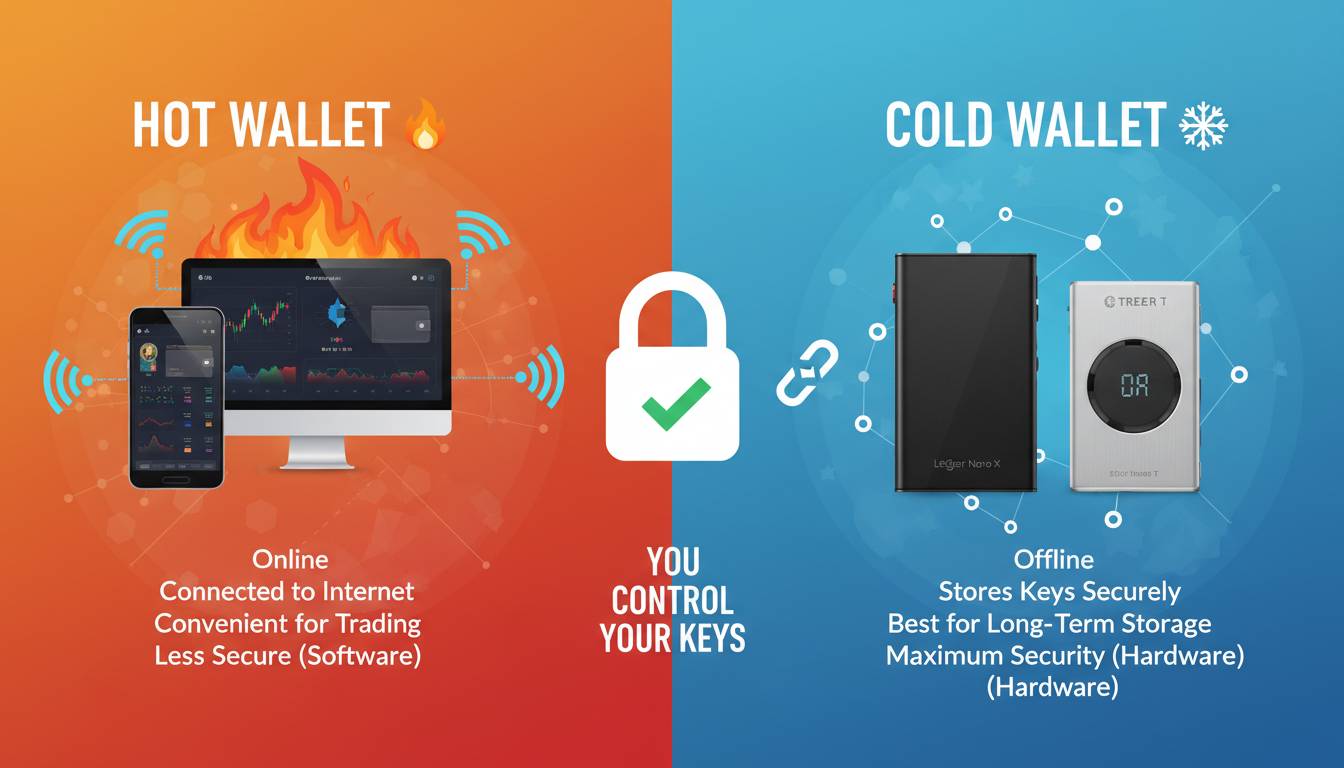
⚠️ CRITICAL RISK: Cryptocurrency investments are uninsured. Unlike bank deposits, you have no recourse if tokens are lost or stolen. Hardware wallets and secure storage practices are essential.
Comparing Top Investment Options
| Factor | Bitcoin | Ethereum | Solana | Chainlink |
|---|---|---|---|---|
| Market Cap | $1.6T | $380B | $95B | $14B |
| 2024 Performance | +120% | +45% | +180% | +60% |
| Transaction Speed | 7 TPS | 15-30 TPS | 65,000 TPS | N/A |
| Use Case | Store of Value | Smart Contracts | High-Speed Apps | Data Oracles |
| Risk Level | Lower | Moderate | Higher | Moderate |
| Institutional Fit | Excellent | Excellent | Growing | Emerging |
Bitcoin vs. Ethereum
Bitcoin functions primarily as a store of value and medium of exchange. Its simplicity and proven security make it the preferred institutional entry point. Ethereum offers broader utility through its smart contract platform, enablingDeFi, NFTs, andtokenization. Investors seeking growth may favor Ethereum’s ecosystem; those prioritizing stability prefer Bitcoin.
Layer-1 vs. Layer-2 Investments
Layer-1 blockchains like Solana and Cardano offer native token appreciation potential and network effects. Layer-2 solutions like Arbitrum and Optimism inherit Ethereum’s security while offering faster, cheaper transactions. Both categories present investment opportunities as the scaling race continues.
Common Investment Mistakes to Avoid
| Mistake | Impact | Prevention |
|---|---|---|
| FOMO buying | Buying at peaks | Stick to investment plan |
| Ignoring security | Loss of funds | Use hardware wallets |
| Over-concentration | Amplified losses | Diversify across assets |
| Market timing | Underperformance | Use dollar-cost averaging |
| Ignoring research | Scam exposure | Verify project legitimacy |
| Emotional trading | Selling lows | Automate contributions |
⚠️ CRITICAL: Pump-and-dump schemes remain prevalent. Avoid cryptocurrencies with sudden price spikes lacking fundamental support. If returns seem too good to be true, they likely are.
Expert Insights on 2025 Market
👤 Michael Saylor, Executive Chairman at Strategy
“Bitcoin remains the cornerstone of any serious digital asset allocation. Its scarcity, security, and institutional adoption create fundamental value that appreciates over time regardless of short-term market conditions.”
👤 Vitalik Buterin, Creator of Ethereum
“The future involves multiple chains serving different needs. Ethereum’s focus on security and decentralization provides the foundation for financial infrastructure that will rival traditional systems.”
📊 INSTITUTION ADOPTION METRICS
| Metric | 2023 | 2024 | Change |
|——–|——|——|——–|
| Crypto custody assets | $450B | $800B | +78% |
| Corporate treasuries holding crypto | 50+ | 150+ | +200% |
| Major banks offering crypto services | 8 | 25+ | +213% |
Tools and Resources for Investors
| Tool | Type | Cost | Purpose |
|---|---|---|---|
| Coinbase | Exchange | Free | Buying/Selling |
| Kraken | Exchange | Free | Advanced Trading |
| Ledger | Hardware Wallet | $79+ | Secure Storage |
| CoinGecko | Tracker | Free | Price Monitoring |
| Glassnode | Analytics | $49/mo | On-chain Data |
| Messari | Research | $0-290/mo | Market Analysis |
Recommended Approach: Use reputable exchanges for purchases, transfer to hardware wallets for long-term holding, and leverage analytics tools for informed decision-making.
Frequently Asked Questions
Is cryptocurrency a good investment for beginners?
Cryptocurrency can be appropriate for beginners who understand the risks and start with small positions. Bitcoin and Ethereum offer the most established investment cases with lower risk than altcoins. Beginners should never invest more than they can afford to lose and should thoroughly research any cryptocurrency before purchasing.
How much should I invest in cryptocurrency?
Financial advisors typically recommend limiting cryptocurrency to 1-5% of a diversified portfolio. Conservative investors may prefer 1-2%, while those with higher risk tolerance might allocate 5-10%. Never invest money you need for essential expenses or that you’re unwilling to lose entirely.
Which cryptocurrency has the highest potential growth in 2025?
Smaller-cap cryptocurrencies typically offer higher growth potential but also higher risk. Solana and emerging layer-2 solutions show strong growth metrics, but predicting price movements remains speculative. Focus on fundamentals and established track records rather than price predictions.
Is it too late to invest in Bitcoin in 2025?
Bitcoin’s price has increased significantly from earlier years, but many analysts see continued upside as institutional adoption expands. The key consideration isn’t timing but position sizing—starting with an allocation you’re comfortable with and adding through dollar-cost averaging regardless of current price.
What are the tax implications of cryptocurrency investing?
In the United States, the IRS treats cryptocurrency as property. Capital gains and losses apply when selling for profit. Keeping detailed records of purchase dates, amounts, and prices is essential for accurate tax reporting. Consult a tax professional familiar with cryptocurrency for personalized guidance.
How do I safely store cryptocurrency?
Hardware wallets provide the safest storage for significant holdings. These devices store private keys offline, protecting against hacking. Software wallets work for smaller amounts and active trading. Never store cryptocurrency on exchanges long-term, as they remain vulnerable to breaches.
Conclusion
The cryptocurrency market in 2025 presents compelling opportunities for investors willing to understand the fundamentals and manage risk appropriately. Bitcoin remains the foundation of any serious crypto allocation, offering institutional-grade adoption and proven security. Ethereum leads smart contract innovation with ongoing upgrades expanding its utility. Solana and other alternatives provide growth opportunities for those seeking higher returns with increased risk tolerance.
Success in cryptocurrency investing requires patience, discipline, and continuous learning. Avoid the temptation of quick profits from speculative assets. Build positions gradually through dollar-cost averaging. Maintain diversification across established assets and higher-growth opportunities. Stay informed about regulatory developments and technological advances that reshape the landscape.
The cryptocurrency asset class has matured significantly, offering institutional-quality infrastructure while maintaining the innovation that attracts growth-oriented investors. By focusing on fundamentals, managing risk, and maintaining long-term perspective, investors can participate meaningfully in this evolving market throughout 2025 and beyond.