DeFi Yield Farming for Beginners: Start Earning Crypto Today

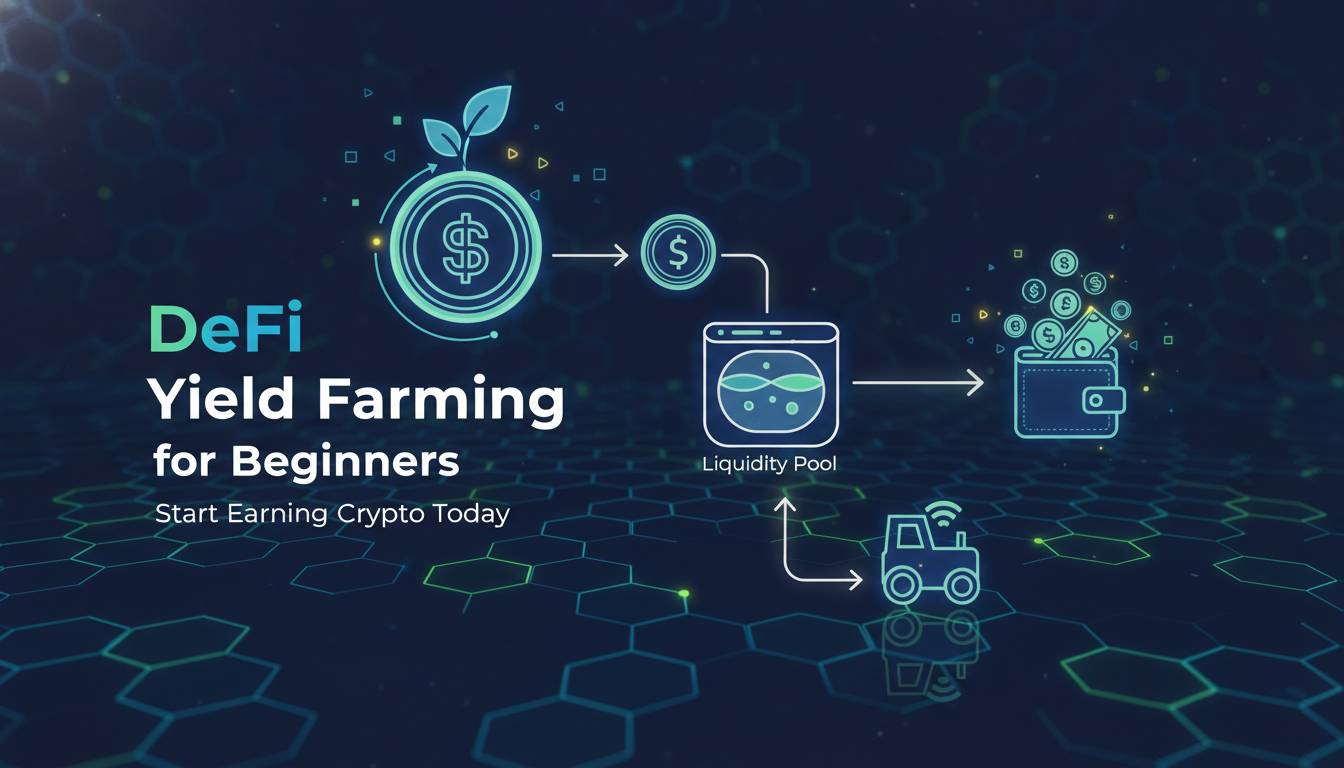
DeFi yield farming represents one of the most innovative opportunities in cryptocurrency, allowing users to earn passive income by providing liquidity to decentralized finance protocols. Unlike traditional banking, yield farming enables anyone with a crypto wallet to earn returns ranging from 5% to over 100% annually on their digital assets. This comprehensive guide walks you through everything you need to know to start earning crypto through yield farming safely and effectively.
📊 STATS
• $85 billion in total value locked across DeFi protocols (DefiLlama, January 2025)
• 2.4 million unique wallets actively participating in yield farming
• 12% average yield for stablecoin farming strategies
• $4.2 billion lost to DeFi exploits since 2020
Key Takeaways
• Yield farming involves staking crypto assets to earn rewards from DeFi protocols
• Impermanent loss remains the primary risk for liquidity providers
• Stablecoin farming offers lower risk with 5-15% annual yields
• Start small with proven protocols before exploring higher-yield opportunities
• Gas fees on Ethereum can significantly impact profitability for small investors
The DeFi ecosystem has matured significantly since its emergence in 2020, with institutional adoption increasing and security practices improving across major protocols. Understanding how yield farming works, its risks, and practical strategies will help you navigate this space profitably.
What Is DeFi Yield Farming?
Yield farming, also known as liquidity mining, is the process of earning rewards by locking cryptocurrency assets in DeFi protocols. In exchange for providing liquidity, users receive native protocol tokens, trading fees, or interest payments. The concept gained mainstream attention in mid-2020 when Compound Finance introduced tokenized rewards for suppliers and borrowers, creating a new passive income paradigm in crypto.
At its core, yield farming leverages automated market makers (AMMs) and lending protocols to facilitate decentralized trading and borrowing. When you provide liquidity to a protocol like Uniswap or Aave, your funds contribute to pools that enable other users to trade or borrow assets. In return, you earn a share of the trading fees and additional protocol tokens as incentives.
How Yield Farming Works
The process begins when you deposit tokens into a smart contract—a self-executing program on the blockchain that automatically distributes rewards based on your contribution. These smart contracts calculate your share of the pool and distribute rewards proportionally, typically on a per-block basis.
The basic workflow involves:
1. Deposit assets into a liquidity pool or lending protocol
2. Receive liquidity tokens representing your share of the pool
3. Earn rewards in the form of protocol tokens, trading fees, or interest
4. Compound earnings by reinvesting rewards for compound interest
Most yield farming strategies involve supplying two assets in equal value to create a trading pair. For example, providing equal amounts of ETH and USDC creates an ETH-USDC pool. The protocol then rewards you with a portion of every trade executed in that pool.
💡 STAT: The average yield farming APY on major protocols dropped from 150%+ in 2020 to 8-25% in 2024 as market competition increased .
Key Terms to Understand
APY vs. APR: Annual Percentage Yield includes compound interest, while Annual Percentage Rate does not. DeFi protocols typically advertise APY, which can appear significantly higher when rewards are compounded frequently.
Total Value Locked (TVL): The total amount of cryptocurrency deposited in a protocol. Higher TVL generally indicates greater trust and more stable yields, though it may also mean lower individual returns.
Liquidity Provider (LP) Tokens: These represent your share of a liquidity pool and can often be staked elsewhere to earn additional rewards, creating layered yield strategies.
Impermanent Loss: When the price ratio between two tokens in a pool changes significantly, you may lose value compared to simply holding the tokens. This is called impermanent because losses only become permanent when you withdraw.
Benefits of Yield Farming in DeFi
Yield farming offers several advantages over traditional finance savings accounts and other crypto investment strategies. Understanding these benefits helps you make informed decisions about where to allocate your capital.
| Benefit | Impact | Source |
|---|---|---|
| Higher yields | 5-100%+ APY vs. 0.5-4% in traditional savings | DeFi Llama, 2024 |
| 24/7 market access | No banking hours, instant transactions | Protocol docs |
| No intermediaries | Direct peer-to-peer transactions | Blockchain tech |
| Transparent rewards | On-chain verification of all payouts | Etherscan data |
| Passive income potential | Automated reward distribution | Smart contracts |
Financial Advantages
The primary attraction of yield farming remains the substantially higher returns compared to traditional finance. While savings accounts offer less than 1% annually in most developed markets, stablecoin farming strategies consistently deliver 8-15% APY with relatively low risk. More aggressive strategies involving volatile tokens can yield 50%+ APY, though with proportionally higher risk.
Additionally, yield farming rewards often include governance tokens that appreciate as protocols grow. Many farmers hold these tokens long-term, potentially benefiting from price appreciation alongside regular yield payments.
Financial Autonomy
DeFi operates without traditional financial intermediaries, meaning you retain full control of your assets at all times. Unlike bank accounts that can be frozen or restricted, your funds remain accessible through your wallet using only your private keys. This financial sovereignty appeals to users in regions with unstable banking systems or those seeking censorship-resistant financial tools.
📈 CASE: A crypto-native investor using a Yearn Finance vault strategy achieved 14.2% APY on USDC holdings throughout 2024, compared to 0.5% from a major US bank savings account—a 28x improvement in annual returns.
Popular Yield Farming Strategies
Different strategies suit different risk tolerances and capital requirements. Understanding the main approaches helps you choose the right path for your financial situation.
Stablecoin Farming (Low Risk)
Stablecoin farming involves providing liquidity to pools containing stablecoins like USDC, USDT, or DAI. Because these assets maintain relatively constant values, impermanent loss remains minimal. Typical yields range from 5-15% APY, with some protocols offering promotional rates up to 20%.
Best protocols: Yearn Finance, Curve Finance, Aave
Best for: Conservative investors seeking stable, predictable returns
Volatile Pair Farming (Medium Risk)
This strategy involves trading pairs that include one stablecoin and one volatile asset like ETH or BTC. The volatile asset’s price movements create opportunities for both trading fees and potential token appreciation, though impermanent loss becomes a significant factor.
Best protocols: Uniswap, SushiSwap, Balancer
Best for: Investors comfortable with moderate volatility who want higher yields than stablecoin farming
Concentrated Liquidity (Advanced)
Concentrated liquidity, pioneered by Uniswap V3, allows liquidity providers to concentrate their funds within specific price ranges. This advanced strategy can generate significantly higher fees but requires active management and deeper expertise.
Best protocols: Uniswap V3, Gamma Strategies
Best for: Experienced farmers with time to actively manage positions
| Strategy | Risk Level | Typical APY | Time Required |
|---|---|---|---|
| Stablecoin lending | Low | 5-12% | Low |
| Stablecoin LP | Low-Medium | 8-15% | Low |
| Volatile pair LP | Medium | 15-40% | Medium |
| Concentrated liquidity | Medium-High | 20-100%+ | High |
| Leverage farming | High | 30-200%+ | Very High |
How to Start Yield Farming
Starting with yield farming requires careful preparation and a systematic approach. Follow these steps to begin safely and minimize potential mistakes.
Prerequisites
- [ ] Crypto wallet (MetaMask, Rabby, or hardware wallet)
- [ ] Cryptocurrency to farm (USDC recommended for beginners)
- [ ] Small amount of ETH for gas fees (if using Ethereum)
- [ ] Basic understanding of wallet security
- [ ] Research on chosen protocols
Time: 30-60 minutes for first deposit | Cost: Gas fees vary by network ($5-$50)
Step-by-Step Guide
1. Set Up Your Wallet
Create a non-custodial wallet and securely store your seed phrase offline. Never share this phrase with anyone—anyone asking for it is attempting to scam you. Consider using a hardware wallet for larger amounts.
2. Acquire Cryptocurrency
Purchase stablecoins like USDC from a centralized exchange like Coinbase or Kraken. Transfer only what you plan to use for farming, accounting for gas fees when selecting networks.
3. Connect to a DeFi Protocol
Visit the official website of your chosen protocol (ensure correct URL to avoid phishing sites). Click “Connect Wallet” and approve the connection in your wallet app.
4. Deposit Your Assets
Navigate to the “Pool” or “Supply” section of the protocol. Select the assets you want to provide and approve them for interaction with the protocol. Confirm the transaction in your wallet.
5. Claim Rewards
Most protocols distribute rewards automatically to your wallet, while others require manual claiming. Check the protocol documentation for specifics and consider compounding rewards for maximum returns.
⚠️ Avoid: Sending funds directly to contract addresses without proper approval transactions. Always use the protocol interface for deposits.
Common Issues:
| Problem | Solution |
|———|———-|
| Transaction failing | Increase gas limit or switch to lower-congestion times |
| Slippage too high | Adjust slippage tolerance in wallet settings |
| Pool not found | Ensure you’re on the correct blockchain network |
| Rewards not appearing | Check correct token address in wallet |
Understanding Risks and How to Mitigate Them
Yield farming carries substantial risks that every participant must understand before committing capital. Failing to recognize and manage these risks has led to significant losses for many farmers.
Impermanent Loss
When you provide liquidity to a pool with two assets, and one asset’s price changes significantly relative to the other, you experience impermanent loss. This occurs because AMMs automatically rebalance pools based on price changes, sometimes resulting in holding more of the depreciating asset.
For example, if you provide ETH-USDC liquidity and ETH doubles in price, the pool automatically sells some ETH for USDC to maintain balance. If you simply held ETH and USDC separately, you would be better off mathematically—hence the “loss” for liquidity providers.
Mitigation: Choose stablecoin pairs, use protocols with lower volatility exposure, or select concentrated liquidity strategies that account for expected price ranges.
Smart Contract Risk
DeFi protocols consist of code that may contain vulnerabilities. Hackers have exploited smart contract bugs to steal billions from DeFi protocols over the years. Even audited protocols can contain undiscovered flaws.
Mitigation: Prefer protocols with multiple audits, established track records, and bug bounty programs. Start with small amounts when trying new protocols. Consider using insurance protocols like Nexus Mutual.
Rug Pulls and Scams
New protocols sometimes launch with malicious code designed to steal user funds. Developers may set up seemingly legitimate farms with extremely high yields to attract liquidity, then drain the pool and disappear.
Mitigation: Research protocol team identities (when available), check for independent security audits, start with protocols having substantial TVL, and avoid yields that seem too good to be true.
⚠️ CRITICAL: Never invest more than you can afford to lose entirely. DeFi remains experimental technology, and even experienced users suffer losses. Diversify across multiple protocols and always maintain emergency reserves outside of yield farming positions.
Prevent these mistakes:
1. Investing all capital in one protocol
2. Ignoring gas fees when calculating profitability
3. Failing to compound rewards regularly
4. Not understanding lock-up periods or withdrawal delays
5. Falling for phishing attacks via social media
Top DeFi Protocols for Beginners
Several established protocols offer accessible entry points for new yield farmers. These platforms have proven track records, robust security, and user-friendly interfaces.
| Protocol | Primary Function | Best For | TVL | Audit Status |
|---|---|---|---|---|
| Aave | Lending | Stablecoin lending | $15B+ | Multiple audits |
| Compound | Lending | ETH/USDC lending | $2.5B+ | Multiple audits |
| Curve Finance | Stable swaps | Stablecoin LP | $2.1B+ | Multiple audits |
| Yearn Finance | Vaults | Automated strategies | $500M+ | Multiple audits |
| Uniswap | AMM | Token trading pairs | $4B+ | Multiple audits |
Top Picks for Beginners:
• Aave: Industry-leading lending protocol with excellent security track record. Lend stablecoins for 8-12% APY with minimal impermanent loss risk. Simple interface suitable for newcomers.
• Yearn Finance: Automated vault strategy that optimizes yields across multiple protocols. Deposit once and let the protocol manage complexity. Lower stress and decent returns.
• Curve Finance: Best for stablecoin-to-stablecoin swaps with minimal slippage. Provides some of the best stablecoin LP yields with virtually zero impermanent loss.
Frequently Asked Questions
What is the minimum amount needed to start yield farming?
You can technically start with any amount, but most experts recommend having at least $1,000-2,000 to make yield farming worthwhile after accounting for gas fees. On layer-2 networks like Arbitrum or Polygon, you can start with $100-200 due to significantly lower transaction costs.
Is yield farming legal in the United States?
Yield farming itself is legal, but tax implications apply. The IRS treats crypto yield as taxable income, and you may owe capital gains tax when token values appreciate. Consult a tax professional familiar with cryptocurrency regulations.
How do I know if a DeFi protocol is safe?
Look for protocols with multiple security audits from reputable firms like Trail of Bits, OpenZeppelin, or Certik. Check for established track records (launched at least six months ago), substantial TVL (over $100 million), and active communities. Consider using DeFi safety tracking sites like DeFi Safety or Rekt News.
What happens if I need to withdraw my funds quickly?
Most protocols allow immediate withdrawal, though some have withdrawal delays for security reasons. However, withdrawing during periods of high network congestion may result in expensive gas fees. Some strategies lock your funds for specified periods—in those cases, understand the lock-up terms before depositing.
Can I lose money yield farming?
Yes, you can lose money through impermanent loss, smart contract hacks, rug pulls, or simply through gas fees exceeding your earnings. Never invest more than you can afford to lose entirely.
Should I use Ethereum or other blockchains?
Ethereum offers the deepest liquidity and most opportunities but has high gas fees. Layer-2 networks like Arbitrum, Optimism, and Base offer lower fees with good protocol options. Alternative layer-1 blockchains like Solana or Avalanche also support yield farming but carry different risk profiles.
Conclusion
DeFi yield farming has evolved from an experimental niche into a legitimate passive income strategy for cryptocurrency holders. With proper research, risk management, and starting capital, beginners can earn substantially higher returns than traditional finance offers. The keys to success involve starting with established protocols, understanding the risks involved, and never investing more than you can afford to lose.
Begin with stablecoin lending on protocols like Aave or Yearn Finance to understand the mechanics without significant impermanent loss exposure. As you gain confidence and experience, explore more complex strategies like liquidity provision or concentrated liquidity positions. Stay vigilant against scams, keep your seed phrases secure, and continuously educate yourself as the DeFi landscape evolves rapidly.
The DeFi ecosystem represents the future of finance—open, permissionless, and accessible to anyone with an internet connection. By starting your yield farming journey today with careful, conservative strategies, you position yourself to benefit from this ongoing financial revolution while learning valuable skills that will serve you well as the space continues to grow.